Your contractor just asked whether you want hardwood or bamboo, and you’ve got until Friday to answer. Every sample board looks like wood. The pitch says bamboo is harder than oak and greener than anything else on the rack.
What nobody has explained is what bamboo flooring actually is, or why two boxes with the same label can behave so differently once they’re on the floor.
This guide covers the short answer: what it’s made from, the three types, how hard it really is, and where it belongs in a house.
What Is Bamboo Flooring?
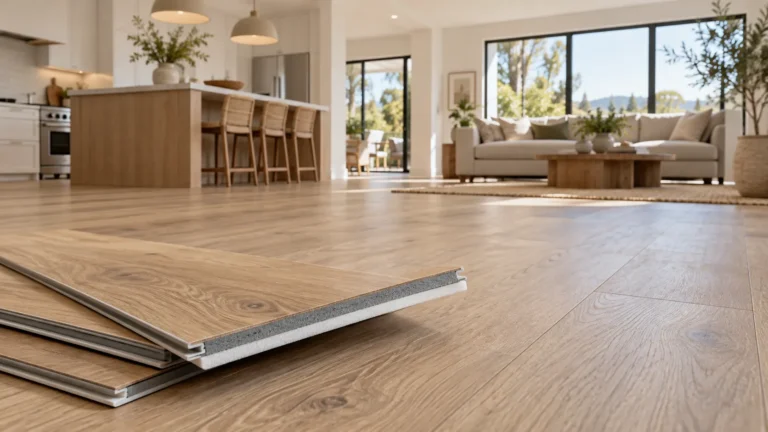
Bamboo flooring is a hard-surface floor made from the stalks of bamboo grass. The stalks are sliced into strips or shredded into fibers, dried, then pressed and glued into planks under heat and pressure. It looks and performs like hardwood, but the raw material is a grass, not a tree.
That matters for two reasons. A grass regrows from the same roots after harvest, and its long, straight fibers can be compressed into a board denser than most wood species.
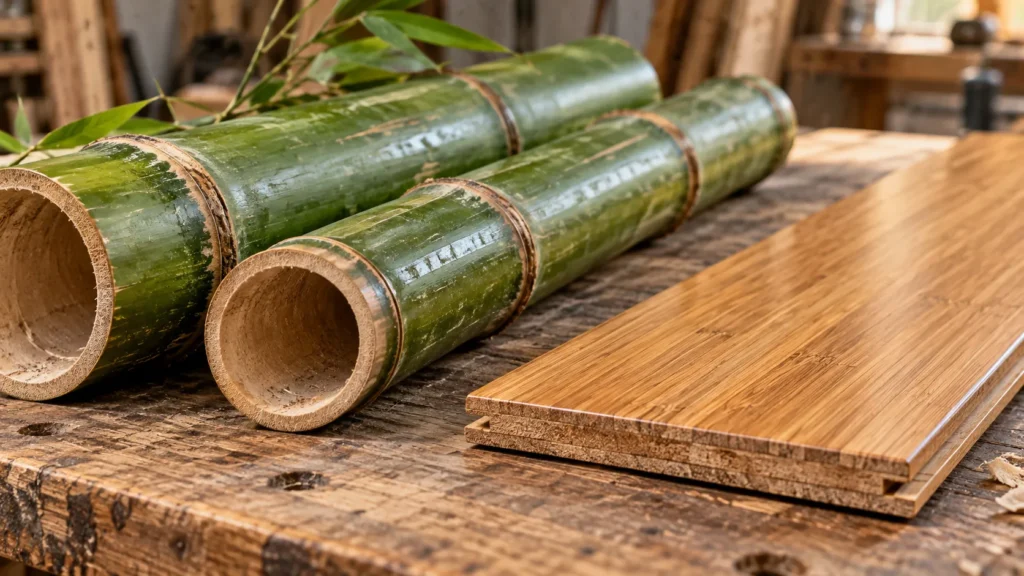
Nearly all bamboo flooring sold in the United States comes from one species, Moso bamboo (Phyllostachys edulis), grown in southern China. If you’re weighing it against other options, our guide to all flooring types shows where bamboo sits next to hardwood, laminate, vinyl and tile.
What Is Bamboo Flooring Made From?
Three things, and the balance between them decides the quality of the floor.
- Bamboo culms, the hollow stalks, harvested at five to seven years old when the walls have hardened. Younger bamboo makes a softer board.
- Resin adhesive, usually a urea-formaldehyde or phenolic resin, sometimes a soy-based or formaldehyde-free alternative. Strand-woven boards carry more of it because shredded fibers need more glue.
- A protective finish, several coats of aluminum-oxide polyurethane cured under UV light. The finish, not the bamboo, is what resists scratches.
There’s no unified grading system for bamboo flooring the way there is for hardwood. “Grade A” means whatever the retailer says it means, so the spec sheet (culm age, resin type, finish coats) tells you more than the grade label.
How Is Bamboo Flooring Made?
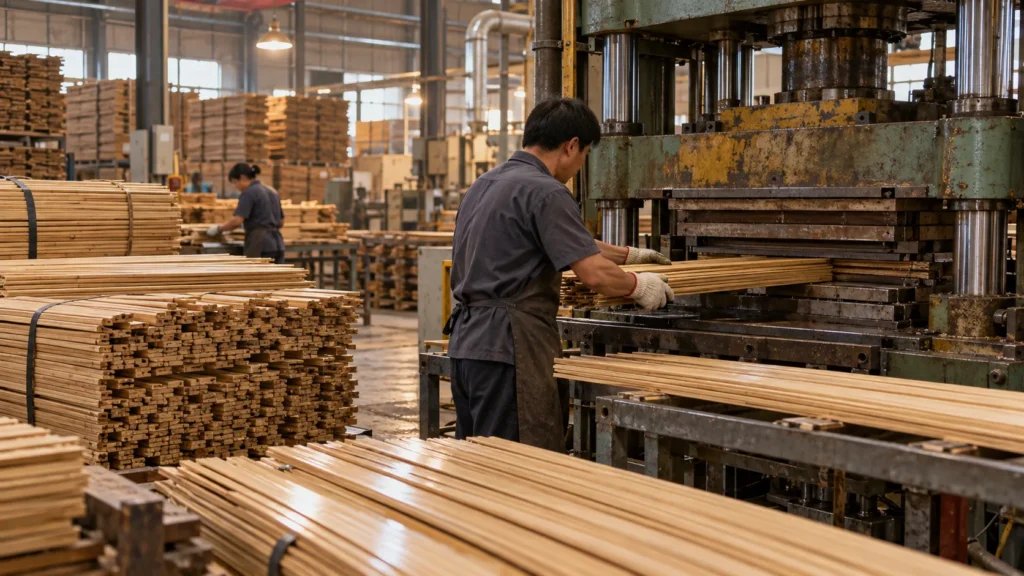
Mature culms are cut at the base, leaving the root network alive to send up new shoots. The hollow stalks are split lengthwise into strips, with the green skin and soft inner layer removed.
The strips are then boiled to strip out sugars and starches. This is the step that makes finished bamboo unappealing to termites and beetles. Boards destined to be dark are steamed under pressure (carbonized) before being kiln-dried to a stable moisture content.
The last step depends on the type. Horizontal and vertical boards are made by gluing whole strips together and pressing them flat. Strand-woven boards are made by shredding the strips into fibers, soaking them in resin and crushing them in a hydraulic press into a block so dense it has to be sawn into planks with hardwood-rated blades. All three are then milled with tongue-and-groove or click edges and finished.
What Are the Different Types of Bamboo Flooring?
Three grain types: horizontal, vertical and strand-woven. The names describe how the strips were stacked in the press, not which way the grain runs across your floor, and that stacking decides both the look and the hardness.
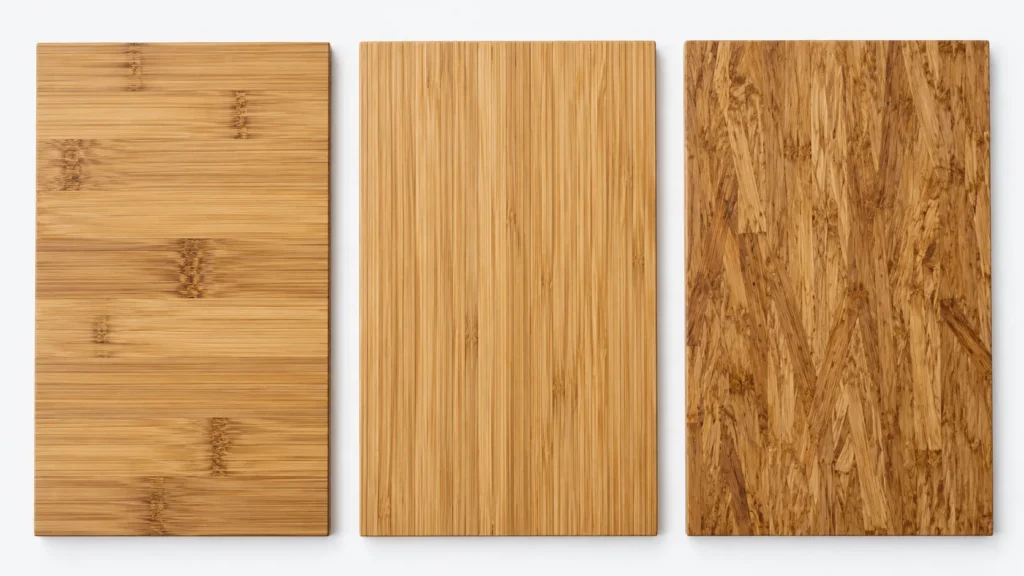
Horizontal Bamboo
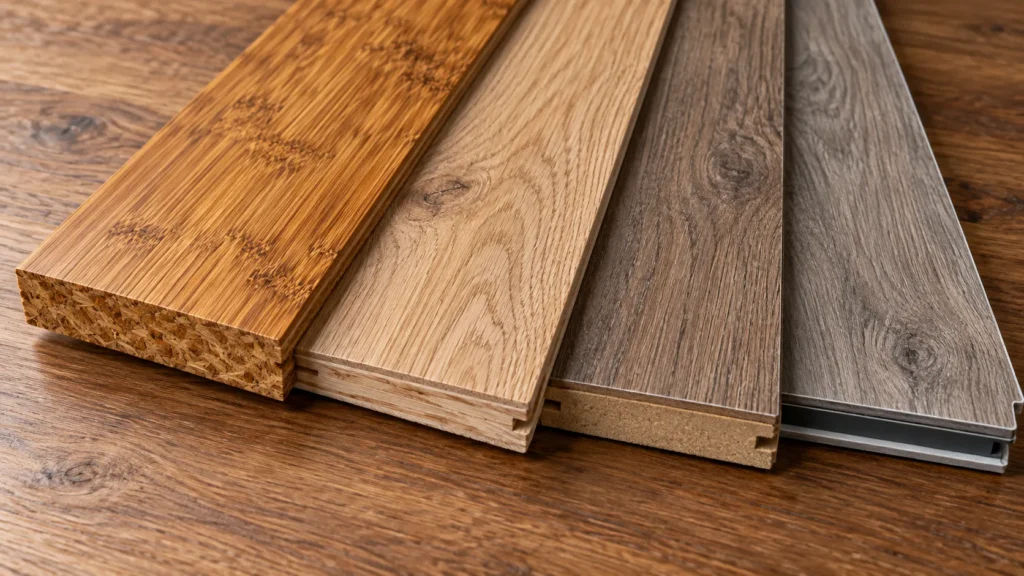
Strips are laid flat, wide face up. You see the bamboo’s nodes, the knuckle-like growth rings, as darker bands every few inches. It’s the classic, slightly rustic bamboo look, and it’s about as hard as oak.
Vertical Bamboo
The same strips are stood on their narrow edge. The nodes nearly vanish and the surface shows tight, uniform lines, which suits modern and Scandinavian-style rooms. Hardness is close to horizontal, sometimes a touch lower.
Strand-Woven Bamboo
The bamboo is shredded, mixed with resin and compressed into a solid block. The grain comes out random and marbled, closer to an exotic hardwood than to traditional bamboo. This is the type that earns bamboo its “harder than oak” reputation, rating two to three times higher on the Janka scale than the other two. It’s also the only type regularly specified for commercial spaces and homes with big dogs.
| Type | How strips are arranged | Visible grain | Relative hardness |
| Horizontal | Laid flat, wide face up | Nodes visible as dark bands | Similar to oak |
| Vertical | Stood on edge | Thin, uniform lines | Similar to oak |
| Strand-woven | Shredded, resin-soaked, compressed | Random, marbled, hardwood-like | 2 to 3 times oak |
Solid Bamboo vs Engineered Bamboo
Grain type is the surface. Construction is what’s underneath, and any grain type comes either way.
Solid bamboo is bamboo all the way through, usually 1/2 to 5/8 inch thick. It can be sanded and refinished more than once over its life.
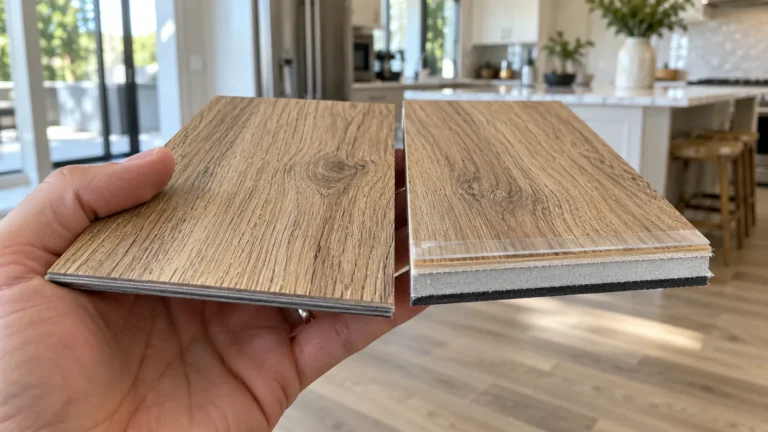
Engineered bamboo is a thin layer of real bamboo, often strand-woven, glued to a plywood or high-density fiberboard (HDF) core, the same core types used in engineered hardwood. The cross-laminated core moves far less with humidity, which makes it the safer choice in basements and climates with big seasonal swings. The thinner wear layer limits refinishing to once, or not at all.
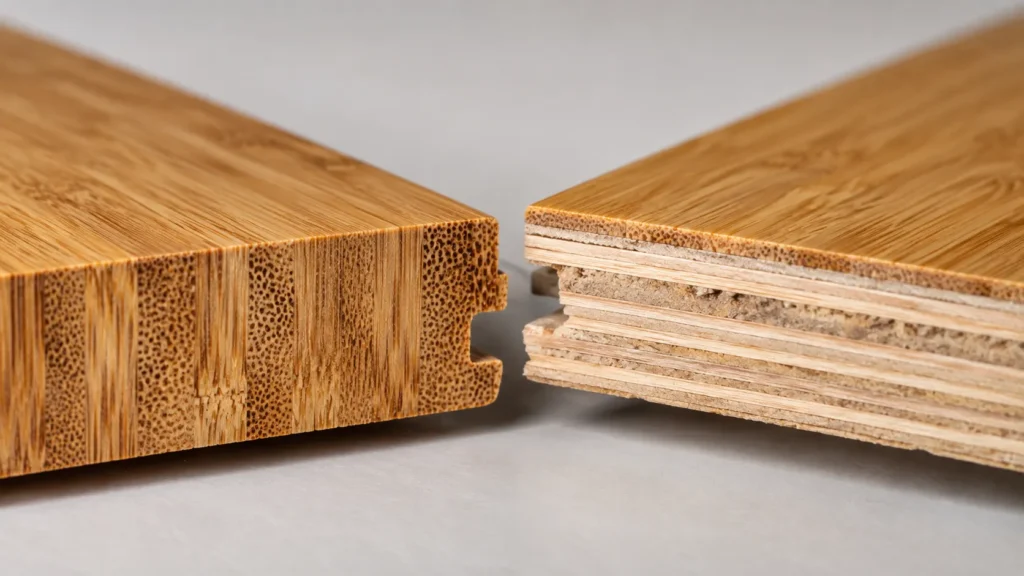
The click-lock HDF-core bamboo you’ll find at big-box stores is engineered bamboo built like laminate, except the top layer is a real bamboo veneer rather than a printed image.
What Does Bamboo Flooring Look Like?
Out of the press, bamboo is a pale blonde between beech and natural maple. Everything else on the showroom floor comes from heat, stain or texture.
Natural vs Carbonized Bamboo
Natural bamboo keeps that light, creamy color. Carbonized bamboo has been steamed before pressing, which caramelizes the sugars and turns the fibers amber to coffee-brown all the way through, so a scratch doesn’t expose a pale layer underneath.
The catch that rarely makes the sample card: carbonizing cooks the fibers and weakens them. A carbonized horizontal or vertical board loses a meaningful share of its hardness. Strand-woven carbonized bamboo holds up far better because the resin and compression do the structural work. Want dark and hard? Look at strand-woven.
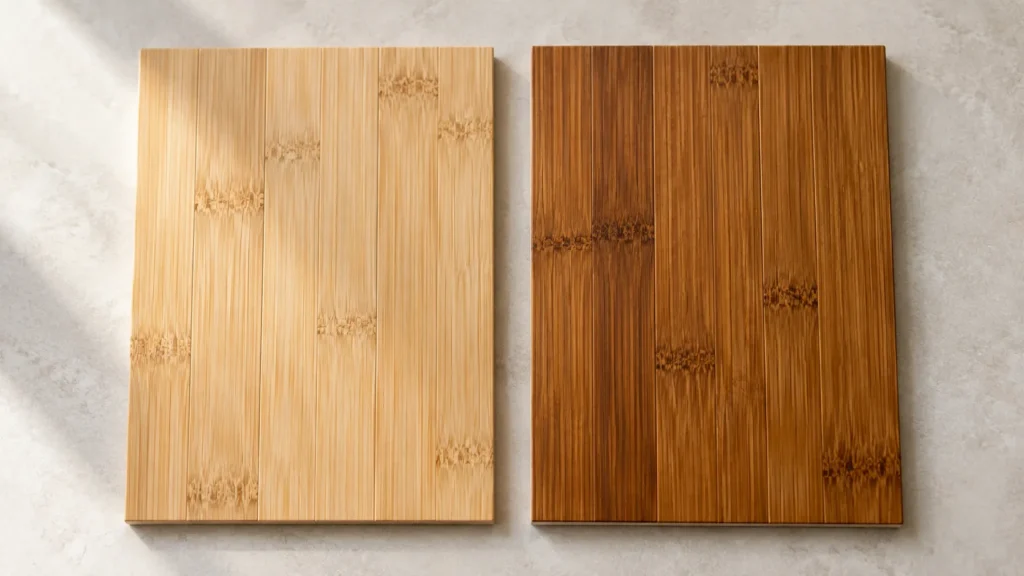
Finishes: Matte, Gloss and Handscraped
Satin and matte finishes hide fine scratches and are the most common choice in US homes. High-gloss looks sharper on day one but shows every scuff. Handscraped and wire-brushed textures suit farmhouse and rustic rooms and are forgiving of wear. All of them sit over the same aluminum-oxide polyurethane coating.
How Durable Is Bamboo Flooring?
It depends entirely on the type. Strand-woven bamboo is one of the hardest floors you can buy. Horizontal and vertical bamboo are roughly as hard as oak, no more.
The industry measures hardness with the Janka test: the force in pounds (lbf) needed to push a steel ball halfway into the surface. Red oak, at 1,290 lbf, is the benchmark most US flooring is compared against.
| Material | Janka hardness (lbf) |
| Strand-woven bamboo | 3,000 to 5,000 |
| Hickory | 1,820 |
| Hard maple | 1,450 |
| Horizontal bamboo | 1,300 to 1,400 |
| White oak | 1,360 |
| Red oak | 1,290 |
| Vertical bamboo | 1,200 to 1,300 |
Hardwood figures from the Janka hardness chart at ToolsToday; bamboo figures are typical manufacturer ranges and vary by brand.
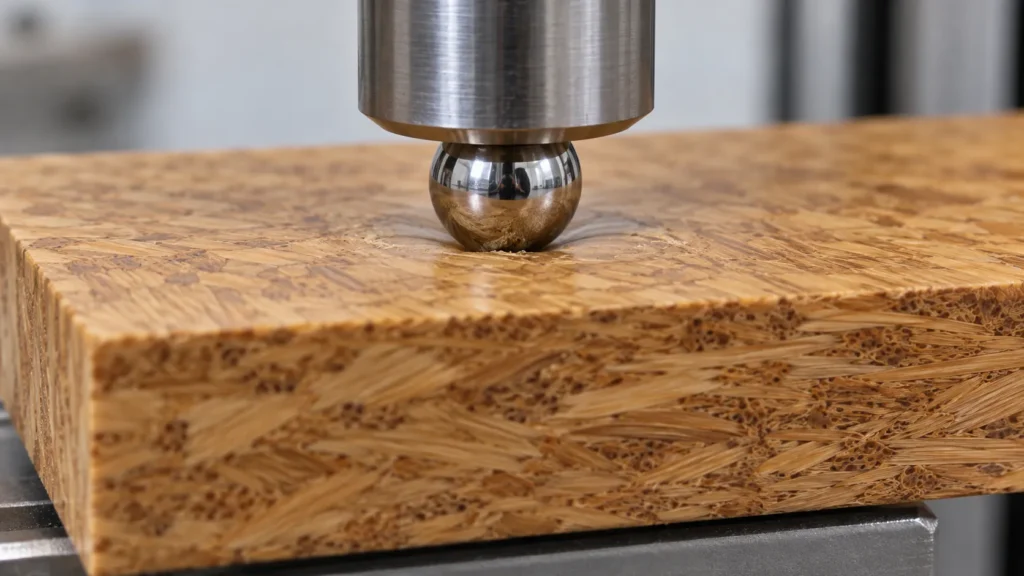
One thing the table doesn’t show: Janka measures denting, not scratching. Scratch resistance comes mostly from the finish, so a strand-woven board with a thin coating can still show dog-nail marks.
Is Bamboo Flooring Waterproof?
No. It’s water-resistant, and packaging swaps those two words far too often.
The dense pressing and polyurethane topcoat let bamboo shrug off a spilled glass or a wet dog, as long as it’s wiped up in reasonable time. That beats most solid hardwood. Standing water is different: it gets into the seams, the board swells, the edges cup, and engineered planks can delaminate at the glue line.
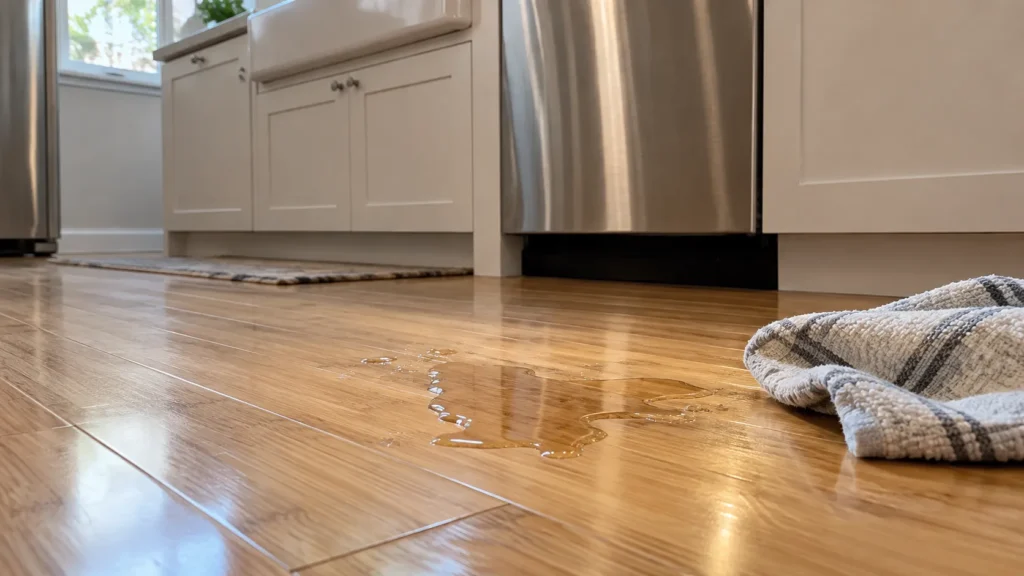
Bamboo also takes on and gives off moisture with the air around it. It expands a little in a Florida summer and shrinks in a Minnesota winter with the furnace running. Engineered planks move less than solid. If a room gets flooded as a matter of routine, that’s a job for tile or rigid-core vinyl.
How Long Does Bamboo Flooring Last?
A well-made bamboo floor lasts 20 to 30 years in a typical home, and solid strand-woven boards can go longer with a refinish along the way. Residential wear warranties commonly run 25 years.
What pushes a floor toward the long end: strand-woven over horizontal or vertical, solid over thin-veneer engineered, a thick finish, stable indoor humidity, and a quality resin that won’t let fibers lift at the surface. For comparison, solid oak routinely passes 50 years because it can be refinished many more times. Bamboo rarely matches that, but it outlasts laminate and most vinyl, which get replaced rather than refinished.
Is Bamboo Flooring Sustainable?
Mostly yes, with two caveats the marketing leaves out.
The case is strong at the source. Moso bamboo reaches harvest size in five to seven years; an oak takes decades. Cutting a culm doesn’t kill the plant, so a managed grove is harvested on a rolling basis with no clear-cutting or replanting.
Caveat one is distance: nearly all flooring-grade bamboo is grown and milled in China and shipped across the Pacific. Caveat two is the glue. Engineered bamboo with a plywood or HDF core falls under the EPA’s TSCA Title VI formaldehyde rules, which require certified, labeled products for anything made or imported after March 22, 2019. Solid bamboo sits outside that rule, so for solid planks look for FloorScore, GREENGUARD Gold or a no-added-formaldehyde label. The EPA’s composite wood formaldehyde standards page explains what the TSCA label means.
A renewable plant, a long boat ride, and an adhesive you should check. On balance it comes out ahead of most hardwood if you buy from a brand that publishes its emissions testing.
Where Can Bamboo Flooring Be Used?
Almost anywhere in a house that stays dry.
| Room | Suitable? | Notes |
| Living room, bedroom, dining room | Yes | Any type works |
| Hallway, entryway, stairs | Yes | Strand-woven handles the traffic better |
| Kitchen | Yes, with care | Handles splashes; keep standing water off it |
| Basement (below grade) | Engineered only | Solid planks move too much with humidity |
| Full bathroom | Not recommended | Steam and puddles reach the seams eventually |
| Laundry or mudroom | Risky | Tile or vinyl is the safer call |
| Over radiant heat | Most engineered, some solid | Check the product’s rating |
| Light commercial | Yes | Strand-woven only |
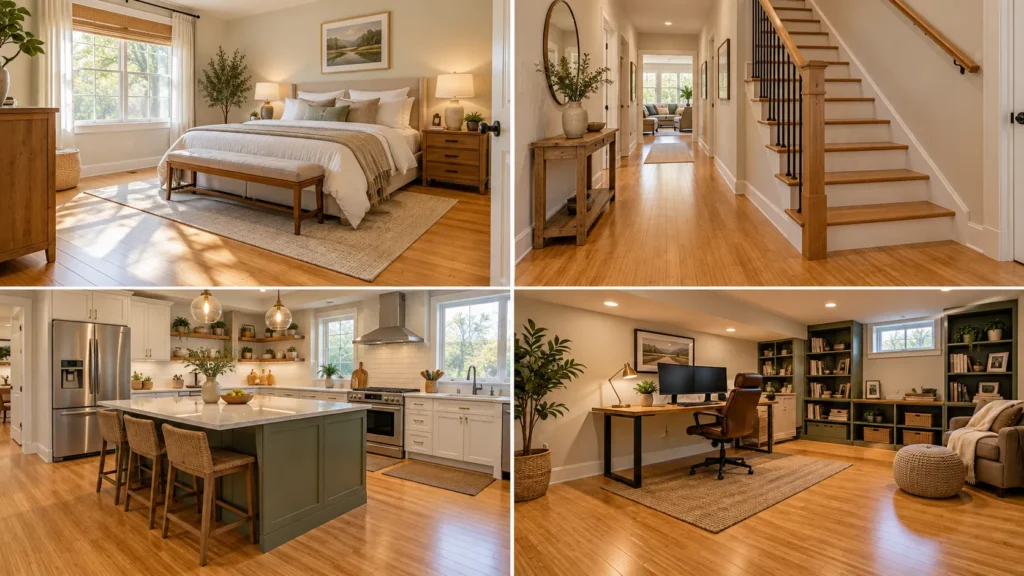
Bamboo works over concrete slabs as well as wood subfloors, which suits the slab-on-grade homes common across the South and Southwest. The one rule: it tolerates a mistake, not a habit.
Bamboo vs Hardwood, Laminate and LVP
| Bamboo | Solid hardwood | Laminate | Luxury vinyl plank | |
| What it is | Compressed bamboo grass | Milled lumber | Printed image on HDF core | Printed vinyl layers, often rigid core |
| Real natural surface | Yes | Yes | No | No |
| Hardness (Janka) | 1,200 to 5,000 by type | 1,290 (red oak) to 1,820 (hickory) | Not Janka-rated | Not rated |
| Water tolerance | Splashes, not standing water | Low | Low to moderate | Waterproof (most rigid-core) |
| Refinishable | Solid yes; engineered limited | Yes, many times | No | No |
| Typical lifespan | 20 to 30+ years | 50+ years | 10 to 20 years | 15 to 25 years |
| Renewable source | Fast, 5 to 7 years | Slow, decades | Partly | No |
Bamboo matches solid hardwood on looks, beats it on hardness (strand-woven) and renewability, and gives up oak’s half-century lifespan. Against laminate and luxury vinyl plank it’s the only real natural surface you can sand, but it loses on waterproofing.
Is Bamboo Flooring a Good Choice?
For most dry rooms in a US home, yes, if you buy strand-woven or a well-made engineered plank from a brand that publishes its emissions testing. Those two conditions decide your experience more than anything else on the label.
It’s the right pick if you want a natural wood look, care where the material came from, and have enough traffic that oak-level hardness feels marginal. It’s the wrong pick for rooms that get wet regularly, houses with no humidity control in swingy climates, or anyone hoping to refinish the same floor in 2075. Horizontal or vertical bamboo in a quiet bedroom is perfectly reasonable; just know you’re buying an oak-equivalent floor with a different look.
Frequently Asked Questions About Bamboo Flooring
What is the downside of bamboo flooring?
Water sensitivity, inconsistent quality between brands, and the oak-level softness of horizontal and vertical types. With no industry grading standard, two boxes with the same label can perform very differently, and cheap imports may use resins with higher formaldehyde emissions.
What are the benefits of bamboo flooring?
A natural wood look from a plant that regrows in five to seven years. Strand-woven bamboo is two to three times harder than red oak, works over concrete slabs and most radiant heat, and solid planks can be refinished.
Is bamboo flooring better than wood?
It depends on the type. Strand-woven bamboo is harder than any domestic hardwood and more renewable. Solid oak lasts longer because it can be refinished many more times, and horizontal or vertical bamboo is no harder than oak. They trade strengths.
Do termites eat bamboo floors?
Rarely. The strips are boiled during manufacturing to remove the sugars and starches insects feed on, and the finished board is sealed under polyurethane. Untreated raw bamboo and water-damaged boards carry some risk; an intact finished floor is not an attractive food source.
Are bamboo floors laminate?
No. Laminate is a photograph of wood fused to a fiberboard core. Bamboo flooring has real bamboo on the surface, either all the way through or as a veneer. Click-lock engineered bamboo installs like laminate, which is where the confusion comes from.
What does vinegar do to bamboo floors?
Vinegar is acidic and gradually dulls the polyurethane finish, leaving the surface cloudy and easier to scratch. One diluted wipe is unlikely to show; regular use wears down the coat that protects the bamboo. A pH-neutral hardwood cleaner is the safer choice, and our guide to cleaning bamboo floors covers what to use.
Is bamboo flooring real wood?
No. Bamboo is a grass, so bamboo flooring isn’t technically wood. It is a real natural plant material that’s milled, finished and lived on the same way hardwood is, which is why retailers shelve it with hardwood.
Is bamboo flooring harder than oak?
Strand-woven is, by a wide margin: typically 3,000 to 5,000 lbf on the Janka scale versus 1,290 for red oak. Horizontal and vertical bamboo land around 1,200 to 1,400, level with oak. Check the rating on the specific product.
Does bamboo flooring off-gas or contain formaldehyde?
It can. The pressing adhesives often contain formaldehyde-based resins. Engineered bamboo with a plywood or HDF core must meet EPA TSCA Title VI limits in the US; solid bamboo isn’t covered, so look for FloorScore, GREENGUARD Gold or a no-added-formaldehyde label.
Does bamboo flooring fade in sunlight?
Yes, like hardwood. Natural bamboo yellows slightly with UV exposure and carbonized bamboo can lighten. It becomes noticeable when a rug shields one patch for years, so UV window film and rotating rugs keep the color even.