The safest way to clean glue from hardwood floors is to soften the glue first, gently lift it with a plastic scraper, wipe the area with a damp microfiber cloth, and test any adhesive remover in a hidden spot before using it widely. Avoid metal scrapers, soaking water, harsh solvents, and aggressive sanding unless you plan to refinish the floor.
Glue on hardwood is tricky because you are not just cleaning the wood. In most homes, you are cleaning a protective finish on top of the wood. If that finish gets scratched, softened, stained, or stripped, the glue may come off, but the floor can look worse than before.
This guide explains how to clean up glue from hardwood floors at home, when to use natural methods, when adhesive remover may help, and when old carpet glue or tile glue needs professional attention.
Quick Summary: Best Way to Remove Glue From Hardwood Floors
| Situation | Best First Step | Avoid |
|---|---|---|
| Fresh glue spill | Wipe with damp cloth and mild soap | Letting it dry |
| Dried glue spot | Soften with warmth, then scrape gently | Metal blades |
| Carpet glue residue | Test small area, scrape carefully, consider refinishing | Sanding unknown black adhesive |
| Rug pad residue | Use microfiber cloth and gentle adhesive remover | Harsh solvents |
| Tile glue on wood | Identify adhesive type first | Heavy scraping across the grain |
| Glue on engineered hardwood | Use extra caution and less moisture | Deep sanding |
Before You Start: Identify the Glue and the Hardwood Finish
Before you try to clean hardwood floors from glue, answer two questions:
- What type of glue is on the floor?
- What type of finish is protecting the floor?
This matters because carpet glue, tile adhesive, underlay glue, craft glue, wood glue, super glue, and rug pad residue do not respond the same way. A method that works on one glue can damage another floor.
Common Glue Types on Hardwood Floors
| Glue Type | Common Cause | Removal Difficulty |
|---|---|---|
| Fresh craft glue or wood glue | DIY project, furniture repair, kids’ crafts | Easy if cleaned quickly |
| Dried white or yellow glue | Wood glue or general household glue | Moderate |
| Carpet glue | Old glued-down carpet | Hard |
| Rug pad residue | Rubber or latex-backed rug pad | Moderate to hard |
| Tile glue or mastic | Old tile installed over wood | Hard |
| Construction adhesive | Flooring installation or repair | Hard |
| Super glue | Small accidental spill | Small area but risky |
| Black adhesive/mastic | Older flooring layers | High caution |
From a flooring point of view, the biggest mistake is treating every adhesive like a simple sticky spot. Old adhesive can be bonded into the finish, sitting in board gaps, or covering a floor that may already need sanding and refinishing.
Tools and Supplies You May Need
Start with the least aggressive tools first.
Safer Tools
- Plastic scraper or old credit card
- Microfiber cloths
- Soft sponge
- Mild dish soap
- Warm water
- Hardwood-safe cleaner
- Hair dryer
- Painter’s tape for marking test spots
- Gloves
- Eye protection
- Small soft-bristle brush
Optional Products
- Hardwood-safe adhesive remover
- Citrus-based adhesive remover
- Mineral spirits, only if approved for your finish
- Acetone, only for tiny glue spots and only after testing
- pH-neutral hardwood cleaner
Always read product labels. Some adhesive removers can soften, discolor, or strip hardwood floor finish.
How to Clean Glue From Hardwood Floors Step by Step
Step 1: Test in a Hidden Area
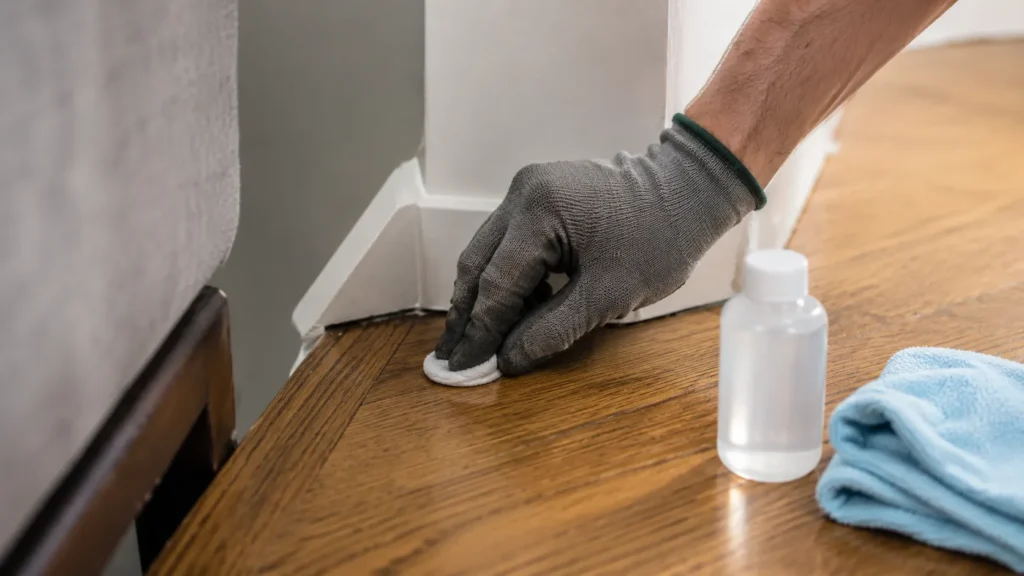
Before using any cleaner or adhesive remover, test it in a hidden spot, such as behind a door, inside a closet, or under furniture.
Apply a tiny amount, wait a few minutes, wipe it dry, and check for:
- Dullness
- Discoloration
- Sticky residue
- Softened finish
- Cloudy marks
- Raised grain
If the finish changes, do not use that method on the visible floor.
Step 2: Remove Loose Dirt First
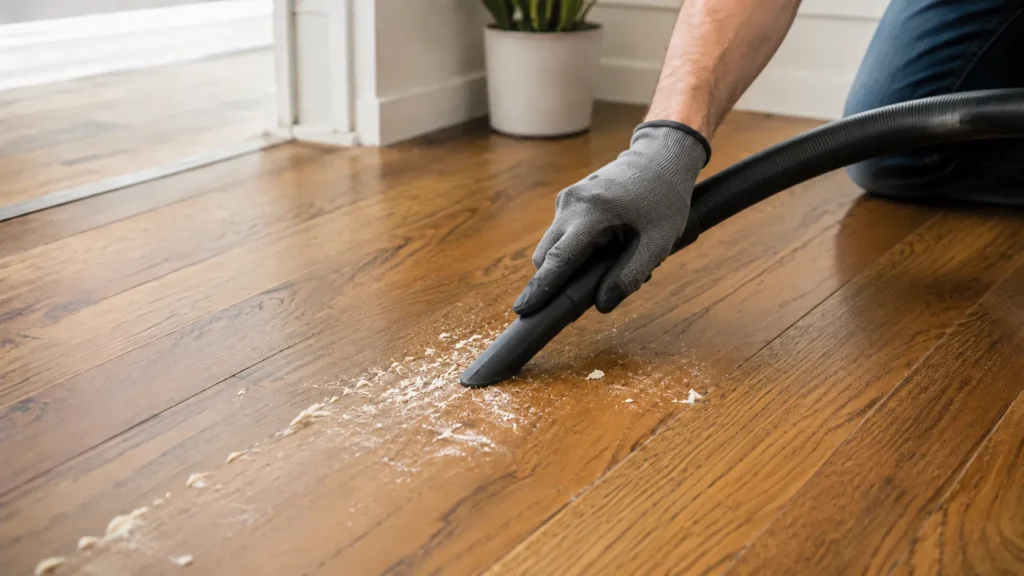
Vacuum or sweep the area before touching the glue. Dirt, grit, and dust can scratch hardwood when rubbed into the surface.
For regular care after the glue is removed, see how to clean hardwood floor for a safer routine.
Step 3: Soften the Glue
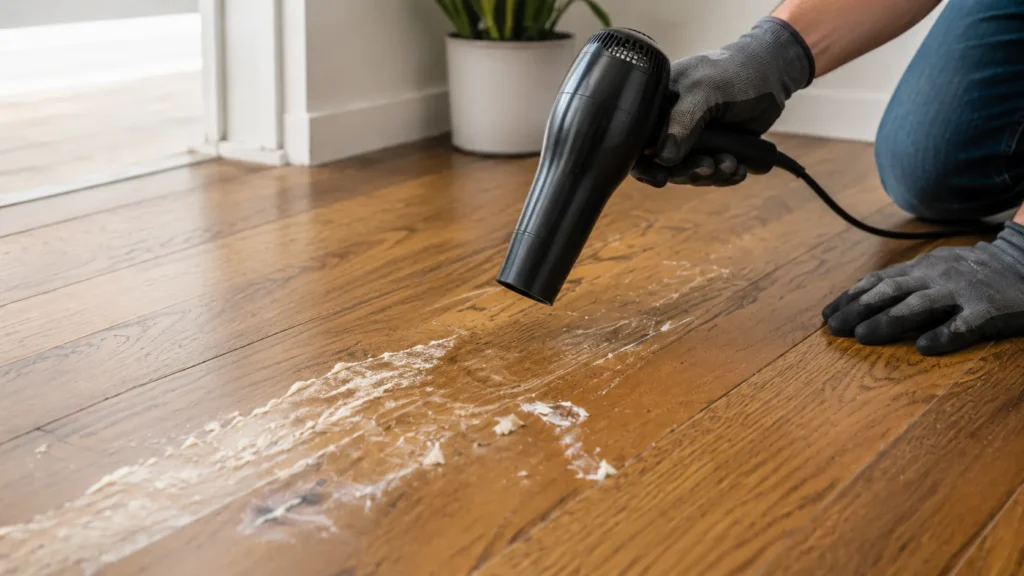
For small dried glue spots, warm the area gently with a hair dryer. Keep the heat moving and do not hold it too close to the floor. The goal is to soften the glue, not heat the wood finish.
Avoid high heat from a heat gun unless you know what you are doing. Too much heat can blister or cloud the finish.
Step 4: Lift the Glue With a Plastic Scraper
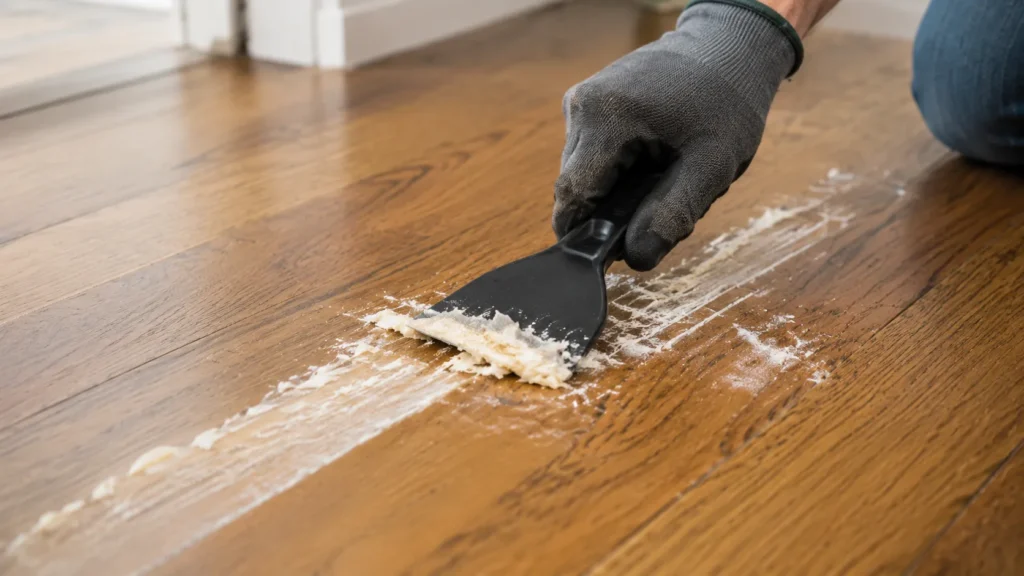
Use a plastic scraper, not a metal blade. Hold it low and push gently with the grain of the wood. Do not dig into the boards.
If the glue does not lift, stop and soften it again. Forcing it can scratch the finish or pull up stain.
Step 5: Wipe With a Damp Microfiber Cloth
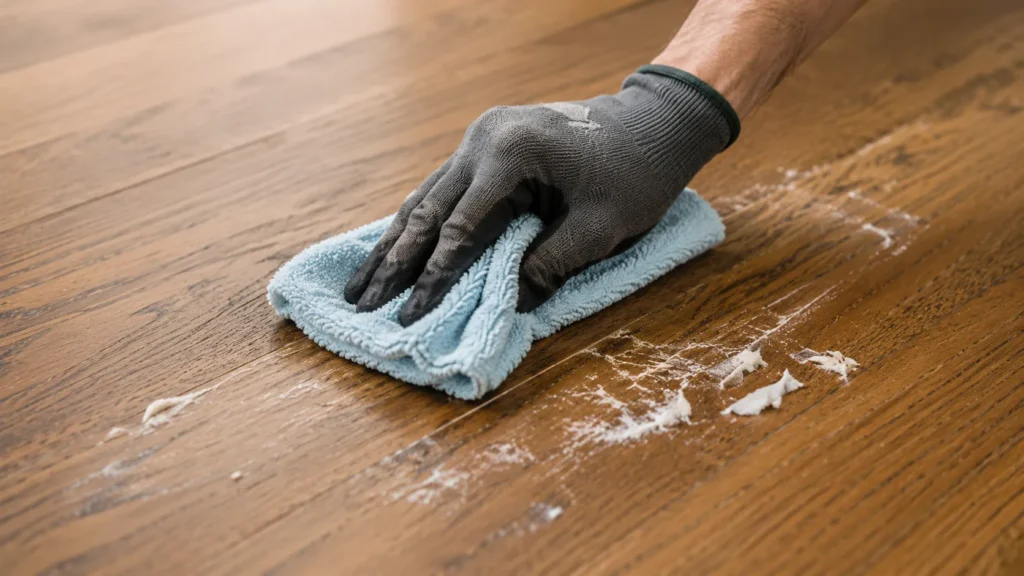
After removing the raised glue, wipe the area with a damp microfiber cloth. Use mild soap only if needed. Then wipe again with clean water on a barely damp cloth.
Do not flood the floor. Hardwood and standing water are a bad combination.
Step 6: Dry the Area Immediately
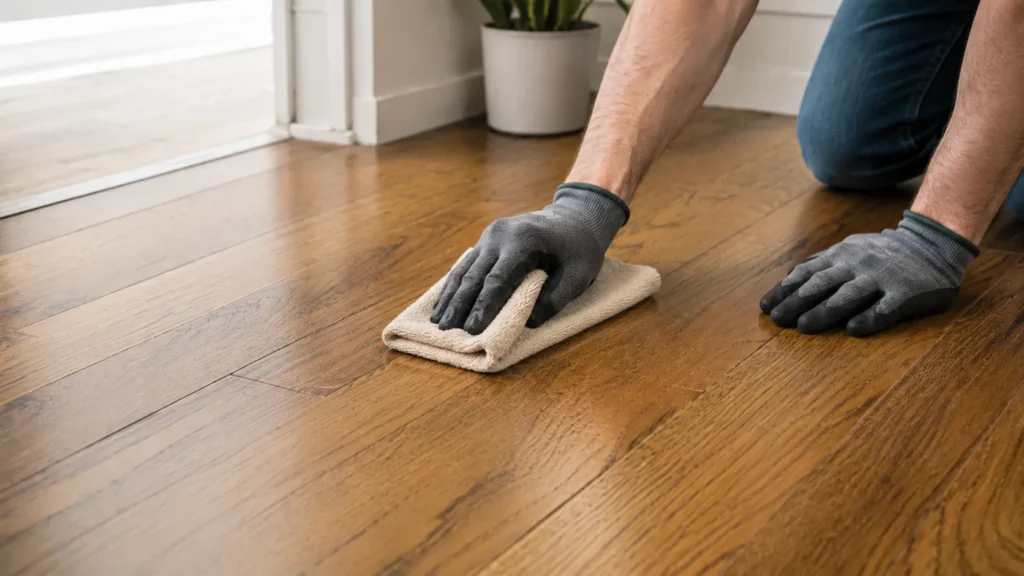
Use a dry microfiber cloth to remove moisture. The area should not stay wet or tacky.
Step 7: Check for Haze or Residue
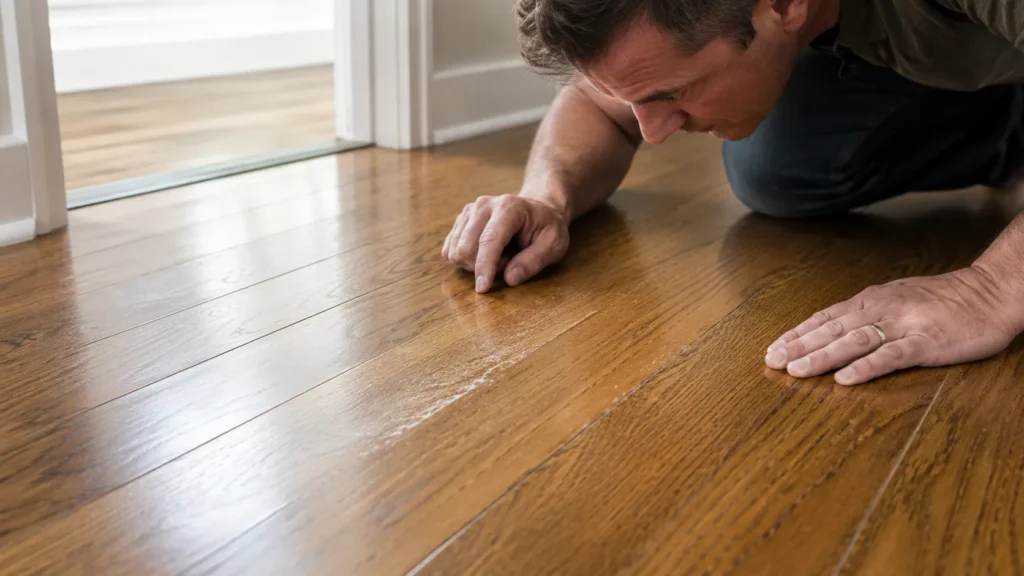
Look at the floor from different angles. If you see haze, greasy residue, or sticky film, clean the area lightly with a hardwood-safe cleaner and dry it again.
Best Methods by Glue Type
| Glue Problem | Best DIY Method | Risk Level |
|---|---|---|
| Fresh glue | Damp cloth + mild soap | Low |
| Dried wood glue | Warmth + plastic scraper | Low to moderate |
| Super glue | Tiny amount of acetone on cloth after testing | Moderate to high |
| Carpet glue | Scrape, soften, test remover, possibly sand/refinish | High |
| Rug pad residue | Gentle adhesive remover + microfiber cloth | Moderate |
| Tile glue | Identify adhesive first, scrape carefully, consider professional help | High |
| Underlay glue | Test remover, scrape in small sections | Moderate to high |
| Old black adhesive | Stop and test for hazardous material risk | High |
How to Remove Carpet Glue From Hardwood Floors
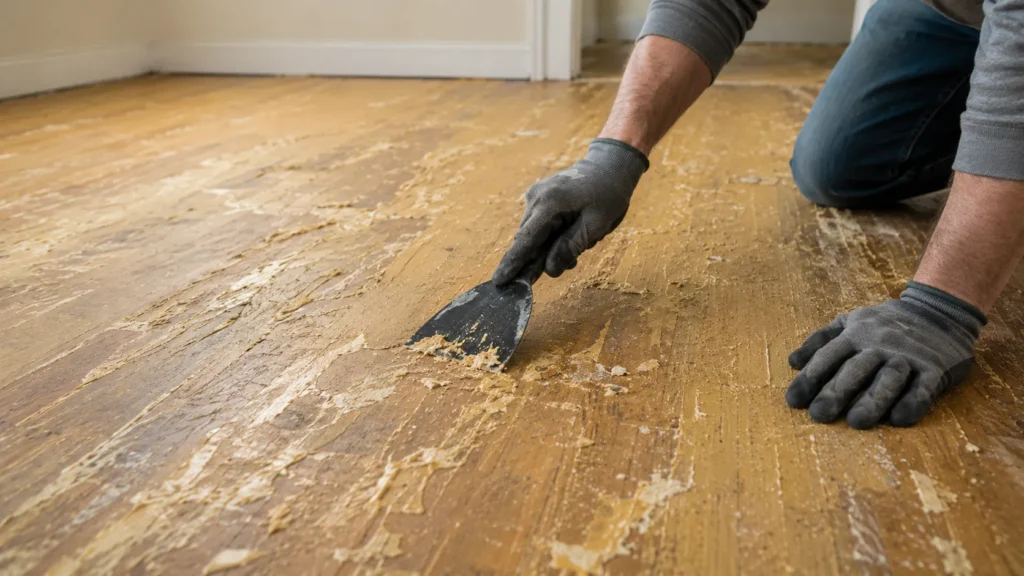
To remove carpet glue from hardwood floors, first scrape off raised glue with a plastic scraper, then test a small area with a hardwood-safe adhesive remover. Work in small sections and wipe residue immediately. If the carpet glue covers the whole floor, sanding and refinishing may be the better long-term solution.
Old carpet adhesive can be stubborn because it may have been pressed into the wood by years of foot traffic. It may also sit in cracks between boards.
For Small Carpet Glue Spots
- Scrape gently with a plastic scraper.
- Apply a small amount of approved adhesive remover to a cloth, not directly across the floor.
- Let it work only as long as the label allows.
- Wipe clean.
- Dry the area.
- Repeat only if the finish still looks safe.
For Large Areas After Removing Carpet
If you need to remove glue from floor after removing carpet, inspect the whole floor first. A room covered in glue is usually not a quick cleaning job. In many older homes, the floor may need sanding and refinishing after adhesive removal.
Do not aggressively sand unknown black adhesive. Older flooring adhesives may require testing before disturbance.
How to Remove Tile Glue From Wood Floor
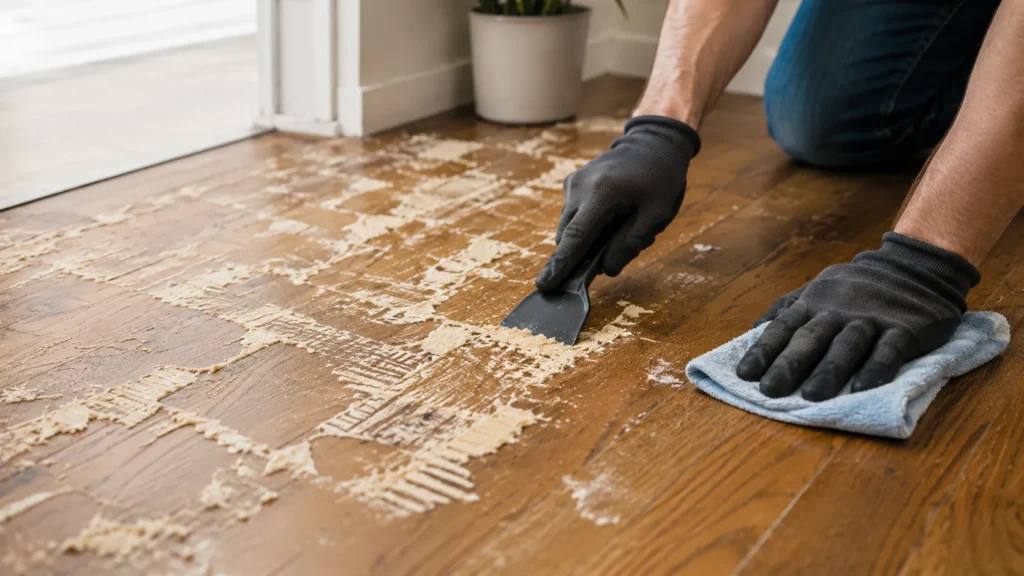
Tile glue, mastic, or thinset on wood flooring is harder than ordinary glue. The safest first step is to identify whether the material is soft adhesive, brittle mastic, or cement-like mortar.
Use a plastic scraper for small residue. For heavy tile glue, avoid grinding, wet soaking, or harsh scraping unless you are prepared to refinish or repair the floor.
If the tile glue is thick, widespread, or embedded between boards, professional sanding or floor repair may be safer than DIY chemical removal.
How to Clean Glue From Hardwood Floors Naturally
The safest natural way to clean glue from hardwood floors is to soften the glue with gentle warmth, scrape it with a plastic tool, and wipe the residue with a lightly damp microfiber cloth.
Natural does not always mean safe for hardwood. Vinegar, lemon juice, baking soda, and oily mixtures can dull, scratch, or leave residue on some finishes.
Safer Natural Options
| Natural Method | Best For | Caution |
|---|---|---|
| Warm water on microfiber cloth | Fresh glue | Do not soak floor |
| Mild dish soap | Light sticky residue | Use very little |
| Hair dryer warmth | Dried glue spots | Avoid overheating |
| Plastic scraper | Raised glue | Do not dig into finish |
| Dry microfiber buffing | Final residue | Use clean cloth |
If a natural method does not work after a few careful attempts, do not keep rubbing harder. That is how many homeowners damage the finish.
Can You Use Adhesive Remover on Hardwood Floors?
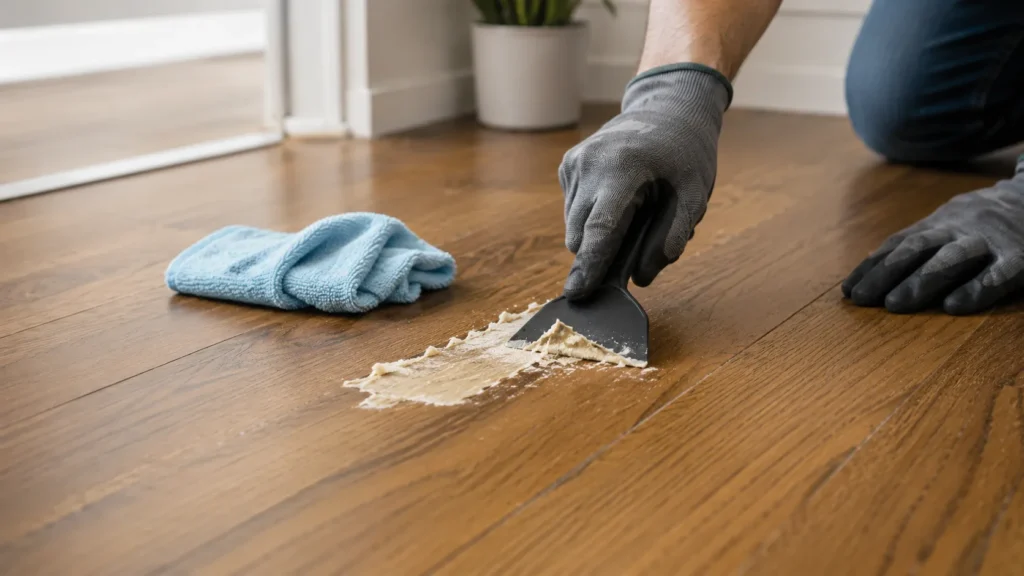
You can use adhesive remover on hardwood floors only if the product label says it is safe for finished wood and you test it first in a hidden area.
Some removers can soften polyurethane, remove stain, leave oily residue, or create a dull patch. Use the smallest amount possible and apply it to a cloth instead of pouring it directly on the floor.
Look for these buying factors:
- Safe for finished wood
- Low odor when possible
- Clear dwell-time instructions
- No harsh residue
- Compatible with your floor finish
- Good ventilation instructions
- Easy cleanup with a clean cloth
What Not to Use on Hardwood Floor Glue
A common mistake homeowners make is trying to remove glue too aggressively. That can turn a small cleanup into a refinishing project.
Avoid:
- Metal razor blades
- Wire brushes
- Steel wool
- Soaking water
- Steam mops
- Harsh paint stripper
- Random solvents without testing
- Bleach
- Ammonia
- Abrasive pads
- High heat in one spot
- Sanding unknown old black adhesive
Also avoid using a Magic Eraser aggressively on finished hardwood. It can behave like a very fine abrasive and may dull the finish.
How to Remove Adhesive From Hardwood Floor Without Damaging Finish
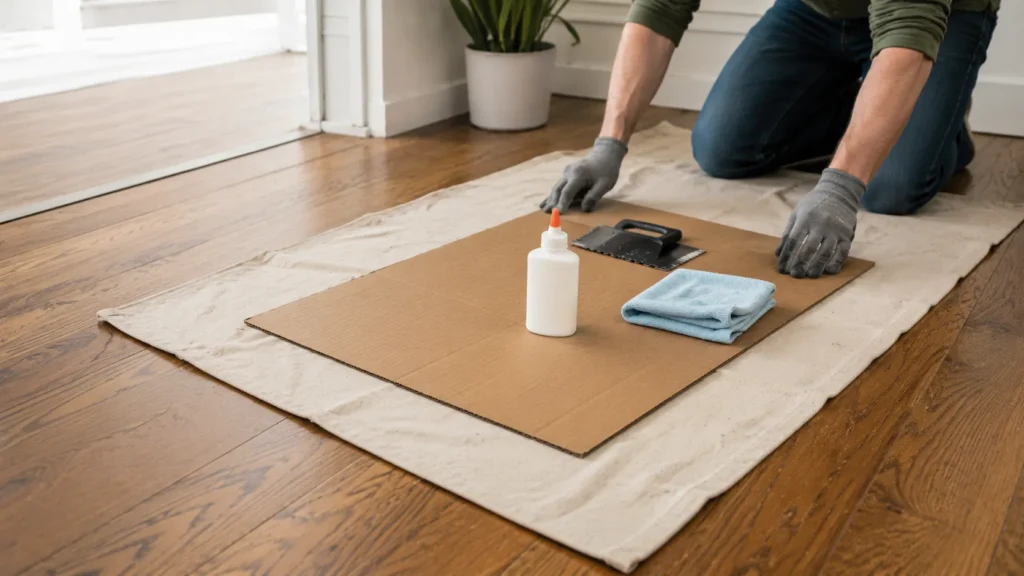
To remove adhesive from hardwood floor without damaging finish, start with the least aggressive method. Soften the adhesive, lift it gently, wipe the residue, dry the floor, and inspect the finish before repeating.
Here is the safer order:
- Dry clean the area.
- Try a damp microfiber cloth.
- Add a tiny amount of mild soap if needed.
- Use gentle warmth.
- Scrape with plastic.
- Try a hardwood-safe adhesive remover on a cloth.
- Stop if the finish becomes dull, sticky, or discolored.
If the glue is stronger than the finish, the floor may need professional screening, recoating, or refinishing.
Special Warning for Old Black Adhesive
If you find black, tar-like adhesive under old carpet, vinyl, or tile, do not sand it right away. Older black mastic can be difficult to identify by sight alone and may need professional testing before removal.
This is especially important in older U.S. homes where flooring layers may have been installed decades ago. When in doubt, stop and ask a flooring or environmental testing professional before sanding, grinding, or scraping aggressively.
Should You Sand Glue Off Hardwood Floors?
Sanding can remove glue from hardwood floors, but it also removes finish and some wood. It should not be the first option for a small glue spot.
Sanding may make sense when:
- Glue covers a large area.
- The finish is already damaged.
- Carpet glue is embedded into the floor.
- You plan to refinish the floor anyway.
- The floor is solid hardwood with enough wear layer.
- A professional confirms the adhesive is safe to sand.
Be extra careful with engineered hardwood. Many engineered floors can only be sanded lightly, and some cannot be sanded at all.
For broader floor care and material questions, visit Hardwood flooring faqs.
When to Stop DIY and Get Help
Stop DIY removal if:
- The floor finish starts coming off.
- The glue covers most of the room.
- The adhesive is black, tar-like, or very old.
- The floor is engineered and you do not know the wear layer thickness.
- You smell strong fumes from a product.
- The wood turns dark or gray.
- Boards start splintering.
- You are unsure whether the floor needs refinishing.
A professional may recommend cleaning, screening, recoating, sanding, or board replacement depending on the condition.
How to Prevent Glue Problems on Hardwood Floors
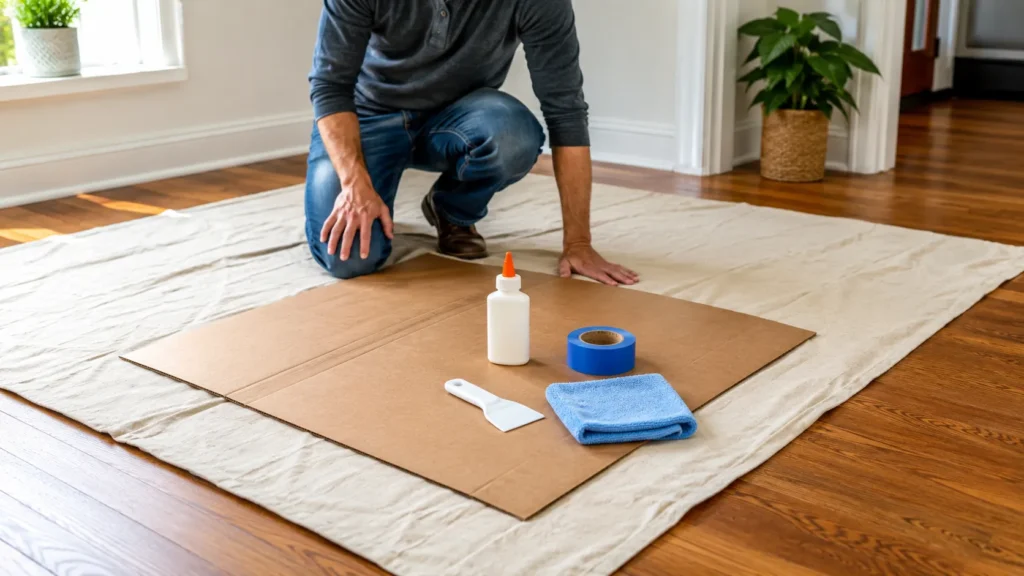
Prevention is easier than removal.
Use these tips:
- Cover floors before DIY projects.
- Use drop cloths when gluing furniture or crafts.
- Do not use cheap rubber rug pads on hardwood.
- Choose rug pads labeled safe for hardwood floors.
- Clean spills immediately.
- Ask installers to clean glue residue before the job is considered complete.
- Check new hardwood floors under bright light after installation.
- Keep product labels and flooring warranty information.
If you are comparing care methods across different flooring materials, see Flooring faqs for more general homeowner guidance.
Final Expert Recommendation
The best way to clean glue from hardwood floors is to go slowly, test first, and protect the finish. Start with gentle warmth, a plastic scraper, and a microfiber cloth. Use adhesive remover only when the product is safe for finished wood and only after a hidden test.
For small glue spots, careful DIY cleaning usually works. For old carpet glue, tile glue, underlay glue, black adhesive, or glue spread across an entire room, the safer answer may be professional evaluation or refinishing instead of repeated chemical cleaning.
FAQs
Can I clean carpet glue from hardwood floors myself?
Yes, small carpet glue spots can often be removed with careful scraping and a tested adhesive remover. Large areas of old carpet glue may require sanding and refinishing.
What removes dried glue from hardwood floors?
Gentle warmth, a plastic scraper, and a damp microfiber cloth usually work first. For stubborn dried glue, use a hardwood-safe adhesive remover only after testing.
Can I use vinegar to clean glue from hardwood floors?
Vinegar may help with some sticky residue, but it can dull certain hardwood finishes. Use it only with caution and never as a first choice on finished hardwood.
Can acetone remove glue from hardwood floors?
Acetone can remove some glue, including super glue, but it can also damage or dull floor finish. Use it only on a cloth, in a tiny hidden test area first.
How do I remove underlay glue from wooden floor?
Scrape raised glue gently, test a hardwood-safe adhesive remover, and work in small sections. If underlay glue covers a large area, refinishing may be needed.
Is it safe to sand glue off hardwood floors?
Sanding is sometimes effective, but it removes finish and wood. Avoid sanding unknown black adhesive and be very careful with engineered hardwood.
How do I remove tile glue from wood floor?
Identify the adhesive first. Small residue may lift with careful scraping, but heavy tile glue may require professional sanding, repair, or refinishing.
What should I do if glue residue is left after new hardwood installation?
Contact the installer first. New flooring glue residue is usually an installation cleanup issue, and using the wrong cleaner yourself may affect the finish or warranty.