To clean hardwood floors safely, remove dust and grit first, then use a lightly damp microfiber mop with a wood-safe, pH-neutral cleaner. Avoid soaking the floor, steam mops, bleach, abrasive cleaners, and harsh chemicals. Always clean spills quickly and check the floor finish before using vinegar, wax, polish, or any strong cleaner.
Quick Summary
The safest way to clean hardwood floors is simple:
- Sweep or dust mop first.
- Vacuum using the hard-floor setting.
- Spot-clean sticky marks by hand.
- Damp mop with a wood-safe cleaner.
- Dry the floor quickly.
- Avoid steam, bleach, and too much water.
- Match the cleaner to the floor finish.
Hardwood floors are beautiful, but they are not cleaned the same way as tile or vinyl. Water, steam, grit, and the wrong cleaner can damage the finish, dull the shine, or cause long-term problems.
What Is the Best Way to Clean Hardwood Floors?
The best way to clean hardwood floors is to remove loose dirt first, then clean with a lightly damp microfiber mop and a cleaner made for wood floors. The goal is to clean the finish, not soak the wood.
From a flooring point of view, grit is one of the biggest problems. Small dirt particles can act like sandpaper under shoes, furniture, pets, and rugs. If you mop before removing grit, you can spread dirt around and create tiny scratches.
The safest routine is:
- Dust mop or sweep.
- Vacuum with the brush roll off.
- Spot-clean sticky areas.
- Lightly damp mop with a wood-safe cleaner.
- Dry any wet areas quickly.
What to Use to Clean Hardwood Floors
For most finished hardwood floors, use:
- Microfiber dust mop
- Soft-bristle broom
- Vacuum with hard-floor setting
- Microfiber flat mop
- pH-neutral hardwood floor cleaner
- Spray mop made for wood floors
- Soft microfiber cloth for spills
A good hardwood floor cleaner should be designed for sealed wood floors, easy to apply lightly, and not leave a sticky film. If you are unsure about the right cleaning method, this dedicated guide on what Is the best way to clean hardwood floors can help you understand the safest routine. If you use a spray cleaner, mist the mop pad or floor lightly. Do not flood the floor.
How to Clean Hardwood Floors Step by Step
Step 1: Remove Dust and Loose Dirt
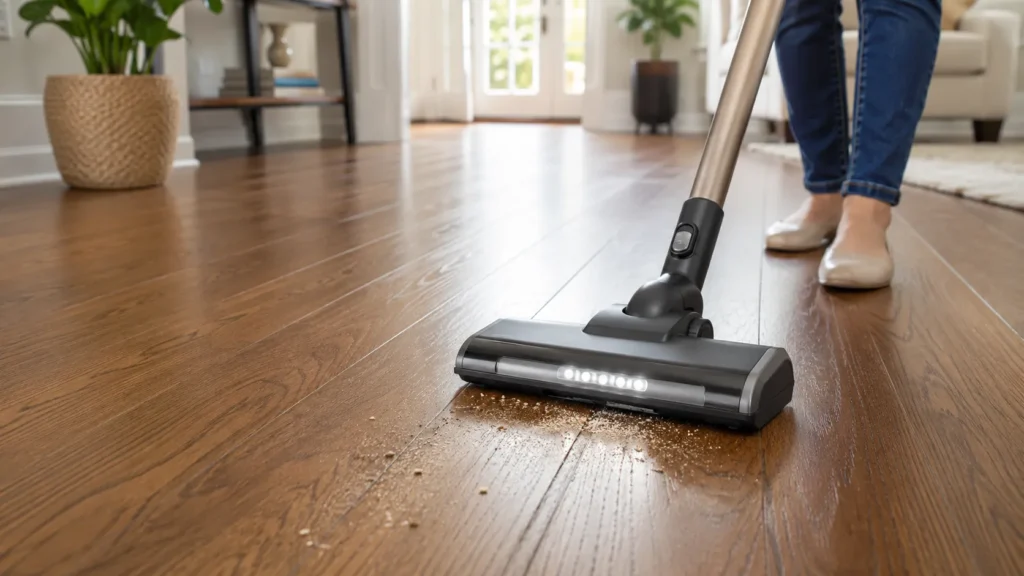
Start with a microfiber dust mop, soft broom, or vacuum. If you vacuum, turn off the rotating brush or use the hard-floor setting. A beater bar can scratch the finish.
This step matters because dust, sand, crumbs, and pet hair can scratch the floor when dragged across the surface.
Step 2: Spot-Clean Sticky Areas
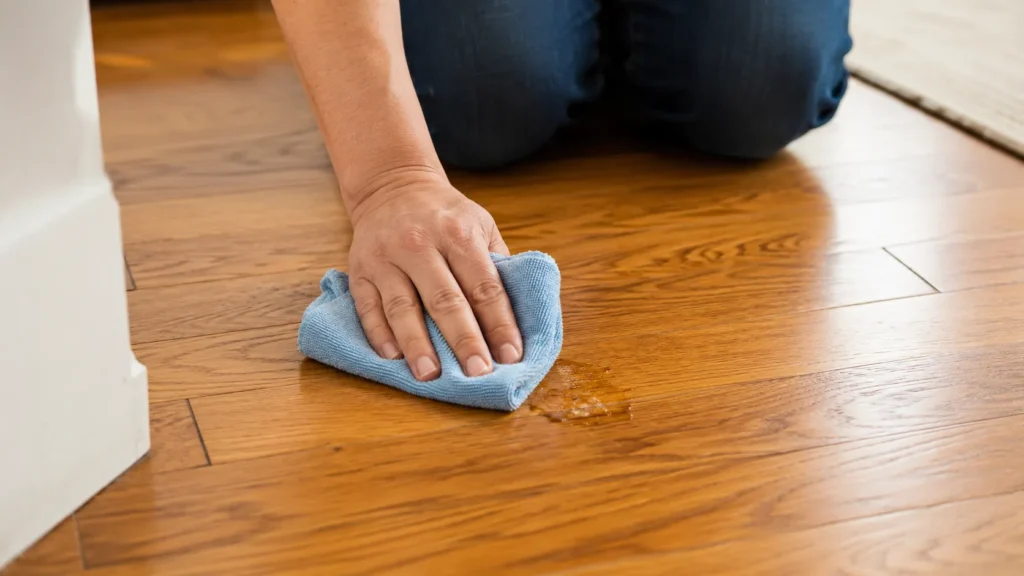
If you see sticky spots, food residue, muddy marks, or small spills, clean them by hand with a slightly damp microfiber cloth. Use a small amount of wood-safe cleaner if needed.
Do not scrub with steel wool, abrasive pads, or hard brushes.
Step 3: Damp Mop With Wood-Safe Cleaner
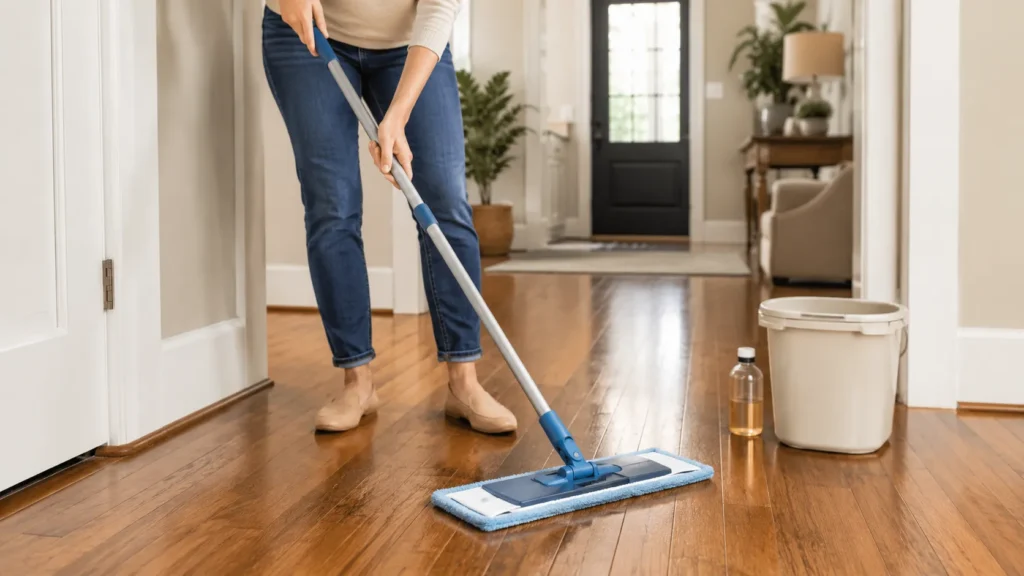
Use a microfiber mop that is damp, not wet. If the mop is dripping, it has too much water. Spray a small amount of hardwood floor cleaner onto the mop pad or floor, then mop with the direction of the grain when possible.
Work in small sections so the floor dries quickly.
Step 4: Dry Wet Areas Quickly
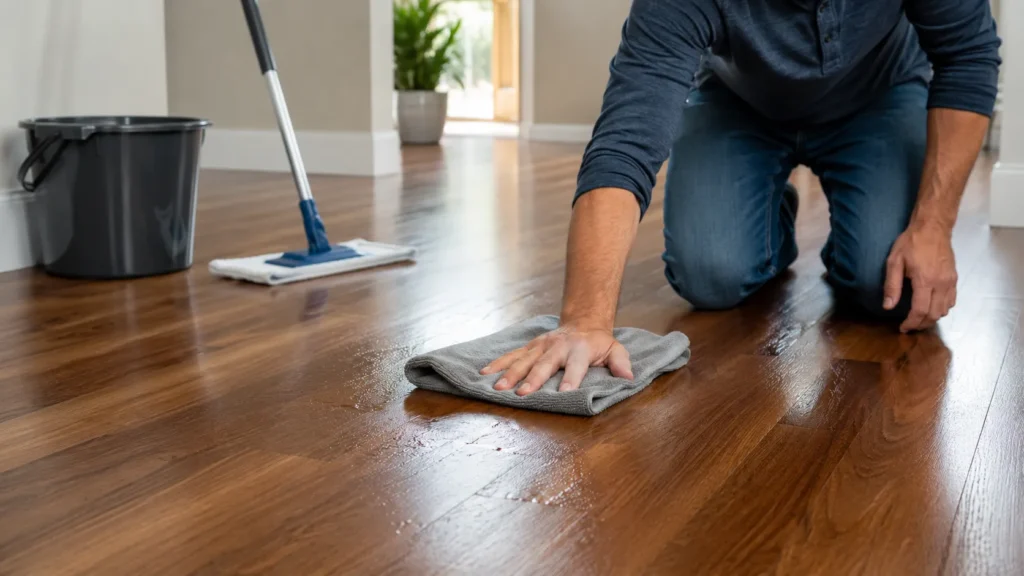
After mopping, check for wet spots, especially near seams, corners, doorways, and high-traffic areas. Wipe any extra moisture with a dry microfiber cloth.
Standing water can enter seams and damage the finish or wood over time.
How Often Should You Clean Hardwood Floors?
A simple schedule works best:
| Frequency | Task | Why It Helps |
| Daily or as needed | Dust mop high-traffic areas | Removes grit before it scratches |
| Weekly | Vacuum with hard-floor setting | Removes dirt from edges and gaps |
| Weekly or biweekly | Damp mop with wood-safe cleaner | Cleans surface buildup |
| Monthly | Check rugs, mats, and furniture pads | Prevents hidden dirt and scratches |
| Every few years | Recoat if needed | Refreshes the protective finish |
| Long term | Refinish when worn | Restores damaged or worn wood |
Homes with pets, kids, shoes, sand, or heavy traffic may need more frequent dust mopping.
How to Deep Clean Hardwood Floors
To deep clean hardwood floors, first remove loose dirt, then clean in small sections with a wood-safe cleaner and microfiber mop. For very dirty floors, repeat the process instead of using more water.
Use this method:
- Remove rugs and furniture where possible.
- Dust mop or vacuum thoroughly.
- Spot-clean sticky buildup.
- Damp mop with a hardwood floor cleaner.
- Change or rinse the mop pad often.
- Dry the floor with a microfiber cloth.
- Inspect for haze, residue, scratches, or worn finish.
Do not deep clean hardwood floors by soaking them. A floor that is extremely dirty may need two light cleanings rather than one heavy wet cleaning.
How to Clean Dirty Hardwood Floors
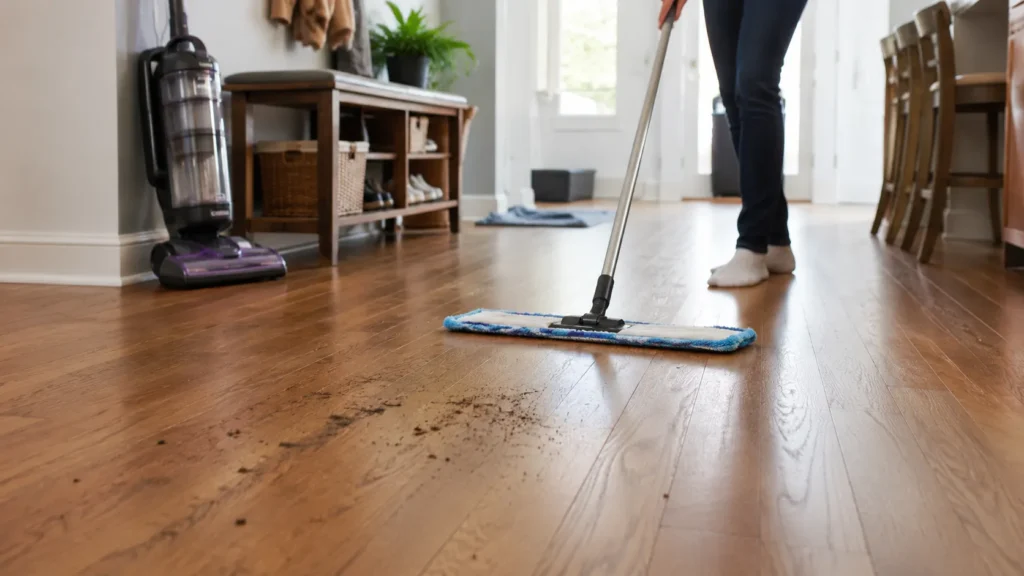
To clean dirty hardwood floors, focus on removing grit first. Dirt often builds up near entryways, kitchen work zones, pet areas, under rugs, and around dining tables.
Use a vacuum with a hard-floor setting, then mop with a wood-safe cleaner. If the floor still looks dull, the problem may be residue, worn finish, wax buildup, or scratches rather than dirt.
A common mistake homeowners make is adding more cleaner when the floor looks dirty. Too much cleaner can leave a cloudy film and make the floor look worse.
How to Clean Extremely Dirty Hardwood Floors
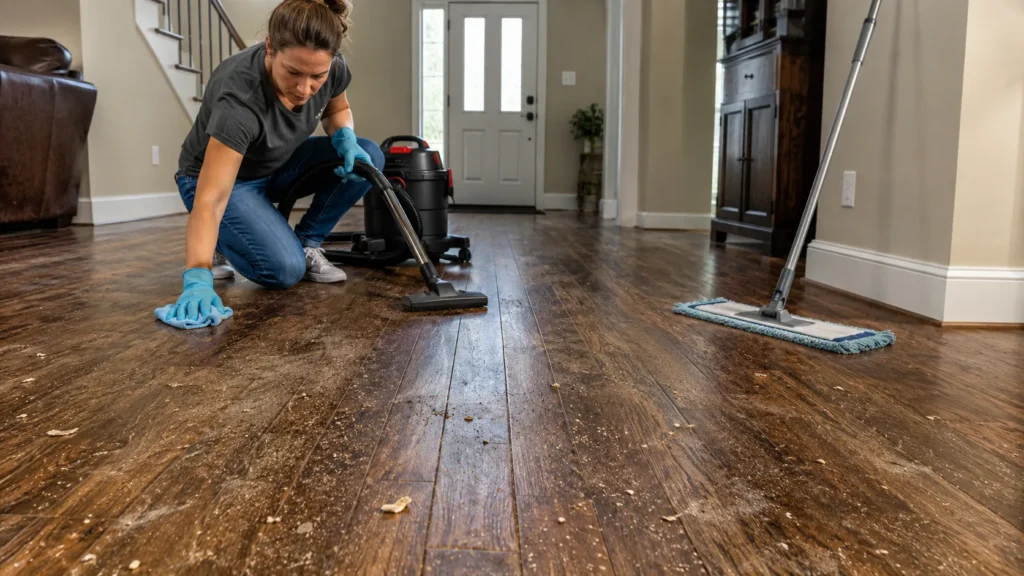
If hardwood floors are extremely dirty, do not start with a wet mop. Start dry.
Use this order:
- Remove loose debris.
- Vacuum slowly along board seams.
- Clean corners and gaps with a soft brush attachment.
- Spot-clean grime by hand.
- Damp mop with a wood-safe cleaner.
- Dry the floor.
- Repeat only if needed.
If the dirt is trapped in cracks, gaps, or worn finish, cleaning may not fully fix the appearance. In older floors, dark areas can be finish wear, moisture staining, or embedded grime.
How to Clean Sticky Hardwood Floors
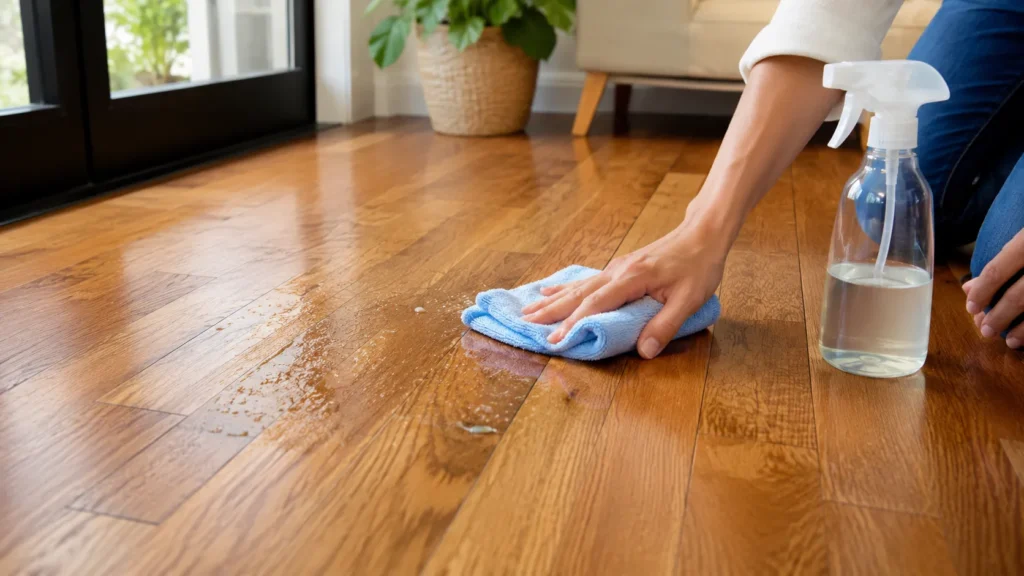
Sticky hardwood floors are often caused by too much cleaner, wrong cleaner, oil soap residue, wax buildup, food spills, or dirty mop water.
To clean sticky hardwood floors:
- Stop using the current cleaner.
- Dust mop first.
- Use a clean microfiber mop pad.
- Apply a small amount of wood-safe cleaner.
- Work in small sections.
- Dry the surface.
- Repeat with fresh mop pads if needed.
If the floor remains sticky, check whether it has wax, oil soap buildup, or a damaged finish. Some sticky floors need professional cleaning or screening and recoating.
How to Clean Old Hardwood Floors
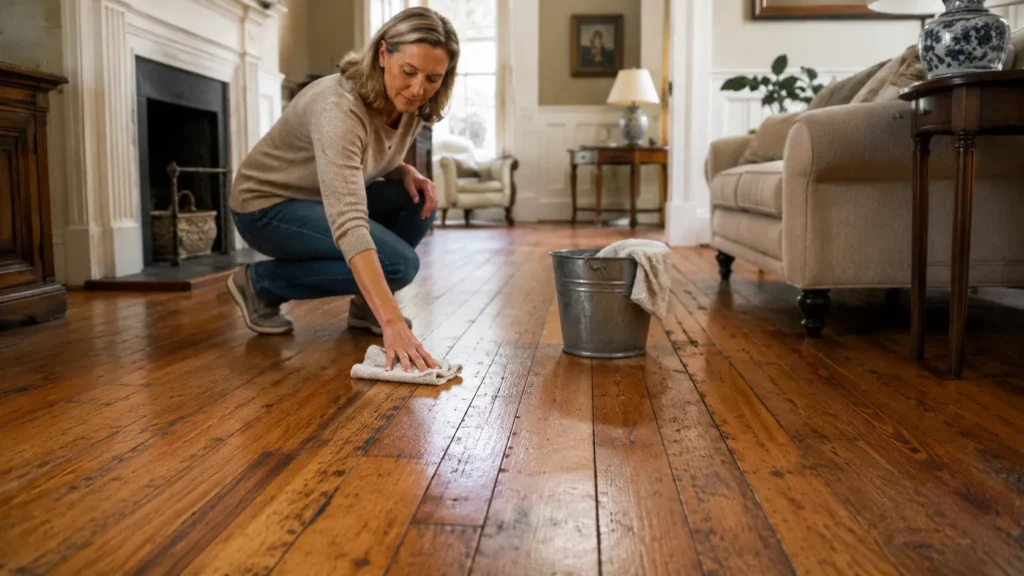
Old hardwood floors need extra care because the finish may be worn, thin, waxed, or uneven. Before mopping, test a small hidden area.
If the floor is sealed and water beads on top, you can usually use a lightly damp microfiber mop and wood-safe cleaner. If water darkens or absorbs into the wood, the floor may be unsealed or worn, and wet cleaning can cause damage.
For old hardwood floors:
- Avoid soaking the floor.
- Avoid steam.
- Avoid harsh cleaners.
- Clean gently.
- Use rugs in high-traffic areas.
- Consider professional advice if the finish is failing.
How to Clean Real Hardwood Floors
Real hardwood floors should be cleaned based on their finish. Most modern real hardwood floors have a surface finish, such as polyurethane. These floors can usually handle light damp mopping with a wood-safe cleaner.
Older real hardwood may have wax, oil, shellac, or worn finish. Those floors need more careful cleaning.
Do not assume every real hardwood floor can be cleaned the same way. The finish matters more than the wood species.
How to Clean Engineered Hardwood Floors
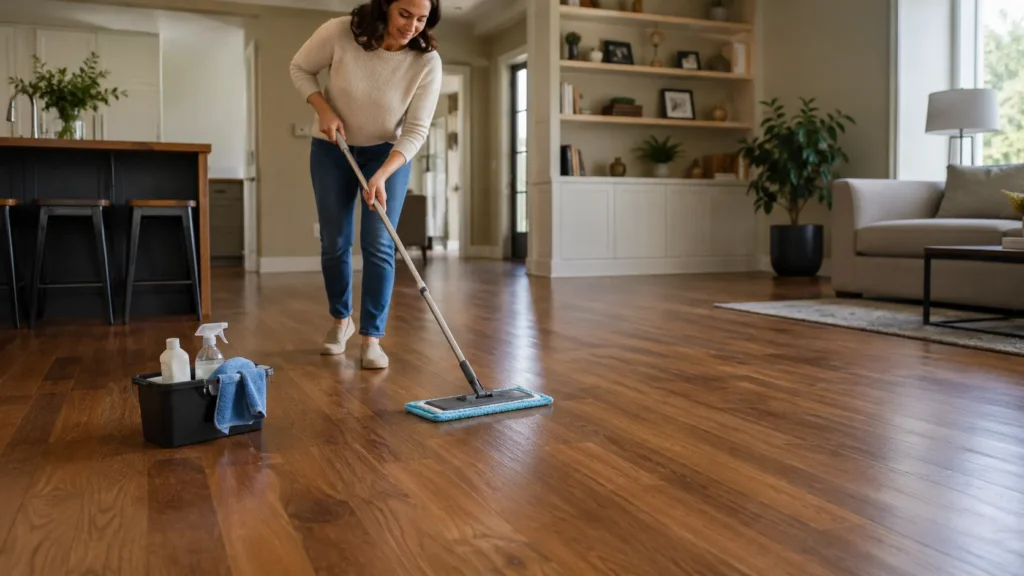
Engineered hardwood floors should be cleaned with the same moisture caution as solid wood. Use a microfiber mop and a cleaner approved for engineered wood or hardwood floors.
Do not use steam mops or excess water. Engineered wood has a real wood veneer on top, and water can still damage seams, edges, and the core if the floor is over-wet.
Before deep cleaning, check the guide how to how to clean engineered hardwood floors.
Is Laminate Hardwood Cleaned the Same Way as Real Hardwood?

Laminate hardwood-style floors may look like real hardwood, but they should not always be cleaned the same way. Laminate has a manufactured surface and a moisture-sensitive core, so too much water, steam, harsh cleaners, or soaking wet mops can damage the seams and edges.
If your floor is laminate instead of real wood, read our detailed guide on how do you clean laminate hardwood floor before using the same cleaning method you would use on hardwood.
How to Clean Prefinished Hardwood Floors
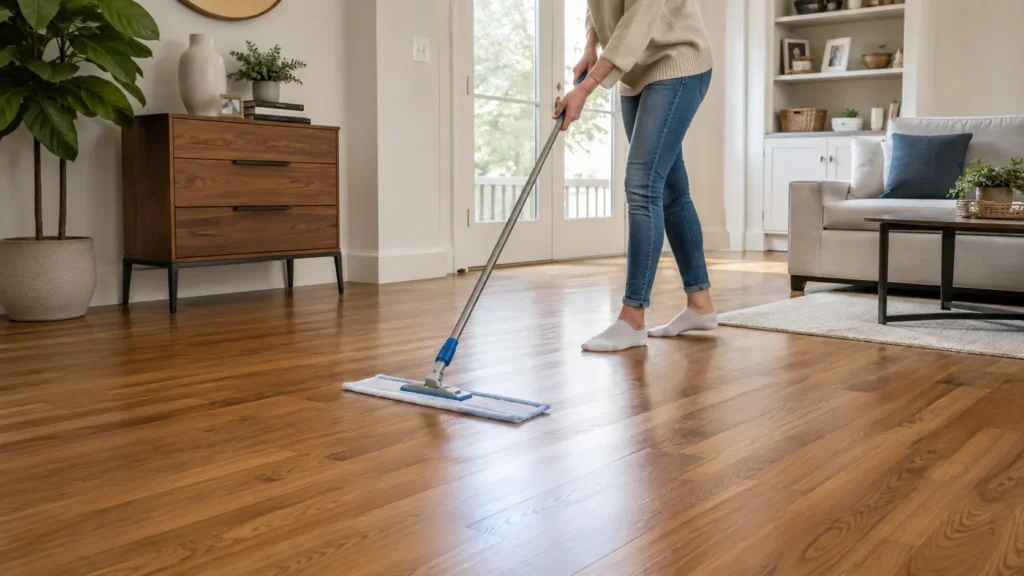
Prefinished hardwood floors usually have a factory-applied finish. They are often easier to maintain, but they still need gentle cleaning.
Use:
- Dust mop
- Vacuum with hard-floor setting
- Wood-safe cleaner
- Lightly damp microfiber mop
Avoid wax unless the manufacturer says it is allowed. Some prefinished floors should not be waxed or polished because added products can create residue or make future recoating harder.
How to Clean Unfinished Hardwood Floors
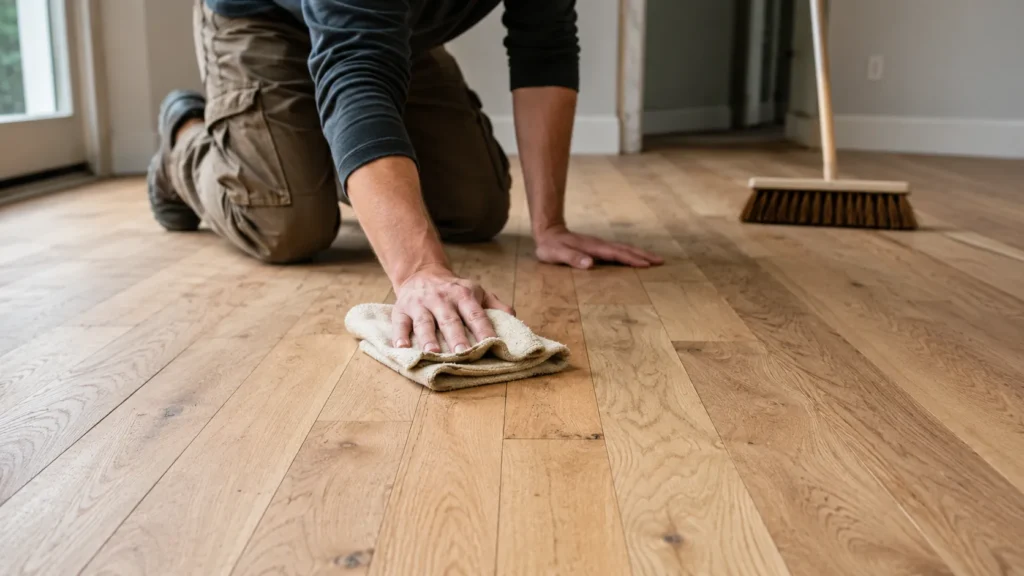
Unfinished hardwood floors should not be wet mopped like finished floors. Unfinished wood can absorb water, cleaner, and stains quickly.
For unfinished hardwood floors:
- Dust mop only.
- Vacuum gently.
- Avoid wet cleaning.
- Avoid steam.
- Avoid bleach.
- Clean small marks carefully with professional guidance.
- Consider finishing or sealing the floor for long-term protection.
If you spill liquid on unfinished wood, blot it immediately. Do not rub aggressively.
How to Clean Unsealed or Untreated Hardwood Floors
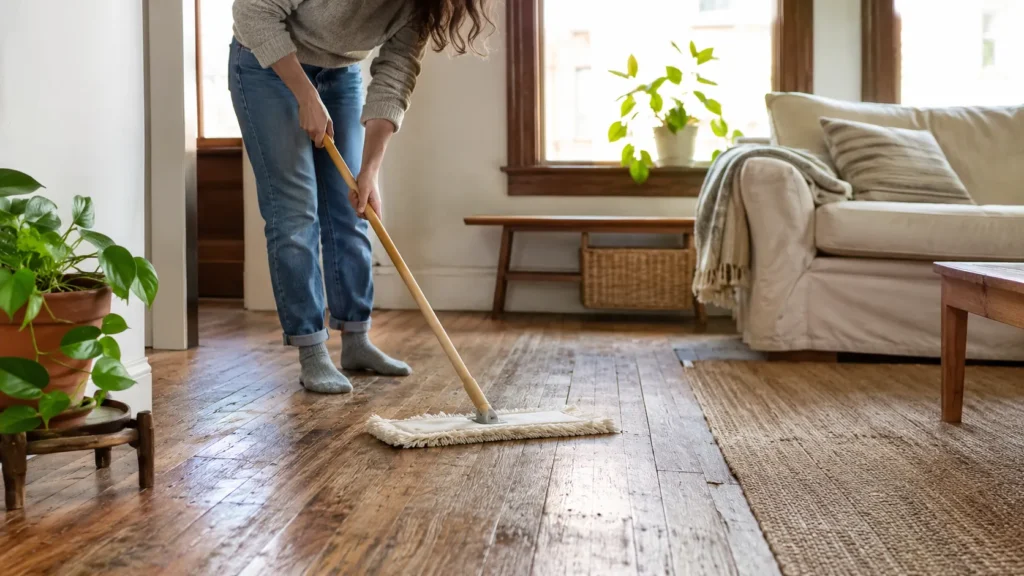
Unsealed hardwood floors are risky to clean with water because the wood can absorb moisture. If water soaks in quickly or darkens the surface, treat the floor as unsealed.
Use dry cleaning methods first:
- Dust mop
- Soft broom
- Vacuum with hard-floor setting
- Dry microfiber cloth
For stains or grime, it is safer to ask a flooring professional before using liquids.
How to Clean Waxed Hardwood Floors
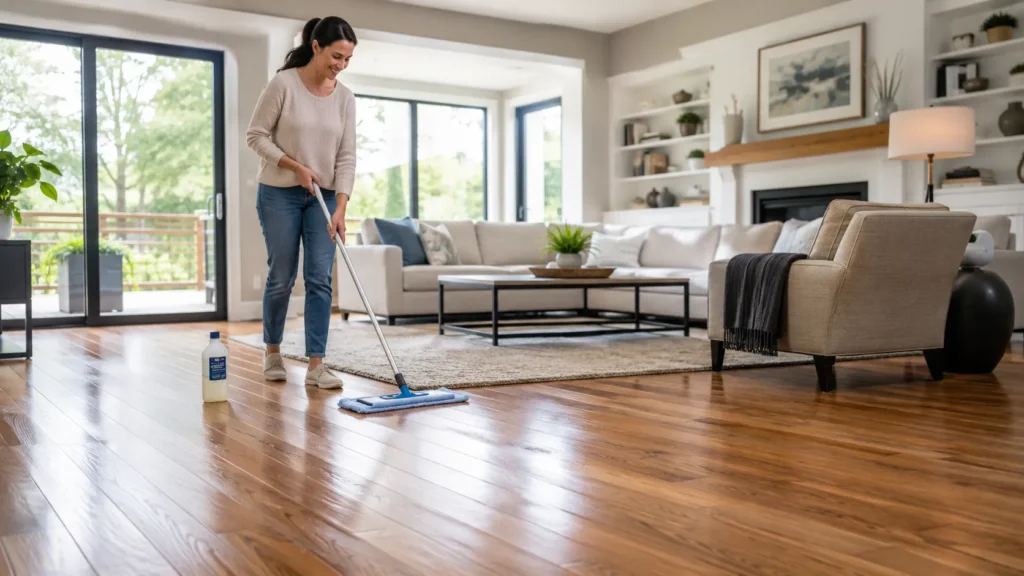
Waxed hardwood floors need different care than polyurethane-finished floors. Some modern cleaners can dull waxed floors or leave haze.
For waxed hardwood floors:
- Dust mop often.
- Avoid excessive water.
- Avoid steam.
- Use cleaners approved for waxed wood floors.
- Buff lightly if needed.
- Re-wax only when appropriate.
Do not apply polyurethane floor polish over a waxed floor. It may not bond properly.
Can You Clean Hardwood Floors Naturally?
You can clean hardwood floors naturally, but natural does not always mean safe. Some natural cleaners, such as strong vinegar mixtures, lemon juice, or abrasive baking soda, can dull or damage the finish.
A safer natural-style approach is:
- Remove dirt with a microfiber dust mop.
- Use a barely damp mop.
- Choose a mild, pH-neutral cleaner approved for wood.
- Avoid soaking the floor.
- Dry quickly.
Natural cleaning methods can be safer than harsh chemicals, but moisture and heat still need caution on wood floors. Before using steam, hot water, or any high-moisture cleaning method, read our guide can you steam clean hardwood floors to understand when steam can damage hardwood finishes, seams, and boards.
Can You Clean Hardwood Floors With Vinegar?
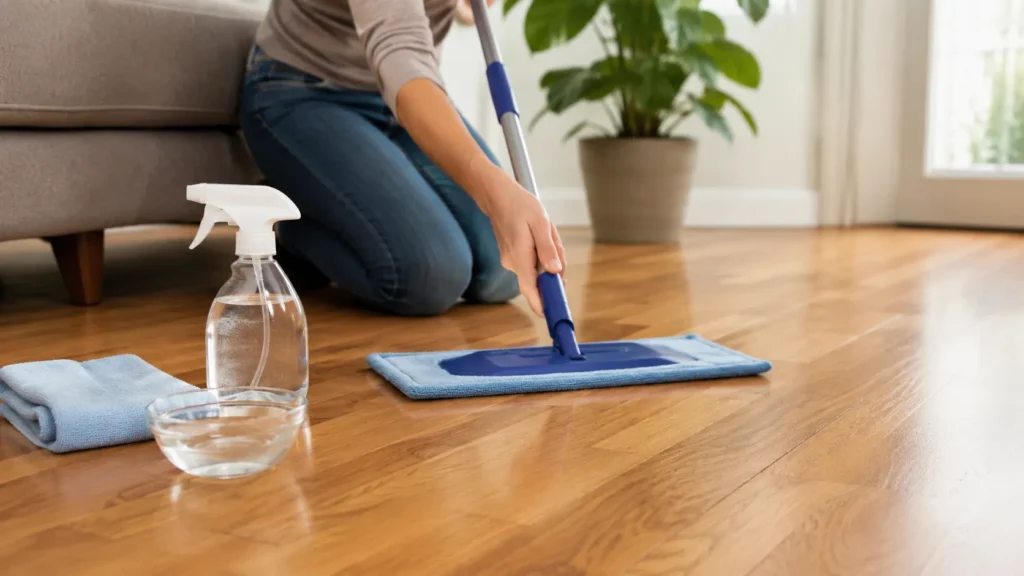
Vinegar is commonly suggested for cleaning hardwood floors, but it should be used with caution. Vinegar is acidic, and repeated use or strong mixtures can dull the finish over time.
If the manufacturer does not recommend vinegar, avoid it. A wood-safe pH-neutral cleaner is usually the safer choice.
If you still choose vinegar, use a very diluted mixture, test it first, and never leave moisture sitting on the floor.
Can You Clean Hardwood Floors With Water?
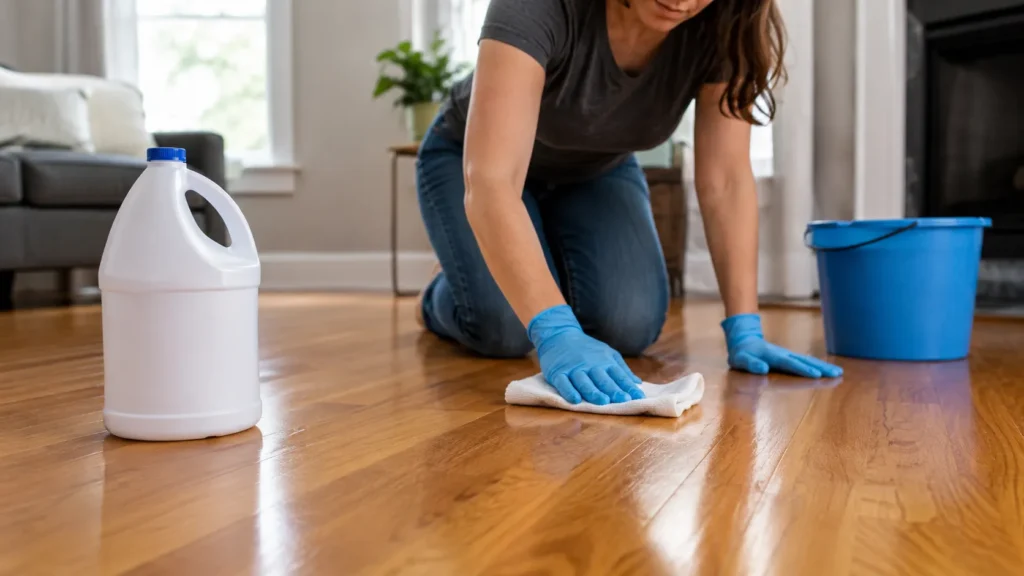
Yes, you can clean many sealed hardwood floors with a small amount of water, but the mop should be damp, not wet. Water should never pool on the floor.
Water is most dangerous when it sits in seams, gaps, scratches, worn finish, or unsealed wood.
Use water carefully:
- Wring the mop well.
- Work in small sections.
- Dry wet spots quickly.
- Avoid standing water.
Can You Clean Hardwood Floors With Steam?
Steam cleaning is not recommended for most hardwood floors. Steam uses heat and moisture, which can enter seams, damage the finish, cause swelling, or lead to cupping over time.
Even if a steam mop says it is safe for sealed floors, check your flooring manufacturer’s warranty first. Many wood floor warranties do not support steam cleaning.
For hardwood, a damp microfiber mop is safer than steam.
Can You Clean Hardwood Floors With Bleach?
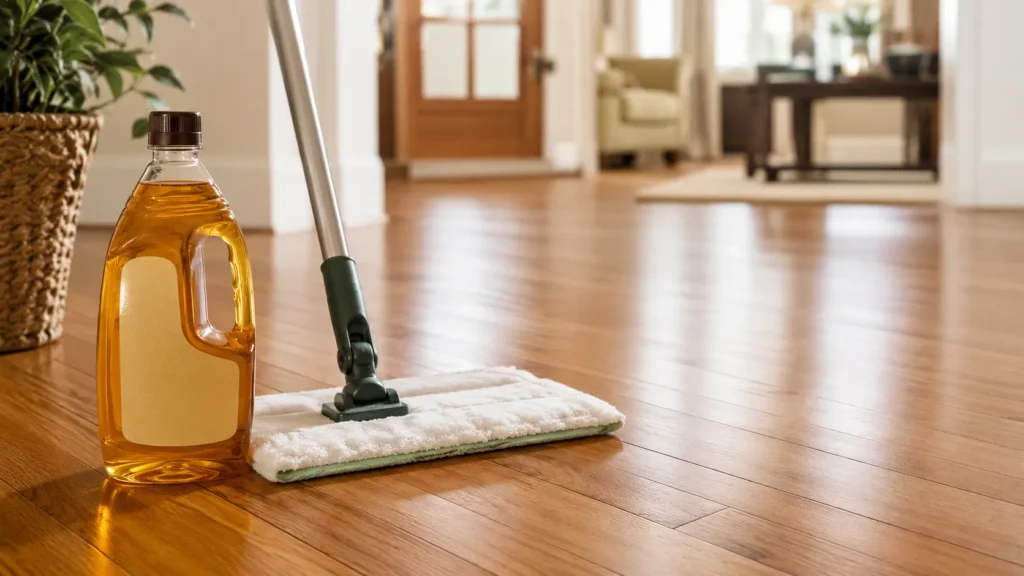
Bleach is not a safe everyday cleaner for hardwood floors. It can discolor wood, damage finish, and create uneven light spots. Bleach may also make future refinishing or staining more difficult.
If you need to disinfect a sealed wood floor, use a product specifically labeled safe for sealed hardwood or sealed non-porous wood surfaces, and follow the label carefully.
Do not use bleach on unfinished, unsealed, waxed, or damaged hardwood floors.
Can You Clean Hardwood Floors With Bona?
Yes, many homeowners use Bona hardwood floor cleaner on sealed hardwood floors. It is popular because it is designed for wood floors and is usually easier to control than a bucket of water.
Still, use it correctly:
- Dust mop first.
- Spray lightly.
- Use a clean microfiber pad.
- Avoid oversaturating the floor.
- Follow the product label.
No cleaner works well if too much is used.
Can You Use Murphy Oil Soap on Hardwood Floors?
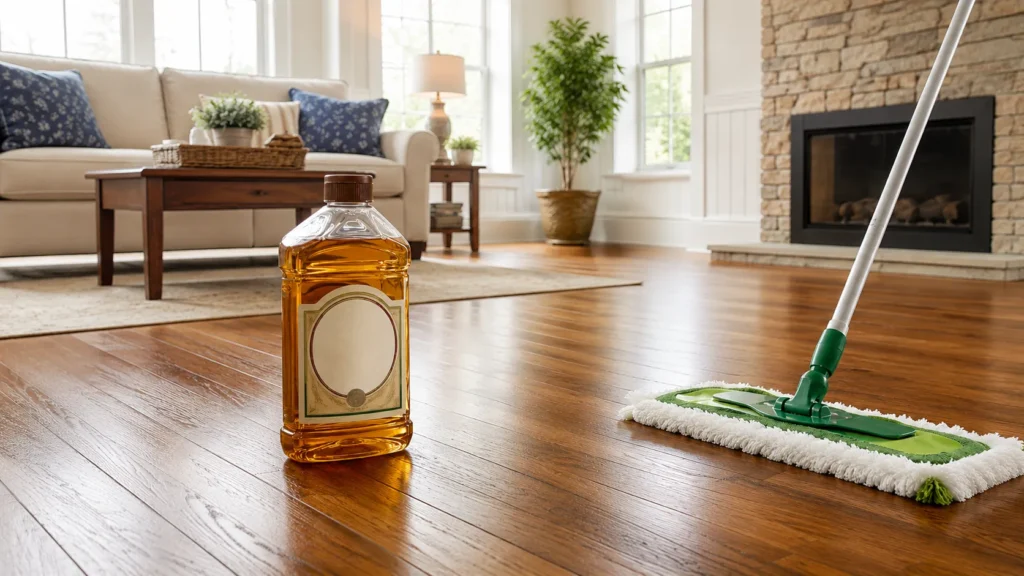
Murphy Oil Soap is commonly used by some homeowners, but it may not be ideal for every hardwood floor finish. Oil-based soaps can sometimes leave residue or buildup if overused or not diluted properly.
Before using it, check your floor manufacturer’s care instructions. If your floor starts looking cloudy or sticky, stop using oil soap and switch to a wood-safe cleaner.
How to Clean Hardwood Floors Without Streaks
Streaks usually happen because of too much cleaner, dirty mop pads, hard water, residue, or too much moisture.
To avoid streaks:
- Dust mop first.
- Use a clean microfiber pad.
- Mist lightly.
- Do not overuse cleaner.
- Mop with the grain.
- Dry the floor quickly.
- Change mop pads when dirty.
If streaks keep coming back, the floor may have residue from previous cleaners.
How to Keep Hardwood Floors Clean Longer
The best way to keep hardwood floors clean is to stop dirt before it spreads.
Use these habits:
- Place mats at exterior doors.
- Remove shoes indoors if possible.
- Use rugs in high-traffic areas.
- Add felt pads under furniture.
- Trim pet nails.
- Wipe spills quickly.
- Vacuum regularly.
- Keep mop pads clean.
- Avoid dragging chairs and tables.
In real homes, prevention usually matters more than heavy cleaning.
What Should You Not Clean Hardwood Floors With?
Do not clean hardwood floors with:
- Steam mops
- Bleach
- Ammonia
- Abrasive powders
- Steel wool
- Harsh scrub pads
- Excess water
- Strong vinegar mixtures
- Oil soaps used too often
- Wax on non-wax floors
- Generic cleaners not approved for wood
The wrong cleaner can dull the finish, create haze, leave sticky residue, or damage the wood.
When Should You Call a Professional?
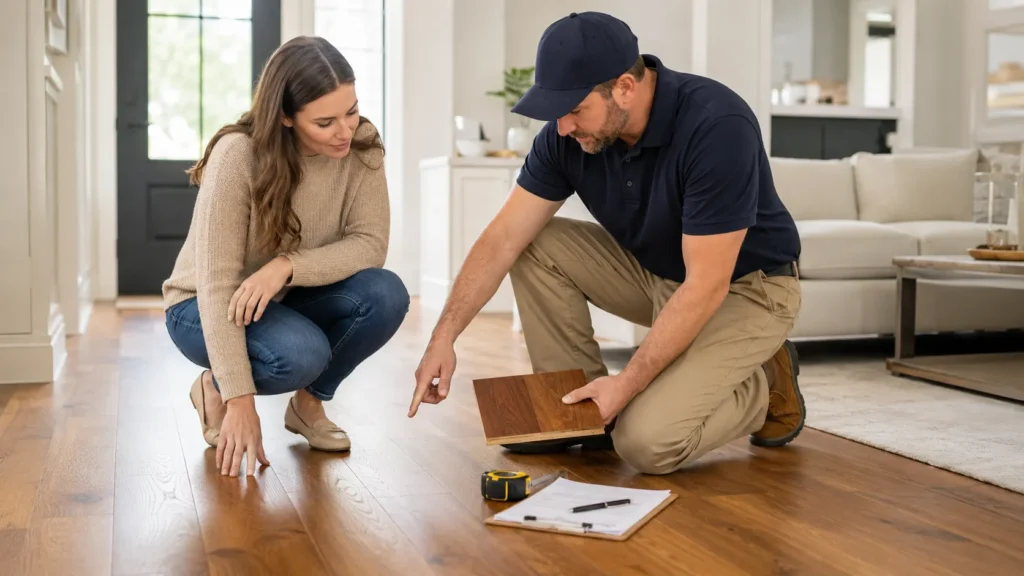
Call a flooring professional if:
- The floor turns gray or black after cleaning.
- Water absorbs into the wood.
- The finish is peeling.
- The floor is sticky after repeated cleaning.
- Pet urine has soaked into the wood.
- Mold appears on or between boards.
- The floor has deep scratches or worn finish.
- You do not know whether the floor is waxed, sealed, or unfinished.
Cleaning can improve the surface, but it cannot always repair finish failure, deep stains, water damage, or worn wood.
Final Expert Recommendation
The best way to clean hardwood floors is to keep the routine simple: remove grit often, use a lightly damp microfiber mop, choose a cleaner made for wood floors, and dry moisture quickly. Avoid steam, bleach, excess water, and harsh cleaners.
Before trying vinegar, wax, polish, oil soap, or any deep cleaning method, identify the floor finish first. A cleaner that works on a sealed polyurethane floor may damage an old waxed, unsealed, or unfinished hardwood floor.
For most USA homeowners, a dust mop, hard-floor vacuum setting, microfiber mop, and wood-safe pH-neutral cleaner are enough to keep hardwood floors clean without damaging them. For more related cleaning, maintenance, stain removal, repair, and care questions, explore our complete Hardwood Flooring FAQs section.
FAQs
What is the best thing to clean hardwood floors with?
A microfiber mop and a wood-safe pH-neutral cleaner are usually best for sealed hardwood floors.
Can I mop hardwood floors with plain water?
You can use a lightly damp mop on sealed hardwood floors, but never leave standing water.
How do I clean really dirty hardwood floors?
Vacuum first, spot-clean grime by hand, then damp mop in small sections with a wood-safe cleaner.
How do I clean sticky hardwood floors?
Sticky floors often come from residue. Stop using the current cleaner, use a clean microfiber pad, and clean lightly with a wood-safe cleaner.
How do I clean old hardwood floors?
Check the finish first. If water absorbs into the wood, avoid wet cleaning and ask a flooring professional.
Can I clean hardwood floors naturally?
Yes, but avoid harsh natural cleaners like strong vinegar or abrasive baking soda. Use gentle, wood-safe methods.
Can I steam clean hardwood floors?
Steam cleaning is not recommended for most hardwood floors because heat and moisture can damage the finish and wood.
Can I clean hardwood floors with bleach?
No, bleach is not safe for normal hardwood floor cleaning and can discolor or damage the wood.
How often should hardwood floors be cleaned?
Dust mop high-traffic areas daily or as needed, vacuum weekly, and damp mop weekly or biweekly depending on traffic.
How do I prevent streaks on hardwood floors?
Use less cleaner, use a clean microfiber pad, avoid excess water, and dry the floor quickly.