To clean engineered hardwood floors safely, remove dust and grit first, then use a lightly damp microfiber mop with a pH-neutral hardwood floor cleaner. Never soak the floor, use a steam mop, bleach, harsh chemicals, wax, or oil soap unless the manufacturer specifically allows it. Dry spills quickly to protect the veneer, seams, and core.
Quick Summary
The safest way to clean engineered hardwood floors is simple:
- Sweep or vacuum first.
- Use the hard-floor vacuum setting.
- Clean with a microfiber mop.
- Use a wood-safe pH-neutral cleaner.
- Keep the mop damp, not wet.
- Dry wet spots quickly.
- Avoid steam, bleach, wax, oil soap, and excess water.
- Follow the manufacturer’s care guide first.
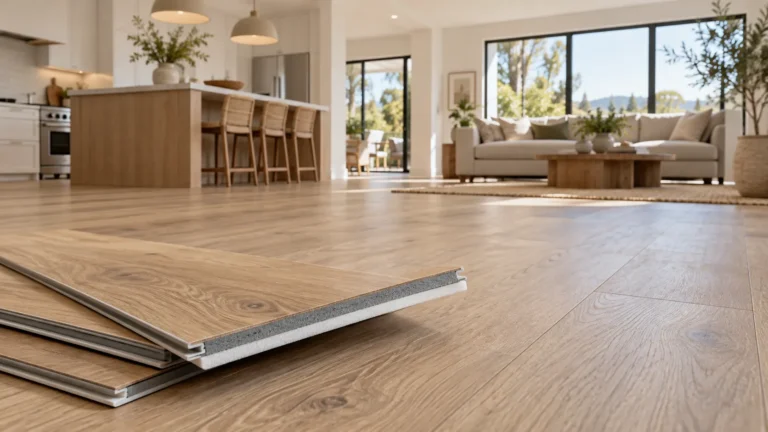
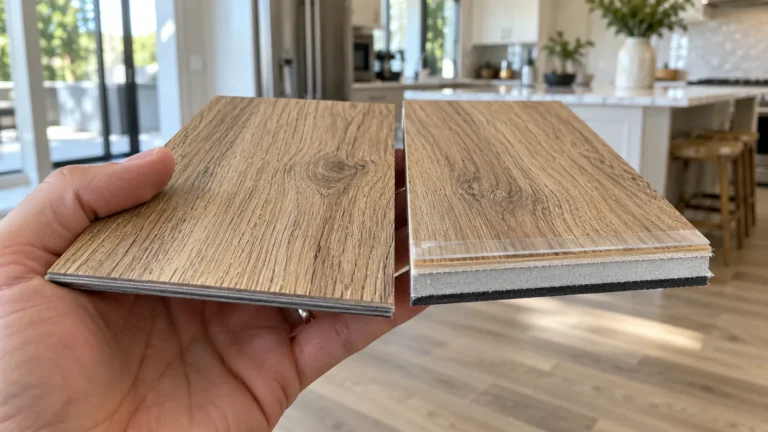
Engineered hardwood has a real wood surface, but it also has a layered core underneath. That means it can be more stable than solid wood in some conditions, but it still needs careful cleaning. Too much moisture, the wrong cleaner, or rough tools can damage the finish and shorten the floor’s life.
What Is the Best Way to Clean Engineered Hardwood Floors?
The best way to clean engineered hardwood floors is to remove dry dirt first, then damp mop lightly with a cleaner made for hardwood floors. The mop should never be dripping wet.
From a flooring point of view, the biggest cleaning risks are grit and moisture. Grit scratches the finish. Moisture can enter seams, edges, or damaged areas and affect the wood surface or core.
A safe cleaning routine looks like this:
- Dust mop or sweep.
- Vacuum using the hard-floor setting.
- Spot-clean sticky marks.
- Damp mop with a wood-safe cleaner.
- Dry any wet areas right away.
Engineered hardwood needs many of the same gentle cleaning habits as real hardwood, but moisture control is even more important around seams and edges. For broader wood floor cleaning advice, you can also read our guide on how to clean hardwood floor before comparing the differences.
What to Use to Clean Engineered Hardwood Floors
For most homes, you only need a few basic tools:
| Tool or Product | Why It Helps |
| Microfiber dust mop | Picks up fine dust without scratching |
| Soft-bristle broom | Good for crumbs and loose dirt |
| Hard-floor vacuum setting | Removes grit from seams and edges |
| Microfiber mop | Cleans gently with less water |
| pH-neutral hardwood cleaner | Safer for modern floor finishes |
| Dry microfiber cloth | Helps dry spills and wet spots quickly |
A cleaner made for hardwood or engineered wood is usually safer than a general household cleaner. Look for a product that says it is safe for sealed wood floors or engineered hardwood floors.
How to Clean Engineered Hardwood Floors Step by Step
Step 1: Remove Dust and Grit
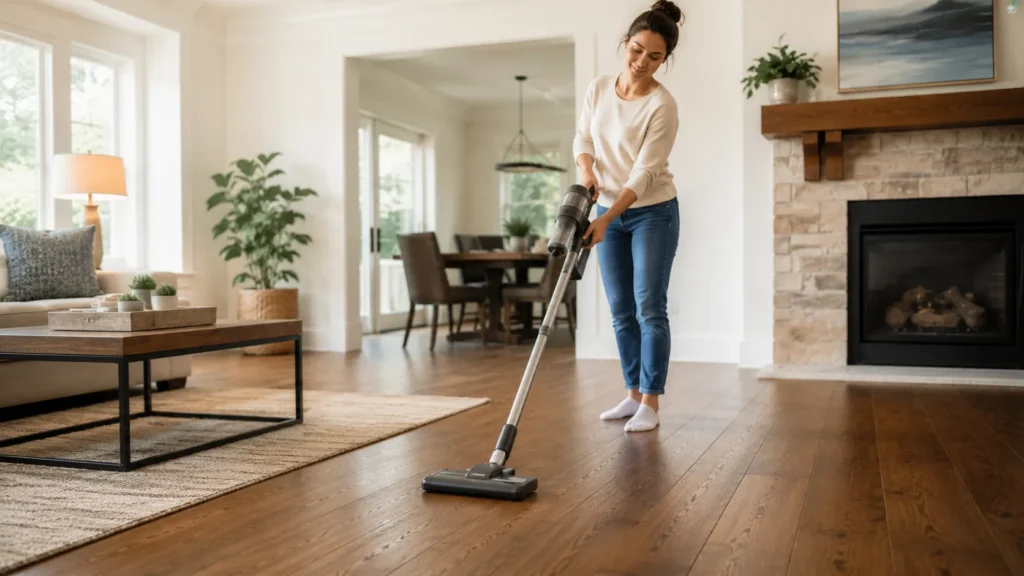
Start with a microfiber dust mop, soft broom, or vacuum. If you vacuum, use the hard-floor setting and turn off the beater bar or rotating brush.
This matters because sand, dirt, and small debris can act like sandpaper when walked on or dragged under furniture.
Step 2: Spot-Clean Sticky Areas

Before mopping the whole room, look for sticky spots, food marks, paw prints, or dried spills. Wipe those areas with a slightly damp microfiber cloth and a small amount of wood-safe cleaner.
Do not scrub with steel wool, abrasive pads, or rough brushes.
Step 3: Damp Mop Lightly

Use a microfiber mop that is damp, not wet. Spray the cleaner lightly onto the mop pad or follow the product instructions. Avoid pouring cleaner or water directly onto the floor.
Mop in small sections and work with the grain when possible.
Step 4: Dry Wet Areas Quickly

After mopping, check for wet spots near seams, doorways, corners, and high-traffic paths. Wipe extra moisture with a dry microfiber cloth.
A floor should dry quickly. If it stays wet, you are using too much liquid.
How Often Should You Clean Engineered Hardwood Floors?
The right schedule depends on pets, kids, shoes, traffic, and room use.
| Frequency | Cleaning Task |
| Daily or as needed | Dust mop high-traffic areas |
| Weekly | Vacuum with hard-floor setting |
| Weekly or biweekly | Damp mop with wood-safe cleaner |
| Immediately | Wipe spills and pet accidents |
| Monthly | Clean under rugs and check furniture pads |
| Seasonally | Check humidity, sunlight, and finish wear |
Busy homes may need more frequent dust removal. Low-traffic bedrooms may need less cleaning.
How to Deep Clean Engineered Hardwood Floors

To deep clean engineered hardwood floors, do not soak the surface. Deep cleaning should mean a more careful version of regular cleaning, not a wet scrub.
Use this method:
- Remove rugs and small furniture.
- Sweep or vacuum thoroughly.
- Clean corners and edges.
- Spot-clean sticky or dirty areas.
- Damp mop with a wood-safe cleaner.
- Replace dirty mop pads as needed.
- Dry the floor with a clean microfiber cloth.
If the floor still looks dull after deep cleaning, the issue may be residue, scratches, worn finish, or cleaner buildup rather than dirt.
How to Clean Engineered Hardwood Floors After Installation

Newly installed engineered hardwood floors often have dust, footprints, installation residue, or light surface debris. Start gently.
Use this process:
- Vacuum with a hard-floor attachment.
- Use a microfiber dust mop.
- Remove any loose construction dust.
- Clean lightly with an approved hardwood cleaner.
- Avoid heavy wet mopping.
- Do not use steam.
- Do not use strong chemicals to remove adhesive unless the manufacturer approves them.
If adhesive residue is present, check the installer or manufacturer instructions before using any remover. The wrong chemical can damage the finish. For more related wood floor cleaning, care, stain removal, and repair questions, explore our complete hardwood flooring faqs section before trying stronger cleaning methods.
How to Clean and Shine Engineered Hardwood Floors

To clean and shine engineered hardwood floors, first remove residue and dust. A floor often looks dull because of cleaner buildup, fine scratches, or a worn finish.
Try this first:
- Dust mop the floor.
- Clean with a pH-neutral wood floor cleaner.
- Use a clean microfiber mop pad.
- Dry the floor.
- Stop using oil soaps, waxes, or polish products unless approved.
Do not add shine by applying random wax or polish. Many engineered hardwood floors have factory finishes that are not designed for wax. Adding the wrong product can create a cloudy film and make future recoating harder.
How to Clean Dark Engineered Hardwood Floors

Dark engineered hardwood floors show dust, footprints, pet hair, and streaks more easily than lighter floors. The cleaning method is the same, but your technique matters more.
For dark floors:
- Use clean mop pads.
- Do not overuse cleaner.
- Avoid hard water residue.
- Dry the floor quickly.
- Mop with the grain.
- Clean in small sections.
- Use a cleaner that does not leave residue.
If streaks keep showing, the floor may have cleaner buildup. Switch to a wood-safe cleaner and use less product.
How to Clean Dog Urine From Engineered Hardwood Floors

Dog urine should be cleaned immediately because it can stain, leave odor, and seep into seams.
Use this method:
- Blot the urine with paper towels or a microfiber cloth.
- Do not rub it across the floor.
- Clean the area with a wood-safe cleaner.
- Dry the area completely.
- Check for odor or dark staining.
- Use a pet-safe wood floor cleaner if needed.
Avoid soaking the area with water, vinegar, bleach, or strong disinfectants. If urine has entered seams or caused dark staining, cleaning may not fully fix the problem. A flooring professional may need to inspect the affected boards.
Can You Clean Engineered Hardwood Floors With Vinegar?

Vinegar is not the best regular cleaner for engineered hardwood floors. It is acidic and may dull or weaken some modern finishes over time, especially when used often or mixed too strongly.
Some homeowners use diluted vinegar, but the safer choice is a pH-neutral cleaner made for hardwood or engineered wood. Before using vinegar, check the manufacturer’s care instructions and test a hidden area.
For long-term care, avoid vinegar unless your floor manufacturer clearly allows it.
How to Clean Engineered Hardwood Floors Without Streaks

Streaks usually happen because of too much cleaner, dirty mop pads, hard water, residue, or too much moisture.
To clean engineered hardwood floors without streaks:
- Vacuum or dust mop first.
- Use a clean microfiber mop pad.
- Apply cleaner lightly.
- Avoid over-wetting the floor.
- Rinse or replace dirty mop pads.
- Mop with the grain.
- Dry the floor quickly.
A common mistake homeowners make is adding more cleaner when they see streaks. In many cases, less cleaner gives a better result.
How to Clean Hand-Scraped Engineered Hardwood Floors

Hand-scraped engineered hardwood floors have texture, so dirt can settle into the low areas of the surface. Avoid rough scrubbing, but clean more carefully.
Use:
- Soft-bristle broom
- Vacuum with hard-floor attachment
- Microfiber mop
- Wood-safe cleaner
- Soft cloth for grooves and edges
Do not use abrasive brushes or stiff scrub pads. If dirt collects in the texture, use a soft brush attachment on the vacuum before mopping.
How to Clean Prefinished Engineered Hardwood Floors

Prefinished engineered hardwood floors have a factory-applied finish. They are usually easy to clean, but they still need gentle products.
Use a cleaner approved for prefinished hardwood or engineered wood. Avoid wax unless the manufacturer says it is allowed.
For prefinished floors:
- Dust mop often.
- Use a microfiber mop.
- Keep water low.
- Avoid steam.
- Avoid oil soap.
- Avoid harsh cleaners.
- Dry spills quickly.
Prefinished floors may have strong coatings, but seams and edges still need moisture protection.
What Not to Use on Engineered Hardwood Floors
Avoid these products and tools unless your flooring manufacturer specifically allows them:
- Steam mops
- Bleach
- Ammonia
- Abrasive powders
- Steel wool
- Harsh scrub brushes
- Excess water
- Strong vinegar mixtures
- Oil soaps
- Wax on non-wax floors
- Generic cleaners not approved for wood
- Beater-bar vacuum heads
The wrong cleaner can dull the finish, leave sticky residue, cause streaks, or damage the veneer.
Can You Use Water on Engineered Hardwood Floors?
You can use a small amount of water on many sealed engineered hardwood floors, but the mop should be damp, not wet. Water should never pool on the floor.
Standing water is risky because it can enter seams, edges, scratches, and damaged finish areas. Always dry wet spots quickly.
Can You Steam Clean Engineered Hardwood Floors?
Steam cleaning is not recommended for most engineered hardwood floors. Steam uses heat and moisture, which can enter seams and damage the finish or core.
Even if a steam mop says it is safe for sealed floors, check the flooring warranty first. Many engineered wood manufacturers do not recommend steam cleaning.
When Should You Call a Professional?

Call a flooring professional if:
- The floor has dark stains from pet urine.
- Water has soaked into seams.
- The finish is peeling or cloudy.
- The floor remains sticky after cleaning.
- Boards are cupping, swelling, or separating.
- You do not know whether the floor can be refinished.
- The veneer looks worn through.
- Mold appears near seams or edges.
Cleaning can improve surface dirt, but it cannot always repair water damage, pet urine damage, finish failure, or worn veneer.
Final Expert Recommendation
The best way to clean engineered hardwood floors is to keep the routine gentle and consistent. Remove grit first, use a microfiber mop, choose a wood-safe pH-neutral cleaner, and keep moisture under control.
Do not treat engineered hardwood like tile. Avoid steam, soaking, bleach, harsh chemicals, oil soaps, and unapproved waxes. If you are unsure about vinegar, polish, deep cleaning, or pet stain removal, check the manufacturer’s instructions first.
For most USA homes, a soft broom, hard-floor vacuum setting, microfiber mop, and approved hardwood floor cleaner are enough to keep engineered hardwood floors clean, attractive, and protected. For more helpful answers about flooring types, cleaning, installation, repairs, moisture problems, and maintenance, visit our complete All Flooring FAQs page.
FAQs
How do you deep clean engineered hardwood floors?
Deep clean engineered hardwood by vacuuming thoroughly, spot-cleaning grime, damp mopping with a wood-safe cleaner, and drying the floor quickly. Do not soak the floor.
How do you clean engineered hardwood floors after installation?
Remove dust with a hard-floor vacuum and microfiber mop. Use only a manufacturer-approved cleaner, especially if there is installation residue.
What is the best cleaner for engineered hardwood floors?
A pH-neutral cleaner made for sealed hardwood or engineered wood is usually the safest choice.
Can you clean engineered hardwood floors with vinegar?
Vinegar is not ideal for regular engineered hardwood cleaning because it is acidic and may dull some finishes over time.
How do you clean engineered hardwood floors without streaks?
Use less cleaner, a clean microfiber pad, light moisture, and dry the floor quickly. Dirty mop pads and too much cleaner often cause streaks.
How do you clean dog urine from engineered hardwood floors?
Blot the urine immediately, clean with a wood-safe cleaner, and dry the area fully. Avoid soaking the floor with vinegar, bleach, or water.
Can you steam clean engineered hardwood floors?
Steam cleaning is not recommended for most engineered hardwood floors because heat and moisture can damage seams, finish, and core layers.
How do you clean hand-scraped engineered hardwood floors?
Vacuum with a soft brush or hard-floor attachment first, then use a microfiber mop and wood-safe cleaner. Avoid stiff brushes and abrasive pads.