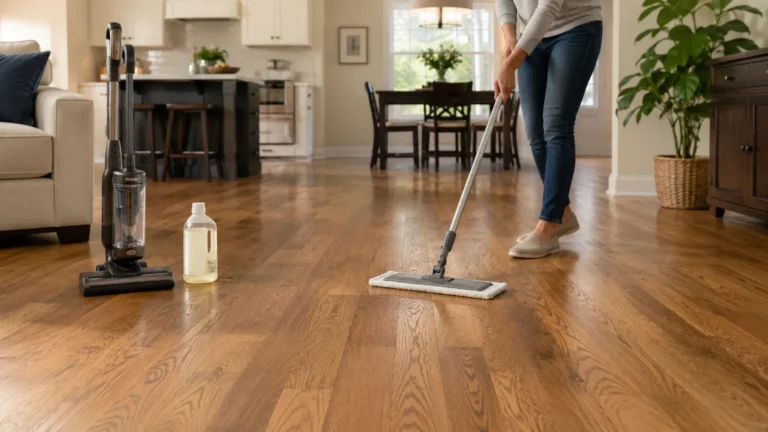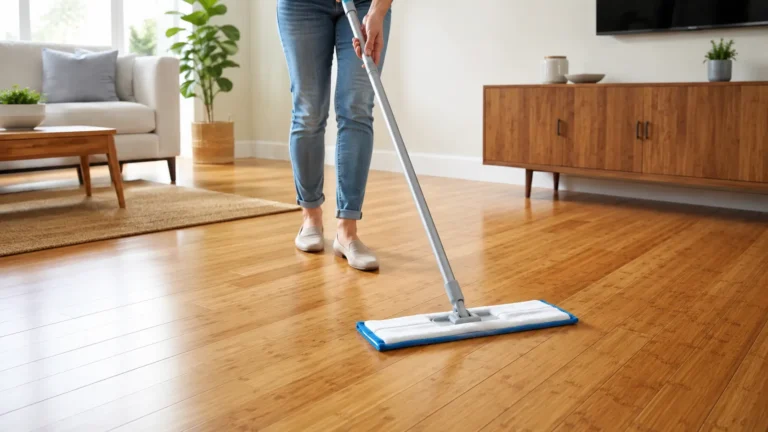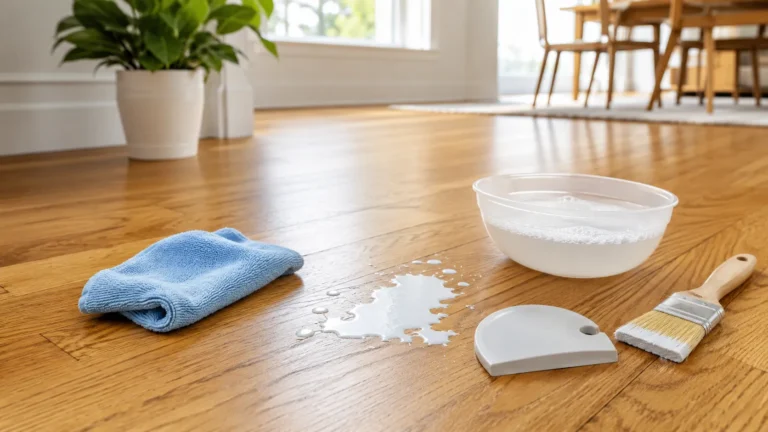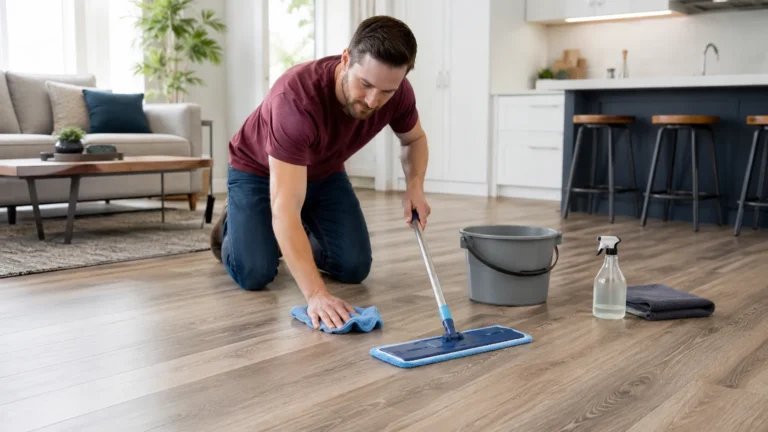
Blot fresh dog urine immediately, then clean the spot with a product specifically approved for your hardwood finish. Use minimal liquid, work from the outside toward the center, wipe away all residue, and dry the floor completely. For dried odor, use a hardwood-safe enzyme cleaner. Dark stains, swollen boards, or recurring odor may require refinishing or plank removal.
Quick Summary
| Floor condition | Best response |
| Fresh puddle on intact finish | Blot, clean with approved hardwood cleaner, and dry |
| Dried spot with mild odor | Use a hardwood-safe enzyme cleaner according to its label |
| Urine along plank seams | Use very little product and inspect for penetration |
| Dull or cloudy finish | Stop experimenting and assess finish damage |
| Dark brown or black stain | Cleaning may not remove discoloration |
| Swollen or cupped boards | Arrange a flooring inspection |
| Odor returns after cleaning | Inspect boards, underlayment, and subfloor |
| Engineered plank is delaminating | Replacement is usually more realistic than sanding |
| Rental property | Document the damage and notify the landlord before refinishing |
Why Dog Urine Can Damage Hardwood
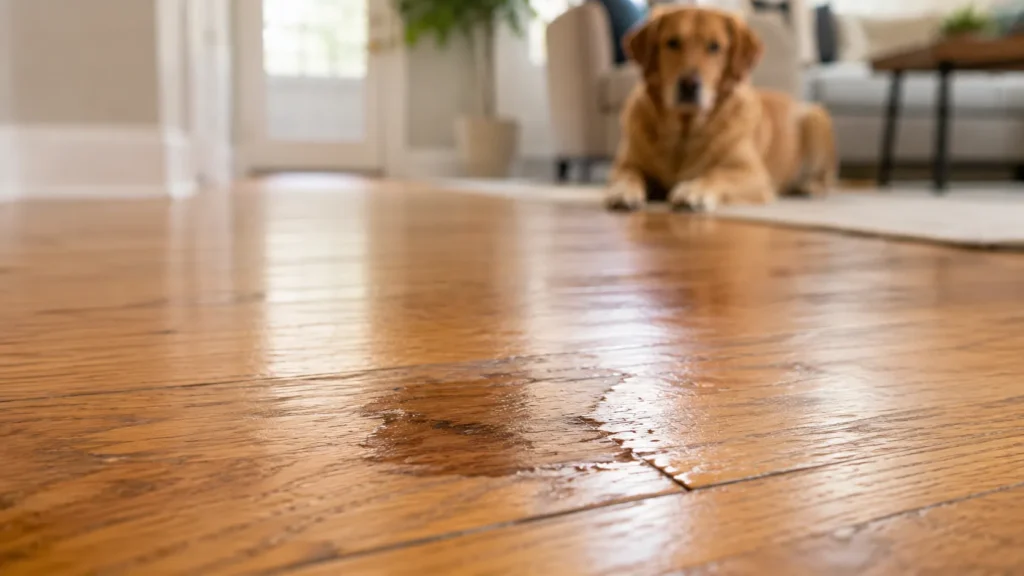
Hardwood is moisture-sensitive even when it has a protective finish.
Urine can affect the floor in several ways:
- It can dull or discolor the finish.
- Liquid can enter scratches and worn areas.
- Urine may seep between individual planks.
- Repeated accidents can reach unfinished board edges.
- Moisture may affect adhesive beneath engineered flooring.
- Long-term exposure can stain the wood below the finish.
- Persistent contamination can reach the underlayment or subfloor.
Excess liquid is particularly risky. Bruce advises using products designed for hardwood and warns that too much water can damage the flooring. Its care guidance also advises against routine use of vinegar, bleach, ammonia-based cleaners, detergents, oil soap, and abrasive products because they can harm the finish.
First Identify Your Hardwood Floor
Before choosing a cleaner, determine what you have.
Site-Finished Hardwood
Site-finished floors normally have a continuous coating across the boards. Small fresh accidents may remain on top when the finish is intact.
However, worn finish, gaps, scratches, and nail holes create entry points.
Prefinished Hardwood
Each board receives its factory finish before installation. The top surface may be durable, but the seams and beveled edges remain separate.
Urine can enter those edges even when the visible surface appears undamaged.
Engineered Hardwood
Engineered flooring has a real-wood veneer over a layered core.
The top may be cleanable, but urine that reaches the core can cause:
- Edge swelling
- Veneer lifting
- Delamination
- Adhesive failure
- Persistent odor
Whether an engineered floor can be sanded depends on its remaining wear-layer thickness.
Oil- or Wax-Finished Hardwood
Oil and wax finishes react differently from polyurethane coatings. Household cleaners may change their color, sheen, or protection level.
Use only products approved for that particular finish.
Supplies You May Need
Gather:
- Disposable paper towels or absorbent white cloths
- Clean microfiber cloths
- Disposable gloves
- Hardwood-floor cleaner approved by the manufacturer
- Enzyme cleaner explicitly labeled for sealed hardwood
- Clean water for lightly dampening a cloth, when permitted
- Dry towels
- Painter’s tape for marking the affected area
- Optional UV flashlight
- Optional pin-style or pinless moisture meter
- Pet gate or closed door
Avoid using a mop for a single accident. It spreads the residue over a larger area and introduces unnecessary moisture.
How to Clean Fresh Dog Urine From Hardwood Floors
Step 1: Keep People and Pets Away
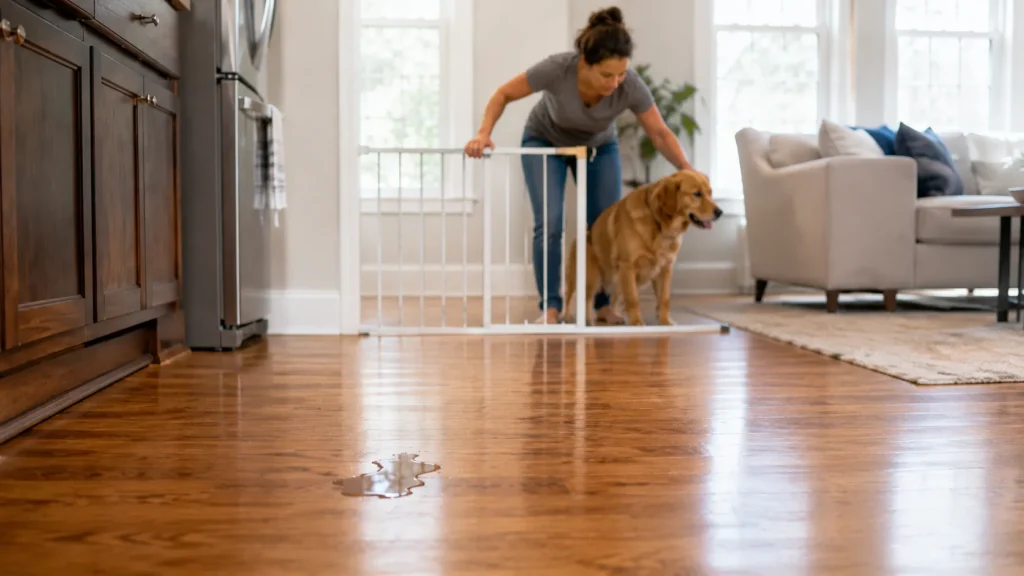
Move the dog to another room and prevent anyone from walking through the puddle.
This reduces spreading and gives you room to inspect the affected planks.
Step 2: Blot—Do Not Wipe
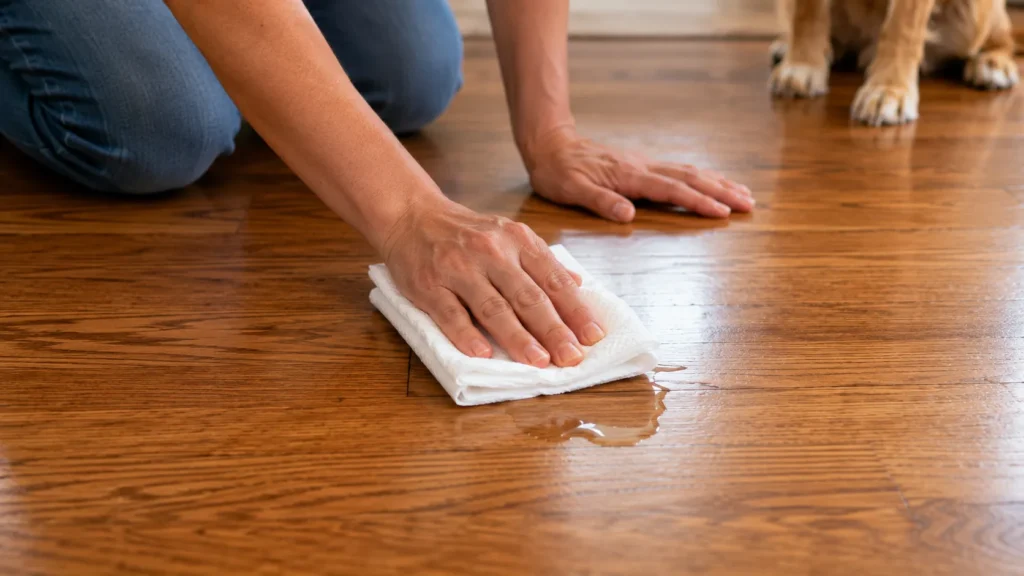
Place paper towels or an absorbent cloth directly over the urine.
Press firmly, lift, and replace the material until little moisture transfers. Work from the outer edge toward the center.
Wiping first can spread the urine across plank seams and a larger section of finish. Competitor guidance consistently recognizes immediate blotting as the critical first action.
Step 3: Inspect the Finish and Seams
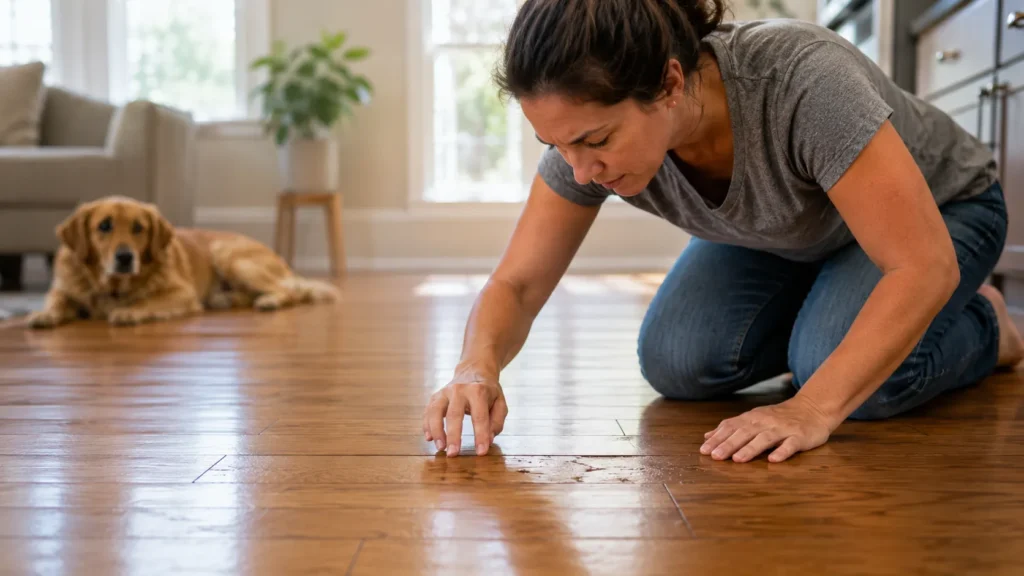
Look for:
- Scratches
- Open gaps
- Chipped finish
- Worn coating
- Beveled edges
- Urine reaching a wall or baseboard
- Liquid disappearing between boards
Use painter’s tape to mark the outer boundary when the affected area is difficult to see after blotting.
Step 4: Check the Flooring Manufacturer’s Instructions
The safest cleaner depends on the floor and finish—not simply on the fact that it is wood.
Use either:
- The manufacturer’s hardwood-floor cleaner, or
- An enzyme product whose label expressly lists sealed hardwood flooring
Do not assume that a cleaner labeled for carpet, upholstery, laminate, or “all floors” is appropriate for hardwood.
Step 5: Test the Product
Apply a small amount in a hidden area.
Wait for the label’s stated test period and check for:
- Dulling
- Whitening
- Sticky residue
- Color change
- Softening
- Finish lifting
Step 6: Apply Minimal Cleaner
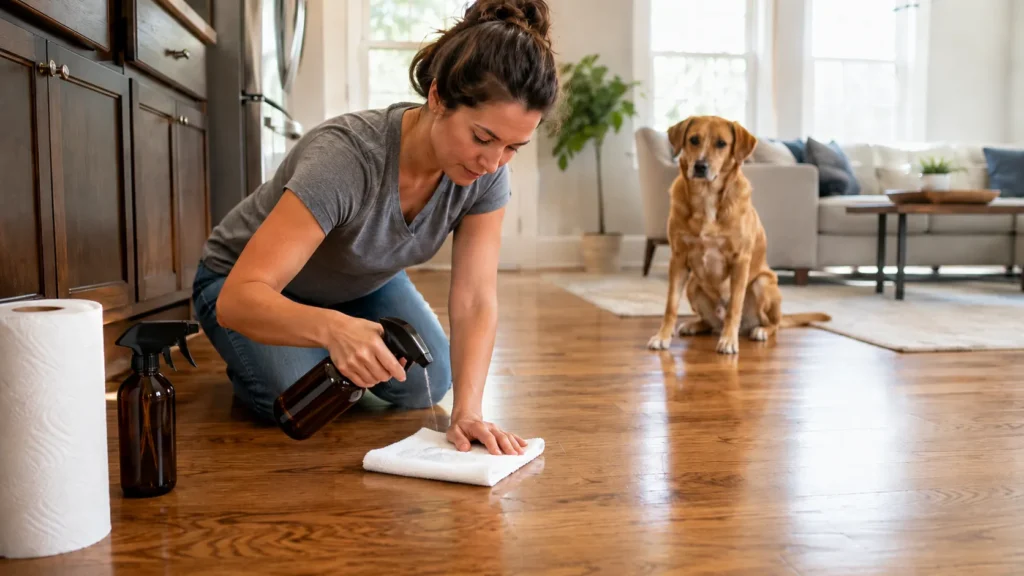
Apply the product to a microfiber cloth when the label permits rather than saturating the floor directly.
Lightly wipe the affected area. Keep liquid away from open seams and perimeter gaps.
For enzyme products, follow the exact contact time. Do not extend the dwell time in an attempt to improve the result because hardwood can be damaged by prolonged moisture.
Hardwood-compatible enzyme cleaners are widely recommended for breaking down odor-producing urine residue, but the product must be suitable for the floor finish and used according to its label.
Step 7: Remove Residue
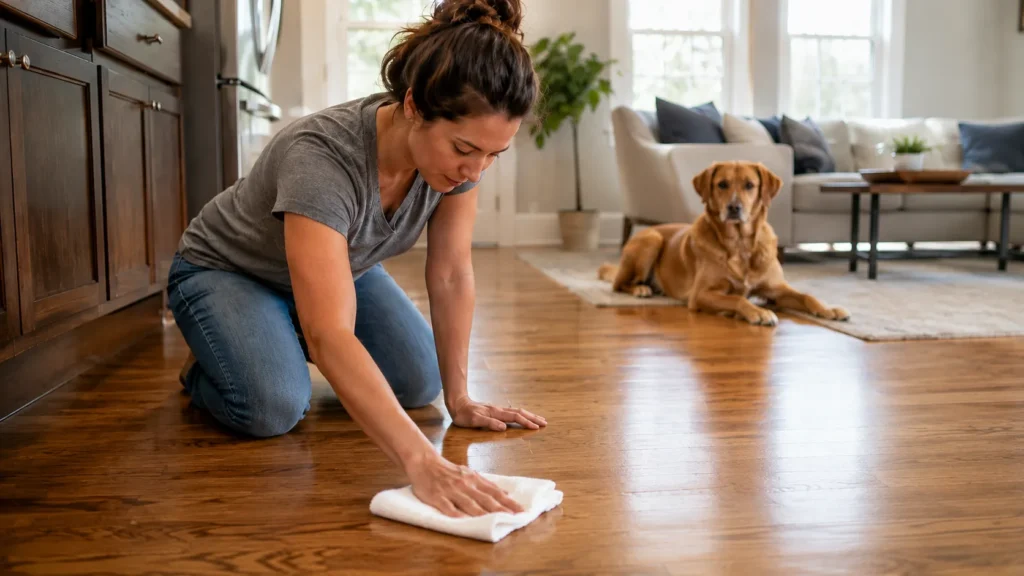
Wipe the area using a clean cloth as directed by the product label.
Some cleaners are no-rinse. Others require a lightly damp follow-up cloth. Never pour clean water over the area.
Step 8: Dry the Floor Completely
Use a dry microfiber towel and gentle room ventilation.
Do not direct concentrated heat onto the boards. Avoid reinstalling a rug or moving furniture over the area until the floor is dry.
Step 9: Check Again After Several Hours
Inspect for:
- Remaining odor
- Dull finish
- Darkening
- Raised board edges
- New gaps
- Sticky residue
For general maintenance after the accident has been resolved, follow a material-appropriate routine for how to clean hardwood floor surfaces without leaving excess moisture.
How to Remove Dried Dog Urine Odor
A dried spot is more difficult because the liquid may have moved below the visible surface.
1. Locate the Full Area
Inspect:
- Plank seams
- Baseboards
- Rug backing
- Furniture legs
- Pet beds
- Crate edges
- Doorways
- Corners where the dog repeatedly marks
A UV flashlight may help locate suspect residue in a dark room, but fluorescence is not proof of urine. Cleaning products, food residue, and other materials may also glow.
2. Clean Surface Residue
Use the approved hardwood cleaner first to remove dirt or dried residue.
Do not immediately stack several treatments on top of one another.
3. Use a Hardwood-Safe Enzyme Cleaner
Select a product that:
- Lists sealed hardwood as an approved surface
- Explains whether rinsing is required
- Provides a specific dwell time
- Includes pet re-entry instructions
- Does not require soaking the floor
- Does not contain an incompatible finish-restoring coating
Apply it only as directed.
4. Dry and Recheck
Allow the area to dry completely before judging the odor.
Wet wood and cleaning-product fragrance can temporarily mask the result. Recheck the room after several hours with windows closed.
5. Stop Repeated Wet Treatments
When odor returns after a careful treatment and complete drying, repeated soaking is unlikely to solve urine trapped under the finish or between boards.
At that point, inspect the floor assembly.
How to Treat an Old Dark or Black Urine Stain
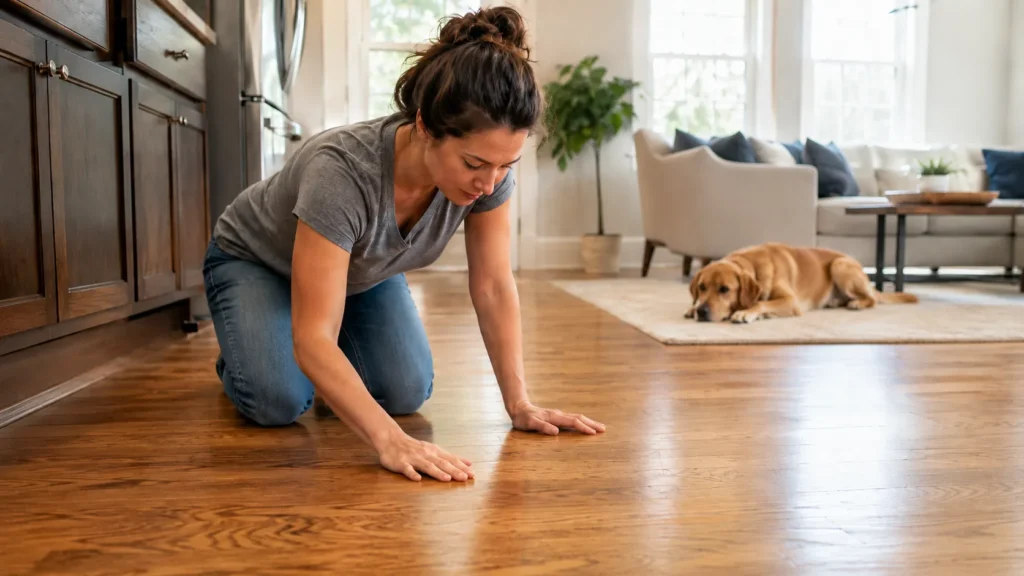
Dark discoloration usually indicates that the accident affected more than surface residue.
Start With a Condition Test
Check whether:
- The finish is smooth and intact.
- The finish is cloudy or peeling.
- The wood grain feels raised.
- The board feels soft.
- The stain crosses multiple planks.
- Odor remains in humid weather.
- The board edges have lifted.
The comparison image on page 2 of the ReallyCheapFloors competitor divides urine damage into light staining, cloudy finish, brown staining, and black staining. This is a useful concept because each condition requires a different response.
Surface Cleaning May Not Remove the Color
Cleaning and odor removal are different outcomes.
An enzyme cleaner may reduce odor on a cleanable surface while the dark color remains in the wood. Stronger chemicals can also lighten the surrounding wood and leave a pale repair spot.
Do Not Begin With Peroxide or Sandpaper
Hydrogen peroxide is commonly recommended online, but it can lighten the wood or alter the finish. It should not be treated as a universal first-line hardwood cleaner.
Similarly, sanding without identifying the construction may:
- Spread odor-producing dust
- Remove a factory finish
- Expose bare wood
- Create a low spot
- Sand through an engineered veneer
- Make color matching more difficult
NWFA technical guidance includes spot abrasion and chemical treatments among specialized repair options, but those procedures depend on the flooring system, finish, and damage—not a single household recipe.
Cleaner Comparison
| Cleaner or method | Appropriate use | Main concern |
| Manufacturer-approved hardwood cleaner | Fresh surface accident and residue | May not remove odor below the finish |
| Hardwood-safe enzyme cleaner | Dried odor on an approved sealed surface | Required dwell time may introduce moisture |
| Clean, barely damp cloth | Light final residue when permitted | Water may enter seams |
| Vinegar | Not a default hardwood treatment | Acid may dull or strip some finishes |
| Hydrogen peroxide | Controlled stain treatment with professional or manufacturer guidance | May bleach wood or damage the finish |
| Baking soda | Sometimes suggested for dry odor absorption | Powder can scratch, dull, or enter seams |
| Chlorine bleach | Generally avoid for routine pet cleanup | Can damage finish and discolor wood |
| Ammonia cleaner | Avoid | Harsh on finishes and has a strong odor |
| Steam cleaner | Avoid | Adds heat and moisture to the floor |
| Abrasive brush or steel wool | Only for specific repair systems | Can permanently scratch or remove finish |
Never mix bleach with ammonia, vinegar, peroxide, or another cleaner. The CDC warns that mixing household bleach or disinfectants with other cleaning products can release dangerous vapors.
Can You Use Vinegar on Dog Urine?
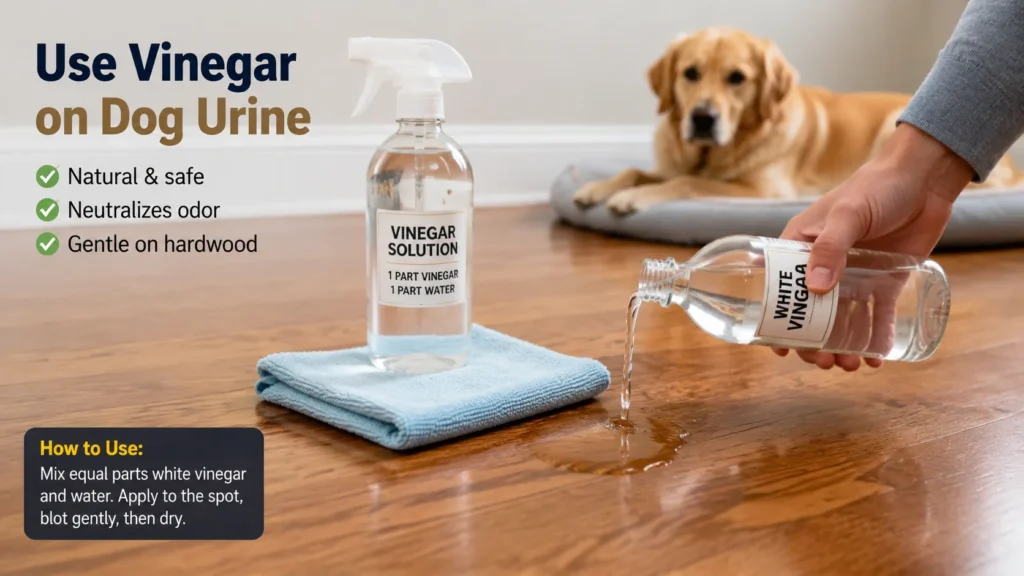
Vinegar is frequently recommended because it is inexpensive and readily available. Several competitor pages include diluted vinegar but also warn that it may dull or damage hardwood finishes.
From a flooring point of view, it should not be the default choice.
Bruce’s current hardwood-care instructions specifically advise avoiding acidic substances such as vinegar on its floors. Follow the instructions for your actual flooring product rather than a universal homemade-cleaner formula.
Can You Use Hydrogen Peroxide?
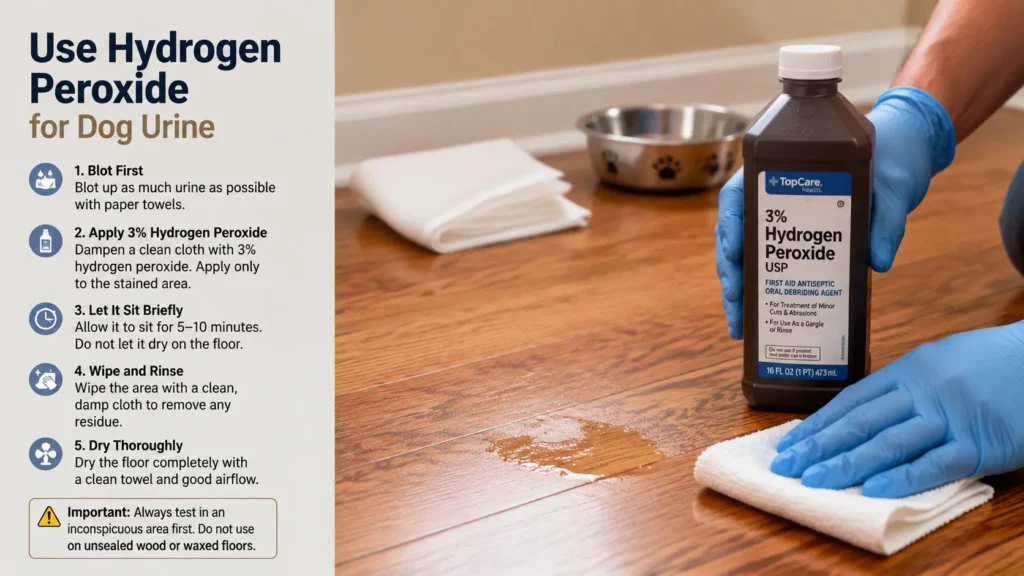
Hydrogen peroxide may lighten organic discoloration, but it can also lighten the wood and change the finish.
Consider it only when:
- The floor manufacturer permits it.
- The product concentration is known.
- The affected material is structurally sound.
- A hidden-area test is successful.
- You understand that color matching may still be required.
Do not soak a towel and leave it on finished hardwood for hours unless that procedure is expressly approved for the floor.
Does Baking Soda Remove the Smell?
Dry baking soda may absorb some surface odor, and some flooring guidance recommends it as an odor-control option.
However, it has limitations:
- It does not reach urine beneath boards.
- Powder may collect in bevels and seams.
- Scrubbing can dull the finish.
- A wet baking-soda paste introduces moisture.
- Pets should not have access to the treatment area.
Use it only when the flooring manufacturer permits it, and remove it gently with the vacuum brush turned off.
Advice by Flooring Type
Solid Hardwood
Solid hardwood offers more repair flexibility because many products can be sanded and refinished.
However, urine may penetrate deeply through gaps or worn finish. A deeply stained board may still be more economical to replace than repeatedly bleach and sand.
Engineered Hardwood
The veneer thickness controls whether refinishing is possible.
When urine has caused edge swelling, delamination, or core odor, replacing affected planks is often safer than trying to sand the surface.
Factory-Prefinished Flooring
Factory finishes can be highly durable, but urine may enter beveled edges and joints.
Spot refinishing can be difficult because the repaired finish may not match the factory sheen or texture.
Oil-Finished Flooring
Oil-finished flooring may absorb contamination differently from polyurethane-finished wood.
Use the finish manufacturer’s maintenance system. The treatment may require localized cleaning followed by compatible maintenance oil.
For more guidance on hardwood construction, finishes, gaps, scratches, and refinishing limits, refer readers to the Hardwood flooring FAQs.
Room-Specific Risk Areas
Near Exterior Doors
Dogs may have accidents while waiting to go outside. Urine can also reach the expansion gap beneath the baseboard.
Beneath Rugs
Rugs hide fresh accidents and slow evaporation. Inspect both the flooring and rug pad.
Around Dog Crates and Beds
Repeated accidents in the same area may penetrate plank seams before they become visible.
Near Water Bowls
Urine may be confused with spilled water. Repeated moisture from either source can damage wood.
Rental Properties
Photograph the area before treatment and notify the property owner when:
- The stain is old
- The finish is damaged
- Boards need removal
- Sanding or refinishing may be required
Do not perform irreversible repairs without authorization.
Common Mistakes to Avoid
Mopping the Entire Room
A single accident should be spot-cleaned. Mopping spreads residue and moisture.
Saturating an Enzyme Cleaner
The product must reach the residue, but hardwood should not be soaked. Use only products and quantities approved for wood flooring.
Using Several Cleaners in Sequence
Combining treatments can create dangerous reactions, sticky residue, discoloration, or finish damage.
Using Steam
Steam introduces heat and moisture, and competitor guidance specifically identifies it as unsuitable for urine cleanup on hardwood.
Judging the Result While the Floor Is Wet
Moisture and fragrance can temporarily hide odor. Reassess after complete drying.
Covering the Area With a Rug
Covering a damp floor slows drying and may trap odor.
Treating a Black Stain as a Cleaning Problem
Deep discoloration may require floor repair rather than stronger household chemicals.
How to Tell Whether Urine Reached the Subfloor
Suspect deeper contamination when:
- Odor returns during humid weather.
- Several adjacent seams smell.
- The stain reappears after surface treatment.
- The floor is cupped or swollen.
- A plank edge has lifted.
- Engineered flooring is delaminating.
- Odor is stronger near a wall or cabinet.
- The underside of a rug repeatedly smells after cleaning.
- Urine was present for several days.
- The same location has been used repeatedly.
A flooring professional may need to remove a transition, baseboard, or selected plank to inspect the underside.
When Refinishing May Be Enough
Refinishing may be appropriate when:
- The odor has been resolved.
- Damage is limited to the finish or upper wood surface.
- The boards remain flat and structurally sound.
- The floor has enough thickness for sanding.
- The stain does not extend through the entire board.
- A compatible stain and finish can restore the area.
When Board Replacement May Be Necessary
Replacement becomes more likely when:
- The wood is soft or permanently swollen.
- The engineered core has separated.
- Urine odor remains beneath the boards.
- Several old black stains penetrate deeply.
- The subfloor requires cleaning or sealing.
- Sanding would remove too much engineered veneer.
- The existing repair would be more visible than a matched replacement.
Bruce notes that replacement boards and substantial moisture-related damage are among the repairs that may require professional assistance.
How to Prevent Future Urine Damage
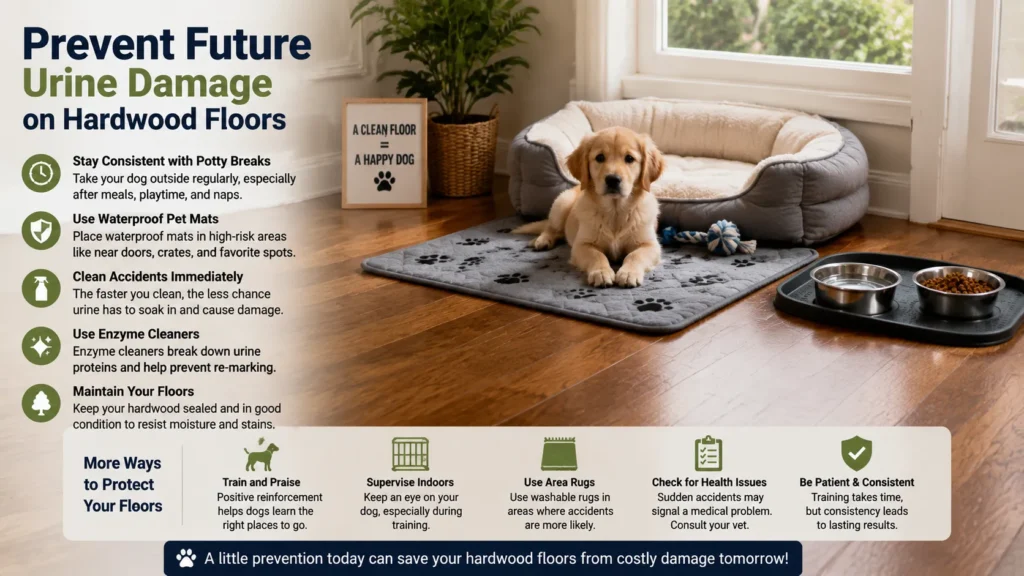
- Clean every accident immediately.
- Place washable, waterproof-backed mats beneath pet areas.
- Inspect beneath rugs regularly.
- Maintain the floor’s protective finish.
- Keep a hardwood-safe cleaner and absorbent towels nearby.
- Use pet gates around previously affected rooms.
- Follow a consistent outdoor-break schedule.
- Clean the full odor source so the dog is less likely to return.
- Avoid punishing the dog at the accident site.
- Speak with a veterinarian when a house-trained dog suddenly starts urinating indoors.
Sudden or frequent indoor urination can be related to behavioral factors, urgency, pain, or medical conditions. Veterinary guidance recommends an examination when a previously house-trained dog begins urinating indoors unexpectedly, particularly when straining or other symptoms are present.
Readers needing care and damage advice for other materials can continue to the broader Flooring FAQs hub.
Final Recommendation
For a fresh accident, speed matters more than chemical strength.
Blot the urine, identify the finish, use an approved hardwood cleaner, remove residue, and dry the area. For lingering odor, use an enzyme cleaner specifically labeled for sealed hardwood and follow its contact time exactly.
Do not repeatedly saturate an old stain with vinegar, peroxide, bleach, or homemade mixtures. When odor returns, boards swell, the finish peels, or dark staining penetrates the wood, stop treating the surface and inspect the floor assembly.
FAQs
What neutralizes dog urine on hardwood floors?
A hardwood-safe enzyme cleaner can break down odor-producing urine residue when the product is approved for the floor and used according to its label. Surface cleaners may remove residue but may not reach urine beneath the finish or between boards.
Can dog urine permanently damage hardwood?
Yes. Urine can dull the finish, stain bare wood, enter plank seams, cause swelling, and contaminate the subfloor when it remains untreated or repeatedly affects the same area.
Can I use vinegar to clean dog urine from hardwood?
Do not use vinegar unless the flooring manufacturer approves it. Vinegar is acidic and may dull or damage some hardwood finishes. A manufacturer-approved cleaner or hardwood-safe enzyme product is normally safer.
Will hydrogen peroxide remove black urine stains?
It may lighten some discoloration, but it can also bleach the wood or alter the finish. Deep black staining may require sanding, refinishing, or board replacement instead of repeated peroxide treatments.
Is an enzyme cleaner safe for hardwood?
Only when the label specifically approves it for sealed hardwood and its instructions are followed. Carpet enzyme cleaners may require more liquid or a longer dwell time than a hardwood floor can safely tolerate.
How do I remove urine smell from between floorboards?
Clean the surface carefully and dry it. When odor remains in multiple seams, the urine may be beneath the boards. Removing selected planks and treating or sealing the subfloor may be necessary.
Can baking soda scratch hardwood floors?
Yes, scrubbing baking soda can act as an abrasive. Dry powder may also collect in seams. Use it only when the flooring manufacturer permits it, and remove it without an active vacuum brush.
Why does the urine smell return when the room is humid?
Higher humidity can make odor trapped in wood, plank seams, underlayment, or the subfloor more noticeable. Returning odor usually indicates residue below the cleanable surface.
Can old dog urine stains be removed without sanding?
Light surface marks may improve with an approved cleaner, but dark stains that have penetrated the finish often remain. Odor treatment, spot refinishing, or board replacement may be required.
Why does my dog keep urinating in the same place?
Residual odor can attract repeat marking, but behavior, routine changes, anxiety, aging, pain, or illness may also contribute. Clean the full odor source and consult a veterinarian when the behavior is sudden or frequent.