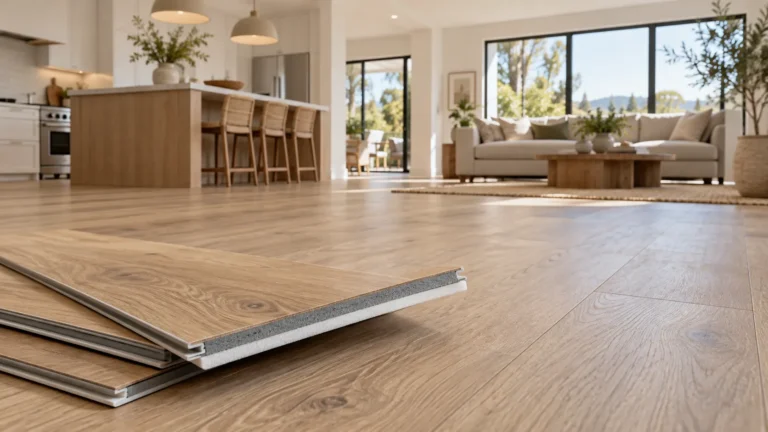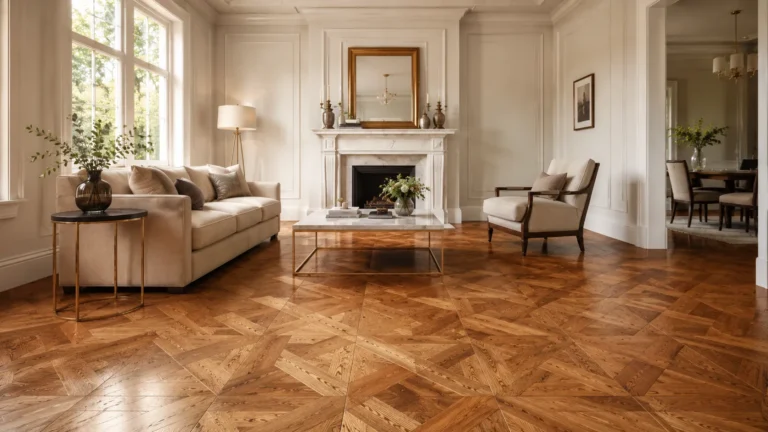
Use a soft-bristle broom or hard-floor vacuum to remove loose dirt, followed by a clean microfiber mop lightly dampened with a manufacturer-approved, pH-neutral hardwood floor cleaner. Apply the cleaner sparingly and dry the surface afterward. Avoid steam, excessive water, bleach, ammonia, vinegar, abrasive pads, oil soap, and wax unless the flooring manufacturer specifically approves them.
Quick summary
- Best cleaner: pH-neutral hardwood floor cleaner
- Best mop: flat microfiber mop with a washable pad
- Best dry-cleaning tool: microfiber dust mop or hard-floor vacuum
- Best natural option: minimal water and a very small amount of mild dish soap, only when the manufacturer permits it
- Best way to prevent streaks: use less cleaner and dry-buff afterward
- Avoid: steam, soaking water, vinegar, bleach, ammonia, oil soap, wax, and abrasive pads
What Is the Safest Cleaner for Most Hardwood Floors?
For most modern, sealed hardwood floors, the safest choice is a pH-neutral cleaner specifically labeled for hardwood flooring.
A suitable cleaner should:
- State that it is safe for sealed wood floors
- Leave little or no residue
- Require minimal water
- Be compatible with the floor manufacturer’s finish
- Not contain wax, bleach, ammonia, or harsh abrasives
A dedicated hardwood cleaner is not the only possible option. Some multisurface cleaners are suitable, but only when the label specifically lists sealed hardwood as an approved surface.
Consumer Reports’ cleaning guidance similarly favors a pH-neutral formula and a damp—not wet—mop, while stressing that homeowners should check the label and flooring instructions before using any new product.
What Tools Should You Use?
A safe hardwood floor cleaning kit is simple:
- Soft-bristle broom
- Microfiber dust mop
- Vacuum with a hard-floor setting
- Flat microfiber damp mop
- Washable replacement mop pads
- White microfiber cleaning cloths
- pH-neutral hardwood floor cleaner
- Dry microfiber pad for buffing
Best Vacuum for Hardwood Floors
Choose a vacuum that:
- Has a hard-floor mode
- Allows the rotating brush to be turned off
- Has soft wheels
- Does not drag sharp plastic edges across the finish
- Includes a soft crevice or dusting attachment
A powered beater bar can scatter grit and may scratch softer finishes. Check the vacuum head before every use for trapped stones, staples, or coarse debris.
Best Mop for Hardwood Floors
A flat microfiber mop is usually the safest choice because it:
- Uses controlled moisture
- Traps fine dust
- Glides without aggressive scrubbing
- Allows dirty pads to be changed
- Reaches under furniture
- Can be dry-buffed after cleaning
Avoid dripping string mops and saturated sponge mops.
For a complete step-by-step routine, see our guide on how to clean hardwood floor surfaces safely.
Check the Floor Finish Before Choosing a Cleaner
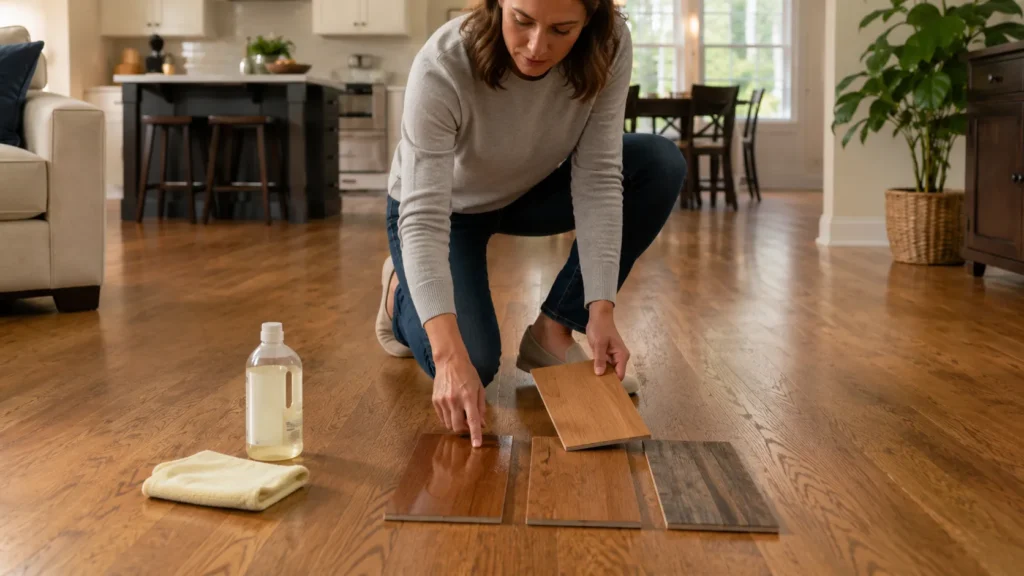
From a flooring point of view, the finish matters more than the wood species. Oak and maple may react differently to dents and moisture, but the surface coating usually determines which cleaning product is safe.
Surface-Sealed Hardwood
Modern floors are commonly protected with:
- Water-based polyurethane
- Oil-based polyurethane
- Moisture-cured urethane
- Factory-applied aluminum oxide
These floors generally tolerate a lightly damp microfiber mop and an approved pH-neutral cleaner.
Penetrating Oil or Hardwax Oil
Oil-finished floors may require:
- A cleaner designed for oiled wood
- Periodic maintenance oil
- Very limited water
- Manufacturer-specific care products
A conventional polyurethane-floor cleaner may leave the surface dry or uneven.
Waxed Hardwood
Waxed floors require special care. Water-based products and ordinary polish may create haze or soften the wax layer.
Use only a wax-compatible cleaner and reapply wax only when the floor-care system requires it.
Shellac or Lacquer
Older shellac and lacquer finishes can be sensitive to alcohol, water, and common solvents. Begin with dry cleaning and seek manufacturer or flooring-professional guidance before wet cleaning.
Unfinished Hardwood
Do not routinely damp-mop unfinished wood. It absorbs liquid quickly and may stain, swell, or develop raised grain.
For a broader explanation of finish systems and wood-floor construction, visit Hardwood Floors: Complete Guide.
Hardwood Floor Cleaner Comparison
| Cleaner or method | Suitable for hardwood? | Best use | Main warning |
| Manufacturer-approved hardwood cleaner | Yes | Routine cleaning | Follow dilution and finish instructions |
| pH-neutral wood-floor cleaner | Usually | Sealed polyurethane floors | Confirm label compatibility |
| Hardwood-safe multisurface cleaner | Sometimes | Routine cleaning | Hardwood must be listed on label |
| Plain water | Limited use | Light dust or fresh residue | Too much water can enter seams |
| Mild dish soap | Spot use | Grease and sticky residue | Too much soap leaves film |
| Diluted vinegar | Usually avoid | Rarely manufacturer-approved | Acid may dull or etch some finishes |
| Oil soap | Usually avoid | Only approved specialty finishes | Can leave difficult residue |
| Wax or polish | Finish-specific | Waxed floor systems | Can build up on polyurethane |
| Furniture polish | No | Not intended for floors | Slippery residue and recoating problems |
| Bleach | No | Not recommended | Discoloration and finish damage |
| Ammonia | No | Not recommended | May dull or strip coatings |
| Steam mop | No for most wood floors | Not recommended | Heat and moisture may damage boards |
| Abrasive powder or pad | No | Not recommended | Scratches and uneven sheen |
How to Mop Hardwood Floors Safely
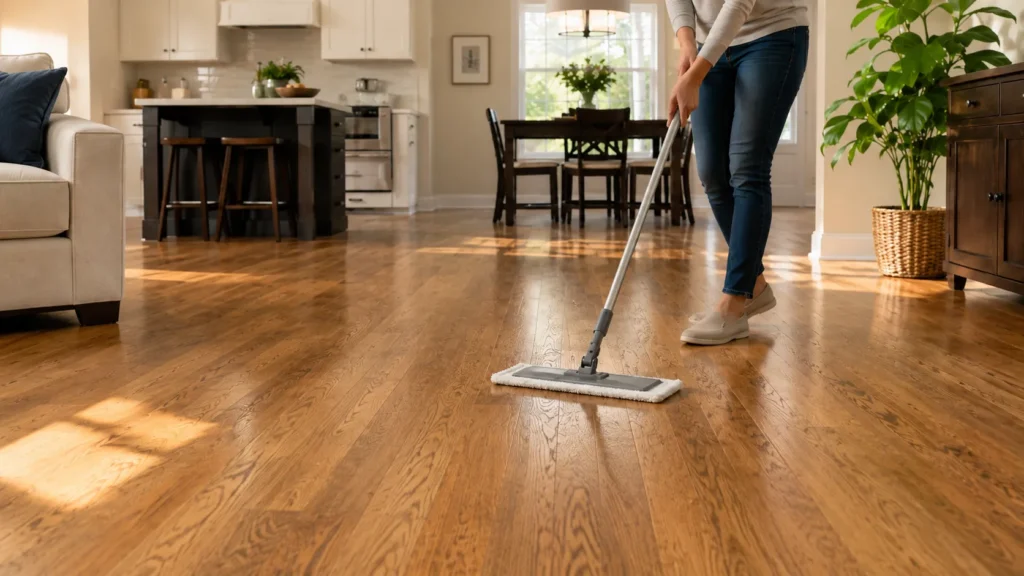
Step 1: Remove Dry Debris
Vacuum, sweep, or dust-mop the entire floor. Pay attention to entrances, kitchen work areas, and chair legs where grit collects.
This step matters because loose dirt can act like sandpaper beneath the mop.
Step 2: Check the Cleaner Label
Confirm that the product is approved for:
- Hardwood
- Your finish type
- Your flooring manufacturer
- Your mop system
Test it in a closet, behind a door, or beneath a cabinet edge.
Step 3: Apply Minimal Cleaner
Apply cleaner to the microfiber pad or lightly mist a small section. Do not pour liquid directly onto the boards.
Step 4: Mop With the Grain
Work in manageable sections. Move in the direction of the planks and avoid repeatedly scrubbing the same spot.
Step 5: Change Dirty Pads
A gray or gritty mop pad spreads dirt and may leave streaks. Use a fresh pad when the first becomes visibly soiled.
Step 6: Dry the Floor
Dry-buff the cleaned area with a fresh microfiber pad. Do not leave standing moisture along board edges or seams.
Both Martha Stewart and Lowe’s emphasize removing debris first, controlling moisture, and using a damp rather than saturated cleaning method.
What Is the Best Natural Hardwood Floor Cleaner?
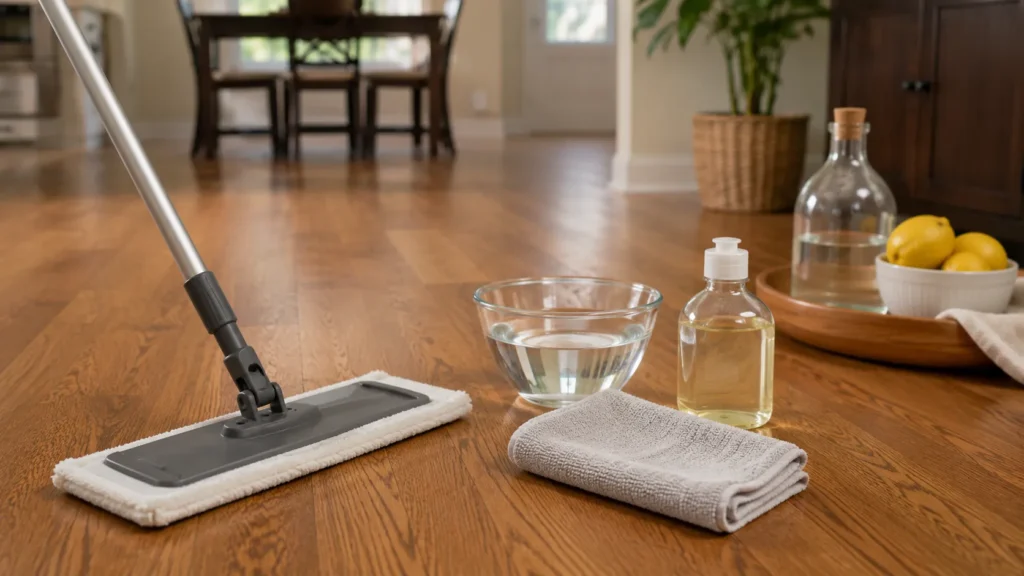
The word “natural” does not automatically mean finish-safe.
Vinegar and lemon juice are natural, but both are acidic. Oil and soap are natural, but they may leave residue. Baking soda is natural, but its abrasive texture may alter the finish.
For many sealed floors, the lowest-risk simple option is:
- Remove all dry dirt.
- Lightly dampen a microfiber pad with warm water.
- Add only a very small amount of clear, mild dish soap when grease is present.
- Clean a small area.
- Wipe again with a separate barely damp pad.
- Dry immediately.
Use this only when the flooring manufacturer allows mild soap and water.
For whole-floor cleaning, an approved pH-neutral product is generally more predictable than a homemade mixture.
Can You Use Vinegar on Hardwood Floors?
Routine vinegar cleaning is not recommended for most finished hardwood floors. Its acidity may gradually affect the sheen, especially when the solution is strong, frequently used, or allowed to remain on the surface.
Consumer Reports, Lowe’s, and Martha Stewart all caution against acidic cleaners such as vinegar on wood-floor finishes.
Can You Use Dish Soap?
A small amount of mild dish soap may help remove greasy or sticky residue from a sealed floor.
Use it for spot cleaning rather than creating a heavily soapy bucket solution. Too much soap can leave a cloudy film that attracts additional dirt.
Should You Add Olive Oil?
Adding oil to a floor-cleaning solution can create an uneven sheen, attract dirt, make the surface slippery, and interfere with future recoating.
Use a maintenance oil only on a floor system that specifically requires it. Do not apply kitchen oils as a general hardwood treatment.
What Should You Use on Engineered Hardwood?
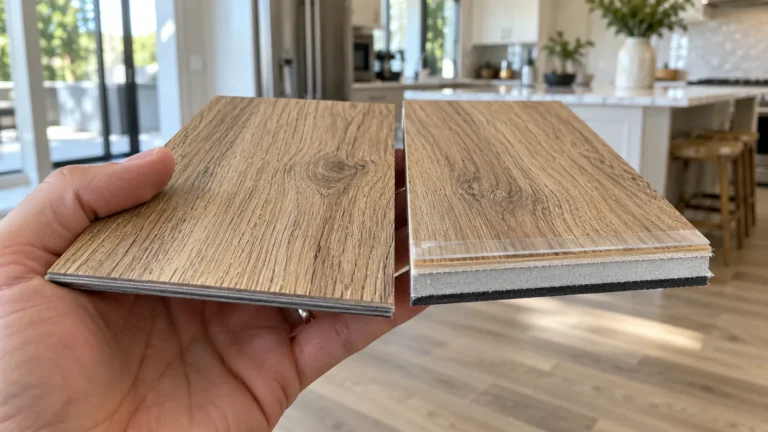
Engineered hardwood has a real wood veneer over a plywood or composite core. The visible surface should be cleaned according to its finish, but moisture control is especially important.
Use:
- A hard-floor vacuum
- A microfiber dust mop
- A barely damp microfiber mop
- A manufacturer-approved pH-neutral cleaner
- A dry pad after cleaning
Avoid:
- Steam
- Wet mopping
- Liquid collecting at plank edges
- Strong solvents
- Aggressive scrubbing
- Products that leave oily buildup
Moisture can move into the click joints or core and cause swelling, edge lifting, or delamination. This is why engineered hardwood floor cleaning should use less liquid than many homeowners expect.
Questions about different flooring constructions and materials are covered in the broader Flooring FAQs section.
What Should You Use for Different Rooms and Messes?
Kitchens
Kitchen floors collect:
- Cooking grease
- Food crumbs
- Sticky spills
- Water near sinks and dishwashers
Vacuum first, then spot-clean grease with an approved cleaner or a very weak mild-soap solution. Dry the area immediately.
Do not rely on repeated heavy mopping. Check beneath dishwashers, refrigerators, and sink cabinets for hidden moisture.
Entryways and Mudrooms
These areas receive sand, salt, and grit.
Use:
- Exterior and interior mats
- Frequent vacuuming
- A microfiber dust mop
- Damp cleaning only after grit is removed
During snowy weather, wipe de-icing salt and melted snow promptly.
Living Rooms and Bedrooms
These rooms usually need more dry cleaning than wet cleaning.
Vacuum or dust weekly and damp-mop only when footprints, residue, or visible soil require it.
Homes With Pets
For pet hair, use a microfiber dust mop or hard-floor vacuum.
For urine or vomit:
- Blot immediately.
- Use a cleaner specifically labeled safe for sealed hardwood.
- Test enzymatic cleaners before broad application.
- Do not allow liquid to soak into seams.
- Dry the area completely.
Persistent odor or dark staining may mean the liquid penetrated beneath the finish.
Grease and Sticky Residue
Use a microfiber cloth lightly dampened with pH-neutral cleaner. For stubborn grease, add a tiny amount of mild dish soap, then remove the soap residue and dry the surface.
Scuff Marks
Try a clean microfiber cloth first. Do not start with a melamine sponge, abrasive pad, or polishing compound because these can alter the sheen.
What Should You Never Use on Hardwood Floors?
A common mistake homeowners make is choosing a product because it cleans another hard surface well.
Avoid using:
- Steam mops
- Excessive water
- Bleach
- Ammonia
- Undiluted vinegar
- Lemon juice
- Abrasive powders
- Steel wool
- Rough scrub pads
- Furniture polish
- Silicone spray
- Oil soap unless approved
- Wax on polyurethane floors
- Carpet-cleaning machines
- Automatic scrubbers not approved for wood
Steam is especially risky because it combines heat, pressure, and moisture. Water may enter seams even when the top surface appears sealed.
Why Do Hardwood Floors Look Dull After Cleaning?
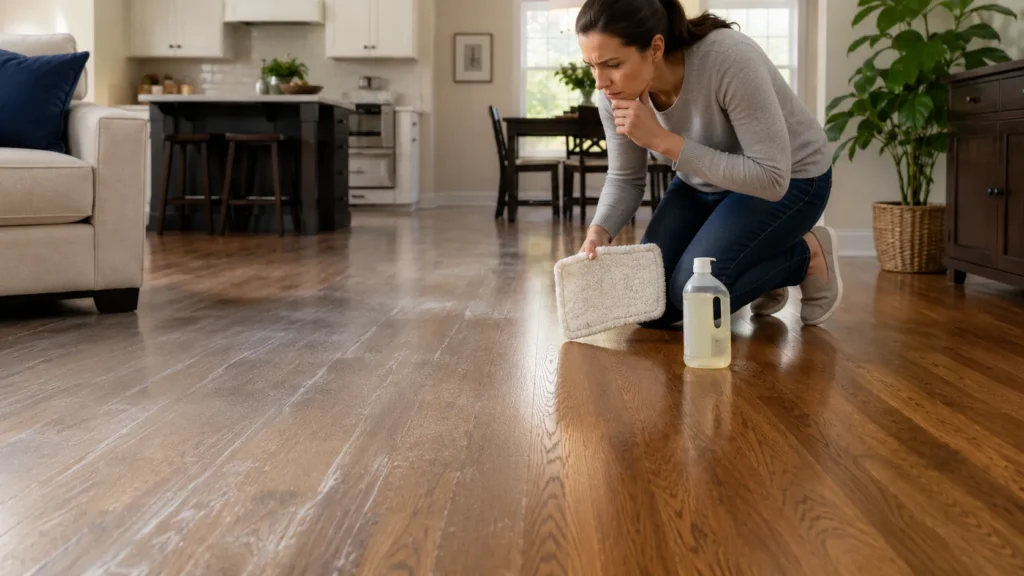
Dullness does not always mean the finish is worn out.
Common causes include:
- Too much cleaner
- Dirty mop water
- Soap buildup
- Oil-soap residue
- Hard-water minerals
- A dirty microfiber pad
- Wax or polish buildup
- Cleaner drying before it is buffed
- Fine scratches in high-traffic areas
- Genuine finish wear
How to Identify Cleaner Buildup
Cleaner buildup often appears:
- Cloudy
- Sticky
- Uneven
- More visible in angled light
- Temporarily improved when wiped with a clean damp cloth
Finish wear is more likely when:
- The dullness follows walking paths
- The wood looks lighter or gray
- Scratches remain after cleaning
- Water darkens the area
- The finish is peeling or worn through
Do not add more polish to a hazy surface until you know whether the problem is residue or worn coating.
How to Choose the Best Cleaner and Mop
Cleaner Buying Factors
Look for:
- Clear hardwood-floor approval
- Finish compatibility
- Neutral pH
- Low-residue formula
- Clear dilution directions
- Manufacturer or warranty compatibility
- Ingredient disclosure
- Packaging that allows controlled application
Be cautious with terms such as:
- Natural
- Plant-based
- Multisurface
- Restoring
- Rejuvenating
- High-gloss
- One-step polish
These claims do not guarantee that the product is suitable for your floor.
Mop Buying Factors
Choose a mop with:
- A flat microfiber head
- Washable pads
- Easily available replacement pads
- Controlled spray
- A swivel head
- No exposed metal or sharp edges
- A lightweight handle
- Pads for both damp cleaning and dry buffing
Wash mop pads without fabric softener. Softener can coat microfiber and reduce its ability to absorb moisture and trap soil.
Hardwood Floor Maintenance Schedule
| Frequency | Maintenance task |
| Daily or as needed | Remove visible crumbs, pet hair, and grit |
| Immediately | Blot spills, pet accidents, and standing water |
| Weekly | Vacuum or microfiber dust-mop |
| Weekly or biweekly | Damp-mop high-use areas when visibly dirty |
| Monthly | Clean beneath movable rugs and furniture |
| Every few months | Wash mop pads and inspect furniture protectors |
| Seasonally | Check entryways, appliance areas, and board seams |
| As needed | Evaluate cloudy residue, scratches, or finish wear |
Homes with children, pets, outdoor footwear, or heavy traffic may require more frequent dry cleaning. More frequent wet cleaning is not always better.
When Should You Call a Flooring Professional?
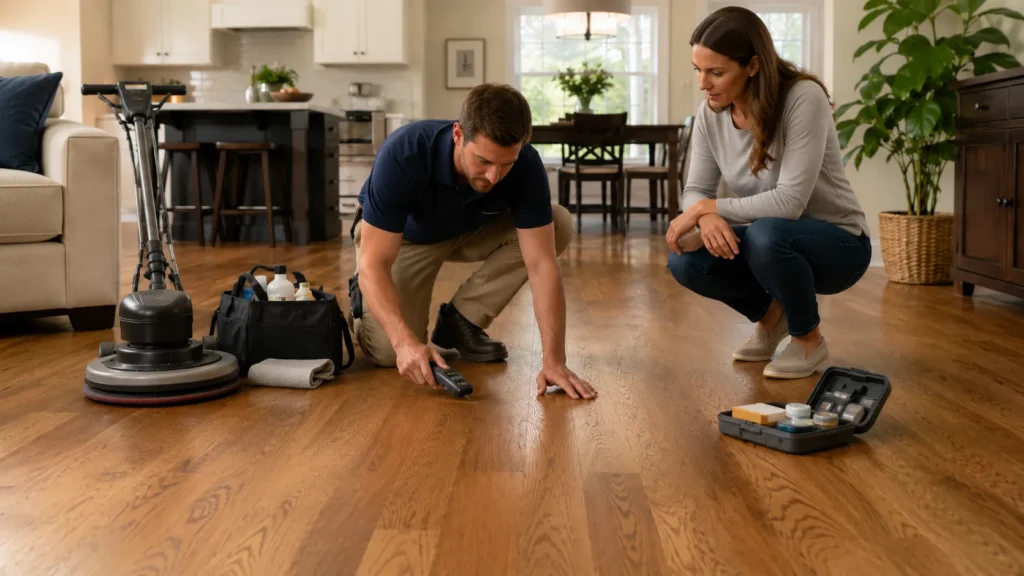
Professional evaluation is useful when:
- The finish becomes sticky or soft
- Boards are cupping or swelling
- Dark stains remain after cleaning
- Pet odor persists
- The finish is peeling
- Wax or oil buildup covers a large area
- The floor has an unknown antique finish
- Water has entered plank seams
- The wood looks gray or unfinished
- A cleaning chemical has discolored the surface
Cleaning cannot restore finish that has worn through. In that situation, screening and recoating, refinishing, or localized board repair may be required.
Final Expert Recommendation
The safest combination for most modern hardwood floors is a hard-floor vacuum, a clean microfiber mop, a small amount of pH-neutral hardwood cleaner, and a dry microfiber pad.
Before choosing any wood floor cleaning solution, confirm the finish type and read the flooring manufacturer’s care instructions. Use less liquid and less cleaner than you think you need. In real homes, repeated moisture and product buildup cause more problems than insufficient detergent.
At EveryFAQ, the practical rule is simple: remove grit first, use a finish-compatible cleaner sparingly, and leave the floor dry.
FAQs
Can I use plain water to clean hardwood floors?
A barely damp microfiber mop may be suitable for lightly soiled, sealed hardwood, but plain water can leave mineral streaks and should never be allowed to collect in seams. Check the manufacturer’s instructions first.
Can I use vinegar on hardwood floors?
Vinegar is not recommended for routine hardwood cleaning because its acidity may dull or damage some finishes. Use an approved pH-neutral cleaner instead.
Is dish soap safe for hardwood floors?
A very small amount of mild dish soap can help with greasy or sticky spot cleaning on sealed hardwood. Remove any soap residue and dry the area immediately.
What is the best mop for hardwood floors?
A flat microfiber mop with a washable pad is generally the best choice. It controls moisture, traps fine soil, and can also be used for dry buffing.
Can you use a steam mop on hardwood?
Steam mops are generally unsuitable for hardwood and engineered wood. Heat and moisture may enter seams, damage the finish, swell boards, or affect the warranty.
How often should hardwood floors be mopped?
Damp-mop only when the floor is visibly dirty, typically weekly or biweekly in busy areas. Vacuuming or dust-mopping should be more frequent.
Can multisurface cleaner be used on hardwood?
Only when the product label specifically lists sealed hardwood and the flooring manufacturer allows it. Not every multisurface formula is suitable for wood finishes.
Why are my hardwood floors streaky after mopping?
Streaks usually come from excessive cleaner, dirty mop pads, hard water, soap residue, or allowing the cleaner to dry before buffing.
What should I use on engineered hardwood floors?
Use a hard-floor vacuum, microfiber mop, and a manufacturer-approved pH-neutral cleaner. Apply very little moisture and avoid steam.
Should hardwood floors be waxed?
Only floors designed for a wax maintenance system should be waxed. Applying wax to polyurethane or factory-finished floors can cause buildup and complicate future recoating.