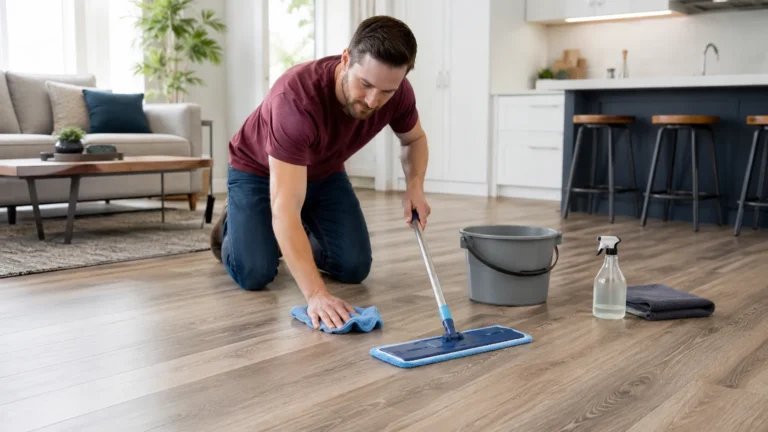
To clean paint from hardwood floors, first determine whether the paint is water-based or oil-based and test every cleaning method in a hidden spot. Start with warm water, mild dish soap, and a microfiber cloth. Gently lift softened paint with a plastic scraper. Use rubbing alcohol only for stubborn latex paint and mineral spirits only when the floor finish permits it.
Quick summary
- Blot fresh paint instead of wiping it across the floor.
- Begin with warm water and a few drops of dish soap.
- Use a plastic scraper, never a metal blade.
- Treat dried latex paint with limited rubbing alcohol only after testing.
- Use mineral spirits cautiously for oil-based paint.
- Avoid soaking the boards, aggressive heat, acetone, and abrasive pads.
- Stop if the finish becomes cloudy, sticky, soft, or discolored.
What Should You Check Before Removing Paint?
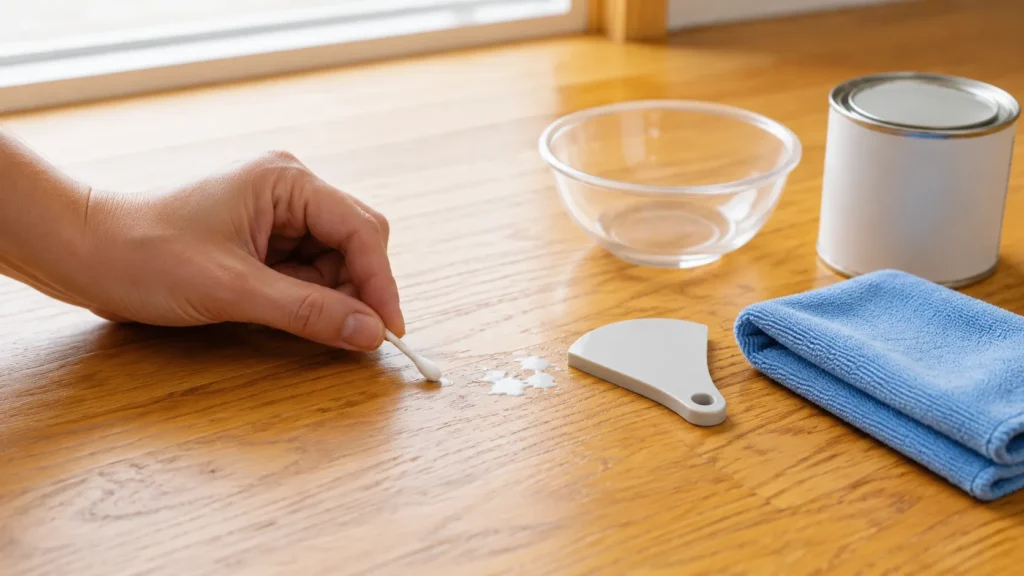
Before choosing a cleaner, identify three things:
- Is the paint fresh or dried?
- Is it water-based or oil-based?
- What finish is protecting the floor?
These factors matter more than the wood species. Paint usually rests on the finish rather than penetrating immediately into the wood. The goal is therefore to remove the paint without stripping, softening, or scratching that protective layer.
Is the Paint Fresh or Dried?
Fresh paint is generally easier to remove, but it can spread if wiped aggressively. Blot it from the outside toward the center.
Dried paint requires controlled softening and gentle lifting. Do not immediately reach for sandpaper, a razor blade, or a strong solvent.
Is It Latex, Acrylic, or Oil-Based Paint?
Check the paint can when available. If the paint type is unknown:
- Place a warm, damp cloth on a small paint spot for one or two minutes.
- If it softens, it is probably water-based latex or acrylic.
- If it does not soften, touch the paint with a cotton swab containing a small amount of isopropyl alcohol.
- If the paint transfers to the swab, it is likely latex or acrylic.
- If neither method affects it, it may be oil-based, enamel, or a fully cured specialty coating.
Do not flood the floor with alcohol during the test. Alcohol can affect shellac and some older finishes.
What Finish Is on the Hardwood?
Common finishes include:
- Factory-applied aluminum oxide
- Water-based or oil-based polyurethane
- Wax
- Penetrating oil or hardwax oil
- Shellac
- Lacquer
A modern polyurethane or factory finish is usually more resistant than wax, oil, shellac, or lacquer. However, even durable finishes can become cloudy or dull after repeated solvent exposure.
Homeowners who are uncertain about finish types can find broader surface-care guidance in the Hardwood flooring FAQs guide.
Important Older-Home Warning
Paint in homes built before 1978 may contain lead. Avoid sanding, grinding, heating, or creating paint dust until the material has been appropriately tested. This is especially important when removing large painted areas rather than a recent decorative spill.
Tools and Supplies
Start with the least aggressive tools:
- White microfiber cloths
- Mild dishwashing liquid
- Warm water
- Small bowl
- Plastic putty knife with rounded corners
- Old plastic gift card or credit card
- Cotton swabs
- Soft nylon-bristle brush
- Nitrile gloves
- Dry absorbent towels
- Manufacturer-approved hardwood cleaner
For stubborn paint, you may also need:
- 70% isopropyl alcohol
- Odorless mineral spirits
- Low-temperature hair dryer
- Finish-compatible paint remover
Choose white cloths when possible. Colored rags can transfer dye or make it difficult to see whether floor finish is coming off.
How to Remove Fresh Water-Based Paint
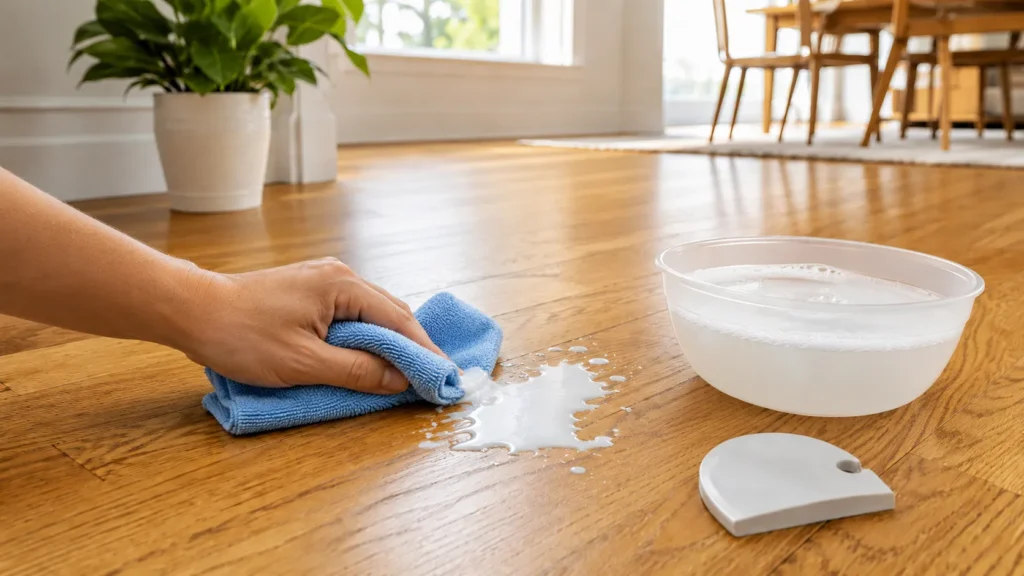
Fresh latex and acrylic paint are usually the easiest types to remove.
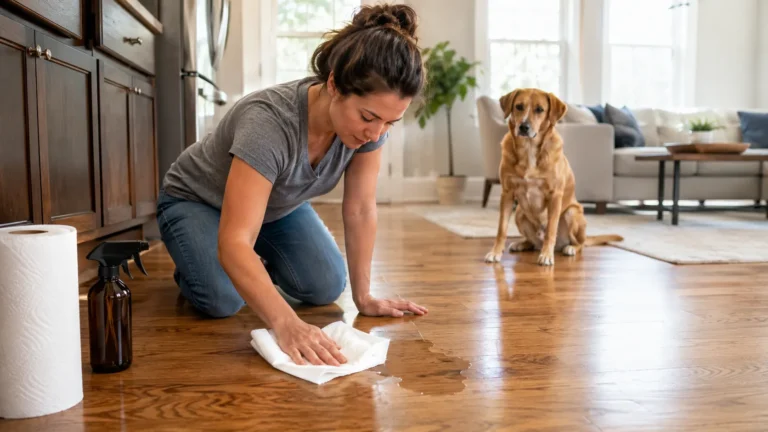
Step 1: Blot the Spill
Use a dry cloth or paper towel to lift as much paint as possible. Do not scrub in wide circles because this can spread the paint into board gaps and wood grain.
Step 2: Prepare a Mild Cleaning Solution
Add several drops of mild dish soap to a bowl of warm water. The cloth should be damp, not dripping.
Step 3: Wipe Toward the Center
Work from the outer edge of the spill toward its center. Use a clean section of the cloth with each pass.
Step 4: Lift Remaining Paint
If a thin edge remains, hold a plastic scraper almost flat against the floor and push gently in the direction of the wood grain.
Step 5: Remove Residue and Dry
Wipe the area with a separate barely damp cloth, then dry it immediately.
Do not allow water to remain in seams. Excess moisture can move between boards and contribute to swelling, raised edges, or finish whitening.
How to Remove Dried Latex Paint From a Wood Floor Without Damaging the Finish
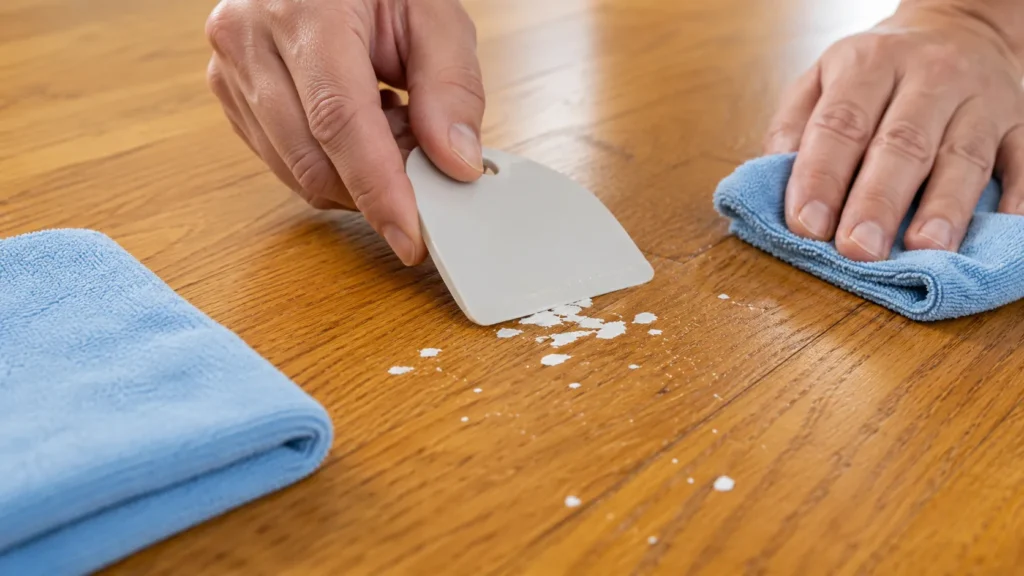
The safest process is to soften, lift, and repeat rather than trying to remove everything in one aggressive pass.
Step 1: Test a Hidden Area
Test warm soapy water and any stronger product in a closet, under a cabinet edge, or behind a door.
Stop if the finish:
- Becomes sticky
- Turns cloudy
- Loses color
- Transfers to the cloth
- Develops a different sheen
Step 2: Soften the Dried Paint
Place a warm, damp microfiber cloth over the paint for three to five minutes. Keep the cloth damp rather than wet.
This works well for many water-based paint splatters.
Step 3: Lift the Paint With Plastic
Use a rounded plastic putty knife or old plastic card. Keep the edge nearly parallel to the floor.
Push with the grain and use light pressure. A steep scraper angle can gouge the finish.
Step 4: Use Isopropyl Alcohol Only When Necessary
If the paint remains:
- Place a small amount of isopropyl alcohol on a cotton swab or cloth.
- Touch only the paint.
- Wait 30 to 60 seconds.
- Gently rub or lift the softened paint.
- Wipe the area with a barely damp cloth.
- Dry immediately.
Do not use alcohol broadly on an unknown finish. Alcohol can soften shellac and affect some older coatings.
Step 5: Repeat in Short Cycles
Several gentle treatments are safer than one long soaking period. Paint often releases in layers.
Step 6: Clean the Surface
Once the paint has been removed, clean the spot with a hardwood-compatible cleaner. For ongoing care techniques, see how to clean hardwood floor without leaving excess water behind.
How to Remove Oil-Based Paint From Hardwood
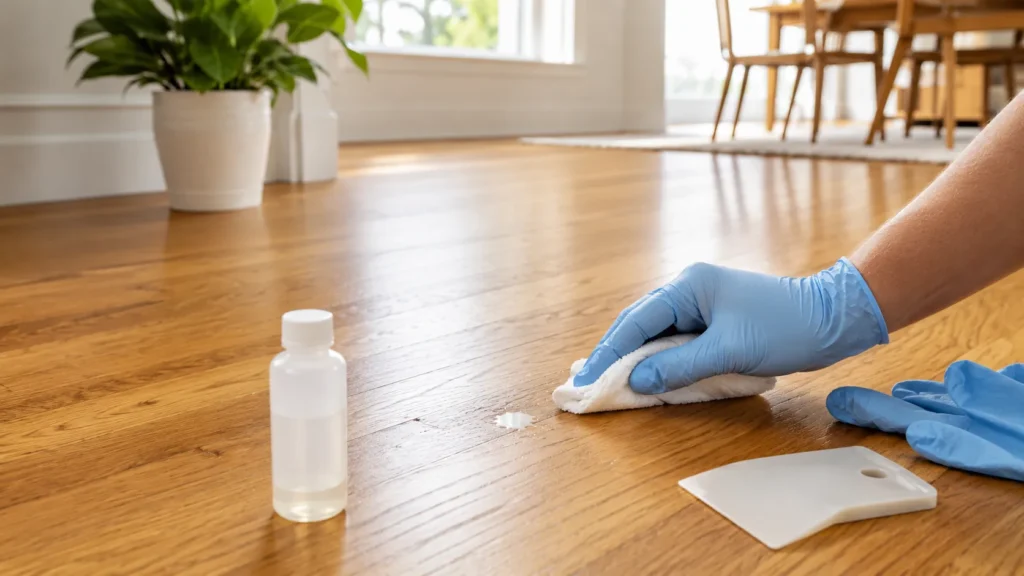
Oil-based paint normally requires more caution because water will not dissolve it.
For Fresh Oil-Based Paint
- Blot the spill with a dry absorbent cloth.
- Do not add water immediately.
- Use a small amount of mineral spirits only if the flooring manufacturer allows it.
- Apply the mineral spirits to a cloth, not directly to the floor.
- Work on the paint in short intervals.
- Wipe away residue and dry the area.
Keep the room ventilated and remove ignition sources.
For Dried Oil-Based Paint
Begin by lifting as much paint as possible with a plastic scraper. If residue remains, test mineral spirits in a hidden spot.
Apply only enough solvent to dampen the cloth. Long dwell times can alter the finish, dissolve wax, or leave a dull patch.
Avoid generic paint thinner unless you know exactly what the product contains and whether the floor manufacturer permits it.
Best Removal Method by Hardwood Finish
| Floor finish | Safer starting method | Main warning |
| Factory aluminum oxide | Damp cloth, dish soap, plastic scraper | Test solvents despite the finish’s durability |
| Polyurethane | Dish soap, plastic scraper, controlled alcohol for latex | Repeated solvent use can dull the sheen |
| Wax finish | Warm water used sparingly and gentle scraping | Alcohol and mineral spirits may remove wax |
| Penetrating oil or hardwax oil | Manufacturer-approved cleaner and plastic scraper | Solvents can create light or dry-looking patches |
| Shellac | Mild soapy water and very gentle scraping | Alcohol can dissolve shellac |
| Lacquer | Manufacturer guidance or professional help | Many solvents can soften lacquer quickly |
| Unknown older finish | Least aggressive method only | Stop before using alcohol, heat, or mineral spirits |
From a flooring point of view, the finish is usually more vulnerable than the wood beneath it. A method may remove the paint successfully but still leave a visible sheen difference.
Will Vinegar Remove Paint From a Floor?
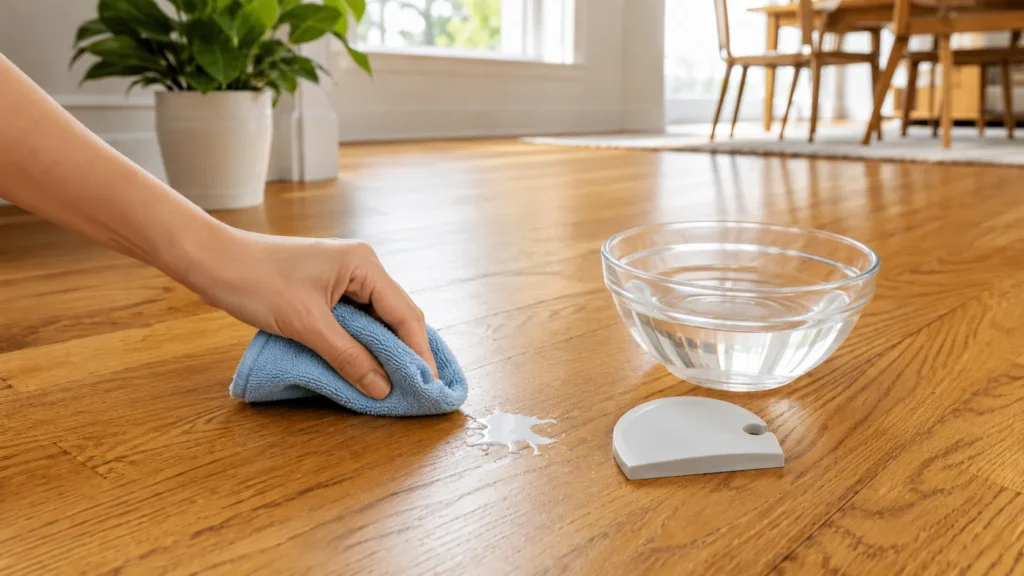
Vinegar may soften some water-based paint, but it should not be the first choice for finished hardwood. Its acidity can dull certain coatings, and repeated use may affect the sheen.
A mild dish-soap solution is normally safer.
When the floor manufacturer permits diluted vinegar:
- Use a weak solution
- Apply it to a cloth rather than pouring it on the floor
- Limit contact time
- Wipe the area clean
- Dry it immediately
Do not use vinegar on natural stone tile. Acid can etch marble, limestone, travertine, and similar materials.
Does WD-40 Remove Paint From Hardwood Floors?
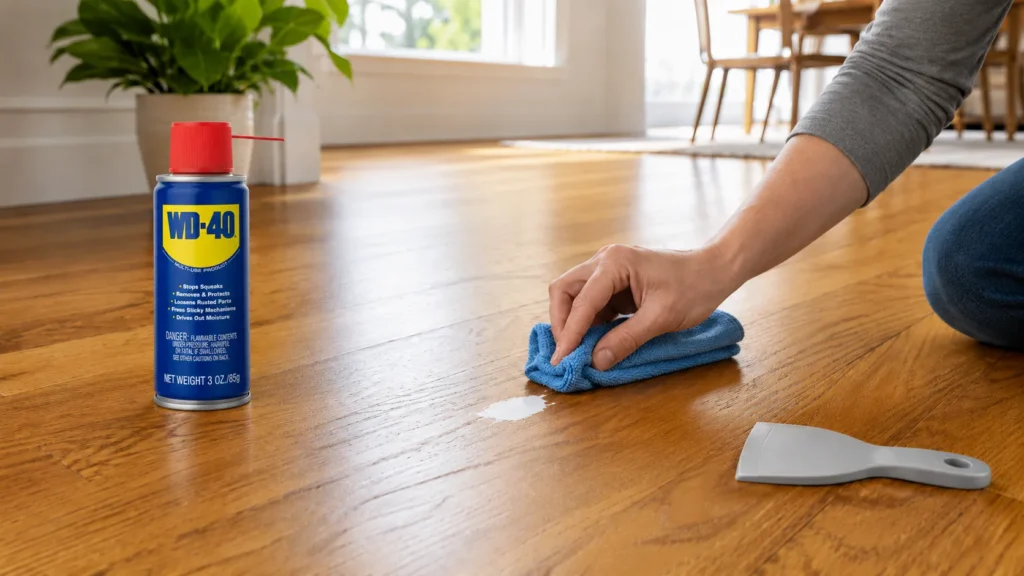
WD-40 may soften some latex paint, adhesive residue, or overspray, but it is not an ideal first-line hardwood treatment.
Potential problems include:
- Oily residue
- Slipperiness
- Uneven sheen
- Soil attraction
- Interference with future recoating or refinishing
Use dish soap, a plastic scraper, and controlled rubbing alcohol before considering WD-40. When WD-40 is used, test a tiny hidden spot, apply it to a cloth, and remove all oily residue afterward with a finish-compatible cleaner.
Which Home Remedies Are Safe?
| Remedy | Does it work? | Flooring recommendation |
| Warm water and dish soap | Often works on latex and acrylic paint | Best first method |
| Plastic card or scraper | Lifts softened dried paint | Recommended when used nearly flat |
| Isopropyl alcohol | Often softens latex paint | Spot-use only after testing |
| Diluted vinegar | May soften water-based paint | Not preferred for hardwood |
| Lemon juice | Acid may help soften residue | Avoid because it can affect the finish |
| WD-40 | May loosen some paint | Not a first choice due to oily residue |
| Mineral spirits | Can loosen oil-based paint | Use only when finish-compatible |
| Nail-polish remover or acetone | Removes many coatings rapidly | Avoid; it can strip the floor finish |
| Steel wool | Abrades paint | Avoid on finished hardwood |
| Razor blade | Can lift paint | High scratch and gouge risk; avoid |
| Heat gun | Softens paint | Excessive risk for many homeowners |
| Hair dryer | Can soften small spots | Use low heat and keep it moving |
Can Heat Be Used on Dried Paint?
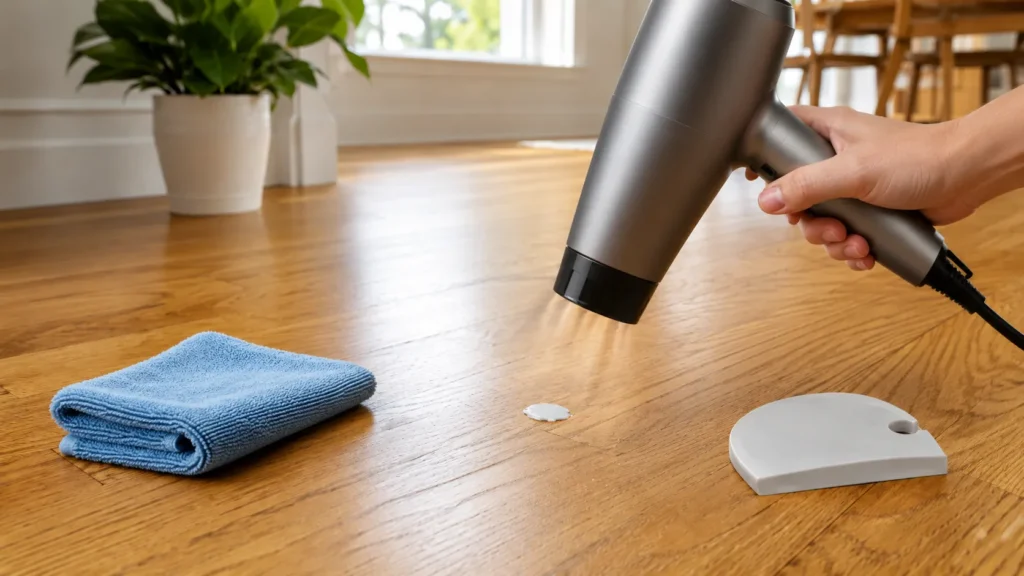
A low-temperature hair dryer can sometimes soften a thick paint drop.
Hold it several inches from the floor and keep it moving. Warm the paint for only a few seconds before trying a plastic scraper.
Avoid concentrated heat when the floor has:
- Wax
- Shellac
- Lacquer
- Heat-sensitive factory coatings
- Open gaps
- Existing finish damage
A heat gun can blister the finish, darken the wood, melt wax, or create fumes. It should not be the default DIY method.
How Do You Remove Paint From Floorboard Gaps?
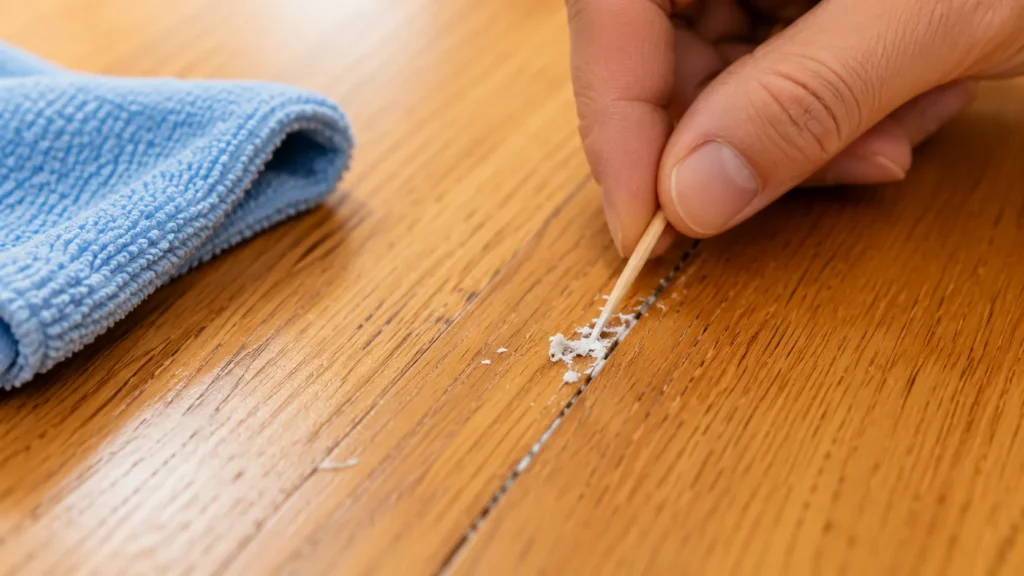
Paint in seams requires patience.
- Soften the paint with a barely damp cloth.
- Use the pointed corner of a plastic card or a wooden toothpick.
- Work along the gap rather than across it.
- Vacuum loosened fragments with a soft-brush attachment.
- Avoid forcing water or solvent into the joint.
Do not use a metal pick. A sharp tool can chip board edges and make the gap more visible.
Does the Method Change for Engineered Hardwood?
Engineered hardwood has real wood on top, so its finish should be treated much like solid hardwood.
However, the wood wear layer may be thin. Aggressive sanding can expose the core, and excessive moisture can affect the plank edges or joints.
Use the same least-aggressive sequence:
- Damp cloth
- Mild dish soap
- Plastic scraper
- Controlled spot treatment
- Immediate drying
What About Laminate and Tile?
| Flooring material | Recommended method | Main risk |
| Engineered hardwood | Treat according to finish; use minimal moisture | Thin wear layer and edge swelling |
| Laminate | Plastic scraper and slightly damp cloth | Moisture entering joints; printed layer damage |
| Ceramic or porcelain tile | Warm soapy water, plastic scraper, controlled alcohol | Scratching glazed surfaces or staining grout |
| Natural stone tile | Stone-safe cleaner only | Vinegar and acids can etch the stone |
| Luxury vinyl plank | Mild cleaner and plastic scraper | Strong solvents can discolor or soften wear layer |
For broader material-specific guidance, visit the Flooring FAQs resource.
How to Remove Paint From Floor Tiles
On glazed ceramic or porcelain tile:
- Soften water-based paint with warm soapy water.
- Lift it using a plastic scraper.
- Use a small amount of isopropyl alcohol for stubborn latex residue.
- Test the alcohol on grout before broad use.
- Rinse and dry the tile.
Do not assume tile and hardwood can tolerate the same chemicals. Also distinguish ceramic tile from natural stone before using vinegar or acidic cleaners.
Room-Specific Considerations
Kitchens and Entryways
These areas often have worn finishes from water, grit, and foot traffic. A solvent may create a more visible dull patch on an already worn floor.
Bedrooms
Paint found beneath old carpet may have been present for years. Test carefully because the floor may have an older wax or shellac finish.
Stairs
Maintain secure footing. Do not leave cleaning solution, oily residue, loose cloths, or tools on stair treads.
Around Baseboards
Paint can bridge the floor and trim. Score only the paint edge with extreme care before lifting it so that you do not peel the baseboard coating or floor finish.
Common Paint-Removal Mistakes
Scraping With a Razor Blade
A metal blade can cut through the paint and the floor finish in the same motion. Even a small scratch may appear darker after cleaning.
Soaking the Floor
Water and solvents can move into seams, end joints, and damaged finish areas. Use a damp cloth rather than pouring liquid directly onto the boards.
Starting With the Strongest Solvent
The strongest cleaner is not automatically the best cleaner. Begin with soap and water, then move upward only when necessary.
Scrubbing Across the Grain
Work in the direction of the wood grain. Circular or cross-grain abrasion can leave visible marks.
Using an Abrasive Pad
Green scrub pads, steel wool, melamine sponges, and coarse brushes can change the finish sheen even when they do not leave a deep scratch.
Combining Products
Do not mix cleaners, solvents, acids, bleach, or ammonia. Besides creating unpredictable reactions, combinations make it difficult to determine which product damaged the finish.
Ignoring the Manufacturer’s Care Instructions
Factory-finished flooring may have specific restrictions. Confirm approved products whenever the brand or finish system is known.
What Should You Do After the Paint Is Removed?
- Wipe away all cleaner or solvent residue.
- Dry the boards immediately.
- Buff gently with a clean microfiber cloth.
- Inspect the area from several angles.
- Allow it to dry completely before judging the sheen.
A temporary dark appearance may be moisture. A persistent pale, cloudy, sticky, or glossy patch suggests finish damage.
Do not apply furniture polish, wax, or oil unless it matches the existing finish system. Random polish can make future recoating more difficult.
How Can You Prevent Future Paint Spills?
- Use canvas drop cloths rather than thin plastic alone.
- Tape drop-cloth edges at walls and doorways.
- Keep paint cans inside a larger plastic tray.
- Close the can when it is not being used.
- Keep a damp cloth and plastic scraper nearby.
- Remove shoes before walking out of the painting area.
- Clean drips before they cure.
- Inspect floor gaps and perimeter edges after painting.
When Is Professional Help Needed?
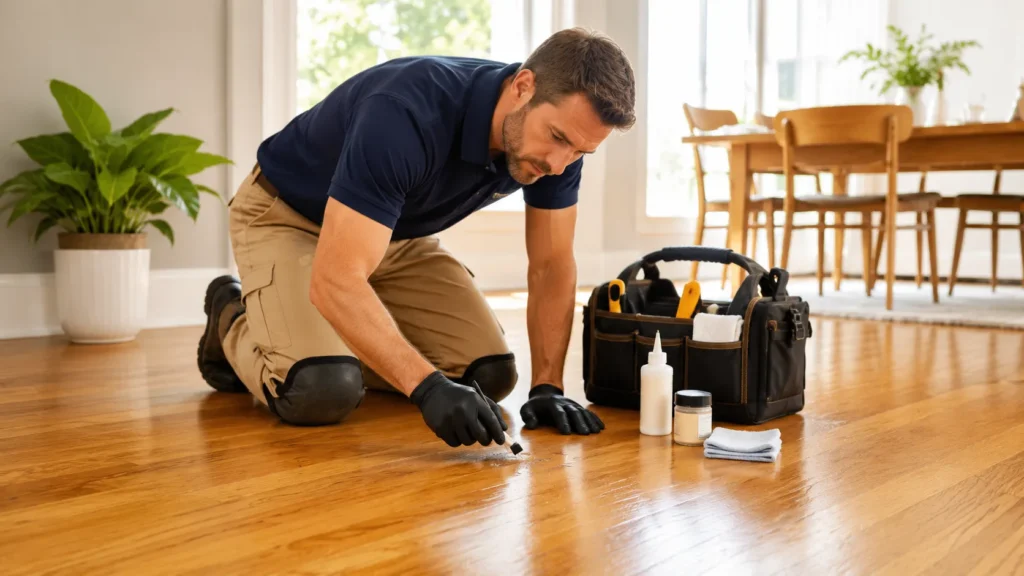
Contact a flooring professional when:
- The spill covers several square feet
- Paint has penetrated unfinished wood
- The floor has shellac, lacquer, wax, or an unknown antique finish
- The surface becomes sticky or discolored
- Solvent has removed the finish
- The paint contains or may contain lead
- Scraping has gouged the boards
- Paint is deeply embedded in open-grain wood
- The affected area needs sanding and recoating
Most paint spills do not require board replacement. Local refinishing, a screen-and-recoat, or a carefully blended finish repair may be sufficient. Board replacement is more likely when the wood itself has been deeply stained, cut, or chemically damaged.
Final Expert Recommendation
The safest way to clean paint from hardwood floors is to move from the least aggressive method to the most controlled stronger treatment. Start with warm water, mild dish soap, and a plastic scraper. Identify the floor finish before using alcohol or mineral spirits, and stop immediately if the sheen or texture changes.
At EveryFAQ, the practical rule is simple: protect the finish first. Removing paint slowly is usually cheaper and less visible than repairing a stripped or scratched floor afterward.
FAQs
What is the safest way to remove dried latex paint from hardwood?
Soften the paint with a warm, damp cloth and mild dish soap. Lift it with a nearly flat plastic scraper. Use a small amount of isopropyl alcohol on the paint only when the first method fails and the finish passes a hidden-area test.
Can rubbing alcohol damage hardwood floors?
Yes. Alcohol can dull some coatings and dissolve shellac. Use it only as a controlled spot treatment after testing. Stop if the finish becomes soft, sticky, cloudy, or discolored.
Will vinegar remove paint from a floor?
Vinegar may soften some water-based paint, but it is not the safest first choice for finished hardwood. Use warm water and dish soap first. Never use vinegar on marble, limestone, travertine, or other acid-sensitive stone.
Does WD-40 remove paint from hardwood floors?
It may loosen some latex paint or overspray, but it can leave an oily, slippery residue and interfere with future refinishing. Use it only after testing and after safer methods have failed.
Can I use acetone or nail-polish remover on hardwood?
No. Acetone can dissolve or discolor polyurethane, lacquer, shellac, and other coatings. It may remove the paint but also strip the floor finish.
Can I scrape paint with a razor blade?
A razor blade can scratch or gouge hardwood and laminate. Use a rounded plastic putty knife or old plastic card instead.
How can I tell whether the paint is latex or oil-based?
Try warm water first. Water-based paint often softens. If it does not, touch the paint with a small amount of isopropyl alcohol. Latex or acrylic commonly transfers to the cloth, while oil-based paint usually does not.
How do I remove paint from ceramic tile?
Soften water-based paint with warm soapy water, then use a plastic scraper. For stubborn latex residue, test a small amount of isopropyl alcohol. Avoid metal blades and test grout separately.
What should I do if paint removal leaves a dull spot?
Allow the area to dry completely and buff it with a clean microfiber cloth. If the dullness remains, the finish may have been altered. Avoid applying random polish; ask the flooring manufacturer or a refinishing professional about a compatible repair.
Does dried paint mean the hardwood must be sanded?
Usually not. Many dried splatters can be softened and lifted without sanding. Sanding should be reserved for paint that has penetrated unfinished wood or for areas where the finish already requires repair.