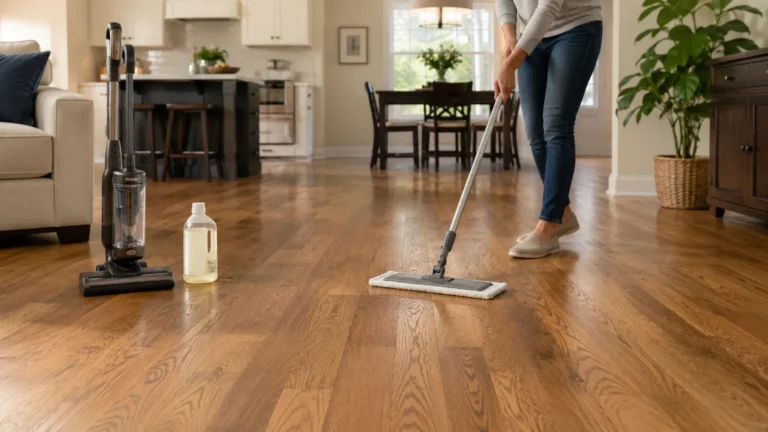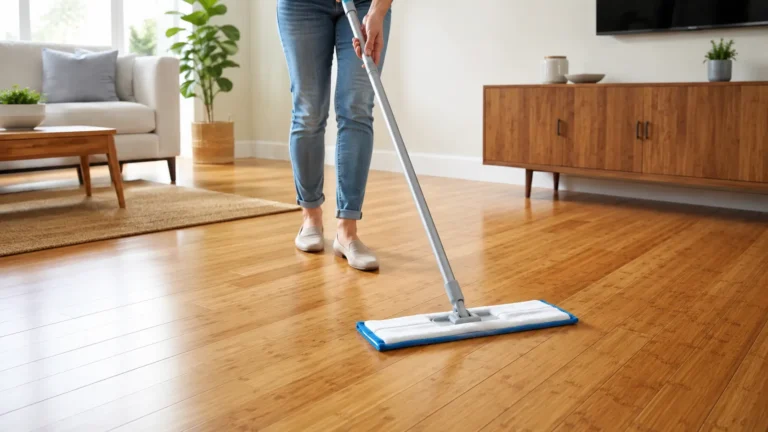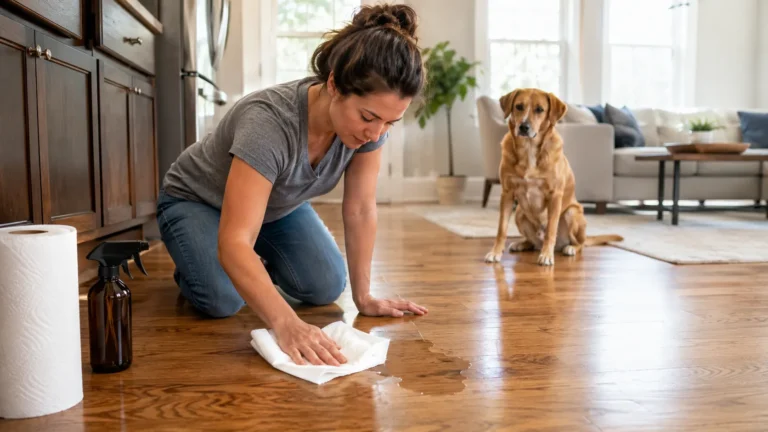
Vinyl hardwood flooring usually refers to wood-look vinyl plank flooring, not genuine hardwood. Although it resembles natural wood, vinyl requires a different cleaning routine. The safest method is to remove loose dirt, use a lightly damp microfiber mop, and clean with a pH-neutral product approved for vinyl flooring.
Avoid steam, excessive water, abrasive tools, and wax-based products because they can damage the wear layer, enter plank seams, or leave a dull residue.
What You Need
Before cleaning, gather:
- Soft-bristle broom or vacuum
- Microfiber dust mop
- Microfiber wet mop
- Bucket of warm water
- pH-neutral vinyl-floor cleaner
- Clean microfiber cloths
- Soft nylon brush for textured areas
Check the flooring manufacturer’s care instructions before applying any cleaner. Product warranties may exclude damage caused by steam, harsh chemicals, or unsuitable cleaning products.
How to Clean Vinyl Hardwood Floors Step by Step
1. Remove Loose Dirt and Grit
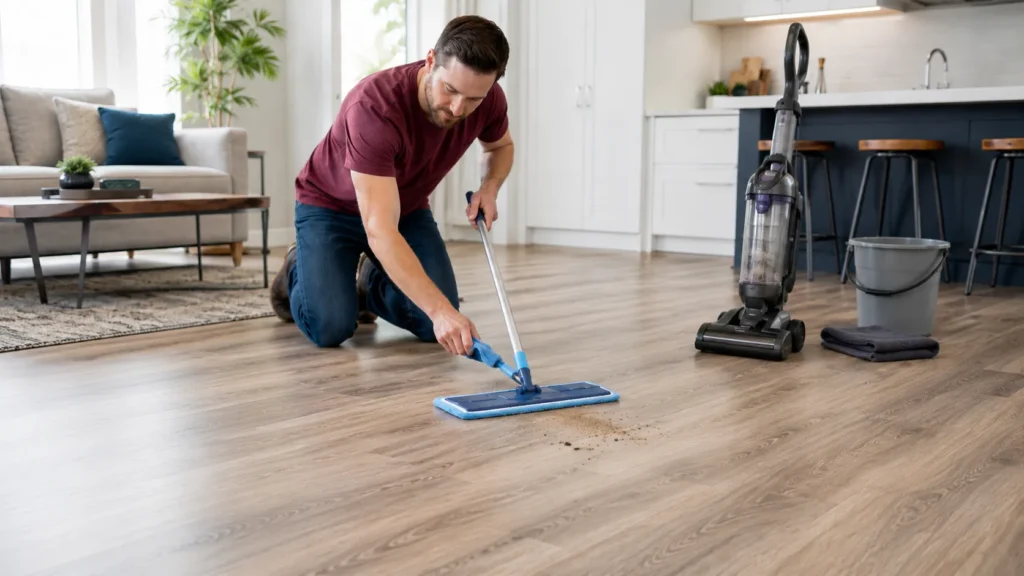
Sweep the floor with a soft-bristle broom or use a microfiber dust mop.
A vacuum is also suitable when it has a hard-floor setting. Turn off the rotating brush or beater bar because stiff bristles can scratch the vinyl wear layer.
Pay close attention to:
- Entryways
- Kitchen work areas
- Beneath dining tables
- Around pet bowls
- Along baseboards
- Between plank edges
Removing grit first prevents it from scratching the surface during mopping.
2. Prepare a Vinyl-Safe Cleaning Solution
Fill a bucket with warm—not hot—water and add the recommended amount of pH-neutral vinyl cleaner.
Do not use more cleaner than the label directs. An overly concentrated solution can leave a sticky film that attracts dirt and makes the floor look cloudy.
A small amount of mild dish soap may be used for occasional grease cleanup, but it should not replace a manufacturer-approved floor cleaner for regular maintenance.
3. Use a Lightly Damp Microfiber Mop
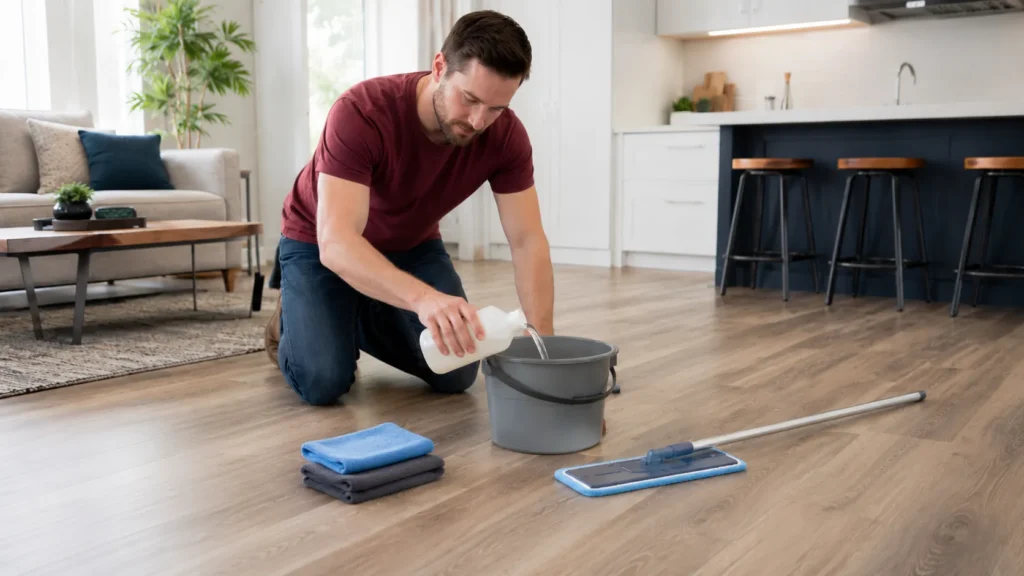
Dip the mop into the cleaning solution and wring it thoroughly.
The mop should be damp rather than dripping wet. Vinyl plank flooring is more water-resistant than natural hardwood, but water can still travel through damaged seams, perimeter gaps, or loose joints.
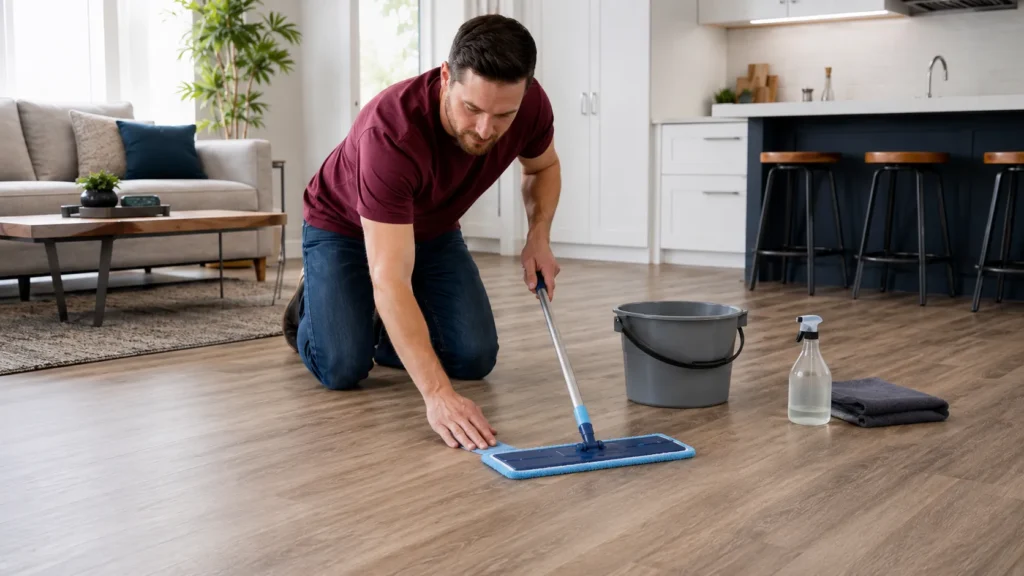
Clean in small sections and follow the direction of the planks. This makes streaks less noticeable and helps remove debris from textured wood-grain patterns.
4. Wipe Away Cleaner Residue
Some vinyl cleaners are designed as no-rinse products. Others may leave residue if too much is used.
When rinsing is necessary, use a second microfiber mop lightly dampened with clean water. Do not pour water directly onto the flooring.
Residue should be removed because it can:
- Create streaks
- Make the floor feel sticky
- Attract dust
- Reduce the floor’s natural appearance
- Increase slip risk
5. Allow the Floor to Dry
Let the floor air-dry before allowing heavy foot traffic.
You can also wipe damp areas with a clean microfiber cloth, especially around seams, thresholds, baseboards, and cabinets.
Do not place rugs back on the floor until the surface and rug backing are fully dry.
Vinyl Plank Flooring Is Not Cleaned Like Real Hardwood
Vinyl and natural hardwood may look similar, but their maintenance needs are different.
Vinyl has a synthetic wear layer, while real hardwood has a wood surface protected by polyurethane, oil, wax, or another finish. Cleaners designed for one material may not be suitable for the other.
For natural wood flooring, follow the methods in our guide on How to clean hardwood floor surfaces safely without damaging the finish.
How to Remove Common Stains
Food and Drink Spills
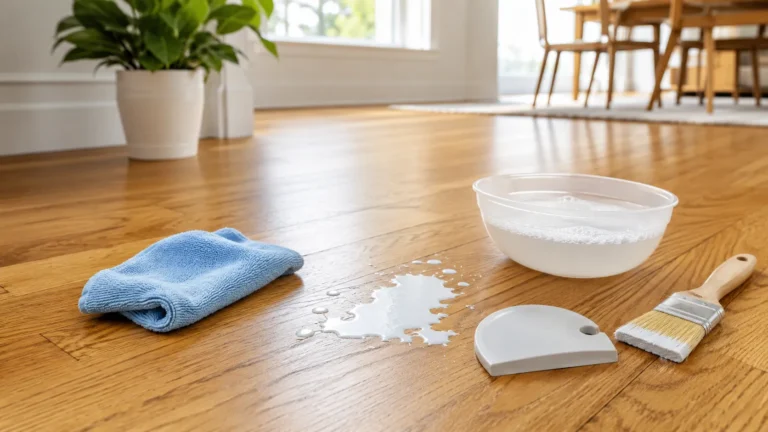
Blot the spill immediately with a clean cloth. Wipe the area with a diluted vinyl-safe cleaner, then dry it.
Avoid rubbing the spill across a larger area.
Grease and Cooking Residue
Apply a small amount of diluted dish soap to a damp microfiber cloth. Wipe the grease gently, remove the soap residue with a clean damp cloth, and dry the floor.
Shoe Scuffs
Start with a dry microfiber cloth. If the mark remains, use a slightly damp cloth and gentle pressure.
Do not use steel wool, abrasive pads, or gritty powder.
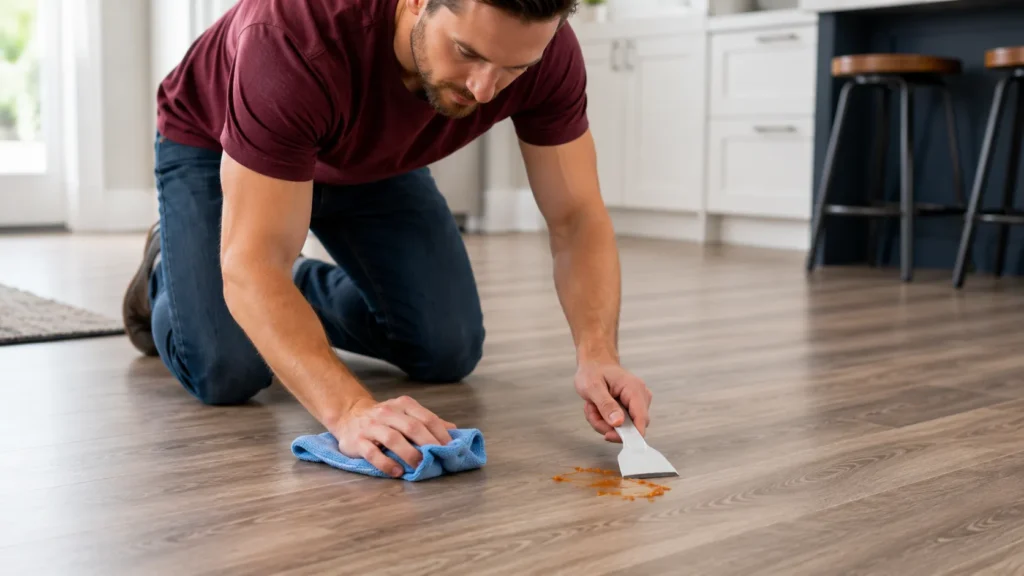
Sticky Residue
Soften the residue with a damp cloth and remove it carefully with a plastic scraper held nearly flat against the floor.
Avoid metal blades because they can cut the wear layer.
Ink, Makeup, or Marker
Test a small amount of rubbing alcohol in an inconspicuous area first. Apply it to a cloth rather than directly to the floor, blot the mark, and wipe away any remaining residue.
Pet Accidents
Clean pet urine or other accidents immediately.
Use a vinyl-safe enzymatic cleaner when necessary, and avoid allowing liquid to sit along the plank joints. Dry the area thoroughly after cleaning.
What Should You Avoid?
Steam Mops
Steam combines heat and moisture. It may weaken adhesive, affect locking joints, enter seams, or cause certain planks to lift.
Excessive Water
Vinyl plank surfaces may resist water, but the entire floor assembly is not automatically waterproof. Moisture can affect the subfloor, adhesive, or plank edges.
Wax and Floor Polish
Most modern vinyl floors do not require waxing. Wax can create uneven buildup, make the floor slippery, and change its appearance.
Oil Soap
Oil-based soap may leave a dull or sticky coating on vinyl.
Abrasive Tools
Avoid:
- Steel wool
- Scouring pads
- Hard-bristle brushes
- Abrasive powders
- Metal scrapers
These materials can scratch or permanently dull the wear layer.
Undiluted Bleach or Ammonia
Strong chemicals may discolor the flooring, affect the finish, or damage nearby materials. Never mix cleaning chemicals.
How Often Should Vinyl Hardwood Floors Be Cleaned?
| Cleaning Task | Recommended Frequency |
|---|---|
| Sweep or dust-mop | Every few days or as needed |
| Vacuum | Weekly |
| Damp-mop | Every one to two weeks |
| Clean spills | Immediately |
| Clean beneath furniture | Monthly |
| Inspect seams and edges | Every few months |
Homes with pets, children, outdoor shoes, or heavy traffic may need more frequent cleaning.
How to Protect Vinyl Flooring Between Cleanings
Use doormats at exterior entrances to reduce tracked grit and moisture.
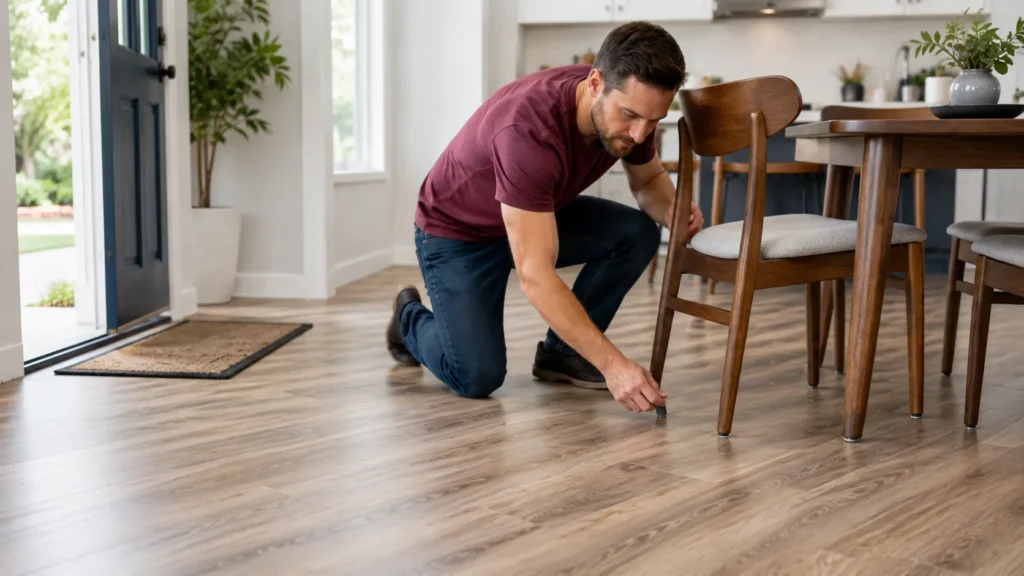
Place felt pads beneath furniture legs and lift furniture instead of dragging it. Use a vinyl-compatible chair mat beneath rolling office chairs.
Avoid rubber-backed rugs unless the flooring manufacturer permits them. Some rubber backings can react with vinyl and cause discoloration.
Homeowners comparing vinyl care with natural wood maintenance can find additional guidance in our Hardwood flooring FAQs.
Can You Use Vinegar on Vinyl Plank Flooring?
Some manufacturers allow a heavily diluted vinegar solution, while others recommend only approved pH-neutral products.
Vinegar is acidic and may affect certain finishes when used too strongly or too often. A vinyl-specific cleaner is usually the safer choice.
Always check the manufacturer’s instructions and test any new solution in a hidden area.
Final Recommendation
The best way to clean vinyl hardwood floors is to remove loose grit, use a lightly damp microfiber mop, and apply a pH-neutral cleaner approved for vinyl. Keep water away from seams, avoid steam and abrasive tools, and clean spills promptly.
Different flooring materials require different cleaning methods. Visit our complete Flooring FAQs for practical guidance on vinyl, hardwood, laminate, tile, cork, moisture problems, stains, scratches, and routine maintenance.