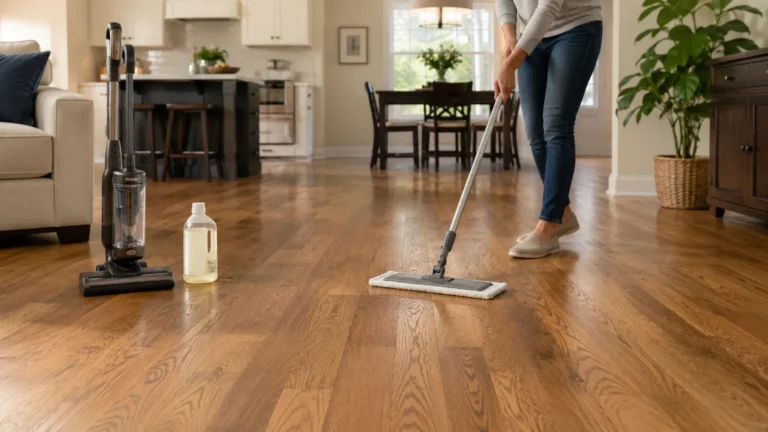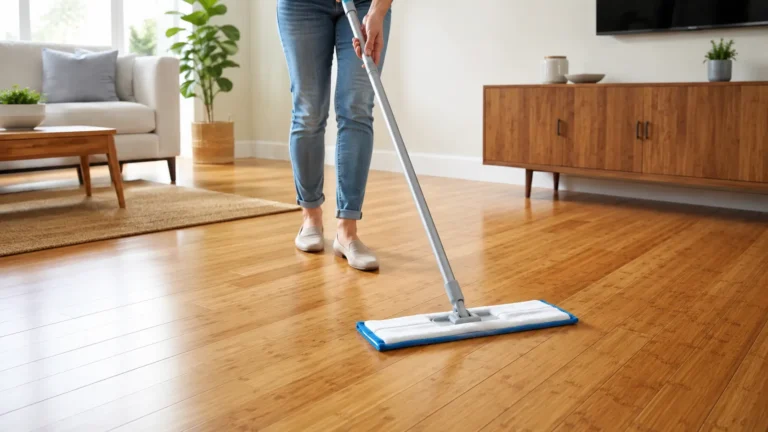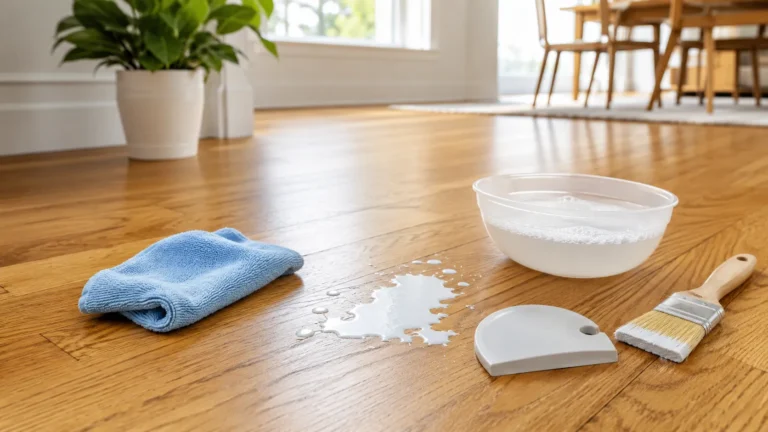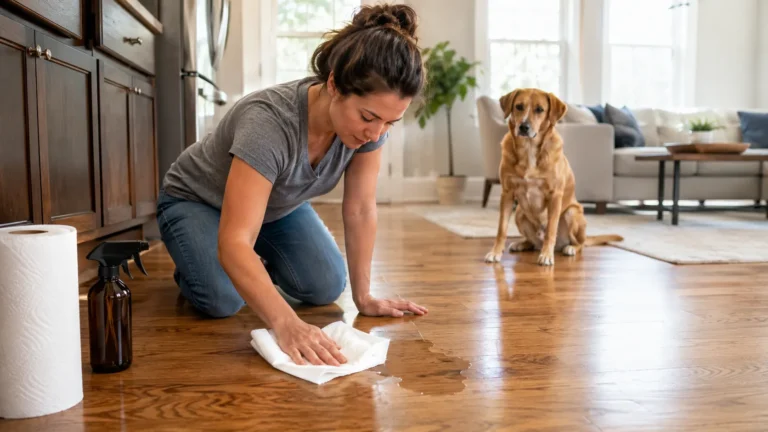
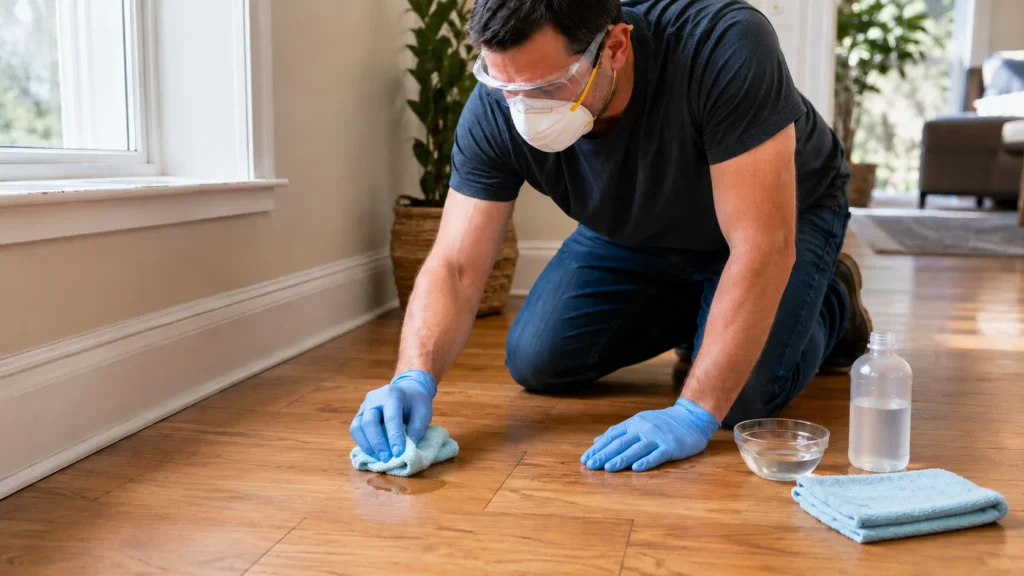
To clean a small surface patch of mold from a structurally sound hardwood floor, first repair the moisture source. Wear an N95 respirator, gloves, and goggles, then clean the area gently with a lightly damp cloth or soft brush and mild detergent. Wipe away residue and dry the wood completely. Do not soak the seams or sand active mold.
Safety note: This guide is intended for small, surface-level mold patches on structurally sound flooring. Hire a qualified professional if the affected area exceeds roughly 10 square feet, follows contaminated flooding, returns after cleaning, or appears beneath the floor.
Quick Summary: Can You Clean It Yourself?
| Situation | Recommended response |
| Small patch on an intact finished surface | Careful DIY cleaning may be reasonable |
| Less than about 10 square feet | Often manageable with proper protection |
| Mold limited to the top finish | Clean gently and dry fully |
| Musty smell but no visible source | Investigate beneath furniture, rugs, appliances, and boards |
| Cupped, buckled, loose, or swollen planks | Stop and arrange an inspection |
| Mold beneath boards or on the subfloor | Professional assessment is usually appropriate |
| Soft, spongy, or crumbling wood | Replacement may be necessary |
| Mold after sewage or contaminated floodwater | Do not treat as a routine DIY cleanup |
| Mold keeps returning | The moisture source remains or hidden growth is present |
| Area larger than about 10 square feet | Contact a mold-remediation professional |
The EPA states that homeowners can often address an area smaller than approximately 10 square feet, but the response also depends on the water source, material, hidden growth, occupant health, and extent of damage.
What Causes Mold on Hardwood Floors?
Mold needs moisture. On hardwood flooring, the most common causes are plumbing leaks, appliance leaks, wet rugs, spills left beneath furniture, high humidity, condensation, pet-water bowls, planters, flooding, and damp crawlspaces.
A hardwood finish may slow surface absorption, but it does not make the floor waterproof. Water can enter through:
- Plank seams
- Beveled edges
- Scratches
- Nail holes
- Worn finish
- Gaps near walls
- Damaged transitions
- The underside of the boards
Cleaning visible growth without fixing the leak or humidity problem is temporary. The EPA identifies moisture control as the central requirement for controlling indoor mold.
Is It Mold, Dirt, or a Water Stain?
Mold can be black, green, gray, white, brown, or another color. Color alone does not identify the species or tell you how hazardous it is.
Look for several signs together:
| Sign | More consistent with mold | More consistent with a stain |
| Texture | Fuzzy, powdery, slimy, or raised | Smooth and flat |
| Pattern | Irregular and spreading | Often follows a spill outline or wood grain |
| Odor | Musty or earthy | Usually little or no odor |
| Moisture history | Leak, flooding, condensation, damp rug | May follow an old spill that is now dry |
| Change over time | May expand or return | Usually remains stable |
| Wood condition | May occur with softness or warping | Wood may remain firm |
Routine mold sampling is usually unnecessary when visible growth and an obvious moisture problem are present. The practical priority is to remove the growth and correct the water source rather than identify the exact species.
Is the Mold Only on the Surface?
This is the most important flooring question.
Surface-level mold is more likely when:
- The patch is small.
- The finish is intact.
- The boards remain flat and firm.
- The problem followed a brief surface spill.
- There is no odor after the area dries.
- The growth wipes away without returning.
- Moisture readings return to the normal range of surrounding boards.
Hidden mold is more likely when:
- The musty odor remains after cleaning.
- Growth appears between planks or at the baseboard.
- The boards are cupped, crowned, buckled, or lifting.
- Engineered planks are swollen or delaminating.
- The floor feels soft or spongy.
- Water remained beneath a rug, cabinet, appliance, or underlayment.
- The leak continued for days or weeks.
- Staining follows multiple plank seams.
- Mold returns after the surface is cleaned.
In real homes, mold that appears along several board edges often signals that moisture entered the floor assembly rather than remaining only on top.
What You Need Before Cleaning
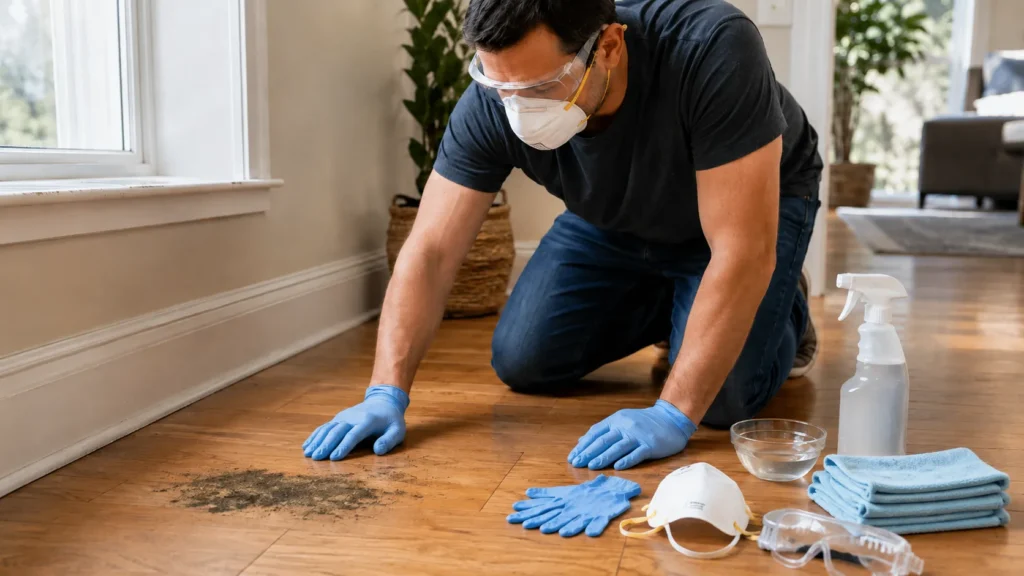
For a small DIY cleanup, gather:
- N95 respirator
- Non-vented safety goggles
- Disposable or washable gloves
- Long sleeves and long pants
- Two or more microfiber cloths
- Soft nylon brush
- Bucket or small bowl
- Mild detergent
- Clean water
- Plastic trash bags
- Hygrometer
- Dehumidifier
- HEPA vacuum, when available
The EPA recommends gloves, eye protection, and at least an N95 respirator when handling mold. People with respiratory conditions, mold allergies, or weakened immune systems should avoid participating in cleanup and discuss appropriate precautions with a healthcare professional.
How to Clean Mold Off Hardwood Floors Step by Step
Step 1: Stop the Moisture Source
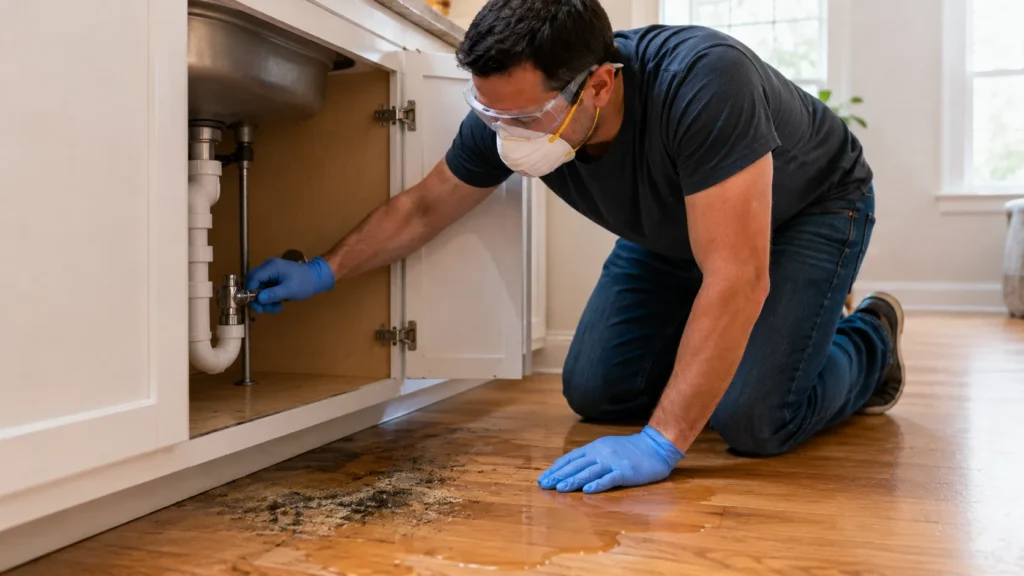
Do not begin by scrubbing.
Check for:
- Sink and dishwasher leaks
- Refrigerator or ice-maker supply lines
- Toilet seals and supply valves
- Washing-machine hoses
- Window or exterior-door leaks
- Wet planters
- Damp rugs
- Condensation
- Crawlspace or basement moisture
Repair the leak and remove standing water first. Water-damaged materials should be dried as quickly as practical; EPA guidance commonly uses 24–48 hours as the critical prevention window.
Step 2: Measure and Assess the Area
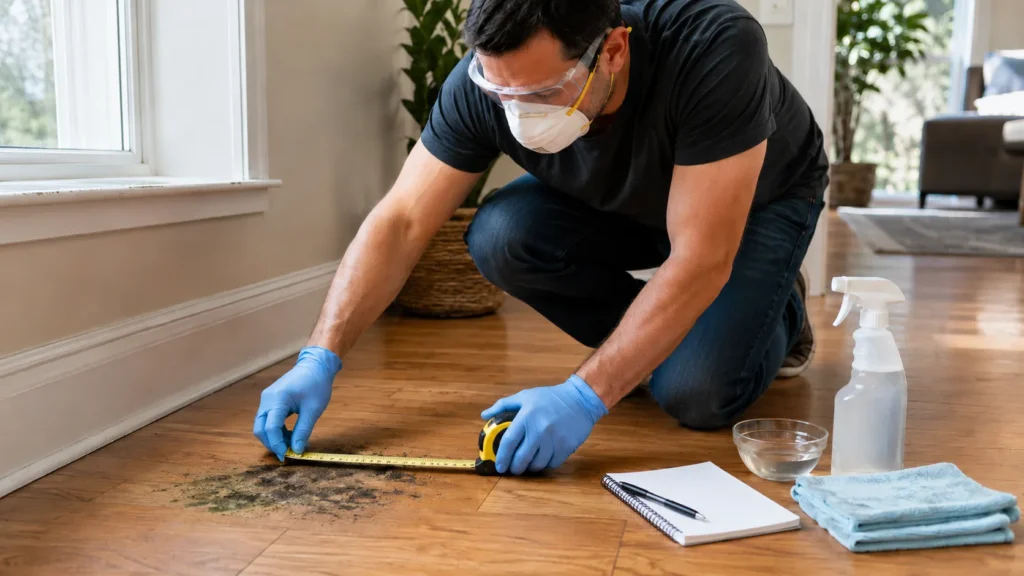
Estimate the visible surface area.
Stop the DIY process when:
- The total area is larger than roughly 3 feet by 3 feet.
- Growth extends beneath cabinets or walls.
- Water came from sewage or contaminated flooding.
- The wood is soft, swollen, loose, or badly distorted.
- Multiple rooms are affected.
- Mold appears inside HVAC equipment.
- Sensitive occupants are present.
- You cannot identify the moisture source.
Step 3: Isolate the Work Area
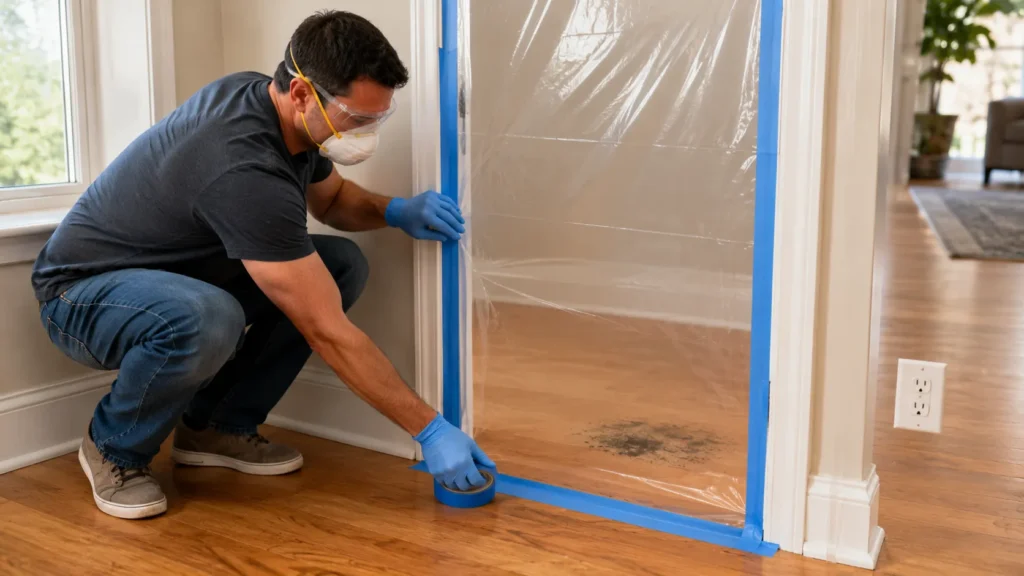
Keep children and pets away.
Close doors to adjacent rooms where practical. Do not point a fan across active mold toward the rest of the home. Open an exterior window when weather permits, especially when using a labeled cleaning product.
Do not mix cleaning chemicals. In particular, never mix bleach with ammonia or another cleaner because dangerous fumes can result.
Step 4: Remove Nearby Items
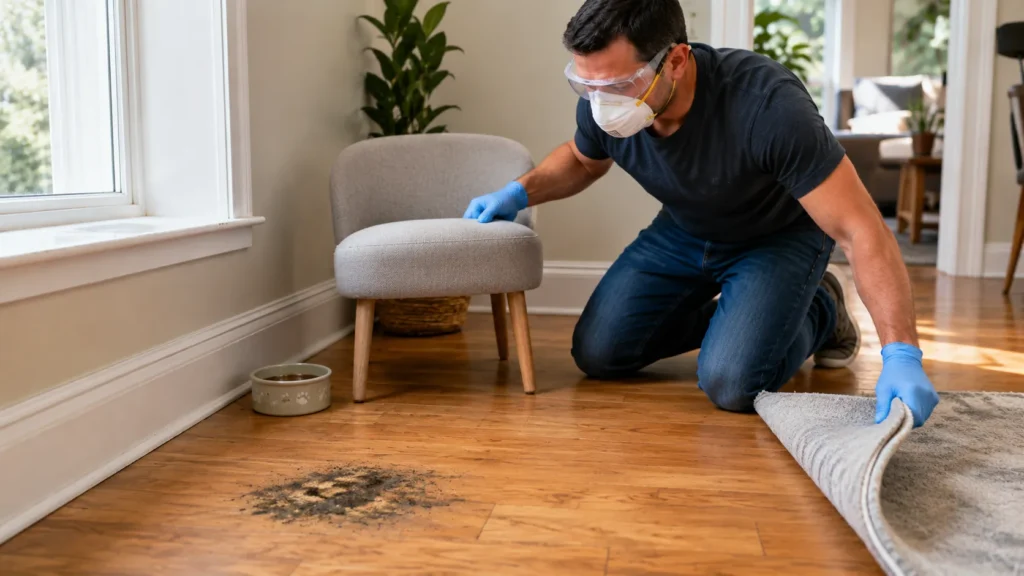
Move furniture, rugs, toys, pet bowls, plants, and movable objects.
Inspect the underside of rugs and furniture legs. A rug pad, cardboard box, mattress, or planter may hold moisture against the floor even when the exposed surface appears dry.
Bag disposable mold-contaminated materials before carrying them through the home.
Step 5: Avoid Dry Brushing or a Standard Vacuum
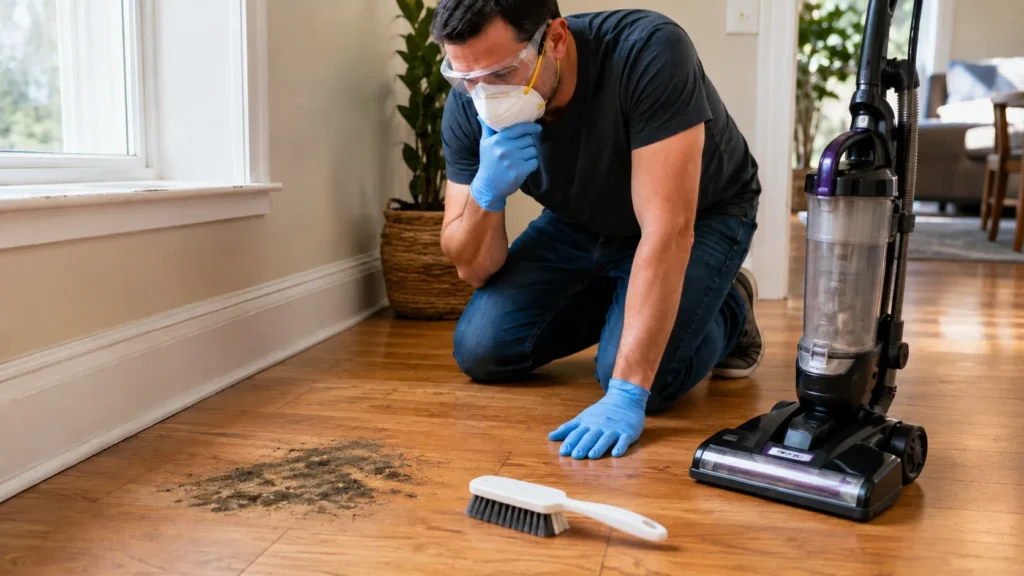
Do not aggressively brush dry mold because this can release spores.
A regular household vacuum may also spread fine particles. When vacuuming is appropriate, use a sealed HEPA-filtered unit and follow the manufacturer’s instructions. The EPA includes HEPA vacuuming in mold-remediation methods because it can collect particles remaining after the material has dried.
Step 6: Prepare a Mild Cleaning Solution
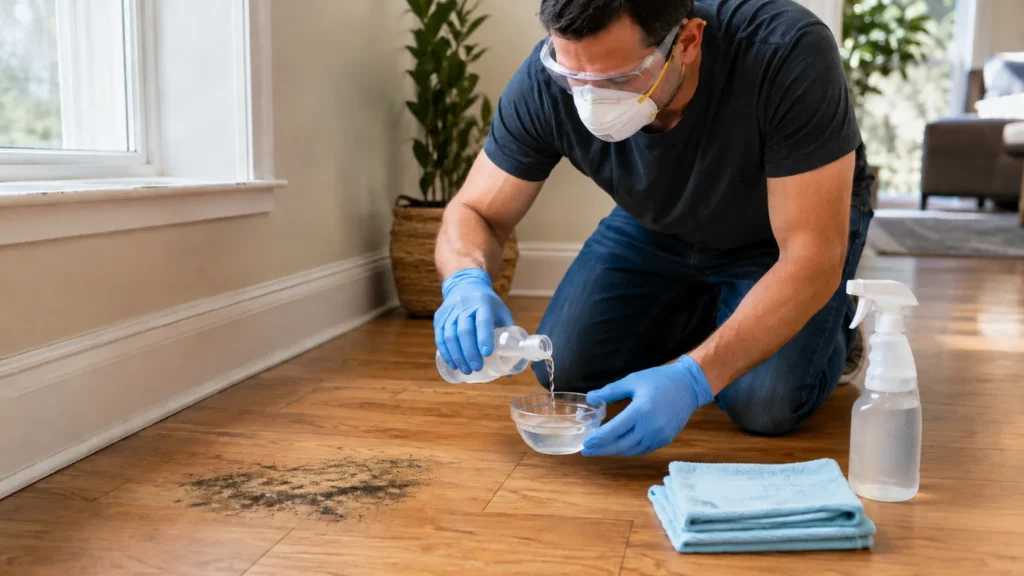
For an intact finished hardwood surface, begin with:
- A small amount of mild dish detergent
- Clean, lukewarm water
The cloth or brush should be damp, not dripping.
Do not pour water onto the floor or spray heavily into plank seams. Treated or finished wood surfaces may be cleaned with mild detergent and clean water, provided they are allowed to dry thoroughly.
Step 7: Test an Inconspicuous Area
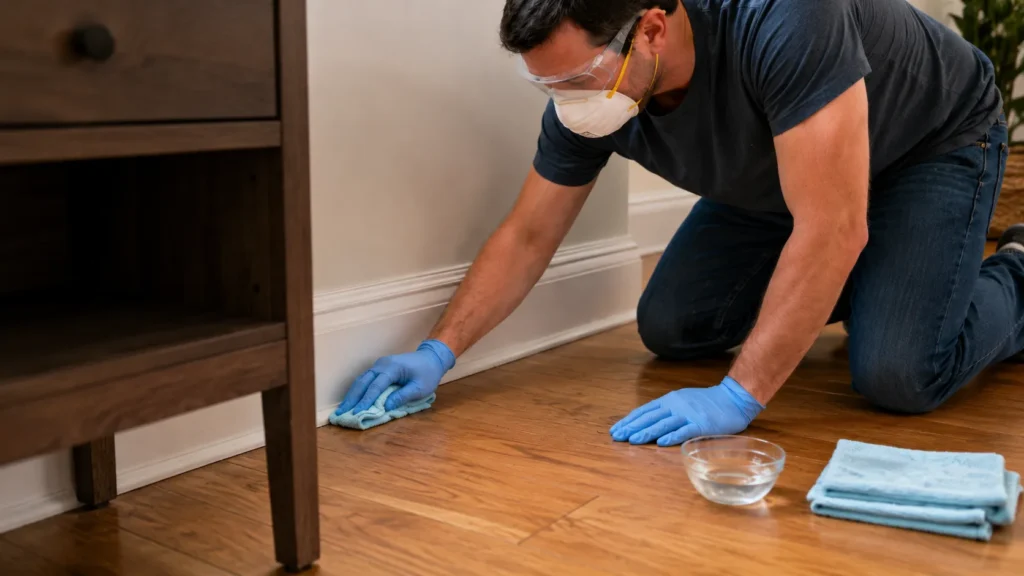
Apply a small amount behind a door, beneath furniture, or in another hidden location.
Check for:
- Dulling
- Whitening
- Softening
- Color change
- Sticky residue
- Finish damage
Stop if the finish reacts.
Step 8: Clean Gently Along the Grain
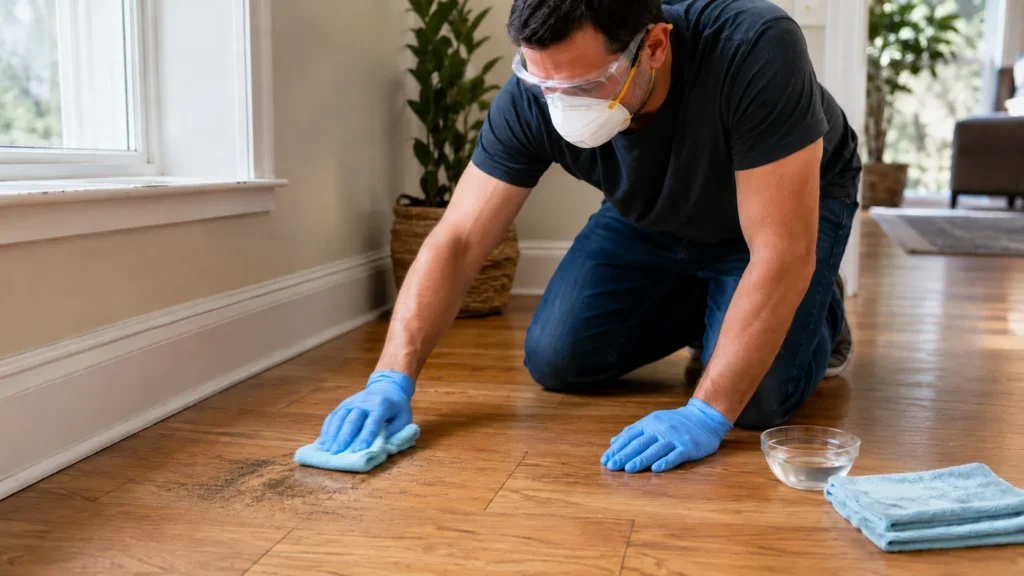
Apply the solution to the cloth or soft brush rather than saturating the floor.
Work in a small section:
- Lightly dampen the visible growth.
- Wipe or scrub gently in the direction of the grain.
- Avoid forcing moisture between boards.
- Use a fresh cloth as residue transfers.
- Repeat only as necessary.
The EPA’s basic guidance is to scrub mold from cleanable hard surfaces with detergent and water and dry the surface completely.
Step 9: Wipe Away Residue
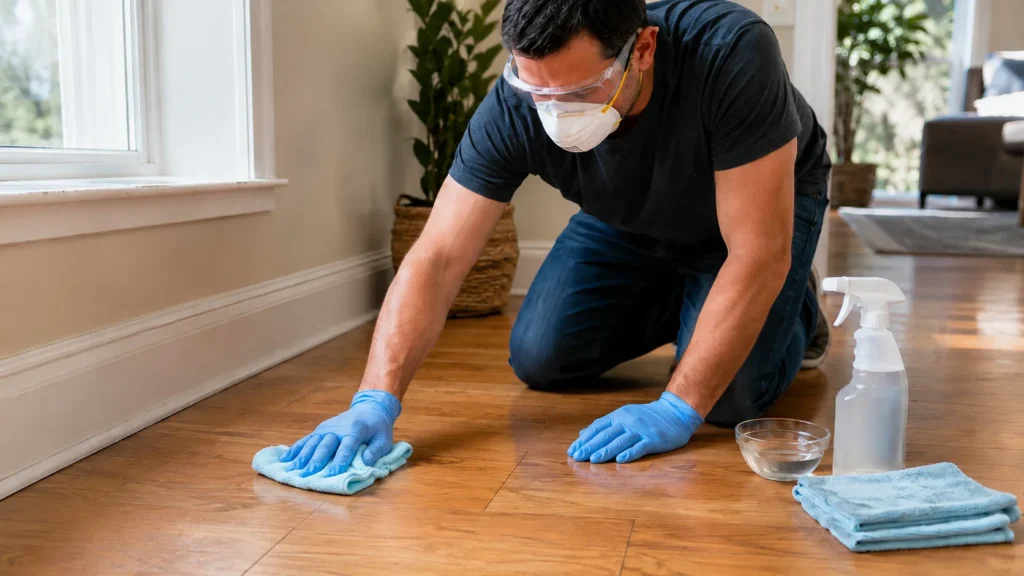
Use a separate clean cloth that is only slightly damp.
Do not flood-rinse the hardwood. Remove detergent residue without allowing water to pool or enter the seams.
Step 10: Dry the Floor Completely
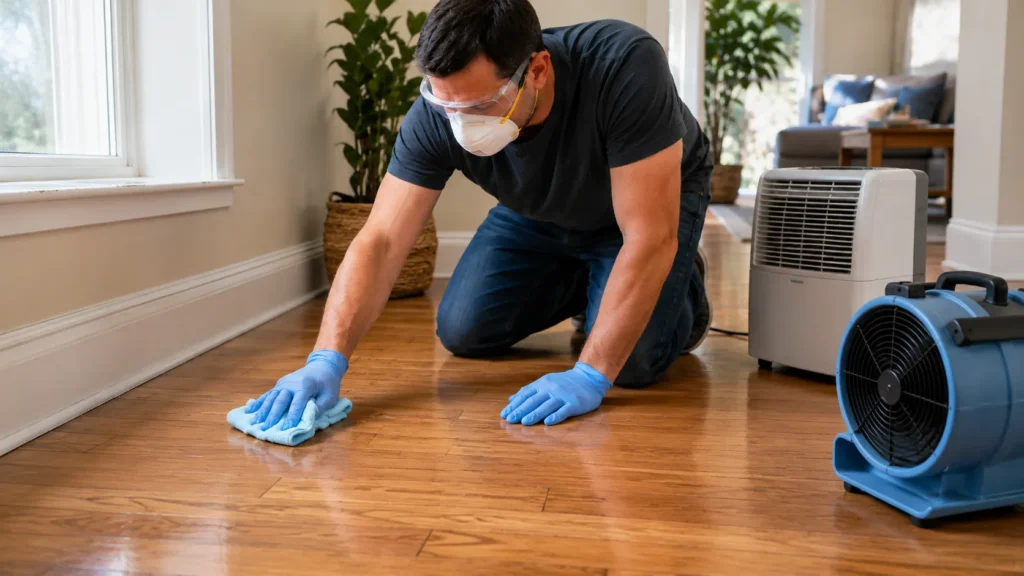
Dry the surface immediately with a clean towel.
Then use:
- A dehumidifier
- Normal HVAC operation, when the system is not contaminated
- Controlled room ventilation
- Gentle airflow after visible growth has been removed
Avoid concentrated heat because excessive heat can damage hardwood and create uneven drying. EPA guidance specifically recommends caution when applying heat to hardwood floors.
Step 11: Inspect After Drying
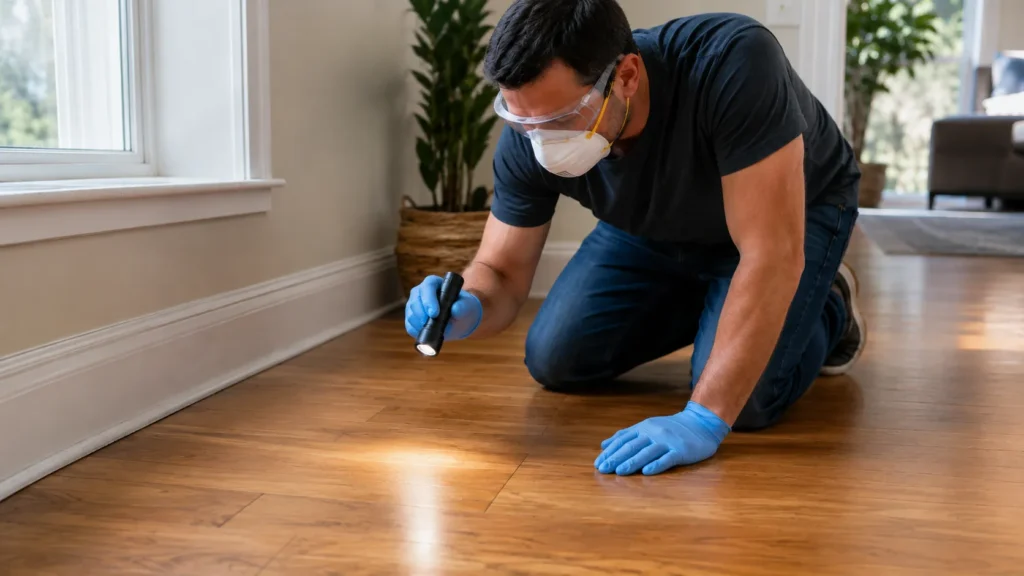
Once the floor is fully dry, check for:
- Remaining fuzzy or powdery growth
- Persistent odor
- New edge staining
- Cupping or crowning
- Finish lifting
- Soft spots
- Mold returning within days or weeks
A remaining dark mark is not always active mold. Mold can leave permanent cosmetic staining even after the visible growth has been removed. The EPA notes that cleaning may not restore the material’s original appearance.
Step 12: Monitor the Area
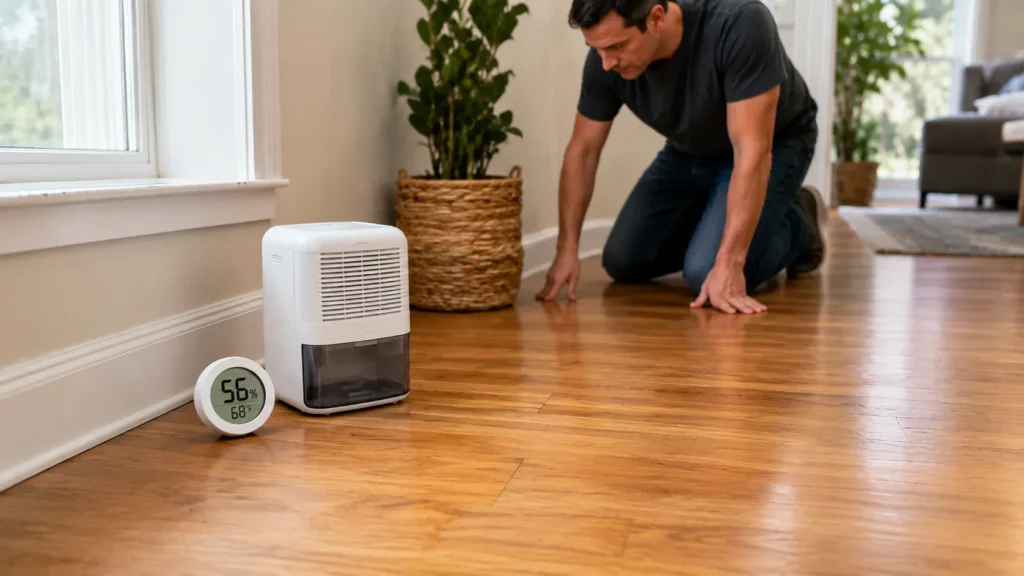
Inspect the location every few days for several weeks.
Use a hygrometer to track indoor relative humidity. The EPA recommends keeping humidity below 60%, ideally around 30–50%, while the CDC recommends keeping it no higher than 50% when possible.
For normal maintenance after the mold and moisture problem has been resolved, follow the methods in our guide on how to clean hardwood floor surfaces without leaving excess water behind.
Which Cleaner Is Best for Mold on Hardwood?
| Cleaner | Suitable use | Main caution |
| Mild detergent and water | Best first option for a small patch on intact finished hardwood | Use minimal water and dry immediately |
| Manufacturer-approved hardwood cleaner | Routine residue and finish care | May not be formulated for mold remediation |
| EPA-registered product labeled for finished wood | Product-specific mold treatment | Follow the label and test the finish |
| White vinegar | Sometimes recommended online | Acidic; may dull or affect some finishes |
| 3% hydrogen peroxide | Sometimes used on unfinished wood | May lighten wood or alter the finish |
| Chlorine bleach | Special circumstances only | Can discolor wood, damage finishes, and add moisture |
| Baking soda or abrasive powder | Not recommended as a first choice | Can scratch or dull the finish |
| Steam mop | Avoid | Heat and moisture may enter seams and damage wood |
Should You Use Bleach?
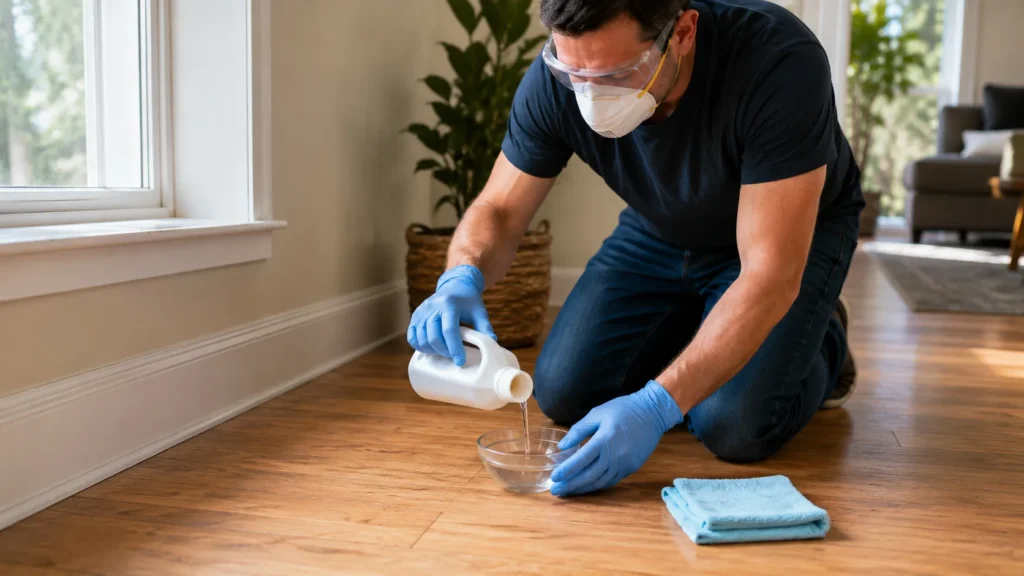
The EPA does not recommend bleach or another biocide as a routine mold-cleanup practice. On hardwood, bleach can alter the finish and wood color without resolving moisture beneath the floor. Use it only when the floor manufacturer, product label, or a qualified professional specifically approves it for the situation.
Should You Use Vinegar?
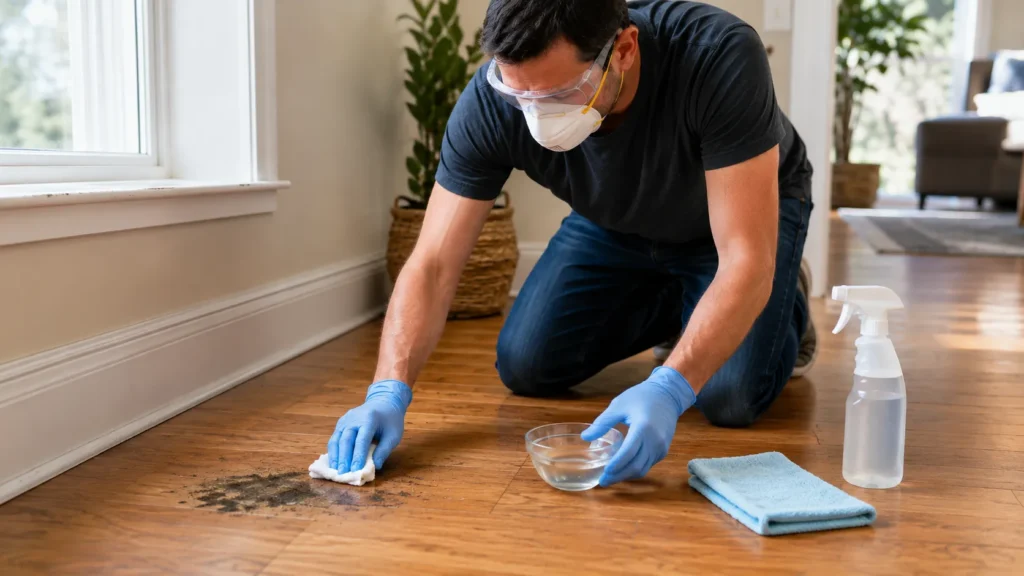
Vinegar is commonly recommended, but it is not universally safe for hardwood finishes. Acidic solutions can dull or alter certain coatings.
Do not pour vinegar directly onto the floor. Use it only when the flooring manufacturer confirms compatibility, and always test an inconspicuous area first.
Should You Use Hydrogen Peroxide?
Hydrogen peroxide may lighten unfinished wood, stain, or certain finishes. It should not be treated as a universal hardwood-floor cleaner.
A finish-compatible, labeled product is safer than relying on an untested household mixture.
Advice by Hardwood Type
Site-Finished Solid Hardwood
A continuous polyurethane finish may make a small surface patch easier to clean. However, worn areas, gaps, nail holes, and scratches remain vulnerable.
If the mold has penetrated beneath the finish, cleaning may need to be followed by professional refinishing after the material is confirmed dry.
Prefinished Solid Hardwood
Prefinished boards have factory-applied coatings, but every plank has separate seams and often beveled edges.
Avoid saturating:
- Bevels
- End joints
- Expansion gaps
- Damaged edges
Moisture can travel beneath an otherwise durable factory finish.
Engineered Hardwood
Engineered flooring has a hardwood veneer over plywood, fiberboard, or another layered core.
Call for an assessment when you see:
- Edge swelling
- Delamination
- Lifting veneer
- Soft core material
- Permanent plank distortion
Surface cleaning cannot restore a swollen or delaminated core.
Oil or Wax-Finished Hardwood
Oil and wax finishes behave differently from polyurethane and may absorb cleaners more readily.
Do not use a household mold solution without checking the floor manufacturer’s care instructions. Cleaning may change sheen or color and require spot repair with a compatible finish.
Unfinished Hardwood
Unfinished wood is more porous.
A small superficial patch may sometimes be cleaned, but deep discoloration, odor, or moisture penetration often requires professional drying, sanding, sealing, or board replacement.
For broader questions about finishes, construction, maintenance, and damage, visit our Hardwood flooring faqs.
Room-Specific Mold Causes
Kitchen
Inspect:
- Dishwasher supply and drain lines
- Sink plumbing
- Garbage disposal connections
- Refrigerator and ice-maker line
- Toe-kick cavities
- Wet mats
- Pet-water stations
Mold that emerges from beneath a cabinet usually requires investigation beyond surface wiping.
Bathroom
Look around:
- Toilet wax ring
- Toilet supply valve
- Tub or shower edge
- Vanity plumbing
- Wet bath mats
- Door thresholds
Repeated water exposure can enter plank seams and affect the subfloor.
Laundry Room
Check:
- Washer supply hoses
- Drain standpipe
- Washer pump
- Utility sink
- Dryer vent condensation
A slow washer leak can remain hidden beneath the appliance until boards begin to cup.
Basement or Crawlspace
Visible growth upstairs may originate from humidity, condensation, plumbing, or subfloor moisture below.
Inspect:
- Floor joists
- Subfloor
- Insulation
- Vapor barrier
- Plumbing
- Foundation moisture
- Crawlspace ventilation or encapsulation system
A surface cleaner cannot correct moisture entering from underneath.
Bedrooms and Living Areas
Common causes include:
- Mattresses placed directly on the floor
- Planters without waterproof trays
- Damp rugs
- Furniture against cold exterior walls
- Window condensation
- Pet accidents
Compare moisture and maintenance advice for other floor materials in our Flooring faqs.
Common Mistakes to Avoid
Soaking the Floor
More cleaner does not mean better mold removal. Excess water can push contamination deeper into plank seams.
Using a Steam Mop
Steam adds heat and moisture to the floor assembly and may damage the finish, adhesive, or wood.
Mixing Cleaners
Never combine bleach, ammonia, vinegar, peroxide, or other cleaners. Chemical mixtures may create dangerous fumes or unpredictable reactions.
Sanding Active Mold Immediately
Sanding can aerosolize spores and remove the finish surrounding the affected area.
Active growth should first be assessed, contained, cleaned, and dried. Sanding is a refinishing procedure for dry, structurally sound wood—not the first response to an active moisture problem.
Assuming a Dark Stain Is Still Mold
Mold can leave discoloration. If no growth, odor, moisture, or recurrence remains, the issue may be cosmetic and require refinishing rather than stronger disinfectants.
Covering the Area Too Soon
Do not reinstall a rug, cabinet, underlayment, or replacement plank until the floor assembly is dry.
Ignoring the Subfloor
Mold may continue beneath clean-looking boards. Persistent odor, recurring edge growth, or distortion requires investigation below the finished surface.
Can Moldy Hardwood Be Saved?
A hardwood floor is more likely to be salvageable when:
- Growth is limited to a small surface patch.
- The finish remains mostly intact.
- The boards are firm and flat.
- The moisture source was clean water.
- The area dries successfully.
- There is no persistent musty odor.
- Mold does not return.
- The subfloor is dry and undamaged.
Replacement becomes more likely when:
- Boards are soft, rotten, swollen, or delaminated.
- The floor is buckled or permanently distorted.
- Mold covers the underside of multiple boards.
- The subfloor has widespread growth.
- Contaminated water entered the assembly.
- The growth repeatedly returns.
- The floor cannot be dried without removal.
- Sanding would remove too much of a thin engineered veneer.
When Should You Call a Professional?
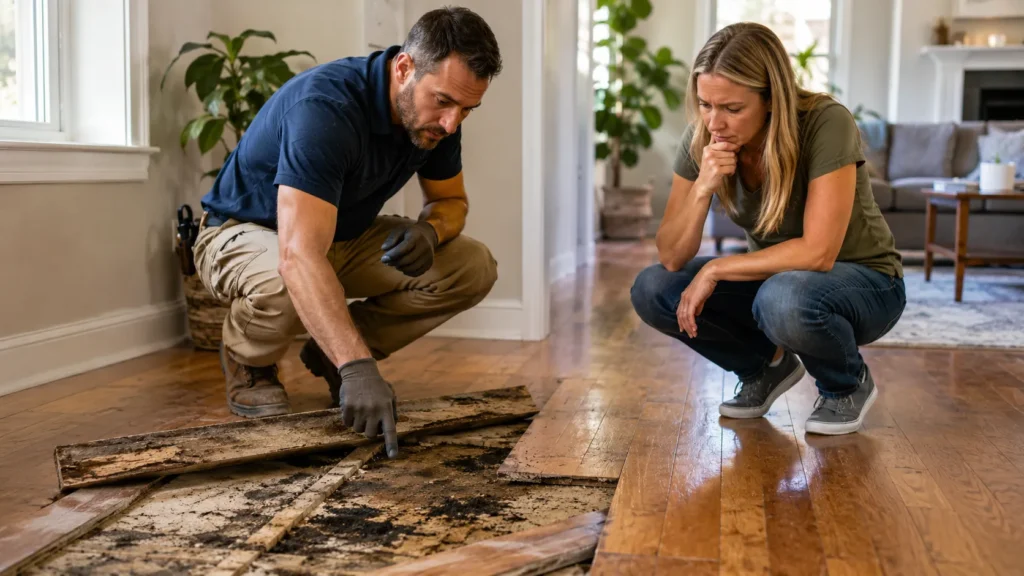
Contact a qualified mold-remediation or water-damage professional when:
- Mold covers more than approximately 10 square feet.
- The affected area is hidden beneath flooring or cabinets.
- The floor followed a major flood or sewage backup.
- Mold is present inside HVAC equipment.
- The wood feels soft or structurally damaged.
- The musty odor remains after drying.
- Mold returns after cleaning.
- Multiple rooms are affected.
- Occupants have asthma, severe allergies, immune-system concerns, or unexplained symptoms.
- You cannot safely isolate or dry the area.
The EPA’s homeowner guidance uses approximately 10 square feet as a general DIY boundary, while also emphasizing that contaminated water, hidden mold, and complex damage can require professional judgment regardless of size.
How to Prevent Mold From Returning
Keep the Floor Dry
Clean spills immediately and inspect beneath rugs, appliances, furniture, pet bowls, and planters.
Control Indoor Humidity
Use a hygrometer and dehumidifier when necessary. Aim for approximately 30–50% relative humidity when practical.
Repair Leaks Promptly
Regularly inspect appliance hoses, sink plumbing, toilets, refrigerator lines, windows, exterior doors, roofs, and crawlspaces.
Use Exhaust Ventilation
Bathroom, kitchen, and laundry exhaust systems should discharge moisture outside rather than into an attic or enclosed cavity.
Leave Air Space
Avoid placing mattresses directly on hardwood. Do not leave damp rugs or tightly packed storage against moisture-prone exterior walls.
Maintain the Finish
Repair worn or damaged finish before water can enter the wood. Follow the flooring manufacturer’s recoating and maintenance requirements.
Inspect After Water Damage
Check board edges, baseboards, transitions, cabinets, and the floor below. A dry-looking top surface does not prove that the subfloor is dry.
Final Practical Recommendation
Start with the least aggressive method that protects both the occupants and the hardwood finish.
For a small surface patch, fix the moisture source, wear protective equipment, clean gently with minimal detergent solution, and dry the floor completely. Do not soak, steam, or immediately sand the boards.
When mold is recurring, hidden, widespread, associated with contaminated water, or accompanied by soft or distorted flooring, cleaning the visible surface is not enough. The floor assembly needs professional inspection, drying, remediation, and possibly replacement.
FAQs
Can I use vinegar to clean mold off hardwood floors?
Vinegar is not safe for every hardwood finish. Its acidity may dull or alter some coatings. Use it only when the flooring manufacturer approves it, test a hidden area first, and never pour it directly onto the boards.
Can I use bleach on moldy hardwood?
Bleach is not the best routine first choice. The EPA does not generally recommend biocides such as bleach for standard mold cleanup, and bleach may discolor hardwood or damage the finish. Never mix it with ammonia or another cleaner.
How can I tell if mold is under hardwood flooring?
Persistent musty odor, recurring growth along seams, cupping, buckling, lifted boards, soft spots, and moisture readings above surrounding areas can indicate hidden growth. Inspection may require removing baseboards or selected planks.
Can black mold be removed from hardwood?
A small surface patch may sometimes be cleaned, but color alone does not identify the mold species or danger level. Treat any visible indoor mold as a moisture problem. Call a professional when growth is widespread, recurring, hidden, or associated with damaged wood.
Can moldy hardwood floors be saved?
They may be saved when growth is superficial and the boards remain dry, flat, firm, and structurally sound. Soft, rotten, swollen, delaminated, or permanently warped boards usually need repair or replacement.
Should I sand mold off hardwood?
Do not begin by sanding active mold. Sanding can release spores and remove the finish. Once the growth is removed, the area is dry, and the floor is structurally sound, professional sanding may be used to correct remaining cosmetic staining.
How long should hardwood dry after mold cleaning?
There is no single fixed time. The surface and floor assembly should return to a normal, stable moisture level before recoating, covering, or reinstalling materials. Depending on the leak and construction, this may take several days or require professional drying.
Will mold return after cleaning?
Yes, it can return when the leak, humidity, condensation, or hidden moisture remains. Successful cleanup requires both removal of visible growth and correction of the moisture source.
Can a regular vacuum remove mold spores?
A standard vacuum may redistribute fine particles. Use a sealed HEPA-filtered vacuum when appropriate and follow its instructions. Do not aggressively vacuum wet or active growth without proper containment.
What should I do after a dishwasher leaks on hardwood?
Shut off the water, repair the leak, remove standing water, inspect beneath the appliance and cabinets, and begin drying immediately. Call a professional if boards swell, cup, remain wet, smell musty, or show growth beneath the surface.