Cork flooring is warm, quiet, comfortable and made from a renewable natural material. However, it is not the right choice for every home or every room.
Its main advantages include cushioning underfoot, sound absorption, thermal comfort and a distinctive natural appearance. Its disadvantages include possible dents, scratches, sunlight fading and sensitivity to moisture when the wrong product is installed or maintained incorrectly.
The most important point is that not all cork floors perform the same way. A solid glue-down cork tile, a floating cork plank with an HDF core and a newer water-resistant cork product may have very different installation requirements and moisture limitations.
For a broader explanation of cork types, installation methods, prices and care requirements, see our complete cork flooring guide.
Cork Flooring Pros and Cons at a Glance
| Cork Flooring Pros | Cork Flooring Cons |
|---|
| Soft and comfortable underfoot | Can dent beneath heavy furniture |
| Warmer than tile and concrete | May scratch from grit, pets or dragged furniture |
| Helps reduce footsteps and impact noise | Traditional products are not fully waterproof |
| Made from renewable cork bark | May fade or change color in direct sunlight |
| Suitable for many bedrooms, offices and living areas | Requires appropriate cleaning and surface protection |
| Available as floating planks and glue-down tiles | Product suitability varies by room |
| Can also be used as sound-reducing underlayment | May cost more than entry-level laminate or vinyl |
What Makes Cork Flooring Different?
Cork flooring is made primarily from the bark of the cork oak tree. The tree does not have to be cut down during harvesting. Instead, trained workers remove the outer bark, which naturally regenerates before it is harvested again.
This renewable harvesting process is one reason cork is frequently considered a lower-impact flooring material. However, the environmental performance of an individual product also depends on its adhesives, core materials, finish, manufacturing process, transportation and expected lifespan.
Cork also has a cellular structure containing millions of enclosed air pockets. These cells contribute to its cushioning, resilience, thermal insulation and sound-absorbing qualities.
That structure is responsible for both sides of cork flooring. It makes the floor comfortable and quiet, but it also makes the surface more vulnerable to concentrated pressure than harder materials such as porcelain tile.
Main Advantages of Cork Flooring
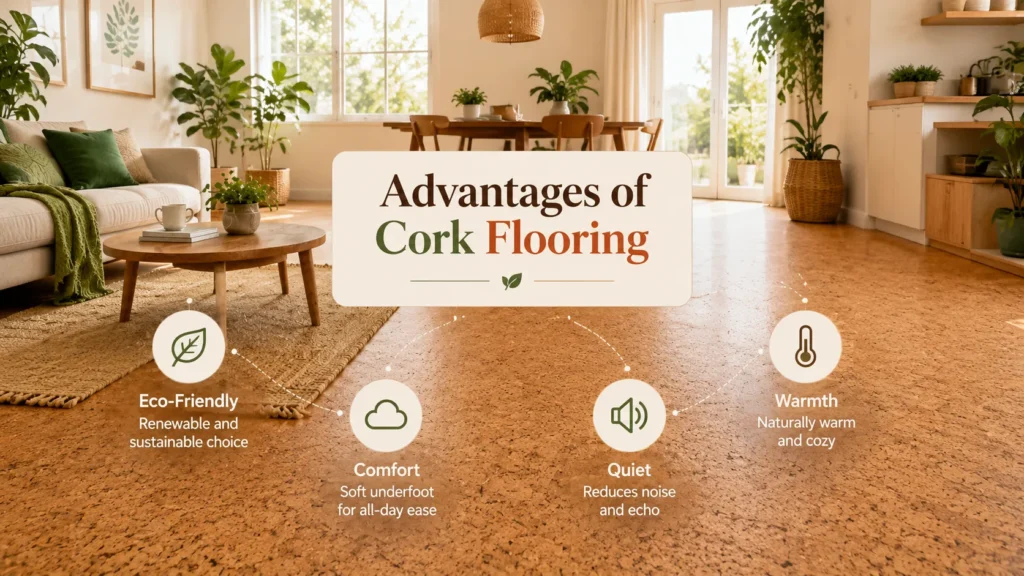
1. Cork Feels Comfortable Underfoot
Comfort is one of cork flooring’s most noticeable benefits.
It feels softer and more forgiving than tile, concrete, laminate and many hardwood floors. This cushioning can make a meaningful difference in rooms where people regularly stand, walk or work for extended periods.
Cork may be particularly comfortable in:
- Kitchens
- Home offices
- Bedrooms
- Playrooms
- Craft rooms
- Reading rooms
- Finished living areas
It is still a hard-surface floor rather than a soft floor covering such as carpet, but it provides more natural give than most conventional hard flooring materials.
2. It Helps Reduce Everyday Noise
Cork can help soften impact sounds created by footsteps, moving chairs, dropped objects, children and pets.
This makes it a practical option for:
- Apartments and condominiums
- Upstairs bedrooms
- Home offices
- Nurseries
- Playrooms
- Media rooms
- Shared living spaces
Its acoustic qualities are also why cork is commonly sold as underlayment beneath laminate, engineered wood and some floating flooring systems.
The exact level of noise reduction depends on the product’s thickness, density, construction, installation method and the floor assembly beneath it. Buyers who must meet condominium or building sound requirements should check the product’s tested impact and sound ratings rather than relying on a general soundproofing claim.
3. Cork Feels Warmer Than Tile or Concrete
Cork generally feels warmer underfoot than ceramic tile, porcelain tile or bare concrete.
It does not generate heat, but its insulating structure slows the transfer of body heat away from your feet. This can improve perceived comfort in bedrooms, offices and living spaces, particularly in colder regions.
Some cork products can also be installed over radiant heating systems. However, temperature limits and installation requirements vary, so the flooring and heating-system manufacturers’ instructions should be checked before installation.
4. It Can Be a Renewable Flooring Choice
Cork bark regenerates after harvesting, allowing the same tree to remain productive over many decades. This gives cork a renewable-material advantage over flooring that depends on cutting down an entire tree.
Nevertheless, “natural” does not automatically mean that every product has the same environmental profile.
Before purchasing, look for information about:
- Product composition
- Adhesives and resins
- Surface coatings
- Volatile organic compound emissions
- Environmental Product Declarations
- Forest or material certifications
- Recycled content
- Manufacturing location
- Expected service life
A durable cork floor that performs well for many years may be a more responsible purchase than a low-quality product that needs early replacement.
5. It Works Well in Comfort-Focused Dry Rooms
Cork is generally best suited to interior rooms where standing water is unlikely and comfort is a priority.
Strong applications may include:
- Bedrooms
- Home offices
- Living rooms
- Libraries
- Playrooms
- Studios
- Low-moisture finished basements
- Apartments where impact noise is a concern
The suitability of any specific product still depends on its construction, warranty and installation requirements.
6. Its Natural Pattern Can Disguise Minor Wear
Cork has a varied grain and cellular pattern that can make dust, small marks and minor surface wear less noticeable than they would be on a glossy, single-color floor.
This does not make it scratch-proof. However, a textured medium-tone cork surface may be visually more forgiving than very dark hardwood, high-gloss laminate or a plain polished floor.
Main Disadvantages of Cork Flooring
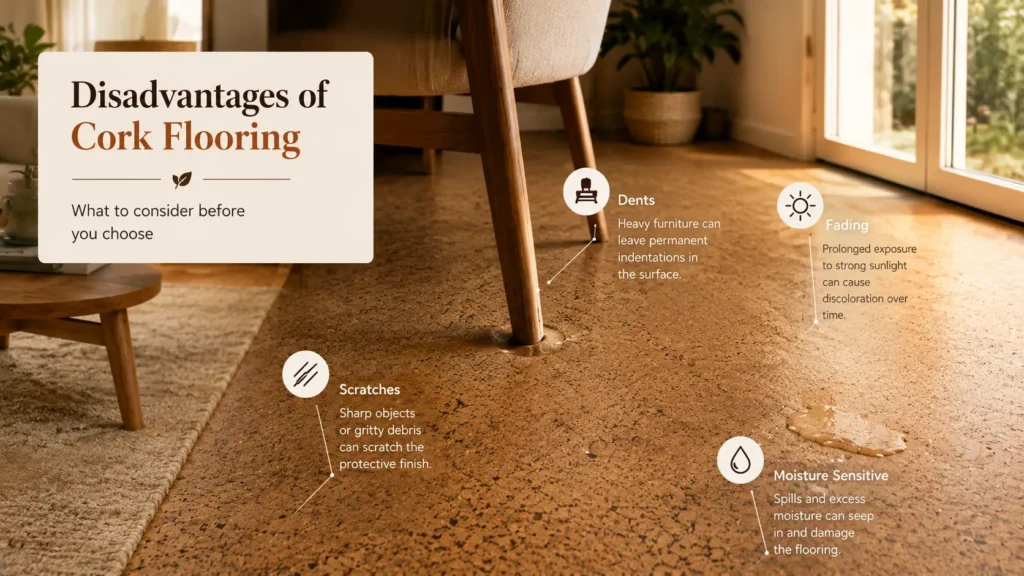
1. Moisture Can Damage the Wrong Cork Product
Traditional cork flooring should not be treated as fully waterproof.
A properly finished surface may tolerate occasional small spills, but standing water, plumbing leaks, wet rugs, pet accidents and moisture entering through seams can damage some cork flooring systems.
The risk depends heavily on construction.
For example, a floating cork plank may contain a moisture-sensitive HDF core. If water enters through the joints, that core may swell. Solid glue-down cork does not contain the same core, but it depends on correct adhesive selection, subfloor preparation and seam sealing.
Some newer cork collections are marketed as water-resistant and approved for more moisture-prone locations. Therefore, buyers should rely on the specific product warranty and room approval—not a blanket claim that every cork floor is either waterproof or unsuitable around moisture.
2. Heavy Furniture Can Cause Indentations
Cork is resilient, but heavy objects can compress it.
Beds, sofas, pianos, appliances, bookcases and tables with narrow legs may leave temporary or lasting indentations, especially when their weight is concentrated in a small area.
Reduce the risk by:
- Using wide furniture coasters
- Placing felt pads beneath furniture legs
- Avoiding narrow or sharp contact points
- Lifting furniture instead of dragging it
- Using a suitable chair mat beneath rolling chairs
- Following manufacturer guidance for heavy appliances
Some cork may gradually recover after pressure is removed, but complete recovery is not guaranteed. Product density, finish, load and exposure time all affect the result.
3. The Finish Can Scratch
Pet nails, outdoor grit, dragged chairs, sharp furniture and abrasive cleaning tools can scratch the protective surface.
Homes with large active dogs, rolling office chairs or sand frequently tracked indoors may notice wear more quickly.
Protection measures include:
- Entry mats at exterior doors
- Regular sweeping or vacuuming
- Felt pads beneath furniture
- Area rugs in high-traffic zones
- Chair mats in offices
- Trimmed pet nails
- Immediate removal of grit and debris
Cork should not be presented as scratch-proof. Some products have stronger commercial-grade finishes than others, so compare wear classifications and warranty exclusions before buying.
4. Direct Sunlight Can Change Its Color
Natural cork may lighten or change tone after prolonged exposure to direct sunlight.
Uneven exposure can become noticeable when rugs, furniture or curtains protect one part of the floor while another area receives strong sunlight every day.
To reduce uneven fading:
- Use blinds, curtains or UV-filtering window treatments
- Rotate area rugs periodically
- Rearrange movable furniture when practical
- Test samples in the actual room
- Ask about UV-resistant finishes
- Avoid permanently covering only one section of a sunlit floor
Wicanders also advises controlling direct sunlight and notes that cork can expand or contract in extreme humidity conditions.
5. Cork Requires Appropriate Maintenance
Cork is not an install-it-and-forget-it floor.
Its routine maintenance is not necessarily difficult, but the surface must be treated correctly. Excessive water, steam cleaning and harsh chemicals may damage the finish or allow moisture to reach seams.
Basic care normally includes:
- Sweeping or vacuuming loose grit
- Using a lightly damp mop when permitted
- Avoiding soaking-wet mops
- Cleaning spills promptly
- Protecting the floor from furniture
- Using only approved cleaning products
- Recoating or resealing when required
Wicanders recommends removing loose dirt first and avoiding excessive water during mopping. Always prioritize the care guide supplied with the specific floor.
6. It May Cost More Than Budget Flooring
Cork is not always the least expensive option.
Its total installed cost can be higher than basic laminate, sheet vinyl or entry-level vinyl plank. Pricing varies according to:
- Product thickness
- Finish quality
- Wear rating
- Core construction
- Installation method
- Subfloor preparation
- Moisture control
- Underlayment
- Local labor rates
The cheapest product is not automatically the best value. A poorly matched floor that swells, dents or wears prematurely can cost more to repair or replace.
Cork Flooring Type Changes Its Performance
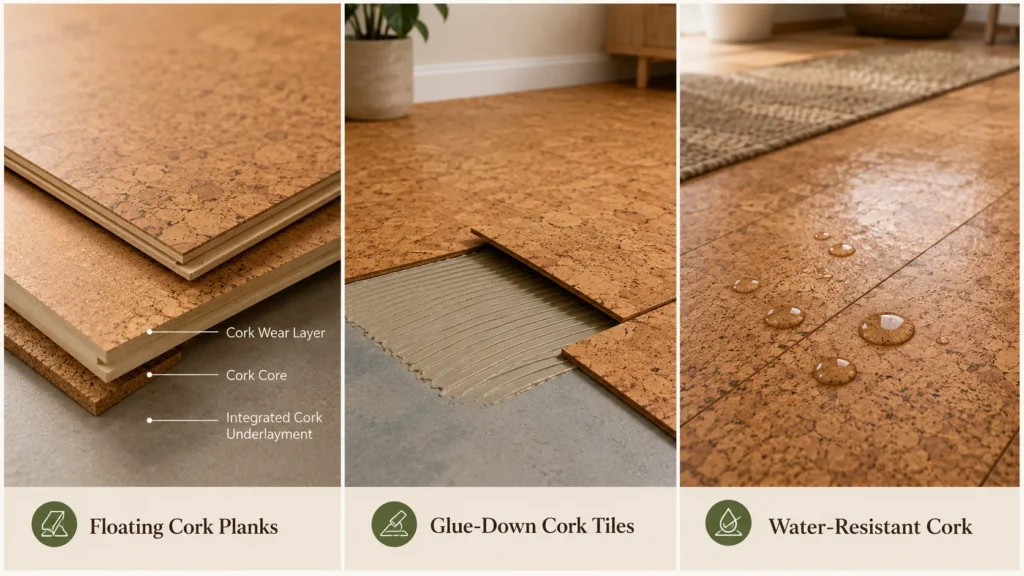
Understanding construction is essential before comparing products.
Floating Cork Planks
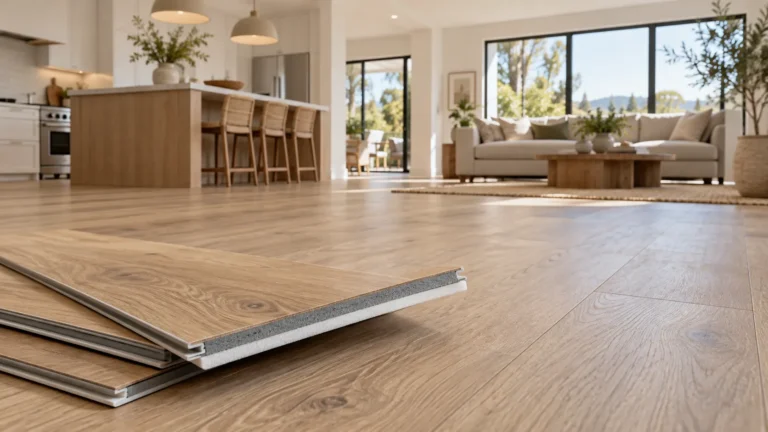
Floating cork flooring uses interlocking planks that are not permanently bonded across the entire subfloor.
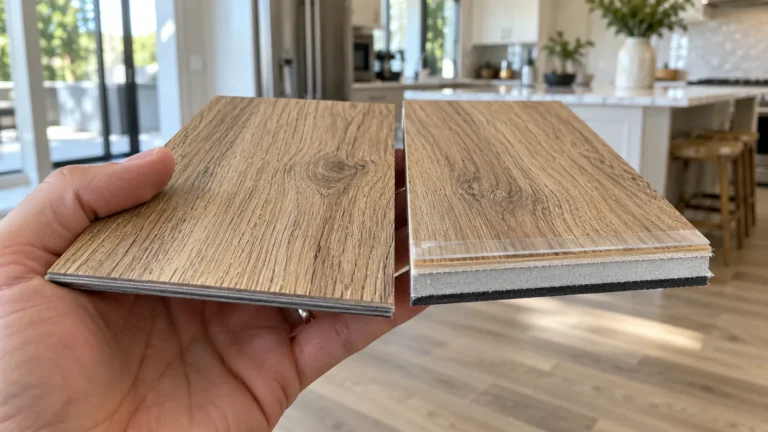
A typical plank may include:
- A protective finish
- A decorative cork surface
- An engineered core
- A cork backing layer
Floating floors are often easier and faster to install. However, products containing an HDF core can be vulnerable if moisture reaches the joints.
They also require appropriate expansion space and should not be trapped beneath fixed cabinetry unless the manufacturer permits it.
Glue-Down Cork Tiles
Glue-down cork tiles or planks are bonded directly to a properly prepared subfloor.
Solid glue-down products do not contain the same HDF core found in many floating planks. When the manufacturer approves the application and the seams are properly finished, they may be more suitable for rooms where water could spill from above.
However, glue-down installation usually requires:
- A flat and stable subfloor
- Compatible adhesive
- Careful layout
- Correct moisture testing
- Professional-quality finishing
One manufacturer recommends floating cork for certain basement applications and glue-down tiles for full bathrooms, demonstrating why installation method and product specifications matter.
Water-Resistant Cork Products
Some modern products combine cork with water-resistant cores, protective finishes or engineered locking systems.
These may perform differently from traditional cork. Nevertheless, terms such as “water-resistant” and “waterproof” should not be treated as interchangeable.
Check:
- The exact test standard
- Approved rooms
- Maximum spill exposure
- Installation requirements
- Perimeter-sealing rules
- Warranty exclusions
- Whether water damage from leaks or flooding is covered
Cork Flooring Pros and Cons by Room
| Room | Main Benefits | Main Risks | General Suitability |
| Bedroom | Warm, quiet and comfortable | Sunlight fading near windows | Very good when kept dry |
| Living room | Comfortable and visually distinctive | Furniture dents and traffic wear | Good with pads and rugs |
| Home office | Quiet and comfortable while working | Rolling-chair damage | Good with a chair mat |
| Playroom | Softer and quieter than many hard floors | Scratches, spills and dents | Good with surface protection |
| Kitchen | Comfortable during long periods of standing | Spills, chair movement and appliance leaks | Product-dependent |
| Bathroom | Warm and comfortable under bare feet | Standing water, humidity and seam damage | Only with approved products |
| Basement | Warmer than concrete and helps soften sound | Slab moisture, leaks and humidity | Only after moisture testing |
| Entryway | Warm and attractive | Grit, rainwater and heavy traffic | Usually a higher-risk area |
Is Cork Flooring Good for Kitchens?

Cork can work well in a kitchen when the correct product is selected and spills are managed promptly.
Kitchen Benefits
- Comfortable during food preparation
- Warmer than tile
- Quieter when chairs move
- May reduce impact compared with tile
- Offers a natural appearance
Its cushioning may reduce the force of a dropped object, but glassware and dishes can still break.
Kitchen Risks
- Sink and dishwasher leaks
- Water entering plank seams
- Scratches from dining chairs
- Indentations from appliances
- Grease and food residue
- Wet-backed mats trapping moisture
Before installation, confirm that the product is approved for kitchens. Floating flooring should normally be installed according to cabinet and appliance requirements so the floor can expand and contract correctly.
Can Cork Flooring Be Used in Bathrooms?
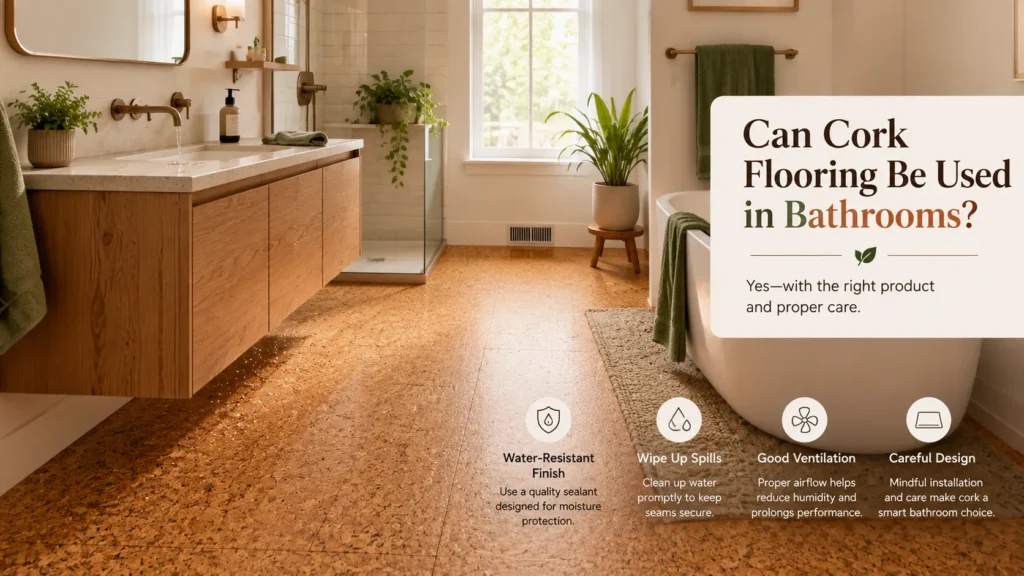
Bathroom suitability depends more on the product and installation method than on cork alone.
A powder room presents less moisture exposure than a full bathroom containing a tub or shower. In a full bathroom, water may reach joints, edges and penetrations around toilets or plumbing fixtures.
Floating HDF-core cork is often a higher-risk option because moisture can enter through seams. A manufacturer-approved glue-down solid cork product may be more appropriate when installed, sealed and maintained according to instructions.
Before choosing cork for a bathroom, verify:
- Written bathroom approval
- Required adhesive
- Seam-sealing instructions
- Perimeter caulking requirements
- Additional finish coats
- Ventilation needs
- Warranty coverage
Do not assume that sealing an unapproved floor automatically makes it suitable for a bathroom.
Is Cork Flooring Suitable for Basements?
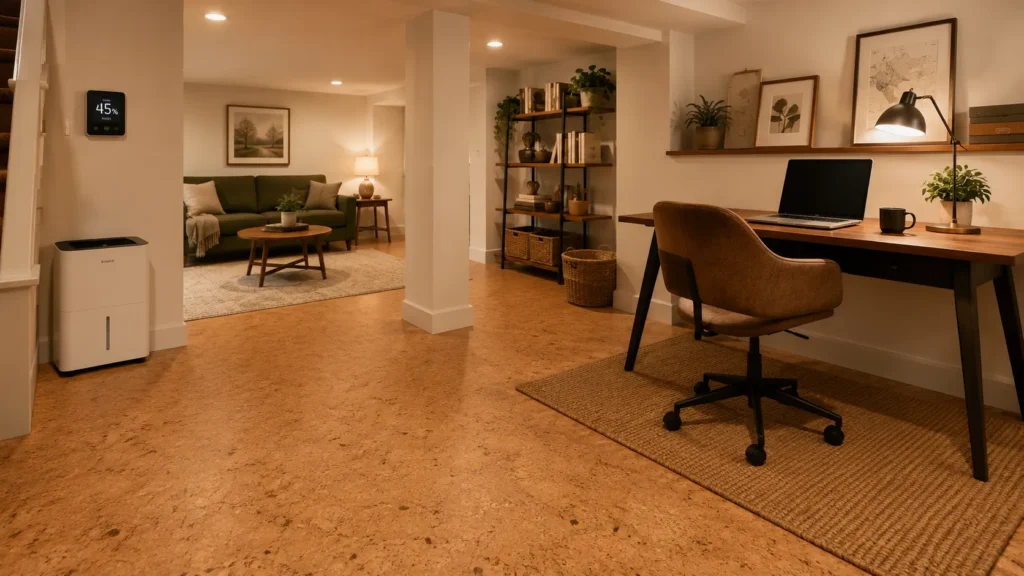
Cork can make a finished basement feel warmer and more comfortable than bare concrete, but the basement must first be evaluated for moisture.
Potential benefits include:
- Improved underfoot comfort
- Reduced echo
- A warmer surface
- Better suitability for offices or media rooms
- Less hardness in play areas
Potential problems include:
- Moisture vapor from the concrete slab
- Foundation or wall leaks
- High indoor humidity
- Previous flooding
- Sump-pump failure
- Adhesive failure
- Swelling at plank joints
A basement should be moisture-tested before flooring selection. Existing stains, musty odors, efflorescence or recurring humidity problems should be addressed before installation.
Use only a product specifically approved for below-grade installation.
Cork Flooring Compared With Other Options
| Flooring Type | Main Strengths | Main Limitations |
| Cork | Comfort, warmth, sound absorption and renewable material | Moisture concerns, dents, scratches and fading |
| Hardwood | Natural appearance, long-term value and possible refinishing | Water damage, scratching and higher cost |
| Laminate | Affordable, easy to install and often scratch-resistant | Product-dependent water resistance and limited refinishing |
| Vinyl plank | Strong water resistance, easy cleaning and durability | Synthetic composition and less natural feel |
| Porcelain tile | Excellent water resistance and long service life | Cold, hard and less comfortable underfoot |
| Carpet | Soft, warm and acoustically comfortable | Staining, moisture retention and more difficult cleaning |
Cork occupies a middle position between soft and hard flooring. It is firmer and easier to clean than carpet, softer than hardwood, warmer than tile and more natural-feeling than vinyl.
However, it generally cannot match properly installed porcelain tile or suitable waterproof vinyl in rooms where water exposure is the primary concern.
Cork Underlayment Pros and Cons
Cork is also used as underlayment beneath other flooring materials.
Benefits of Cork Underlayment
- Helps reduce impact noise
- Adds slight cushioning
- Can improve perceived warmth
- Provides a natural-material option
- May work beneath compatible floating floors
- Can reduce minor sound transfer between levels
Limitations of Cork Underlayment
- It is not a waterproofing membrane
- It cannot correct a severely uneven subfloor
- It adds height to the floor assembly
- Thickness and density affect performance
- It may not be approved beneath every flooring product
- It cannot solve structural movement or serious cracks
Always confirm that both the flooring and underlayment manufacturers approve the combination. A damp, unstable or uneven subfloor should be repaired rather than concealed beneath underlayment.
What to Check Before Buying Cork Flooring
Before choosing a product, ask the retailer or installer:
- Is it a floating floor or a glue-down product?
- Does it contain an HDF or other engineered core?
- Is it approved for my intended room?
- Is it approved for below-grade installation?
- What moisture testing is required?
- What finish or wear classification does it have?
- Is it water-resistant, and under which test standard?
- Does the warranty cover pets, rolling chairs or commercial use?
- Will direct sunlight affect the color?
- Does it require resealing or recoating?
- Which cleaning products are permitted?
- Can it be installed over radiant heat?
- What indoor-air-quality or environmental documentation is available?
- What type of furniture protection is recommended?
Order samples and view them in the actual room during both daylight and artificial light. Also test how easily the surface marks under moderate pressure.
Who Should Choose Cork Flooring?
Cork may be a good choice when you want:
- A warmer-feeling hard floor
- Better underfoot comfort
- Reduced impact noise
- A renewable natural material
- A distinctive textured appearance
- Flooring for a bedroom, office or dry living space
- A surface that is less hard than tile
Who Should Avoid Cork Flooring?
Another material may be more suitable when:
- Flooding or frequent standing water is possible
- The room has unresolved moisture problems
- You want almost no maintenance
- Large active pets are likely to scratch the surface
- Heavy furniture has narrow contact points
- Strong direct sunlight cannot be controlled
- Maximum scratch resistance is the priority
- You need a floor that can tolerate repeated soaking
Is Cork Flooring Worth It?
Cork flooring can be worth it for homeowners who prioritize comfort, warmth, sound absorption and natural materials.
It performs best when three conditions are met:
- The product is suitable for the room.
- The subfloor is properly prepared and moisture-tested.
- The owner is willing to protect the finish from water, grit, furniture and strong sunlight.
It may not be the best value when the room is wet, flood-prone or exposed to extremely heavy wear. In those situations, porcelain tile or a properly rated waterproof floor may offer lower long-term risk.
The practical recommendation from EveryFAQ is to choose cork for comfort-focused dry rooms, evaluate it carefully for kitchens and basements, and use it in bathrooms only when the specific product and installation system are expressly approved.
Frequently Asked Questions
What are the biggest pros and cons of cork flooring?
The main benefits are comfort, warmth, sound absorption, natural appearance and renewable cork bark. The main disadvantages are possible moisture damage, scratching, furniture dents, sunlight fading and product-specific maintenance requirements.
Is cork flooring waterproof?
Traditional cork flooring should not be considered fully waterproof. Some modern products are rated as water-resistant, but performance depends on the finish, core, locking system, seam protection and installation. Always check the written product warranty.
Is cork flooring good for kitchens?
Cork can be suitable for kitchens because it is comfortable, warm and quieter than tile. However, sink leaks, dishwasher leaks, spills, chair movement and heavy appliances create additional risks. Use only a kitchen-approved product and clean spills promptly.
Can cork flooring be used in a bathroom?
Some glue-down cork products and water-resistant engineered products may be approved for bathrooms. Many floating HDF-core cork floors are not recommended for full bathrooms. Follow the manufacturer’s room, sealing and installation requirements.
Is cork flooring good for pets?
Cork can be comfortable for pets, but claws may scratch the finish and accidents can damage seams if they are not cleaned quickly. Keeping nails trimmed and using rugs in high-activity areas can reduce wear.
How long does cork flooring last?
There is no single lifespan for every cork floor. Longevity depends on product construction, finish quality, installation, traffic, moisture, sunlight, pets and maintenance. A high-quality product installed in a suitable dry room can remain serviceable for many years, while an unsuitable product in a wet area may fail much sooner.