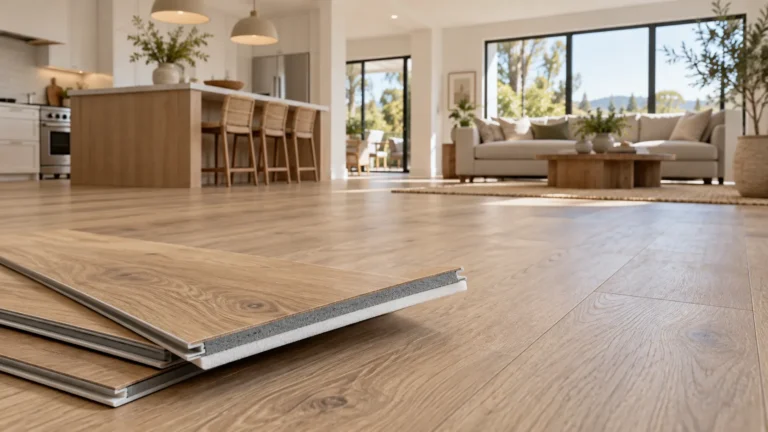
To lay oak flooring, first choose the right installation method for your floor type and subfloor. Solid oak is usually nailed to a wood subfloor, while engineered oak can often be floated, glued, or nailed. The subfloor must be clean, dry, flat, and stable, with proper expansion gaps around the room.
Quick Summary Box
| Question | Quick Answer |
|---|---|
| Can you lay oak flooring yourself? | Yes, but engineered oak is usually easier for DIY than solid oak. |
| Best oak flooring for concrete | Engineered oak is usually safer than solid oak. |
| Best oak flooring for floorboards | Solid oak or engineered oak may work if the boards are stable and level. |
| Hardest style to install | Herringbone and parquet oak flooring. |
| Most important preparation | Moisture testing, leveling, and expansion gaps. |
| Main mistake to avoid | Laying oak flooring over damp or uneven subfloors. |
Before You Start: Check the Type of Oak Flooring
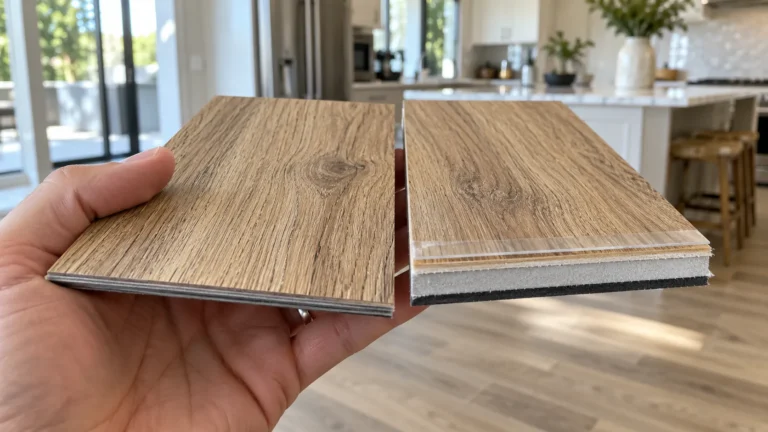
Before you lay oak flooring, check whether you have solid oak flooring or engineered oak flooring. This matters because both products can look similar from the top, but they are installed differently.
Solid oak flooring is made from one piece of oak. It is durable and can often be refinished multiple times, but it expands and contracts more with moisture and humidity changes.
Engineered oak flooring has a real oak top layer with a plywood or layered core underneath. It is usually more stable than solid oak and is often a better option for concrete subfloors, basements, condos, and wider planks.
From a flooring point of view, the installation method should always match the product instructions. Do not assume every oak floor can be nailed, glued, or floated.
Before starting installation, it helps to understand the differences between solid oak, engineered oak, red oak, white oak, finishes, and room suitability. You can read our Complete Guide on Oak Flooring first if you are still comparing your options.
Tools and Materials Needed
You may need:
- Tape measure
- Pencil and chalk line
- Moisture meter
- Spirit level or straight edge
- Spacers
- Underlayment
- Flooring adhesive, if glue-down
- Flooring nailer, if nail-down
- Tapping block
- Pull bar
- Saw
- Safety glasses
- Knee pads
- Vacuum or broom
- Transition strips
- Trim or baseboards
For herringbone oak flooring or oak parquet flooring, you may also need layout lines, extra cutting tools, and more waste allowance because pattern floors require more precision.
How to Prepare the Subfloor
Good oak flooring installation starts with the subfloor. A common mistake homeowners make is focusing on the planks but ignoring what is underneath.
The subfloor should be:
- Dry
- Clean
- Flat
- Structurally sound
- Free from loose boards
- Free from old adhesive lumps
- Suitable for the installation method
If the subfloor is uneven, oak flooring may move, click, gap, squeak, or separate. If the subfloor is damp, oak flooring may cup, swell, or buckle.
Before installation, remove dust, nails, staples, loose debris, and old flooring materials that could affect the new floor.
How to Lay Oak Flooring Step by Step
Step 1: Acclimate the oak flooring
Bring the oak flooring into the room before installation and let it adjust to indoor conditions according to the manufacturer’s instructions. This helps reduce movement after installation.
Do not store oak flooring in a garage, damp basement, or unfinished room before installing it.
Step 2: Check moisture levels
Moisture is one of the biggest causes of oak floor problems. Concrete, floorboards, plywood, and the oak flooring itself should be checked before installation.
If the room has a moisture issue, fix that before laying the floor.
Step 3: Plan the direction
Most oak flooring is laid parallel to the longest wall or in the direction of natural light. In narrow hallways, planks usually look best running along the length of the hallway.
For herringbone or parquet oak flooring, layout is more important because the pattern must stay straight from the center line.
Step 4: Leave expansion gaps
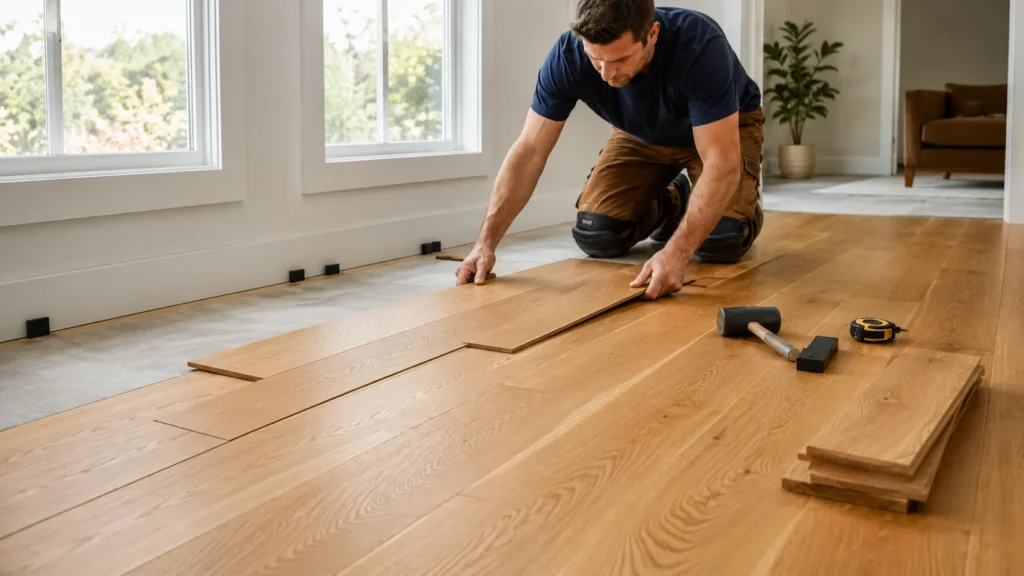
Oak flooring needs space to expand and contract. Leave an expansion gap around walls, door frames, pipes, and fixed objects.
The gap is usually covered later by baseboards, shoe molding, or trim.
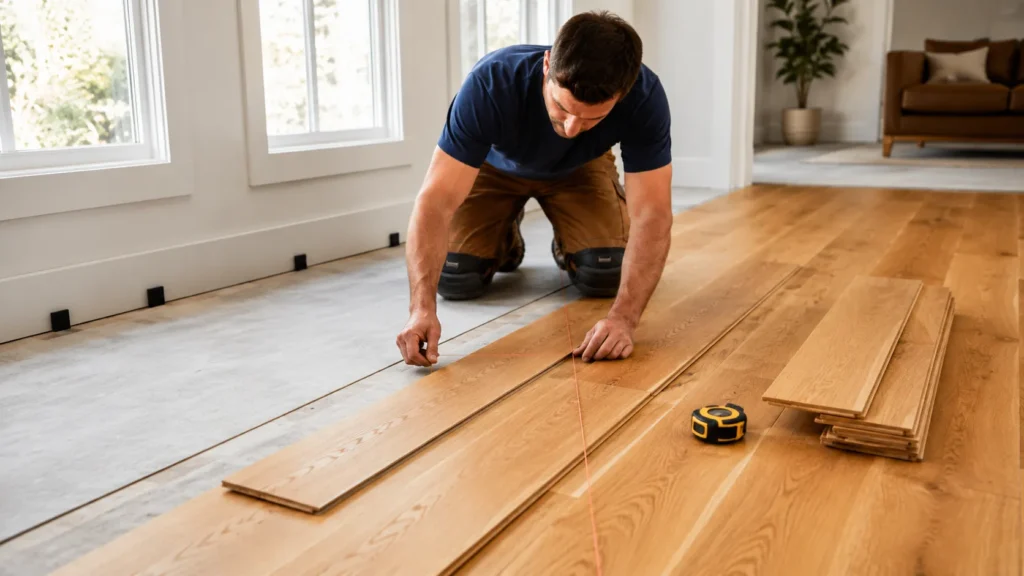
Step 5: Start with a straight first row
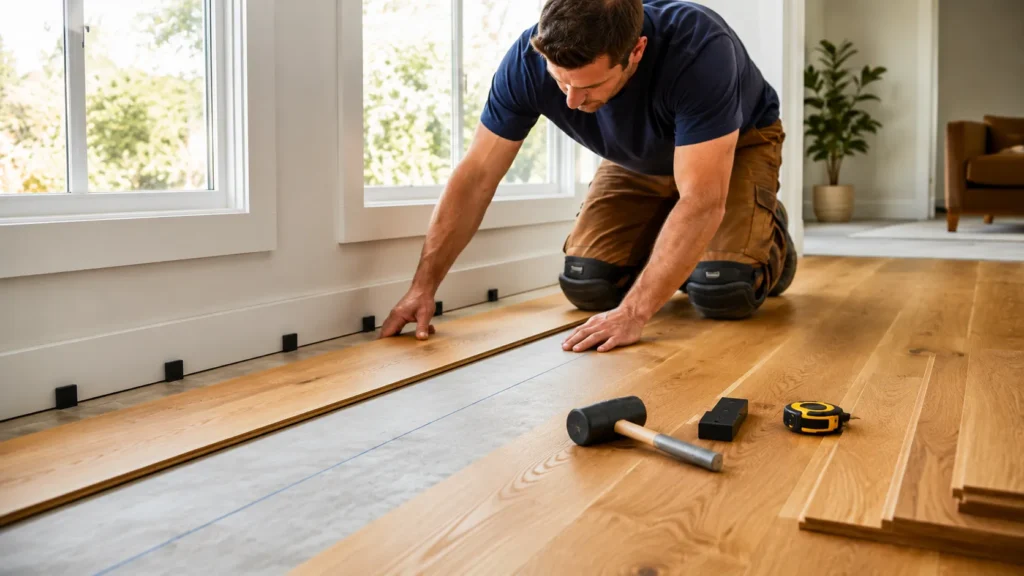
The first row controls the rest of the floor. If it is crooked, the entire room can look uneven.
Use spacers along the wall and check the line before continuing.
Step 6: Install the planks
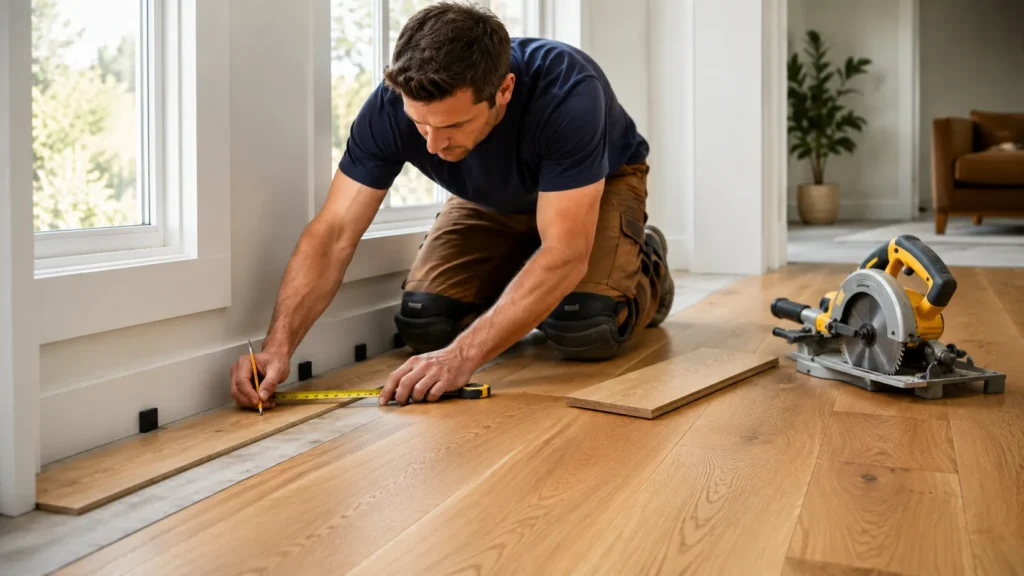
Depending on the flooring type, install the oak flooring by:
- Nailing
- Gluing
- Floating
- Clicking planks together
Follow the product instructions carefully. Do not mix installation methods unless the manufacturer allows it.
Step 7: Stagger the joints
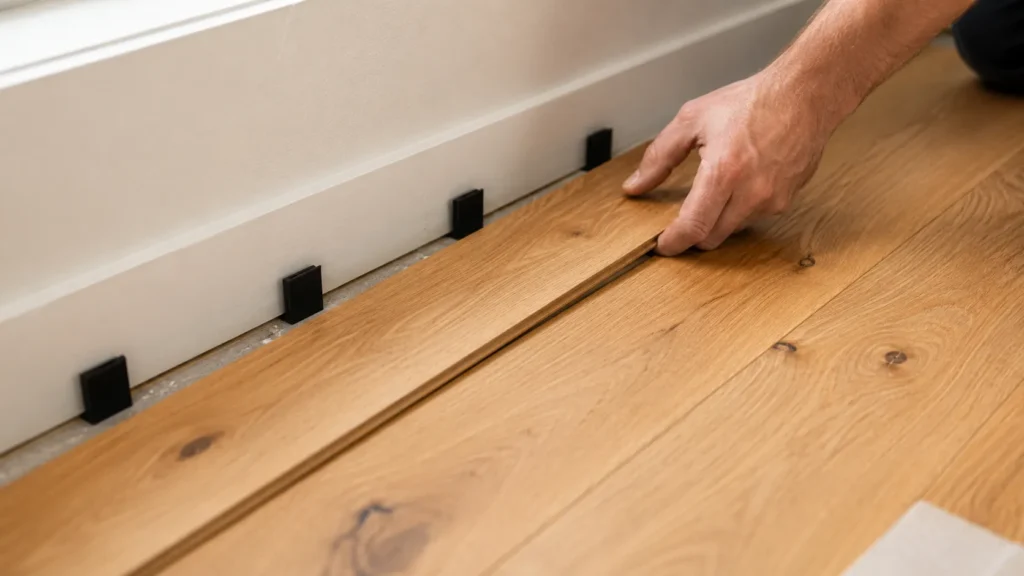
For plank oak flooring, stagger the end joints so the floor looks natural and remains stable. Avoid creating a stair-step pattern or lining up too many joints in one area.
Step 8: Cut the final row
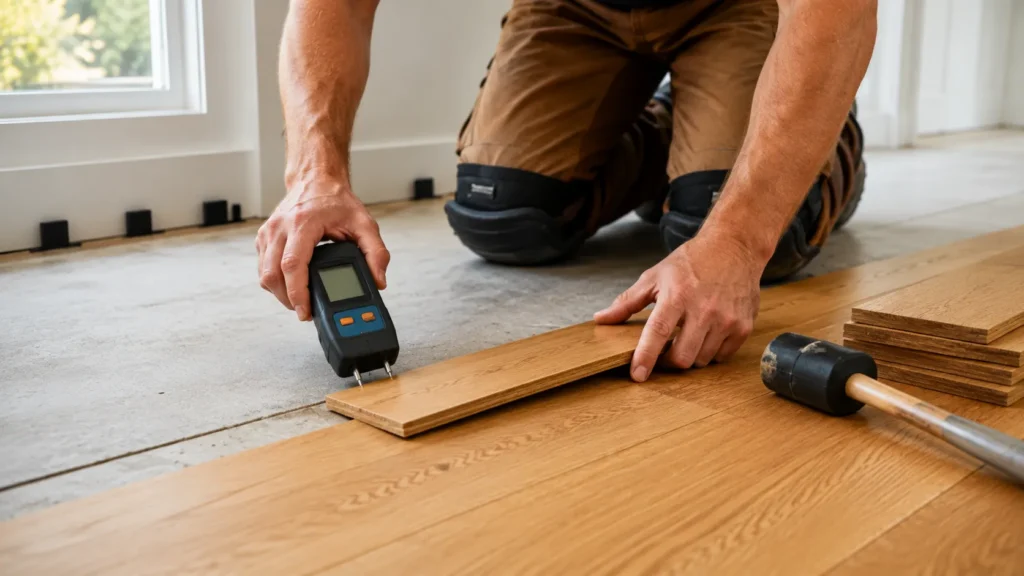
The final row often needs to be trimmed lengthwise. Measure carefully and remember to leave the expansion gap.
Step 9: Install trims and transitions
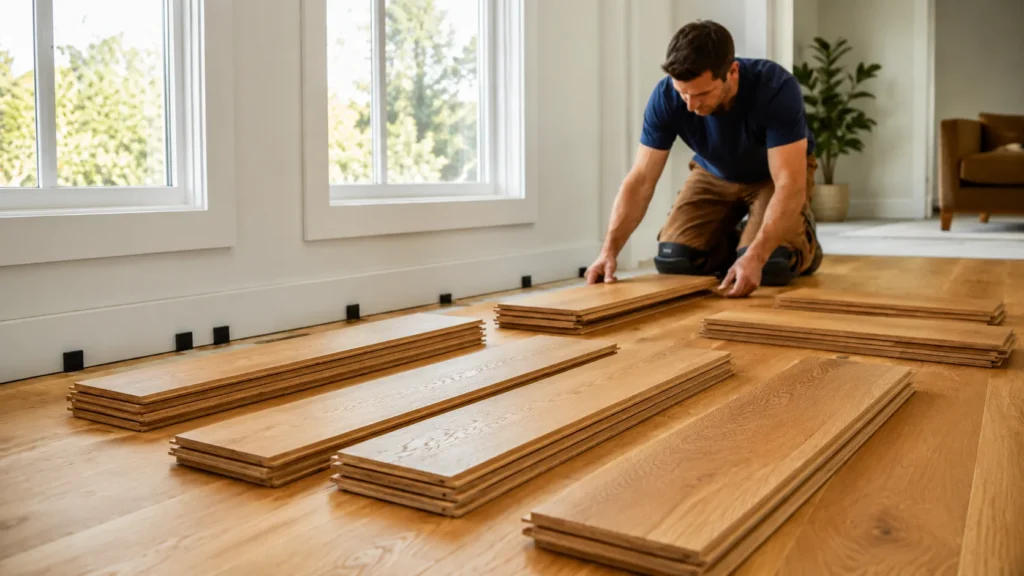
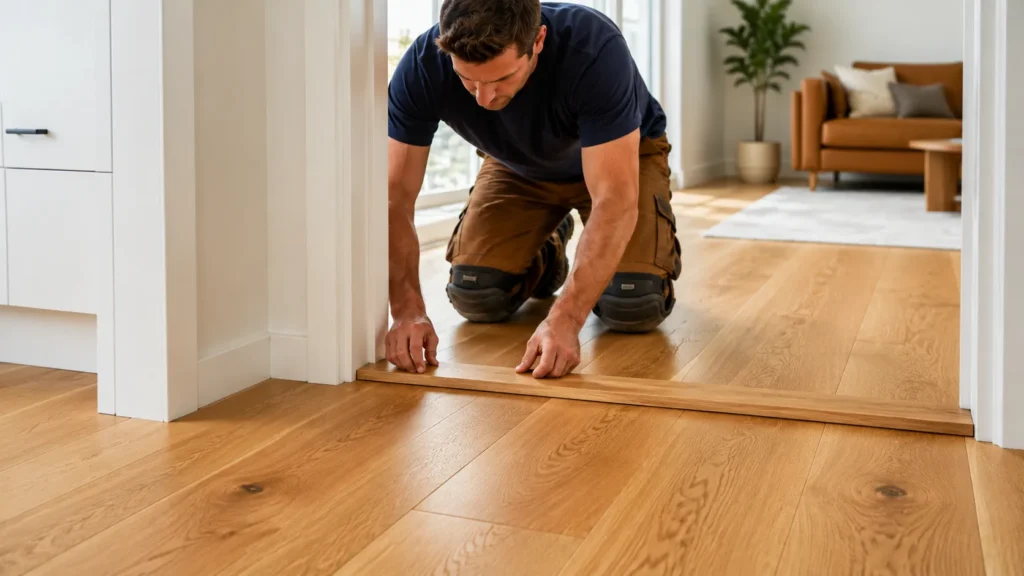
After the floor is laid, install trims, thresholds, and transition strips. These cover expansion gaps and create a finished look.
How to Lay Oak Flooring on Concrete
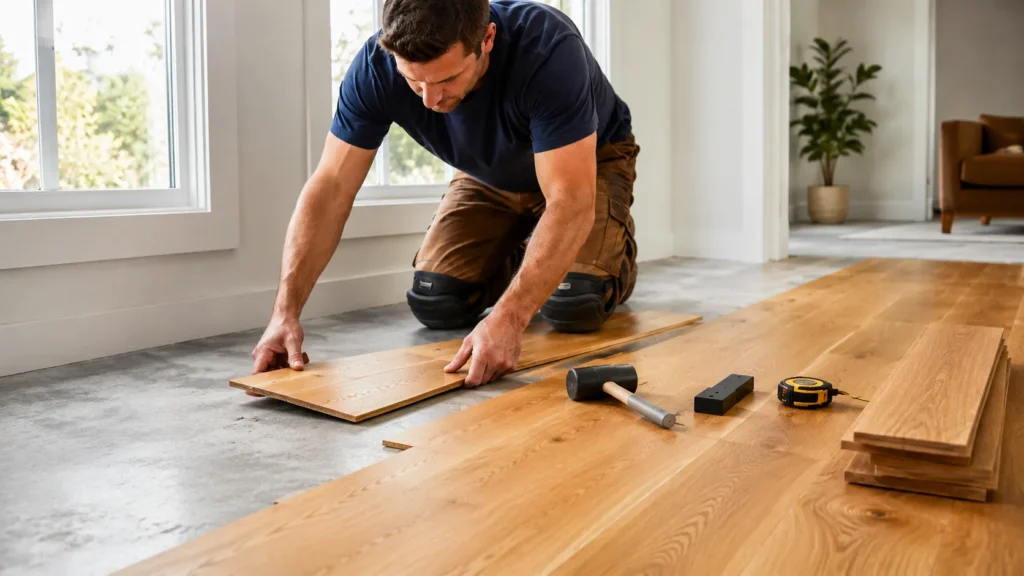
To lay oak flooring on concrete, moisture testing is essential. Concrete can hold moisture even when it looks dry. If moisture rises through the slab, it can damage oak flooring.
In most cases, engineered oak flooring is better for concrete than solid oak flooring because it is more dimensionally stable.
Common methods for concrete include:
- Glue-down engineered oak
- Floating engineered oak with underlayment
- Engineered click-lock oak flooring
Be careful with laying solid oak flooring on concrete. Solid oak is usually not the best direct choice for concrete unless the product and adhesive system are specifically approved for that use. In many homes, solid oak needs a proper wood subfloor, plywood system, or professional installation plan.
Before choosing this option, check:
- Concrete moisture level
- Slab condition
- Flatness
- Vapor barrier requirements
- Manufacturer instructions
- Adhesive compatibility
If the concrete is damp, cracked, uneven, or below grade, do not install oak flooring until the issue is fixed.
How to Lay Oak Flooring on Floorboards
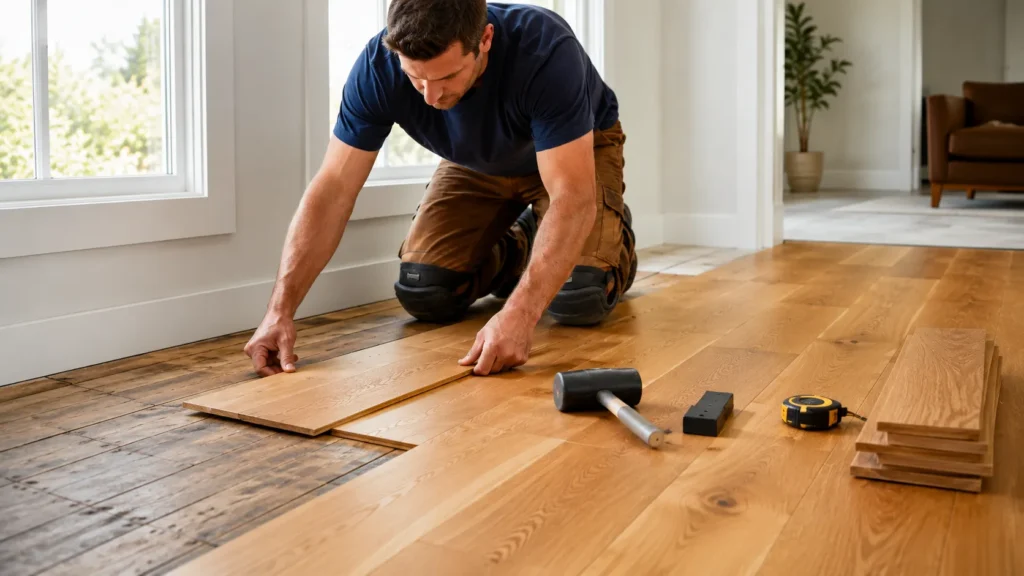
You can lay oak flooring on floorboards if the existing boards are strong, dry, level, and securely fixed. Loose or uneven floorboards can cause squeaks, movement, and gaps in the new oak floor.
Before laying oak flooring on floorboards:
- Screw down loose boards
- Replace damaged boards
- Sand or level high spots
- Remove nails or staples
- Check for moisture
- Make sure the floor does not bounce
If the old floorboards run in the same direction as the new oak planks, you may need a plywood layer first. This gives the oak flooring a more stable base and helps avoid movement between boards.
How to Lay Solid Oak Flooring
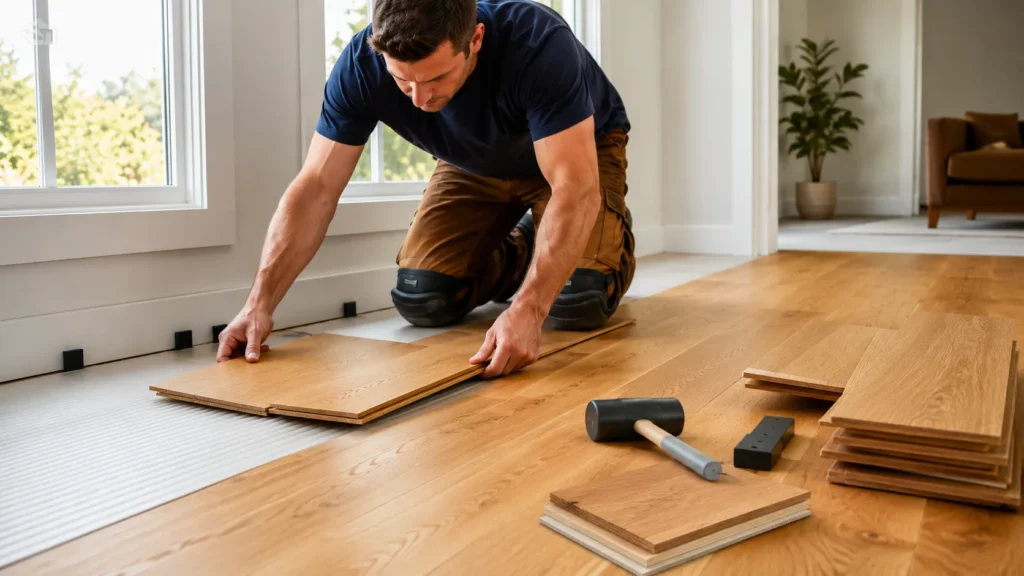
Solid oak flooring is usually best installed by nailing it to a suitable wood subfloor. It is not usually the easiest DIY option because it needs the right tools, proper spacing, and careful moisture control.
Solid oak works best in:
- Living rooms
- Bedrooms
- Dining rooms
- Hallways
- Above-grade spaces
- Stable indoor humidity conditions
Solid oak is less suitable for:
- Damp basements
- Wet rooms
- Uneven concrete
- High-moisture spaces
- Rooms with major humidity swings
If you want to lay solid oak flooring, make sure the subfloor is right. Solid oak is less forgiving than engineered oak.
How to Lay Engineered Oak Flooring
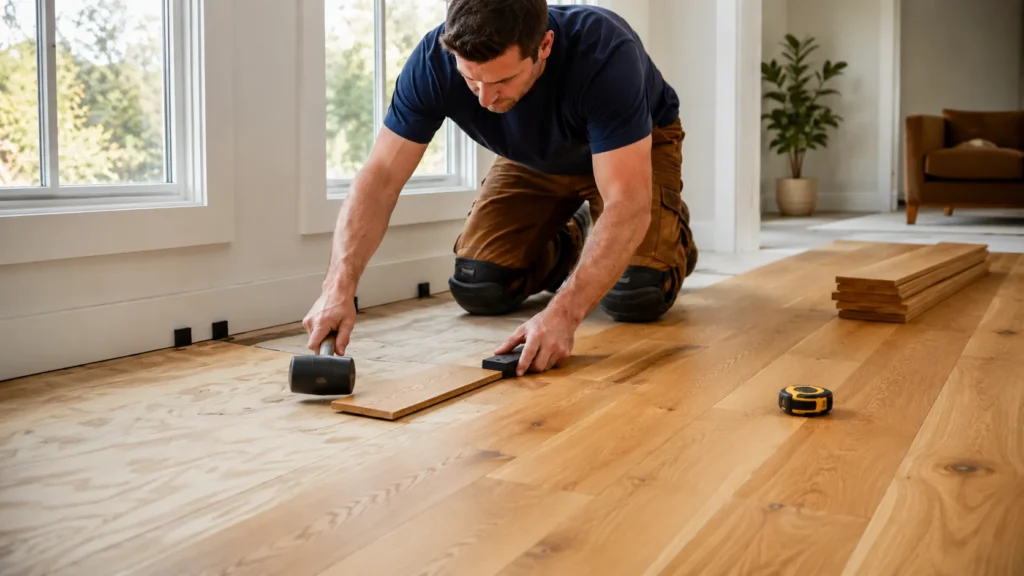
Engineered oak flooring is often easier to install because it may be designed for floating, glue-down, or nail-down installation.
It is commonly used over:
- Concrete
- Plywood
- OSB
- Existing floorboards
- Some underlayment systems
The best method depends on the product. Click-lock engineered oak may be floated over underlayment, while tongue-and-groove engineered oak may need glue or nails.
Engineered oak is often a better choice for DIY homeowners because it is more stable and can be more flexible in different rooms.
How to Lay Herringbone Oak Flooring
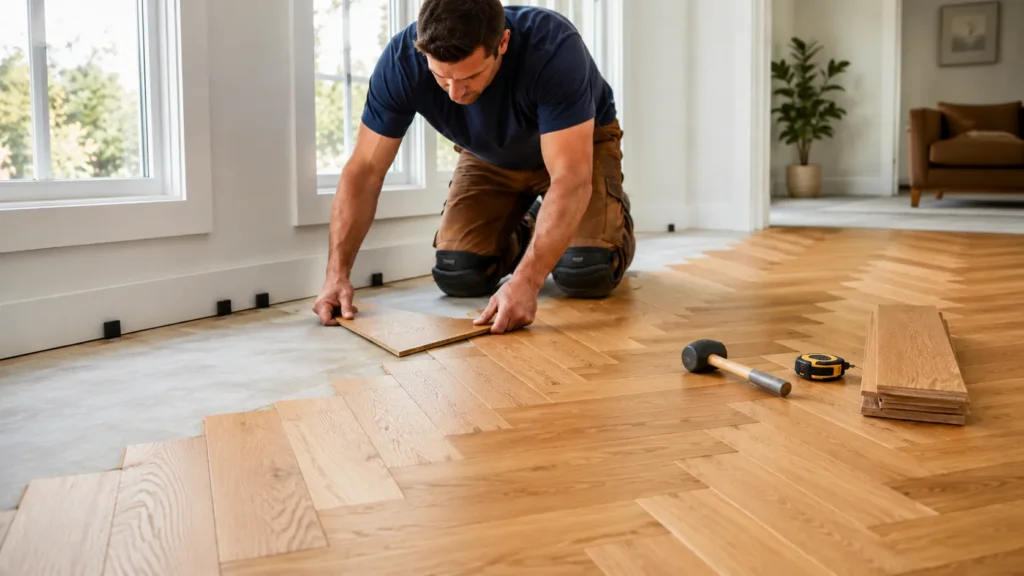
Herringbone oak flooring is more difficult to lay than straight plank flooring. The pattern must be planned carefully because small mistakes can become very visible across the room.
To lay herringbone oak flooring:
- Find the center line of the room.
- Plan the pattern before applying adhesive.
- Dry-lay some pieces first.
- Keep the pattern straight.
- Use the correct adhesive if glue-down is required.
- Cut border pieces carefully.
- Check alignment often.
Lay engineered oak herringbone flooring is usually more practical than solid oak herringbone in many homes because engineered construction is more stable.
Lay solid oak herringbone flooring can be beautiful, but it is less forgiving and usually needs professional-level skill.
How to Lay Oak Parquet Flooring
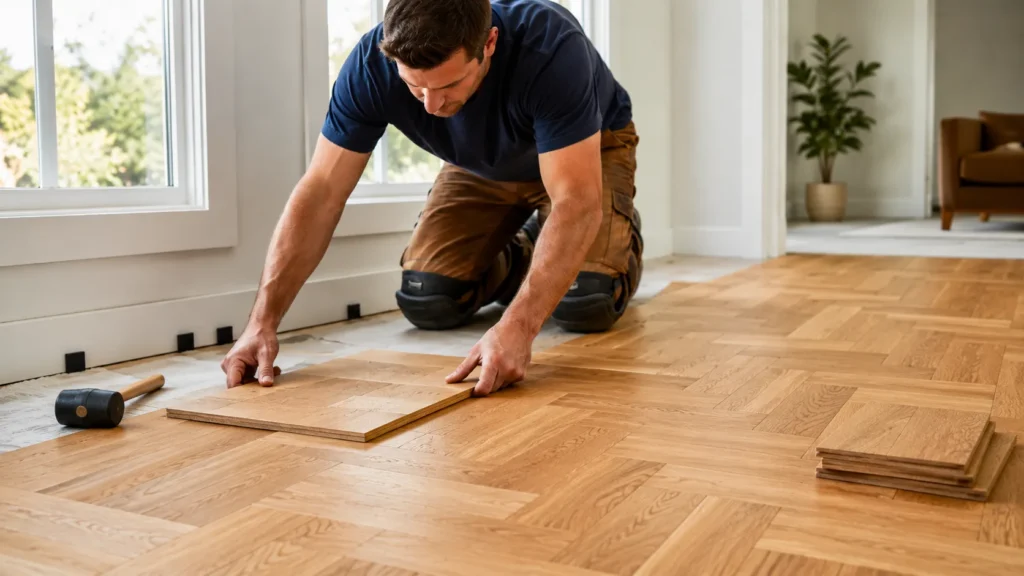
Oak parquet flooring uses small wood pieces arranged in a pattern. Herringbone is one type of parquet, but parquet can also include basketweave, brick, square block, and other designs.
To lay oak parquet flooring correctly, the subfloor must be very flat. Pattern flooring does not hide uneven areas well.
Oak parquet is often glued down. The layout must be measured carefully before installation starts.
Parquet is best for homeowners who want a decorative floor, but it is not the fastest or simplest DIY choice.
Common Mistakes to Avoid
Avoid these mistakes when laying oak flooring:
- Installing over damp concrete
- Skipping moisture testing
- Forgetting expansion gaps
- Laying oak over uneven floorboards
- Using the wrong underlayment
- Mixing installation methods
- Installing solid oak directly over concrete without approval
- Starting the first row crooked
- Not staggering plank joints
- Rushing herringbone or parquet layout
- Ignoring manufacturer instructions
This matters because oak is a natural material. Moisture, traffic, and subfloor condition can change the final result.
When to Call a Professional
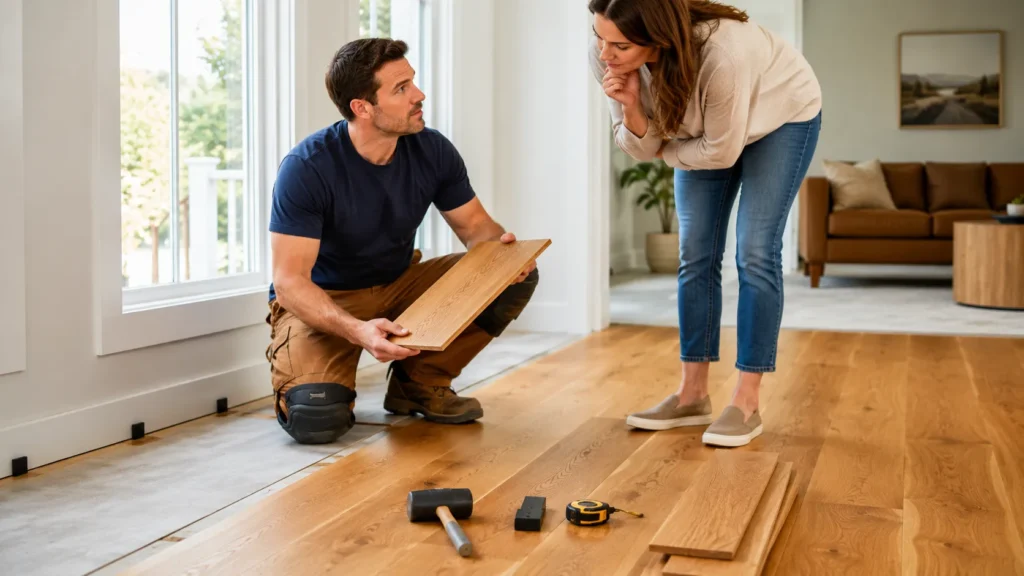
Call a professional if:
- The subfloor is uneven or damaged
- The concrete has moisture issues
- You want solid oak over concrete
- You are installing herringbone or parquet
- The room has stairs or complex cuts
- The flooring is expensive
- You are unsure about adhesives or moisture barriers
- The manufacturer requires professional installation for warranty coverage
DIY installation can save money, but mistakes with oak flooring can be expensive to fix.
Final Expert Recommendation
The best way to lay oak flooring depends on the flooring type and the subfloor. For DIY projects, engineered oak is usually easier and more flexible. For long-term traditional hardwood value, solid oak is a strong choice, but it needs the right subfloor and careful installation.
For more flooring material guides, installation tips, and homeowner-friendly comparisons, explore our All flooring types section.
FAQs
Can you lay oak flooring yourself?
Yes, some homeowners can lay oak flooring themselves, especially click-lock engineered oak. Solid oak, herringbone, and parquet are harder and may need professional installation.
Can you lay oak flooring on concrete?
Yes, but engineered oak is usually the better choice. Concrete must be dry, flat, clean, and tested for moisture before installation.
Can you lay solid oak flooring on concrete?
Solid oak is usually not recommended directly over concrete unless the manufacturer approves a specific system. A wood subfloor or professional installation plan may be needed.
Can you lay oak flooring on floorboards?
Yes, if the floorboards are dry, level, stable, and securely fixed. Loose or uneven boards should be repaired before installation.
Is engineered oak easier to lay than solid oak?
Yes, engineered oak is usually easier because it is more stable and may allow floating, glue-down, or click-lock installation.
Is herringbone oak flooring hard to lay?
Yes, herringbone oak flooring is harder than straight plank flooring because the pattern must be measured, aligned, and cut carefully.
Do oak floors need expansion gaps?
Yes, oak flooring needs expansion gaps around walls, pipes, door frames, and fixed objects because wood expands and contracts with humidity changes.
Should oak flooring be glued or nailed?
It depends on the flooring type and subfloor. Solid oak is often nailed, while engineered oak may be glued, nailed, or floated depending on the product.