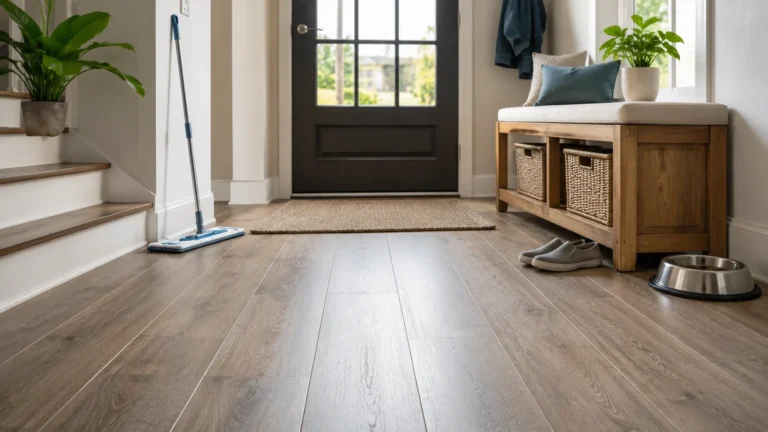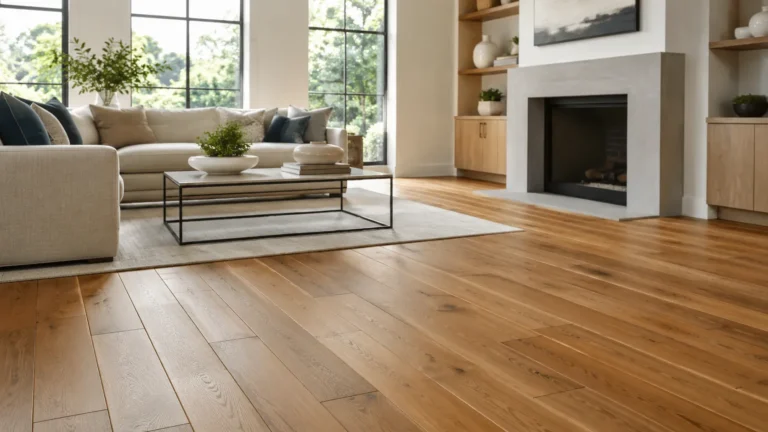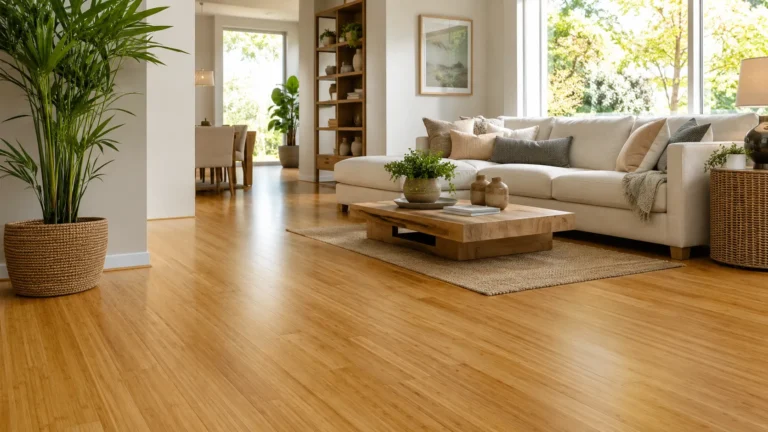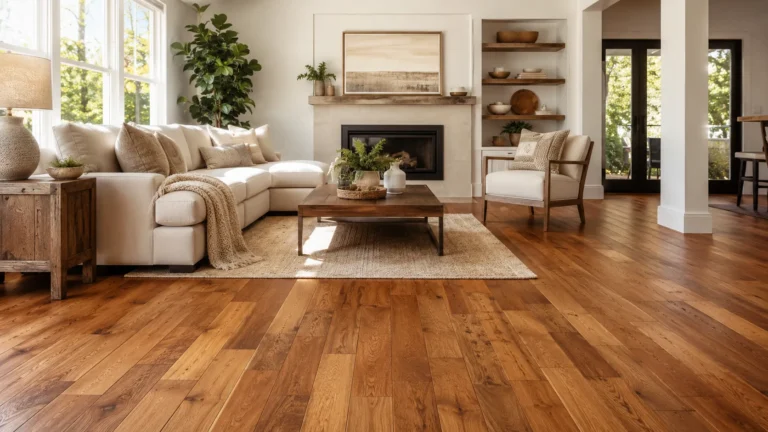
Oak flooring is one of the most popular hardwood flooring choices for American homes because it is durable, attractive, widely available, and flexible enough to fit both traditional and modern interiors. It comes in red oak, white oak, solid oak, engineered oak, unfinished, prefinished, wide plank, light, dark, natural, and stained finishes.
Quick answer: Oak flooring is a hardwood floor made from oak wood, commonly available as red oak or white oak. It is valued for its grain pattern, durability, refinishing potential, and classic appearance. White oak has a tighter grain and more modern tone, while red oak has warmer color and stronger grain variation.
From field experience, oak performs best when the right construction is matched to the room. Solid oak is excellent for dry, above-grade spaces where refinishing matters. Engineered oak is often safer for concrete slabs, basements, condos, and rooms with humidity changes.
Oak Flooring Comparison Table
| Feature | Oak Flooring |
| Material type | Hardwood flooring |
| Common species | Red oak and white oak |
| Best for | Living rooms, bedrooms, hallways, dining rooms, offices |
| Use caution in | Kitchens, basements, entryways |
| Avoid in | Wet bathrooms, laundry rooms, damp areas |
| Main benefit | Durable, timeless, refinishable, widely available |
| Main concern | Moisture movement, scratches, dents, and sunlight color change |
| Installation | Nail-down, glue-down, floating, depending on product |
| Maintenance | Sweep, vacuum, damp mop carefully, refinish when needed |
| Style range | Natural, light, honey, dark, grey, whitewashed, stained |
What Is Oak Flooring?
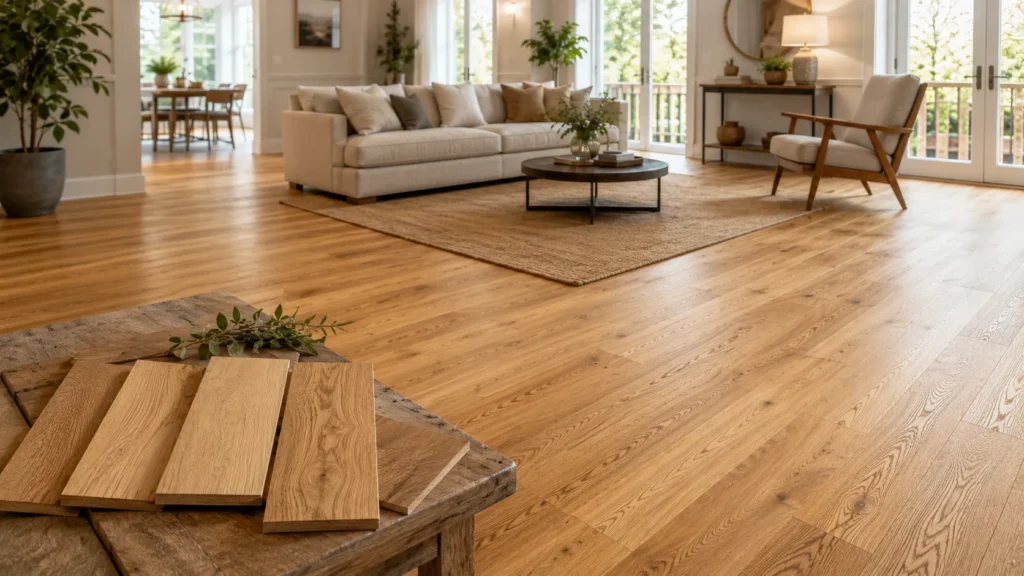
Oak flooring is a hardwood floor made from oak trees. It can be installed as solid hardwood, engineered hardwood, parquet, or oak-look flooring such as laminate, vinyl, or LVP.
Traditional oak hardwood flooring is made from real oak. Oak-look products copy the appearance of oak but are not real wood. This difference matters because real oak can usually be refinished, while laminate and vinyl cannot be sanded like hardwood.
Why Oak Flooring Is Popular
Oak has stayed popular because it offers a strong balance of appearance, durability, and availability.
Homeowners choose oak because it:
- Has a natural wood grain
- Works with many stain colors
- Fits traditional and modern interiors
- Can be refinished when thick enough
- Handles normal foot traffic well
- Is widely available in the USA
- Comes in solid and engineered options
- Offers many plank widths and finish styles
One common mistake homeowners make is choosing oak only by color. The species, grade, plank width, finish, construction, and room humidity all affect how the floor will look and perform.
Types of Oak Flooring
White Oak Flooring
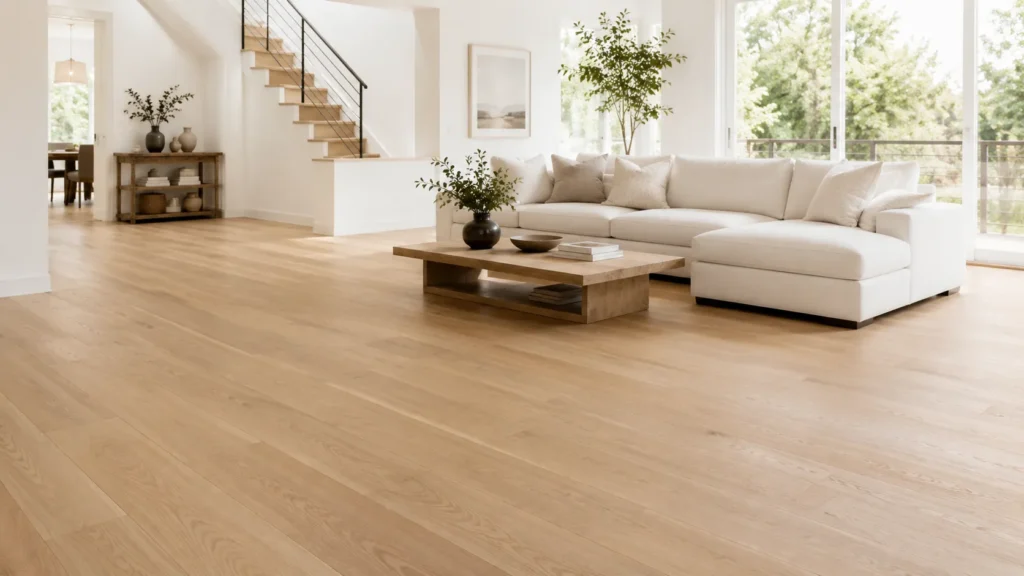
White oak flooring has a tighter, straighter grain than red oak and usually has cooler beige, brown, taupe, or gray undertones. It is popular in modern homes because it looks clean and refined without feeling too busy.
White oak flooring works well for:
- Modern homes
- Scandinavian interiors
- Wide plank floors
- Natural finishes
- Light oak floors
- Neutral interiors
- Homes where subtle grain is preferred
White oak is also commonly used for engineered hardwood flooring, wide plank flooring, and natural matte finishes.
Red Oak Flooring
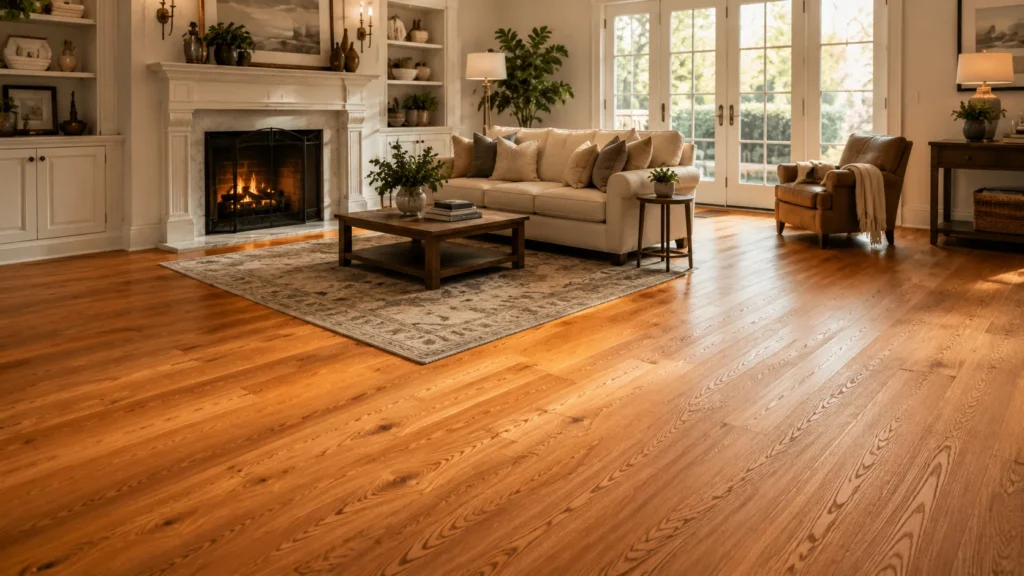
Red oak flooring has a warmer tone, stronger grain pattern, and often a pinkish or reddish undertone. It is one of the most common hardwood flooring choices in the United States.
Red oak flooring works well for:
- Traditional homes
- Farmhouse interiors
- Warm wood designs
- Budget-conscious hardwood projects
- Homes where visible grain is preferred
- Refinishing older hardwood floors
Red oak can take stain well, but its natural undertone can affect the final color. For example, light or gray stains may look different on red oak than on white oak.
Light Oak Flooring
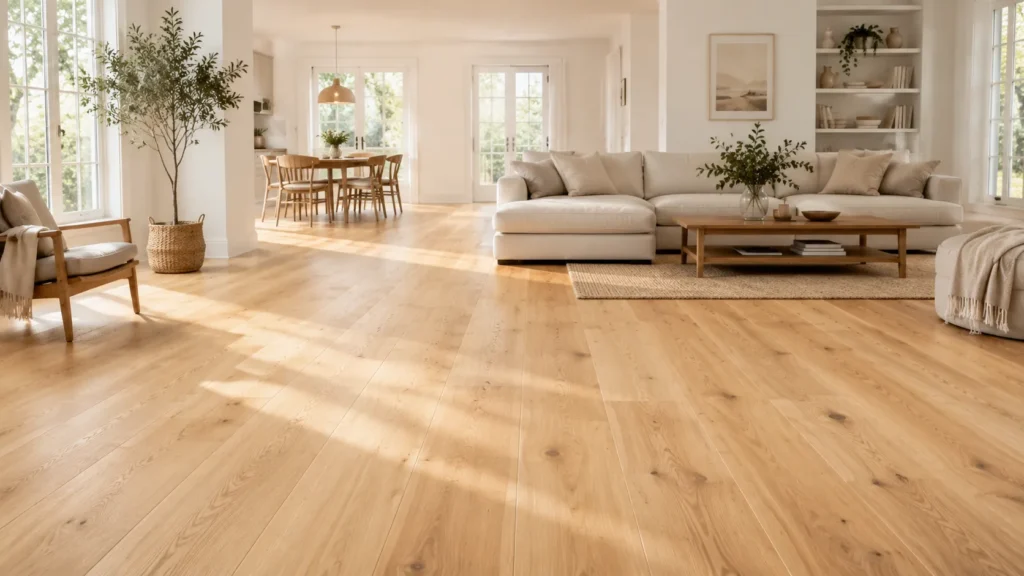
Light oak flooring creates a bright, open look. It is popular in modern homes because it makes rooms feel larger and cleaner.
Light oak flooring may include:
- Natural white oak flooring
- Light oak hardwood floors
- Whitewashed oak
- Light oak laminate flooring
- Light oak engineered flooring
- Pale French oak flooring
Light floors can hide some dust better than dark floors, but they may show dark pet hair, stains, or strong color variation depending on the finish.
French Oak Flooring
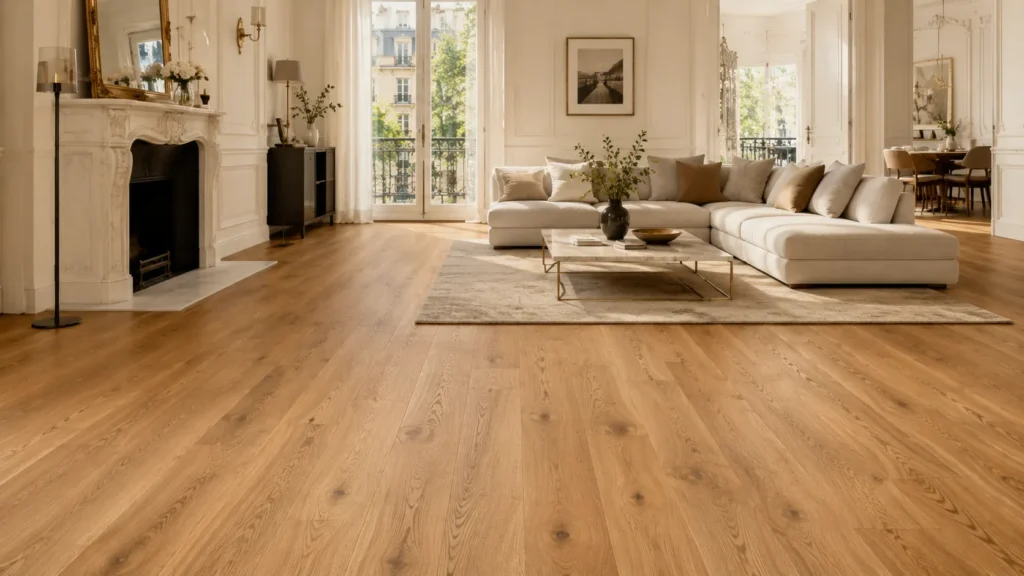
French oak flooring usually refers to oak sourced or styled in a European look. It often has a refined grain, natural tone, wide plank format, and premium design feel.
French oak flooring is commonly chosen for:
- Luxury interiors
- Wide plank floors
- Natural matte finishes
- European-style homes
- Neutral modern designs
Before buying French oak, check whether it is actually sourced from France or simply marketed as a French oak style.
Red Oak vs White Oak Flooring
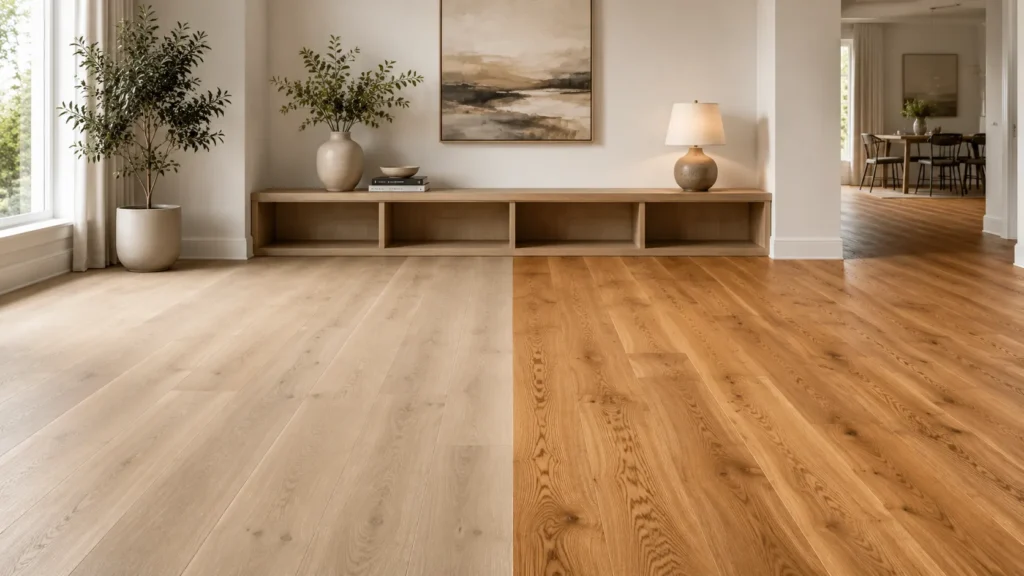
| Feature | Red Oak Flooring | White Oak Flooring |
| Color tone | Warmer, reddish, pinkish, golden | Cooler, beige, brown, taupe, gray |
| Grain | More open and prominent | Tighter and more subtle |
| Style | Traditional, rustic, warm | Modern, clean, refined |
| Staining | Accepts stain well but undertone shows | More neutral for many modern stains |
| Hardness | Durable hardwood | Slightly harder and denser |
| Cost | Often more affordable | Often slightly more expensive |
| Best for | Warm homes, classic looks, budget hardwood | Modern homes, natural finishes, wide plank floors |
Neither option is automatically better. Choose red oak if you want warmth, visible grain, and affordability. Choose white oak if you want a calmer grain, modern tone, and a more neutral base for natural or light finishes.
Solid Oak Flooring vs Engineered Oak Flooring
Solid Oak Flooring
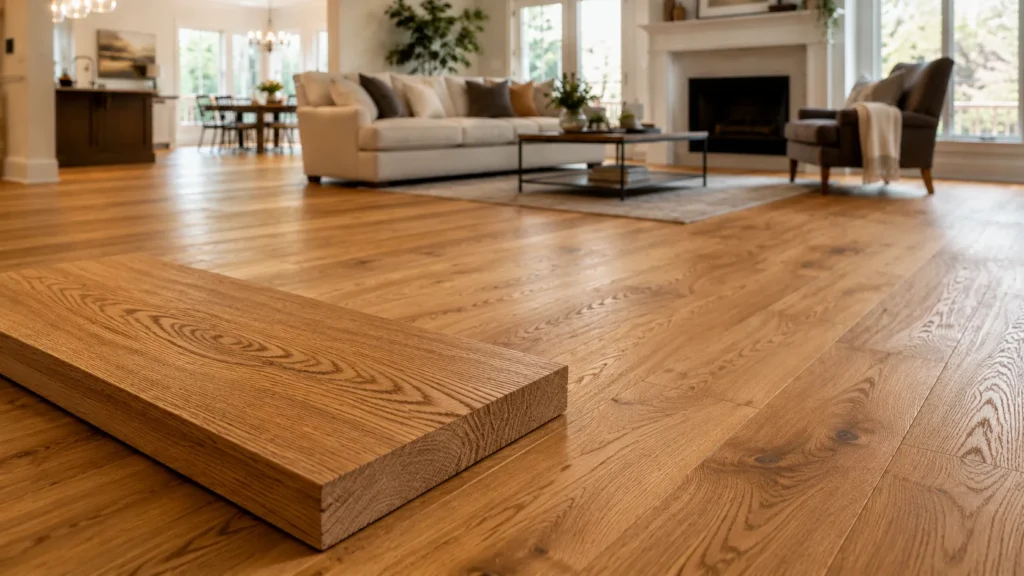
Solid oak flooring is made from one piece of oak wood. It can usually be sanded and refinished multiple times if it is thick enough.
Best for:
- Above-grade rooms
- Living rooms
- Bedrooms
- Hallways
- Dining rooms
- Homes where long-term refinishing matters
Avoid solid oak in areas with high moisture or unstable humidity.
Engineered Oak Flooring
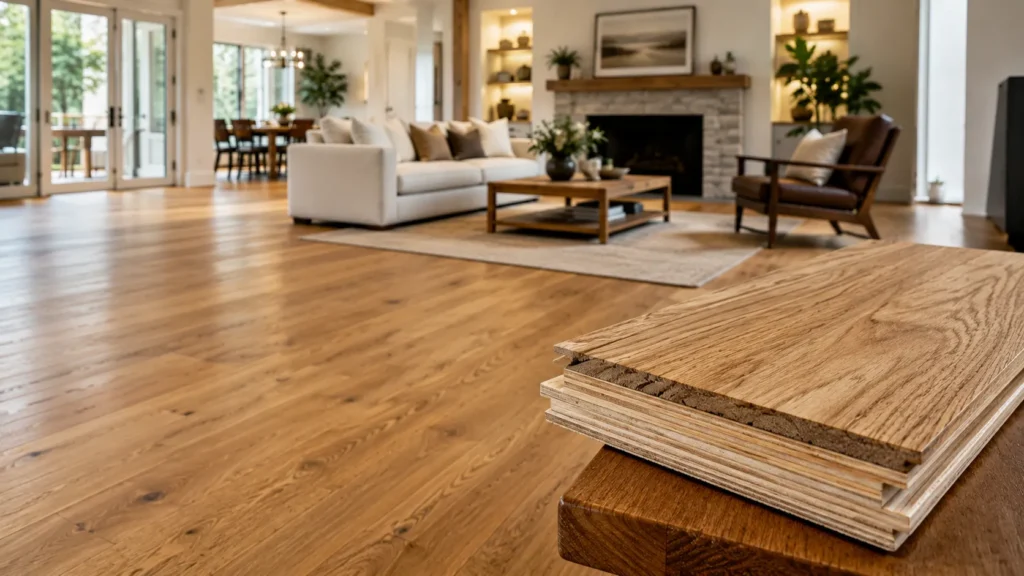
Engineered oak flooring has a real oak top layer over a plywood or high-density core. It is usually more dimensionally stable than solid oak.
Best for:
- Concrete slabs
- Condos
- Basements with controlled moisture
- Radiant heat systems if approved
- Wider plank designs
- Homes with seasonal humidity changes
Before choosing engineered oak, check the wear layer thickness. A thicker wear layer may allow future refinishing. A thin veneer may not.
Unfinished Oak Flooring
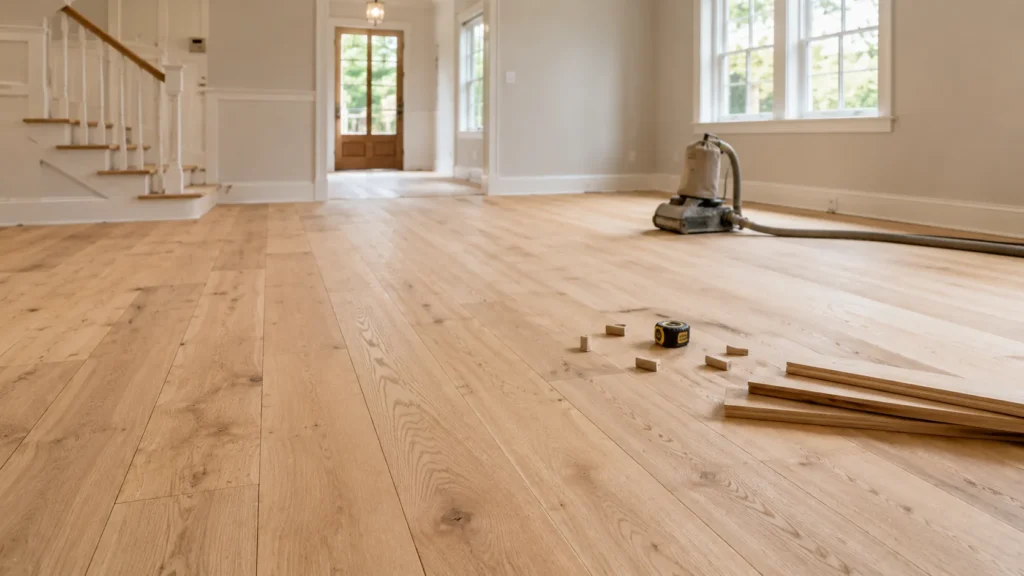
Unfinished oak flooring is installed raw and finished on-site. It allows more control over stain color, sheen, and final appearance.
Best for:
- Custom stain colors
- Matching existing hardwood
- Large remodels
- Traditional hardwood installations
- Homeowners who want a site-finished look
The downside is that unfinished oak requires sanding, staining, sealing, drying time, and more job-site disruption.
Prefinished White Oak Flooring
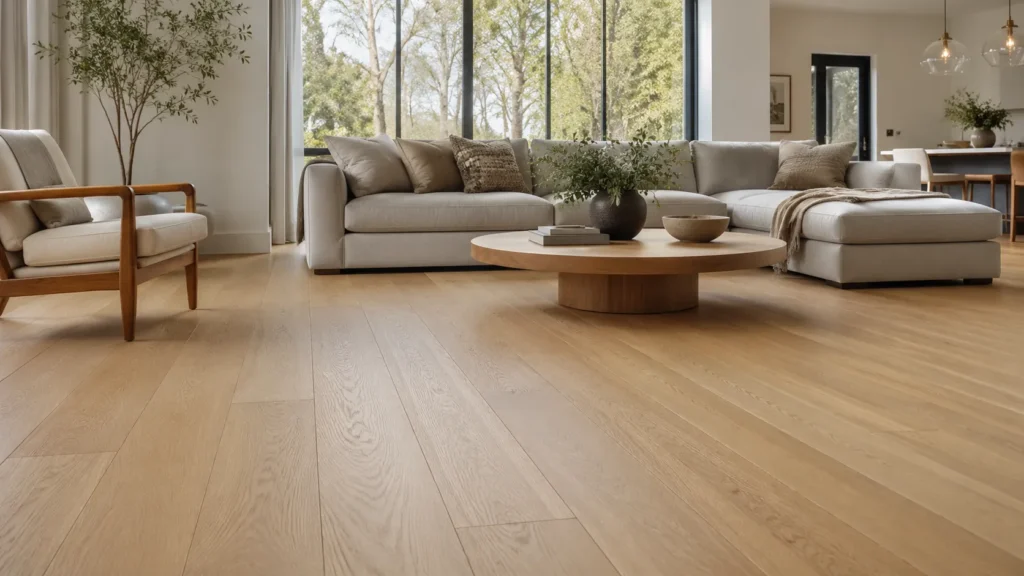
Prefinished white oak flooring is finished at the factory before installation. It is usually faster to install and creates less mess than unfinished hardwood.
Best for:
- Faster projects
- Cleaner installation
- Busy households
- Remodels where dust control matters
- Homeowners who want predictable color
The trade-off is that matching future repairs can be harder if the exact product is discontinued.
Oak Flooring Colors and Stain Options
Oak floor stain colors can dramatically change the final look of the home.
Popular oak flooring colors include:
- Natural oak
- Light oak
- Honey oak
- Whitewashed oak
- Blonde oak
- Gray oak
- Dark oak
- Espresso oak
- Walnut-stained oak
- Neutral matte oak
White oak usually works better with natural, beige, taupe, and modern matte finishes. Red oak often works better with warm, medium, honey, and traditional stain colors.
Dark Oak Flooring
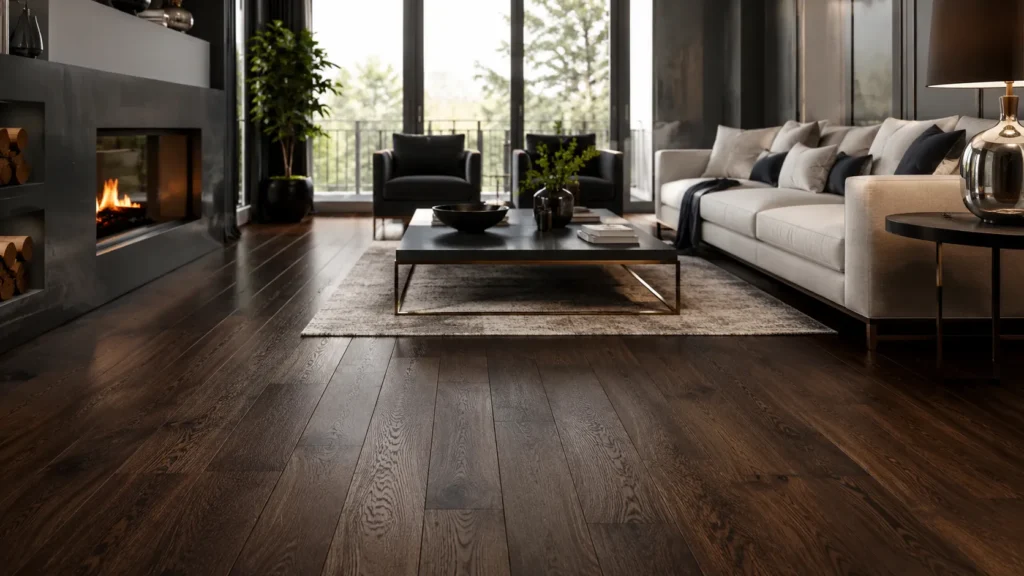
Dark oak flooring looks rich and dramatic, but it can show dust, scratches, pet hair, and footprints more than medium-tone oak.
Dark oak works best in:
- Formal living rooms
- Luxury interiors
- Low-dust homes
- Rooms with good lighting
- Homes without heavy pet traffic
Honey Oak Floors
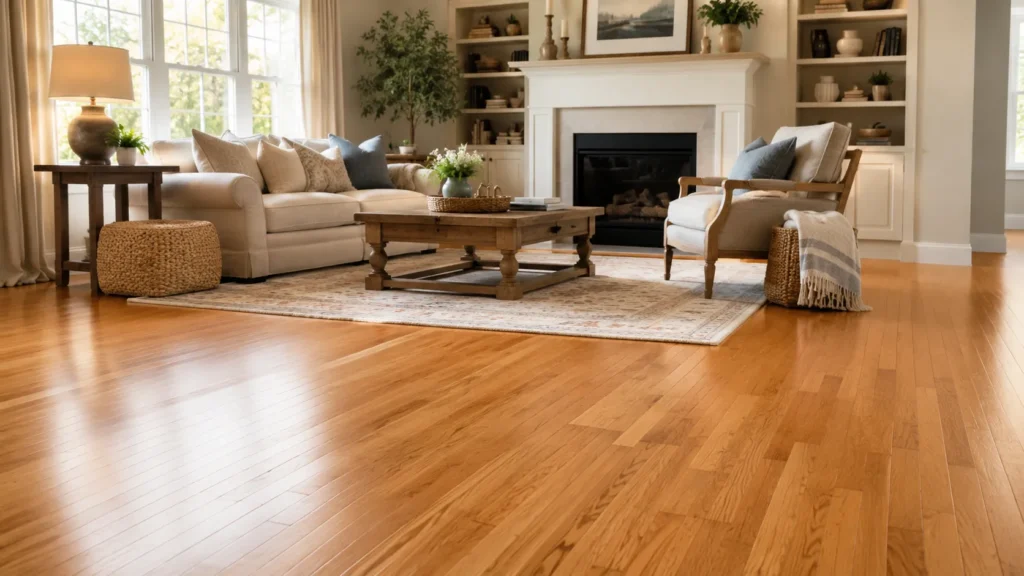
Honey oak floors have warm golden tones. They can feel traditional, cozy, and classic. If the goal is a more updated look, honey oak can be softened with neutral walls, modern rugs, and simple furniture.
Grey Oak Flooring
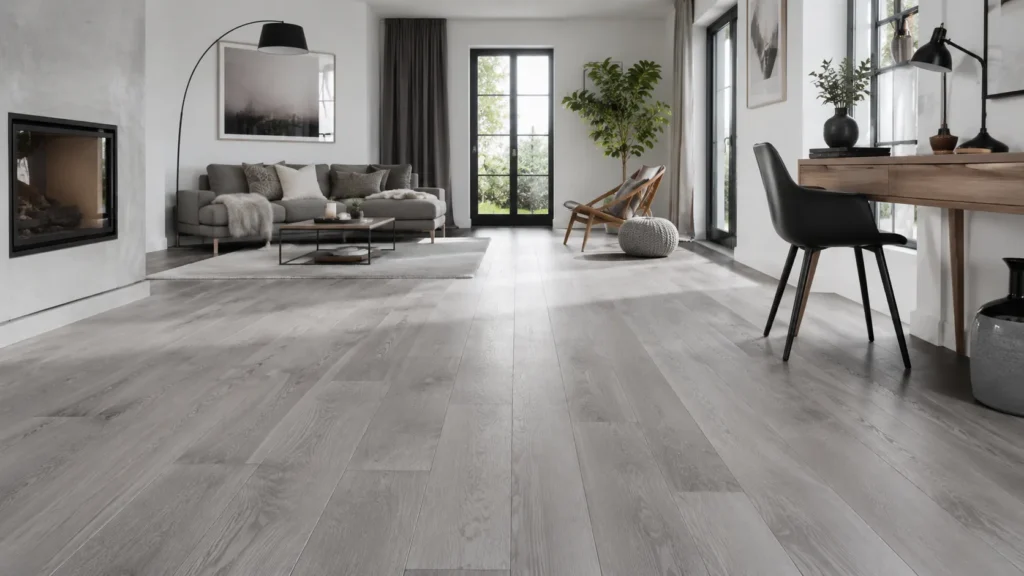
Grey oak engineered flooring and grey oak laminate flooring are common in modern interiors. Before choosing gray, make sure it fits the long-term style of the home because gray flooring trends can change.
Oak Laminate, Oak Vinyl, and Oak LVP Flooring
Not every oak-looking floor is real oak.
White Oak Laminate Flooring
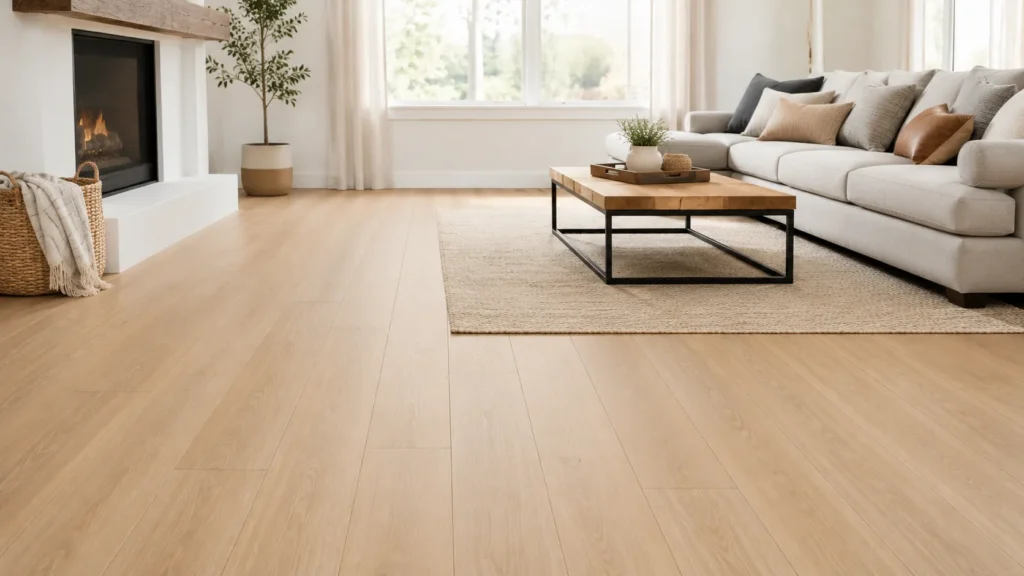
White oak laminate flooring uses a printed image layer to copy the look of oak. It can be budget-friendly and easy to maintain, but it cannot be sanded or refinished like real hardwood.
White Oak Vinyl Flooring
White oak vinyl flooring is vinyl designed to look like white oak. It is often more water resistant than real oak, depending on the product.
Best for:
- Kitchens
- Rentals
- Basements
- Budget projects
- Moisture-prone spaces
White Oak LVP Flooring
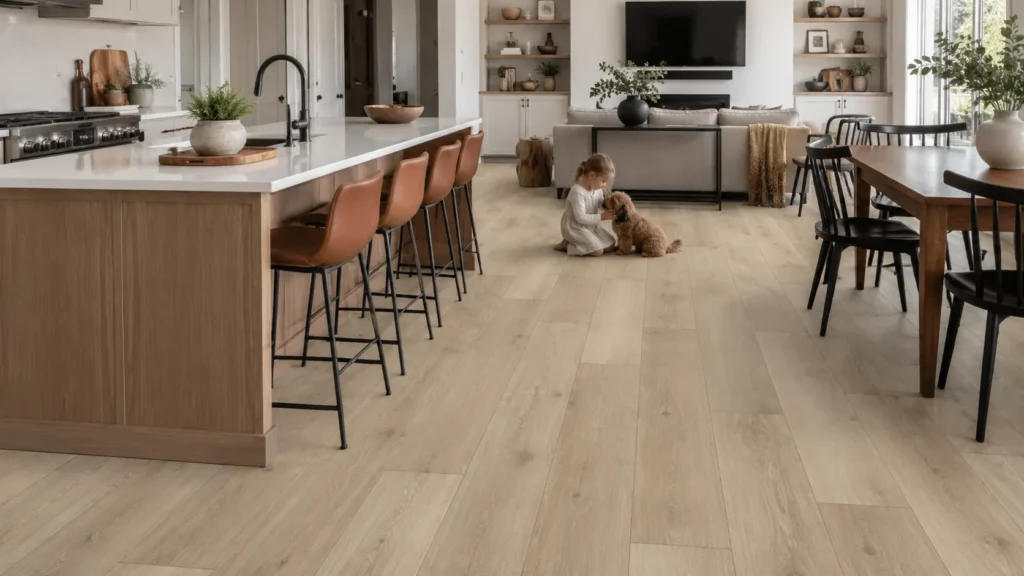
White oak LVP flooring is luxury vinyl plank with a white oak look. It is not real wood, but it can be practical where durability and water resistance matter more than authenticity.
Oak Vinyl Plank Flooring
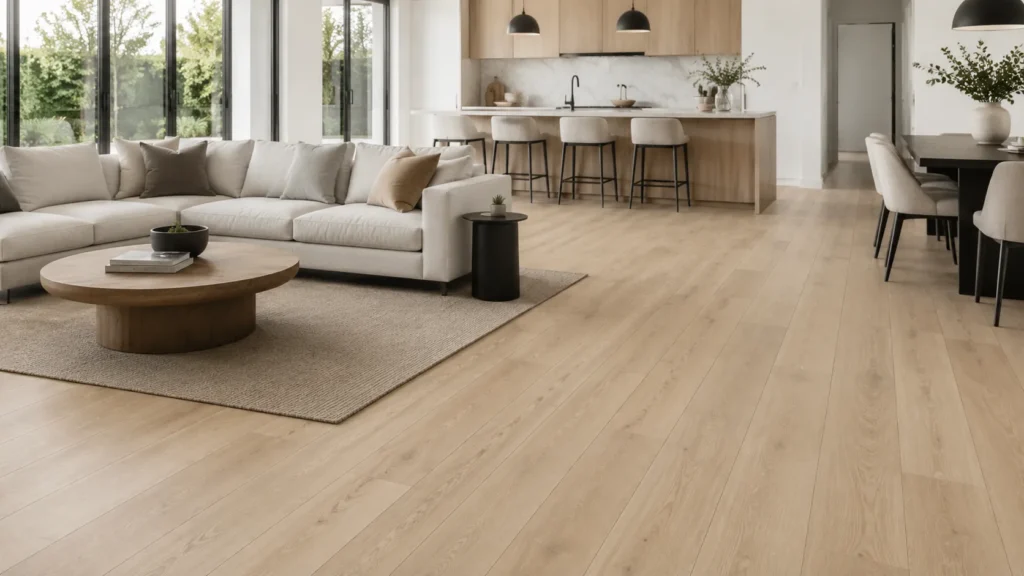
Oak vinyl plank flooring can be useful when a homeowner wants the appearance of oak but needs easier maintenance, lower cost, or better moisture resistance.
Oak Parquet Flooring
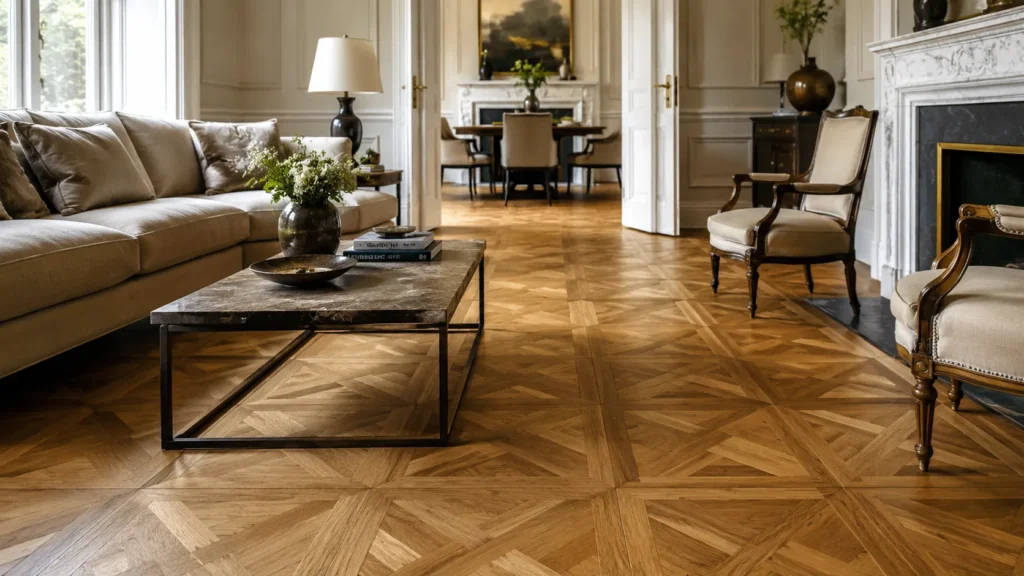
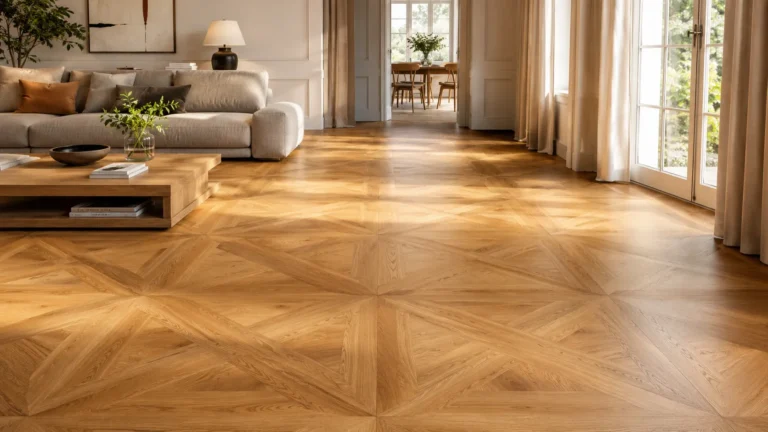
Oak parquet flooring uses oak pieces arranged in patterns like herringbone, basket weave, or geometric blocks. It creates a decorative hardwood look but is more complex to install and repair than standard plank flooring.
Best Rooms for Oak Flooring
| Room | Is Oak Flooring Good? | Notes |
| Living room | Yes | One of the best rooms for oak |
| Bedroom | Yes | Comfortable and timeless |
| Hallway | Yes | Choose durable finish for traffic |
| Dining room | Yes | Classic hardwood look |
| Home office | Yes | Use chair mat under rolling chairs |
| Kitchen | Sometimes | Clean spills quickly |
| Basement | Sometimes | Engineered oak or oak-look vinyl is safer |
| Bathroom | Usually no | Too much moisture risk |
| Laundry room | Usually no | Leaks can damage real oak |
| Pet homes | Sometimes | Choose durable finish and medium tones |
Oak Flooring Installation
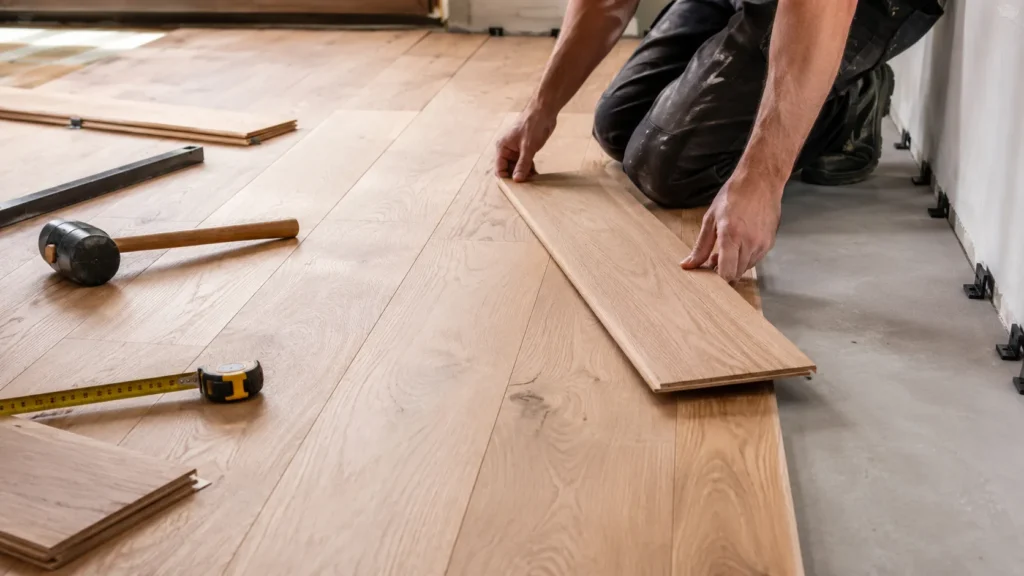
Oak flooring installation depends on product construction.
Common methods include:
- Nail-down installation for solid oak
- Glue-down installation for some engineered oak
- Floating installation for click-lock engineered oak
- Glue or float installation for some oak-look vinyl or laminate
Before installation, check:
- Subfloor flatness
- Subfloor moisture
- Room humidity
- Expansion gap requirements
- Acclimation instructions
- Underlayment compatibility
- Adhesive compatibility
- Manufacturer warranty rules
In real installations, many oak floor problems start before the first board is installed. A damp or uneven subfloor can lead to cupping, gaps, squeaks, adhesive failure, or movement.
How to Clean and Maintain Oak Flooring
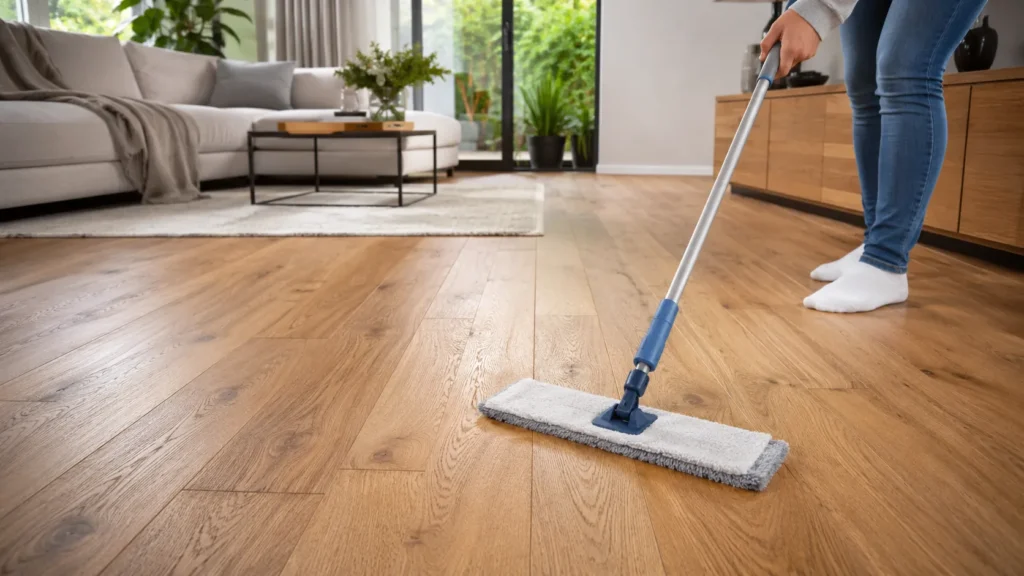
Oak flooring is not difficult to maintain, but it should not be treated like tile.
Basic care tips:
- Sweep or vacuum regularly.
- Wipe spills quickly.
- Use a slightly damp microfiber mop.
- Use a hardwood-safe cleaner.
- Avoid steam mops.
- Avoid soaking the floor.
- Use felt pads under furniture.
- Add rugs in high-traffic areas.
- Keep pet nails trimmed.
- Refinish real oak when the finish is worn.
Oak can last a long time, but no hardwood floor is maintenance-free. Grit, chair legs, pet nails, water, and sunlight are the most common causes of visible wear.
Oak Flooring Pros and Cons
Pros
- Timeless appearance
- Durable hardwood surface
- Wide availability
- Many colors and stains
- Can be refinished if thick enough
- Works in many home styles
- Red oak and white oak options
- Available in solid and engineered formats
- Good resale appeal in many markets
Cons
- Not waterproof
- Can scratch or dent
- May change color with sunlight
- Solid oak can move with humidity
- Professional installation may be needed
- Dark colors show dust and scratches
- White oak may cost more than red oak
- Low-quality engineered oak may have limited refinishing potential
Common Oak Flooring Mistakes to Avoid
Avoid these mistakes:
- Choosing color before checking species
- Assuming oak flooring is waterproof
- Installing solid oak over damp concrete
- Skipping acclimation
- Ignoring plank width and room size
- Choosing dark oak in a pet-heavy home
- Using steam mops
- Buying thin engineered oak without checking wear layer
- Expecting red oak to stain exactly like white oak
- Forgetting sunlight can change oak color over time
When to Hire a Professional
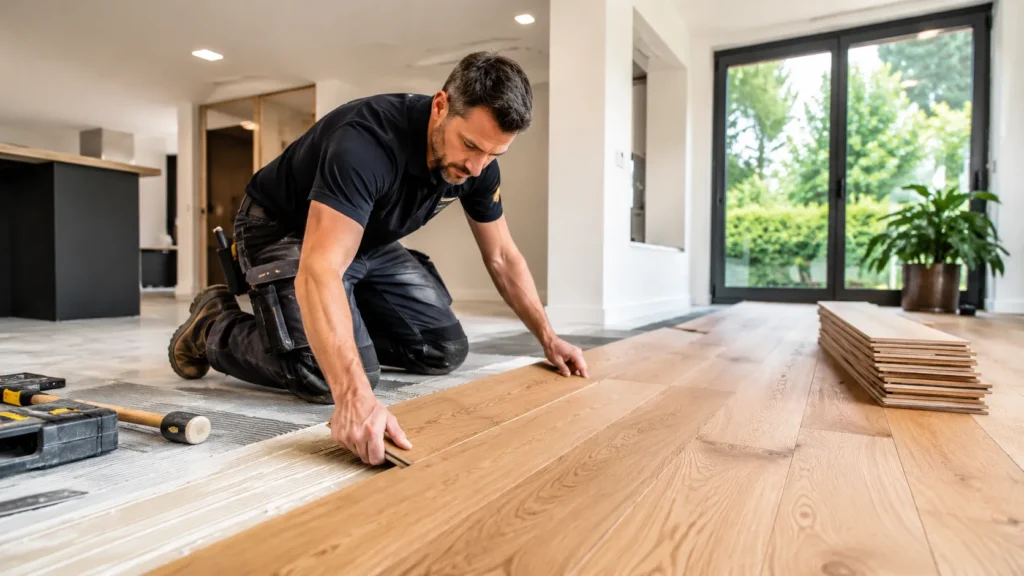
Hire a professional if:
- You are installing solid oak
- You need unfinished oak stained on-site
- The subfloor is uneven
- Moisture readings are unclear
- You are installing over concrete
- You want herringbone or parquet oak
- You are refinishing old oak floors
- You need to match existing oak flooring
- The room has stairs, transitions, or complex cuts
DIY may be realistic for some click-lock engineered oak, oak laminate, or oak vinyl plank, but solid hardwood installation and site finishing usually require more skill.
Final Expert Recommendation
Oak flooring is one of the safest hardwood choices for many homes because it offers durability, beauty, availability, and long-term flexibility. Choose red oak flooring if you want warmth, strong grain, and better affordability. Choose white oak flooring if you want a modern look, subtle grain, and neutral stain flexibility.
Choose solid oak flooring for long-term refinishing in dry above-grade rooms. Choose engineered oak flooring for wider planks, concrete slabs, condos, or rooms with humidity changes. Choose oak vinyl plank flooring or white oak LVP flooring when water resistance and easy care matter more than real wood.
The best oak floor is not just the best-looking sample. It is the one that fits your room, subfloor, moisture level, budget, lifestyle, design style, and long-term maintenance expectations.
FAQ
What is oak flooring?
Oak flooring is hardwood flooring made from oak wood. It is commonly available as red oak, white oak, solid oak, engineered oak, unfinished oak, prefinished oak, and oak-look laminate or vinyl.
Is oak flooring good for homes?
Yes, oak flooring is a good choice for many homes because it is durable, attractive, widely available, and can usually be refinished if it is real hardwood and thick enough.
Which is better, red oak or white oak flooring?
White oak is better for a modern, neutral look with tighter grain. Red oak is better for warmer interiors, stronger grain variation, and often better affordability.
Is oak flooring waterproof?
Real oak flooring is not waterproof. It can be damaged by standing water, wet mopping, plumbing leaks, and high humidity. Oak-look vinyl or LVP is usually safer for wet areas.
Is solid oak better than engineered oak?
Solid oak is better for long-term refinishing in dry rooms. Engineered oak is better for concrete slabs, wider planks, basements with controlled moisture, and rooms with humidity changes.
What is unfinished oak flooring?
Unfinished oak flooring is raw oak flooring installed first and then sanded, stained, and sealed on-site. It is useful when you want a custom stain or need to match existing floors.
What is the best oak floor color?
Natural white oak, light oak, honey oak, medium brown, and neutral matte finishes are popular. The best color depends on your room size, wall color, lighting, furniture, and maintenance needs.
Can oak floors be refinished?
Yes, real solid oak floors can usually be refinished multiple times. Engineered oak can sometimes be refinished if the wear layer is thick enough.