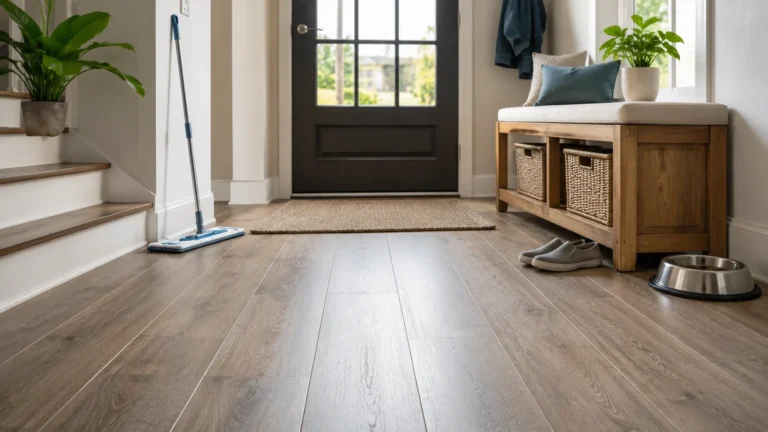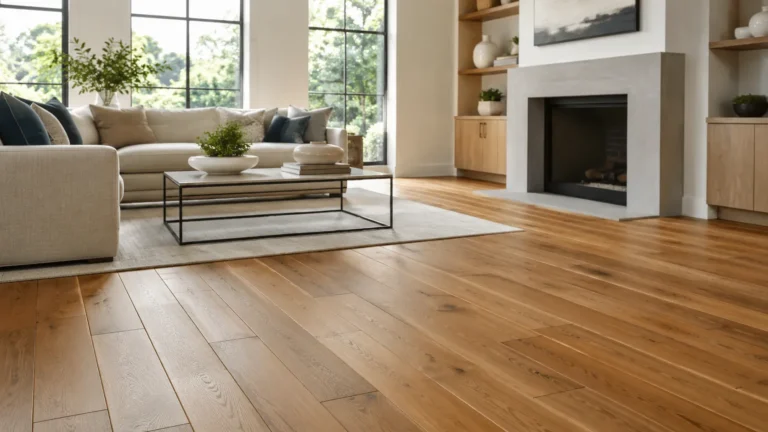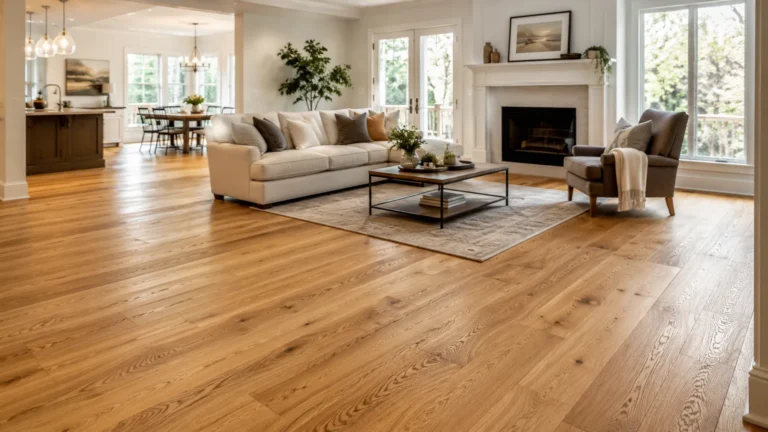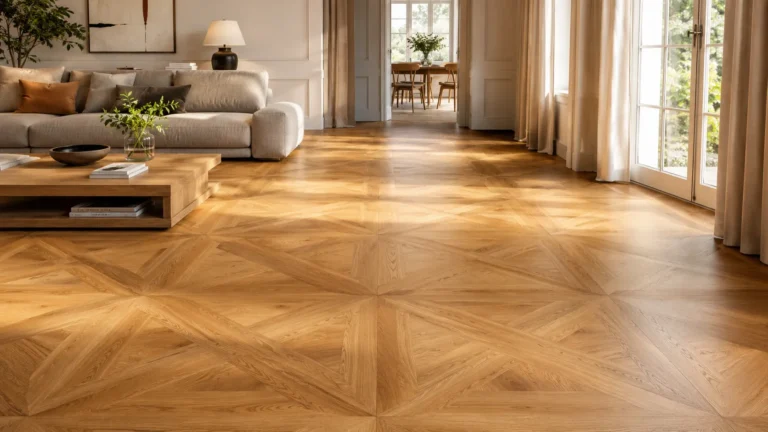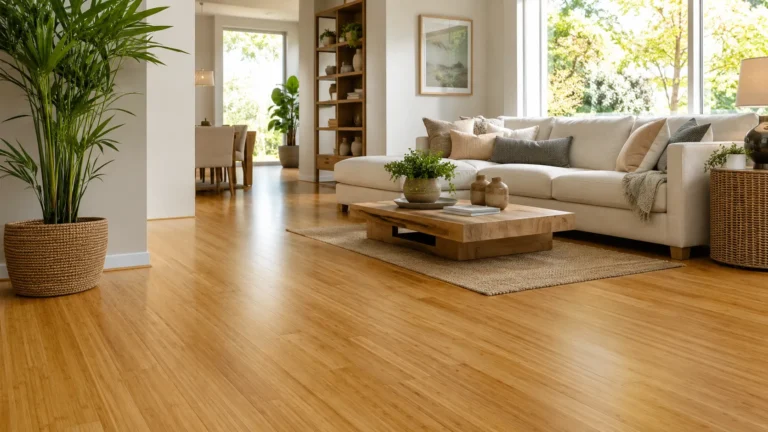
Hardwood flooring is one of the most popular flooring choices because it adds warmth, natural beauty, and long-term value to a home. But not every hardwood floor is the same. Some are solid wood, some are engineered, some are wood species, and some are installation patterns.
Quick answer: The main types of hardwood floors include solid hardwood, engineered wood flooring, oak flooring, bamboo flooring, cork flooring, parquet flooring, and herringbone flooring. Solid hardwood is best for dry rooms and refinishing, engineered wood is more stable in changing humidity, oak is a reliable classic, bamboo and cork offer alternative natural looks, and parquet or herringbone create decorative patterns.
Before choosing a hardwood floor, look beyond color. Check the room’s moisture level, subfloor condition, foot traffic, pets, kids, sunlight exposure, installation method, maintenance needs, and whether the floor can be refinished later.
Types of Hardwood Floors Comparison Table
| Hardwood Floor Type | What It Means | Best For | Main Benefit | Main Warning |
| Solid hardwood | One piece of real wood | Living rooms, bedrooms, dining rooms | Long life and refinishing potential | Sensitive to moisture |
| Engineered wood | Real wood veneer over layered core | Living areas, some kitchens, concrete slabs | More stable than solid wood | Refinishing depends on veneer thickness |
| Oak flooring | Hardwood species, usually red or white oak | Most dry rooms | Durable, classic, widely available | Still needs moisture control |
| Bamboo flooring | Natural grass-based flooring often grouped with wood | Modern homes, dry rooms | Hard, stylish, renewable option | Quality varies widely |
| Cork flooring | Bark-based natural flooring | Bedrooms, offices, quiet rooms | Soft, warm, sound-friendly | Needs sealing and moisture care |
| Parquet flooring | Geometric wood pattern | Living rooms, dining rooms, feature areas | Decorative and classic | Can be harder to repair |
| Herringbone flooring | Angled plank pattern | Premium living spaces and hallways | Elegant, high-end look | More labor and waste |
Solid Hardwood Flooring
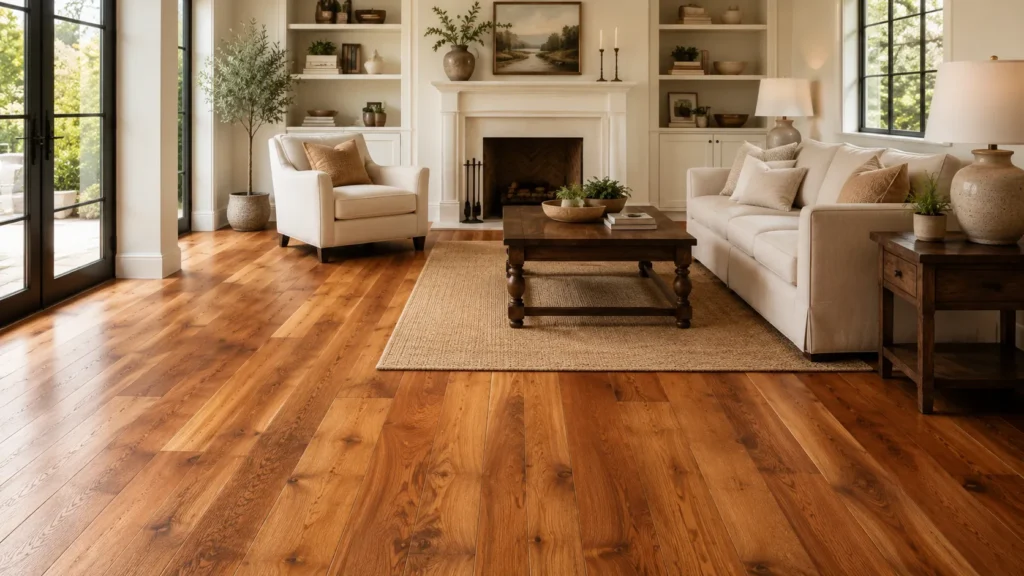
Solid hardwood flooring is made from one solid piece of wood from top to bottom. It is the traditional hardwood floor most homeowners think of first.
Solid hardwood is usually installed by nailing or stapling the boards to a wood subfloor. It works best in dry rooms where humidity is stable.
Best rooms for solid hardwood
- Living rooms
- Bedrooms
- Dining rooms
- Hallways
- Home offices
- Above-grade rooms
Avoid solid hardwood in
- Full bathrooms
- Damp basements
- Laundry rooms
- Rooms with frequent standing water
Pros of solid hardwood
- Natural wood through the full plank
- Can often be sanded and refinished multiple times
- Long-lasting when maintained well
- Classic appearance
- Strong resale appeal
Cons of solid hardwood
- Can expand and contract with humidity
- More sensitive to moisture
- Usually not ideal over concrete slabs
- Installation is harder for DIY beginners
- Can scratch or dent depending on species and finish
Expert tip
Solid hardwood is a great choice when the room is dry and the subfloor is suitable. One common mistake homeowners make is installing solid hardwood in a space where moisture is not controlled. That can lead to cupping, gapping, or buckling.
Engineered Wood Flooring
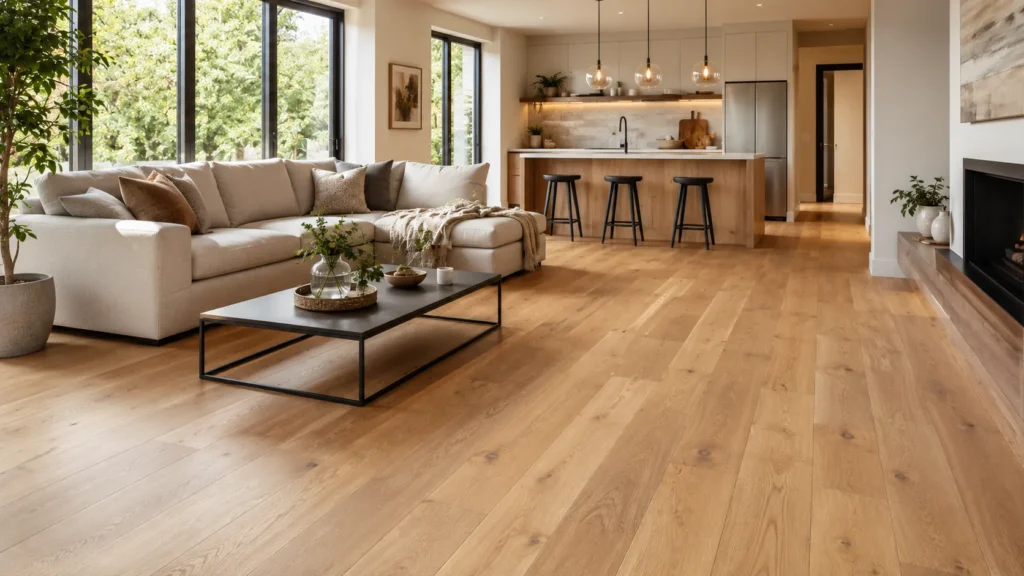
Engineered wood flooring has a real wood top layer attached to a layered plywood or high-density core. It looks like hardwood because the surface is real wood, but the core gives it better stability than solid wood.
This makes engineered wood a smart option for homes where humidity changes more often.
Best rooms for engineered wood
- Living rooms
- Bedrooms
- Dining rooms
- Hallways
- Some kitchens
- Dry basements if the product allows it
- Concrete slab areas when approved by the manufacturer
Pros of engineered wood flooring
- Real wood appearance
- More dimensionally stable than solid hardwood
- Can be installed as floating, glue-down, or nail-down depending on product
- Better choice over concrete than solid hardwood
- Often easier to install than solid wood
Cons of engineered wood flooring
- Refinishing depends on the thickness of the top layer
- Thin veneer products may not refinish well
- Not fully waterproof
- Quality varies by core, veneer, and finish
- Cheap products can wear faster
Expert tip
Before buying engineered wood, check the veneer thickness, core quality, warranty, installation method, and whether it can be refinished. Do not assume every engineered wood floor is the same.
Oak Flooring
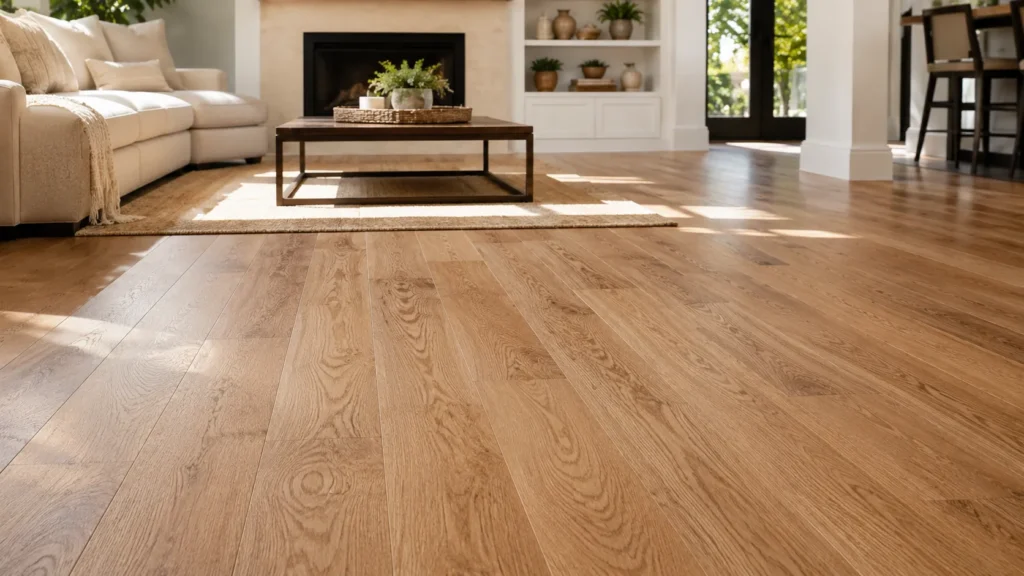
Oak flooring is one of the most common hardwood flooring types in American homes. It is popular because it is durable, attractive, widely available, and works with many design styles.
The two most common types are red oak and white oak.
Red oak flooring
Red oak usually has a warmer tone and more visible grain. It is a classic choice for traditional homes and refinishing projects.
White oak flooring
White oak often has a slightly calmer grain and a more modern look. It works well with natural, light, neutral, and contemporary finishes.
Pros of oak flooring
- Durable for everyday home use
- Easy to match with many styles
- Widely available
- Takes stains well
- Good balance of price, beauty, and performance
Cons of oak flooring
- Still vulnerable to standing water
- Can scratch under pets or furniture
- Needs proper cleaning and maintenance
- Color may change with sunlight and age
Expert tip
Oak is often one of the safest choices for homeowners who want real hardwood without choosing an exotic or high-risk material. Before choosing red oak or white oak, compare sample boards in your actual room lighting.
Bamboo Flooring
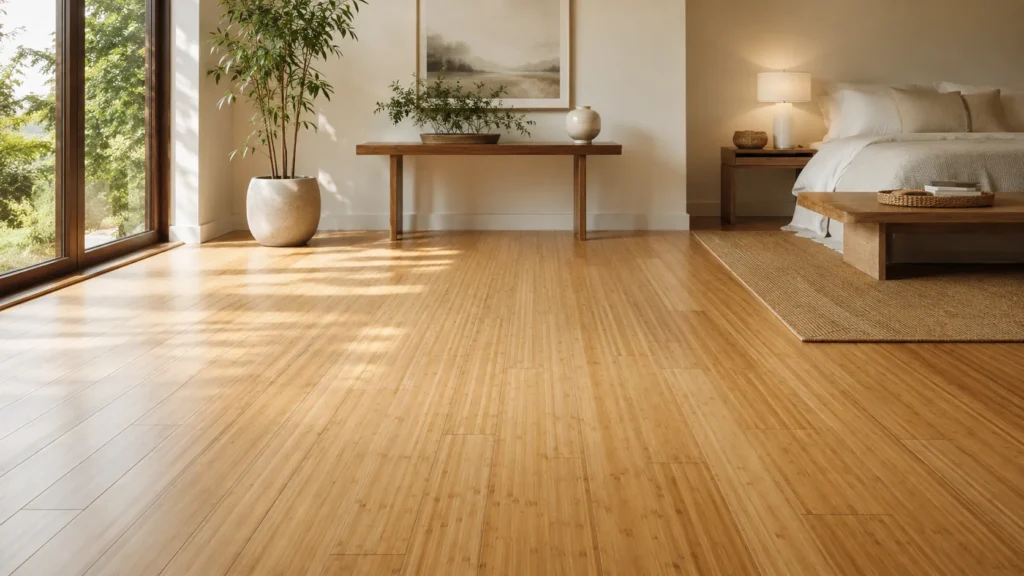
Bamboo flooring is often discussed with hardwood flooring, but bamboo is technically a grass, not a hardwood tree. Still, it is used as a wood-like flooring material and can be a stylish option when quality is good.
Bamboo flooring is available in different constructions, including vertical, horizontal, and strand-woven bamboo. Strand-woven bamboo is usually the strongest type.
Best rooms for bamboo flooring
- Living rooms
- Bedrooms
- Home offices
- Hallways
- Dry family rooms
Pros of bamboo flooring
- Modern natural appearance
- Can be hard and durable
- Often considered a renewable material
- Available in many colors and styles
- Can work well in dry rooms
Cons of bamboo flooring
- Quality varies a lot
- Some products scratch or dent more easily than expected
- Sensitive to humidity and moisture
- Not ideal for wet rooms
- Some finishes and adhesives may affect indoor air quality
Expert tip
Do not choose bamboo only because it is marketed as eco-friendly. Look at product quality, finish durability, warranty, manufacturer reputation, and indoor air quality certifications.
Cork Flooring
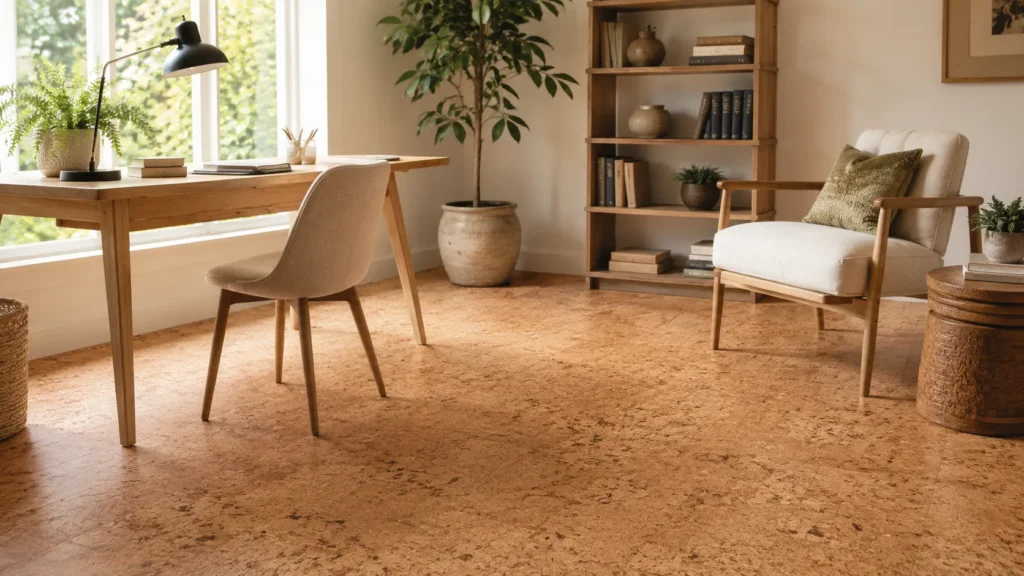
Cork flooring is made from cork bark. It feels softer and warmer underfoot than many hardwood floors. Cork can be a good option for rooms where comfort and sound control matter.
Cork is not a typical hardwood floor, but it is often included in wood and natural flooring discussions.
Best rooms for cork flooring
- Bedrooms
- Home offices
- Playrooms
- Reading rooms
- Low-traffic living spaces
Pros of cork flooring
- Soft and comfortable underfoot
- Naturally warm feeling
- Helps reduce sound
- More forgiving than hard wood or tile
- Natural material appearance
Cons of cork flooring
- Needs sealing and maintenance
- Can dent from heavy furniture
- Can fade in strong sunlight
- Not ideal for wet rooms
- Surface damage may be harder to repair cleanly
Expert tip
Cork can be comfortable, but it needs protection. Use furniture pads, avoid standing water, and make sure the product is sealed properly.
Parquet Flooring
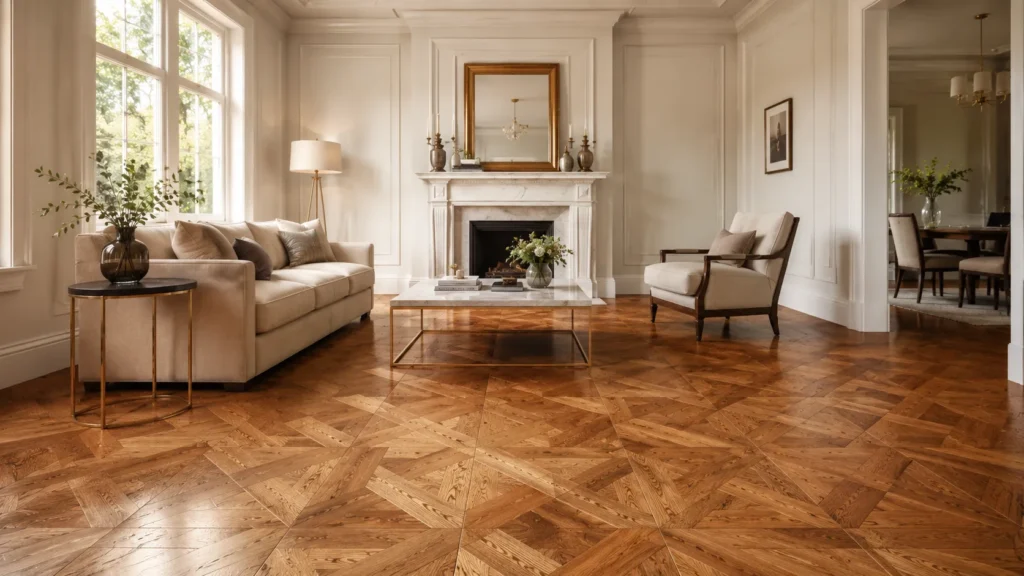
Parquet flooring is not a wood species. It is a decorative flooring style made from small wood pieces arranged in geometric patterns. Common parquet patterns include basket weave, brick, and square-block styles.
Parquet can be made from solid wood, engineered wood, or even wood-look materials.
Best rooms for parquet flooring
- Living rooms
- Dining rooms
- Entry areas
- Formal rooms
- Feature spaces
Pros of parquet flooring
- Decorative and distinctive
- Adds character to a room
- Works well in traditional and vintage-style homes
- Can create a premium design feature
Cons of parquet flooring
- Installation can be more detailed
- Pattern repair can be tricky
- Moisture can still cause wood movement
- Not always easy to match later
- Some older parquet floors may need careful restoration
Expert tip
Before choosing parquet, think about the long-term design style of the room. Parquet can look beautiful, but it is more pattern-focused than standard plank flooring.
Herringbone Flooring
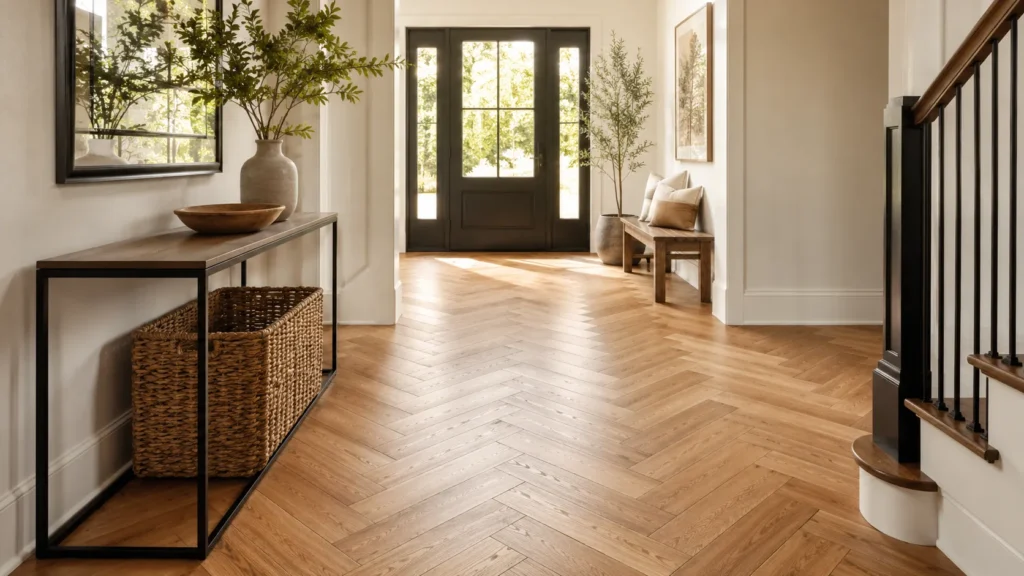
Herringbone flooring is a pattern where rectangular planks are installed in a broken zigzag layout. It is often confused with chevron, but herringbone uses straight-cut ends, while chevron usually uses angled ends.
Herringbone can be installed using solid hardwood, engineered wood, laminate, or luxury vinyl, but true hardwood herringbone is usually more expensive to install than a standard plank layout.
Best rooms for herringbone flooring
- Living rooms
- Dining rooms
- Hallways
- Entryways
- Feature rooms
- Open-plan spaces
Pros of herringbone flooring
- Elegant and premium appearance
- Adds movement and visual interest
- Works with classic and modern interiors
- Can increase the design impact of a room
Cons of herringbone flooring
- Higher installation labor
- More cutting and waste
- Requires careful layout
- Subfloor must be well prepared
- Mistakes are more visible than with straight planks
Expert tip
Herringbone is beautiful when installed correctly, but it is not the best beginner DIY project. The layout must be centered, balanced, and carefully measured.
Hardwood Flooring Types of Wood
When people talk about hardwood flooring types of wood, they usually mean the species. Each species has a different grain pattern, hardness, color, and character.
Common hardwood flooring species include:
| Wood Species | General Look | Best Use |
| Red oak | Warm tone, strong grain | Traditional homes, high-use spaces |
| White oak | Neutral tone, calmer grain | Modern and classic homes |
| Maple | Light, clean appearance | Contemporary spaces |
| Hickory | Strong grain, rustic character | Busy homes and rustic interiors |
| Walnut | Dark, rich appearance | Bedrooms, offices, formal rooms |
| Cherry | Warm color that deepens with age | Decorative rooms |
| Ash | Light and open grain | Bright interiors |
Hardness matters, but it is not the only factor. Finish quality, maintenance, pets, furniture pads, and cleaning habits also affect how the floor performs.
Best Type of Hardwood Flooring by Room
| Room | Best Hardwood Option | Why |
| Living room | Oak, engineered wood, solid hardwood | Good balance of beauty and durability |
| Bedroom | Solid hardwood, engineered wood, cork | Comfort and appearance matter more than heavy wear |
| Dining room | Oak, herringbone, parquet | Strong design impact |
| Hallway | Oak, hickory, engineered wood | Better for foot traffic |
| Kitchen | Engineered wood or harder species with caution | More stable than solid, but still needs moisture care |
| Basement | Engineered wood only if approved and dry | Solid hardwood is usually risky below grade |
| Bathroom | Avoid most hardwood | Moisture risk is too high |
| Home office | Oak, cork, engineered wood | Good balance of comfort and appearance |
Installation and Subfloor Considerations
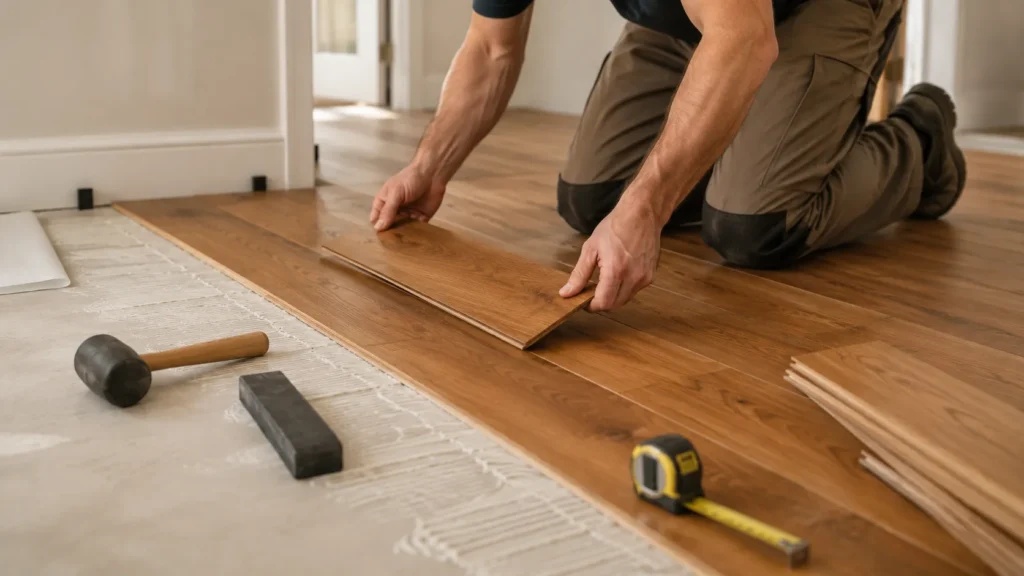
Hardwood flooring performance depends heavily on what is underneath it.
Before installing hardwood, check:
- Subfloor type
- Subfloor flatness
- Moisture level
- Room humidity
- Expansion space
- Acclimation needs
- Installation method
- Manufacturer instructions
- Radiant heat compatibility
- Existing flooring removal
Nail-down installation
Common for solid hardwood over plywood or wood subfloors.
Glue-down installation
Often used for engineered wood over concrete or other approved surfaces.
Floating installation
Common for some engineered wood products. Boards click or lock together over underlayment.
Expert tip
A high-quality hardwood floor can still fail over a poor subfloor. In real installations, many gapping, squeaking, buckling, or uneven floor complaints start below the finished surface.
Maintenance and Refinishing
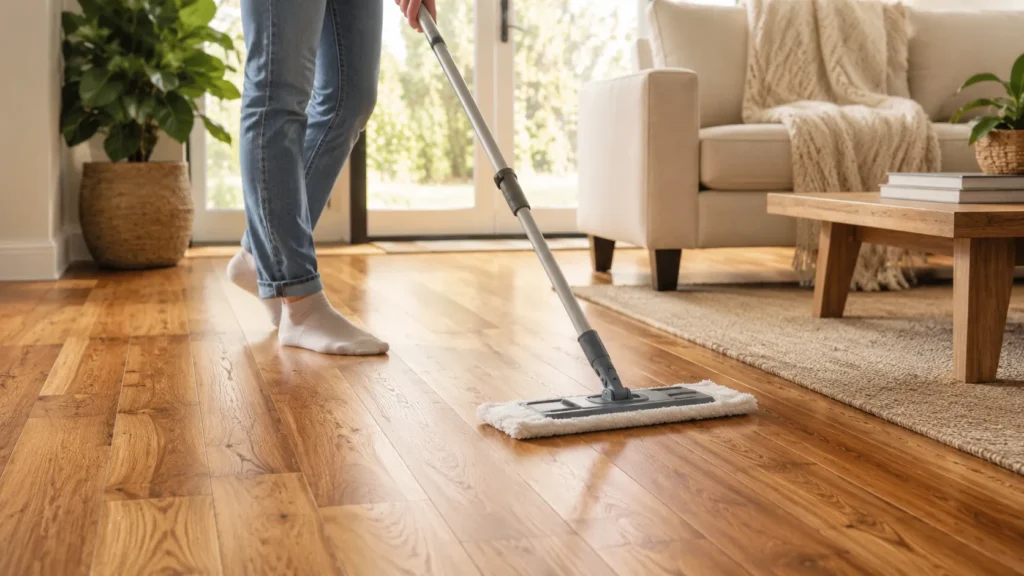
Hardwood floors need regular care to protect their finish.
Basic care includes:
- Sweep or vacuum regularly
- Clean spills quickly
- Avoid wet mopping
- Use furniture pads
- Keep pet nails trimmed
- Use rugs near entries
- Control indoor humidity
- Avoid dragging furniture
- Use cleaners approved for the finish
Solid hardwood can often be refinished several times. Engineered wood may be refinishable depending on the veneer thickness. Cork, bamboo, parquet, and specialty floors depend on product construction and finish.
Common Mistakes to Avoid
- Choosing hardwood only by color
- Ignoring moisture levels
- Installing solid hardwood below grade
- Assuming engineered wood is waterproof
- Choosing bamboo without checking quality
- Forgetting that parquet and herringbone are patterns, not species
- Skipping subfloor preparation
- Not leaving expansion space
- Using wet mops on wood floors
- Buying thin engineered wood and expecting full refinishing later
Final Expert Recommendation
For most homeowners, the best type of hardwood flooring depends on the room and lifestyle.
Choose solid hardwood if you want a long-lasting real wood floor in a dry room and refinishing potential matters.
Choose engineered wood flooring if you want real wood with better stability, especially over concrete or in areas with changing humidity.
Choose oak flooring if you want a classic, reliable, widely available hardwood.
Choose bamboo flooring if you want a modern natural look, but check quality carefully.
Choose cork flooring if comfort, warmth, and sound control matter more than heavy wear resistance.
Choose parquet flooring if you want a decorative traditional pattern.
Choose herringbone flooring if you want a premium design feature and are prepared for more detailed installation.
The best hardwood floor is not just the one that looks good. It is the one that fits your room, subfloor, moisture level, maintenance habits, and long-term expectations.
FAQ Section
What are the main types of hardwood floors?
The main types of hardwood floors include solid hardwood, engineered wood flooring, oak flooring, bamboo flooring, cork flooring, parquet flooring, and herringbone flooring. Some are true wood construction types, while others are species, natural alternatives, or installation patterns.
What is the best type of hardwood flooring?
For most homes, oak hardwood and engineered wood flooring are practical choices. Oak is durable and classic, while engineered wood is more stable in changing humidity and can work in more installation situations.
Is engineered wood better than solid hardwood?
Engineered wood is better for stability and some concrete slab installations. Solid hardwood is better when long-term refinishing potential matters and the room is dry with a suitable wood subfloor.
Is oak flooring a good hardwood floor?
Yes, oak flooring is one of the most reliable hardwood flooring choices. It is durable, widely available, easy to stain, and works with many home styles.
Is bamboo considered hardwood flooring?
Bamboo is often grouped with hardwood flooring, but it is technically grass, not hardwood. It can still be a durable flooring option when the product quality is high.
Is cork flooring good for homes?
Cork flooring can be good for bedrooms, offices, and low-impact rooms because it is soft, warm, and sound-friendly. It is not ideal for wet rooms or areas with heavy furniture unless properly protected.
What is herringbone hardwood flooring?
Herringbone hardwood flooring is a patterned installation where rectangular wood planks are laid in a broken zigzag design. It creates a premium look but usually requires more labor and careful layout.
What hardwood floor is best for pets?
For pets, choose harder wood species, strong finishes, engineered wood, or oak with a durable surface. Also use rugs, furniture pads, and keep pet nails trimmed to reduce scratches.