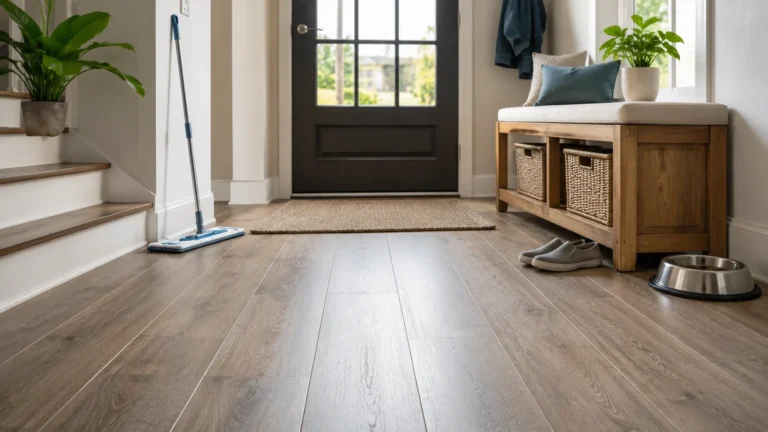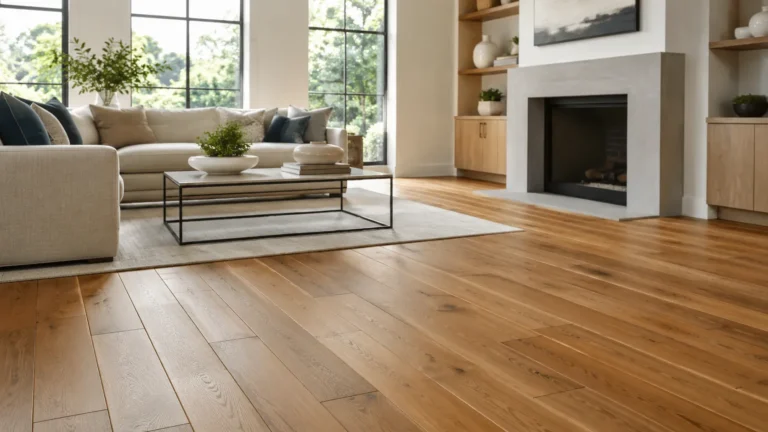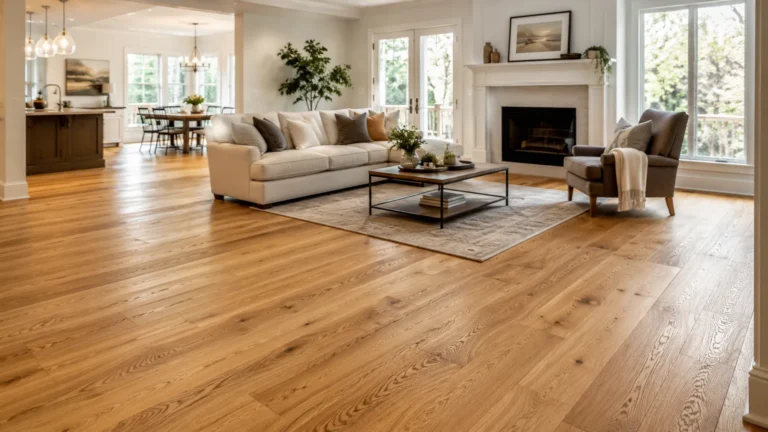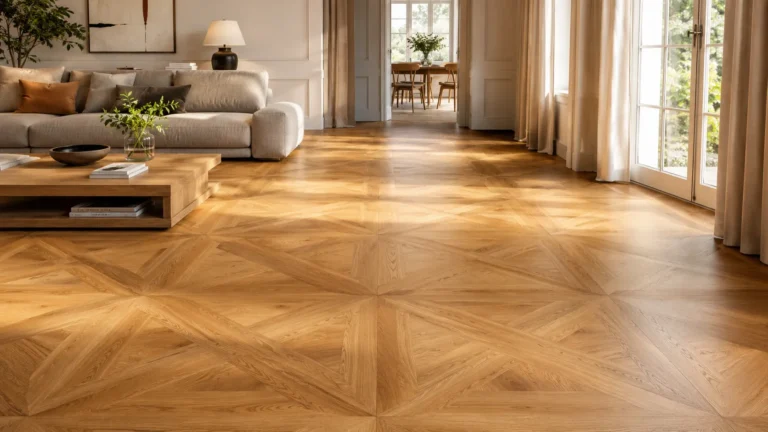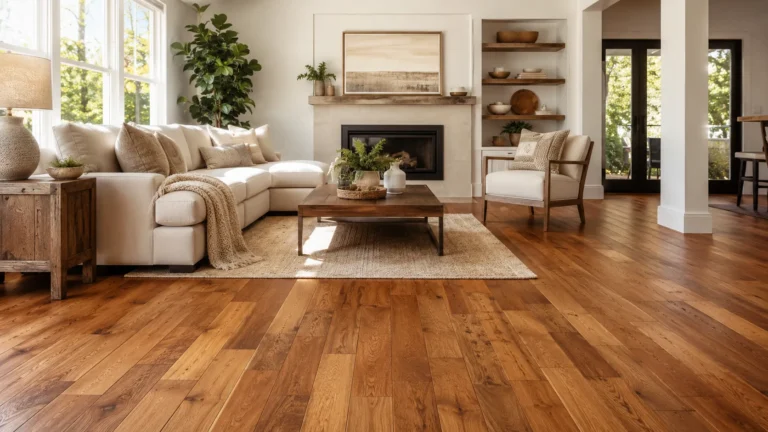
Bamboo flooring is a popular flooring option for homeowners who want a natural-looking floor with a clean, modern style. It is often compared with hardwood because it has a similar appearance, but bamboo is technically a grass, not wood.
Quick answer: Bamboo flooring is made from bamboo stalks that are cut, processed, pressed, and finished into flooring planks. It can be durable, stylish, and easier to maintain than some wood floors, but it is not fully waterproof. The best bamboo flooring depends on product quality, construction, finish, room use, and installation conditions.
From field experience, bamboo can perform well in dry living spaces, bedrooms, hallways, and home offices. Problems usually happen when homeowners install low-quality bamboo, ignore moisture levels, use wet cleaning methods, or choose the wrong product for bathrooms, basements, or high-humidity spaces.
Bamboo Flooring Comparison Table
| Feature | Bamboo Flooring |
| Material type | Grass-based flooring, often grouped with hardwood |
| Best for | Living rooms, bedrooms, hallways, offices, some kitchens |
| Avoid in | Wet bathrooms, damp basements, laundry rooms |
| Main advantage | Natural look, good durability in quality products |
| Main concern | Moisture sensitivity and quality variation |
| Cleaning | Sweep, vacuum, and damp-mop carefully |
| Installation | Floating, glue-down, nail-down, or click-lock depending on product |
| Refinishing | Possible only with certain solid or thick wear-layer products |
What Is Bamboo Flooring?
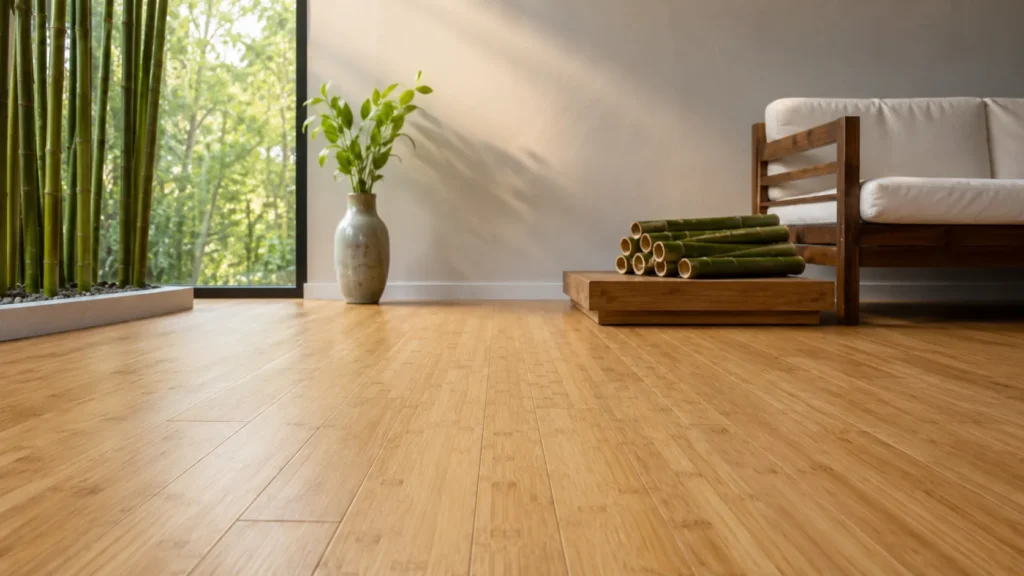
Bamboo flooring is made from bamboo stalks that are sliced, shredded, pressed, bonded, and finished into floorboards. Because bamboo grows differently from trees, it is not a true hardwood, but many homeowners compare it with hardwood because it has a similar plank appearance.
There are several construction types, and they do not all perform the same. Some bamboo floors are solid. Some are engineered. Some are strand-woven for added density. Others are bamboo-look products that are not real bamboo at all.
Before choosing bamboo flooring, always check:
- Product construction
- Finish quality
- Moisture rating
- Warranty
- Installation method
- Subfloor condition
- Room humidity
- Whether it can be refinished
Types of Bamboo Flooring
Solid Bamboo Flooring
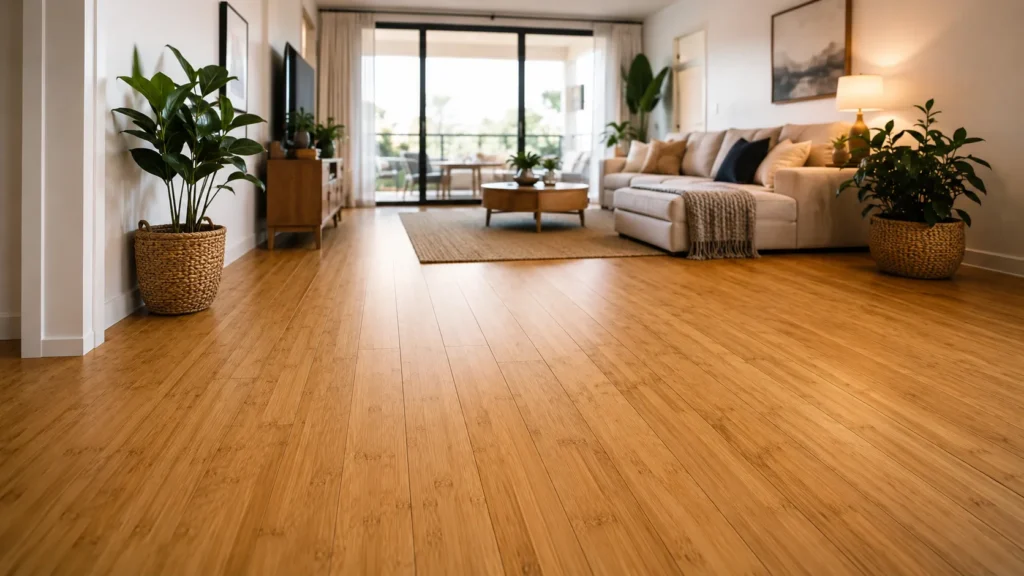
Solid bamboo flooring is made mostly from bamboo material throughout the plank. It can offer a natural bamboo appearance, but it still reacts to moisture and humidity.
Solid bamboo flooring is best for dry, stable rooms where the subfloor is suitable and the manufacturer allows the installation method you plan to use.
Strand Woven Bamboo Flooring
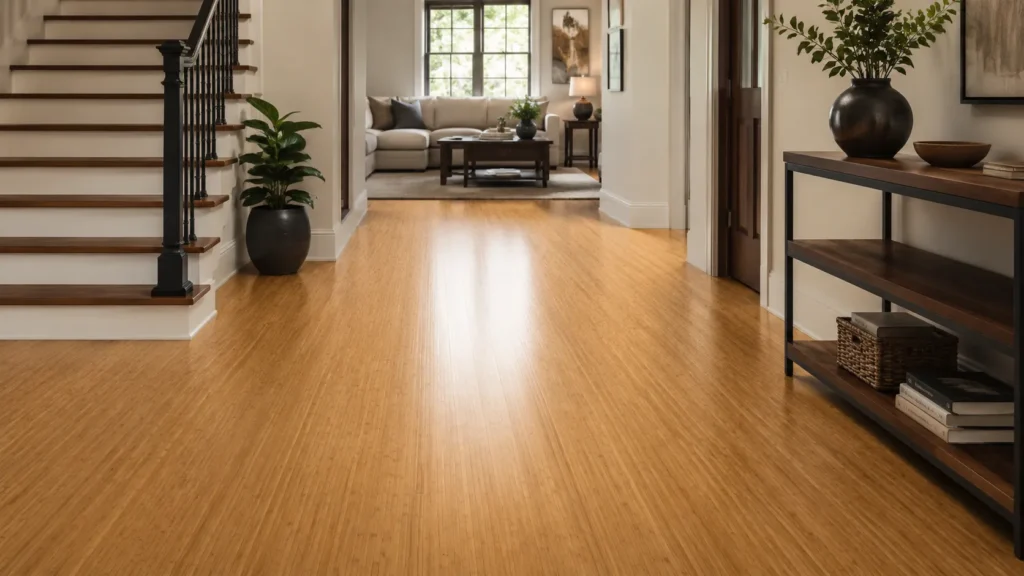
Strand woven bamboo flooring is made by compressing bamboo fibers with adhesive under pressure. It is usually one of the most durable bamboo flooring types and is often chosen for high-traffic spaces.
It can be a good option for busy homes, but quality still matters. A poor finish or weak manufacturing process can cause scratches, dents, or surface problems.
Engineered Bamboo Flooring
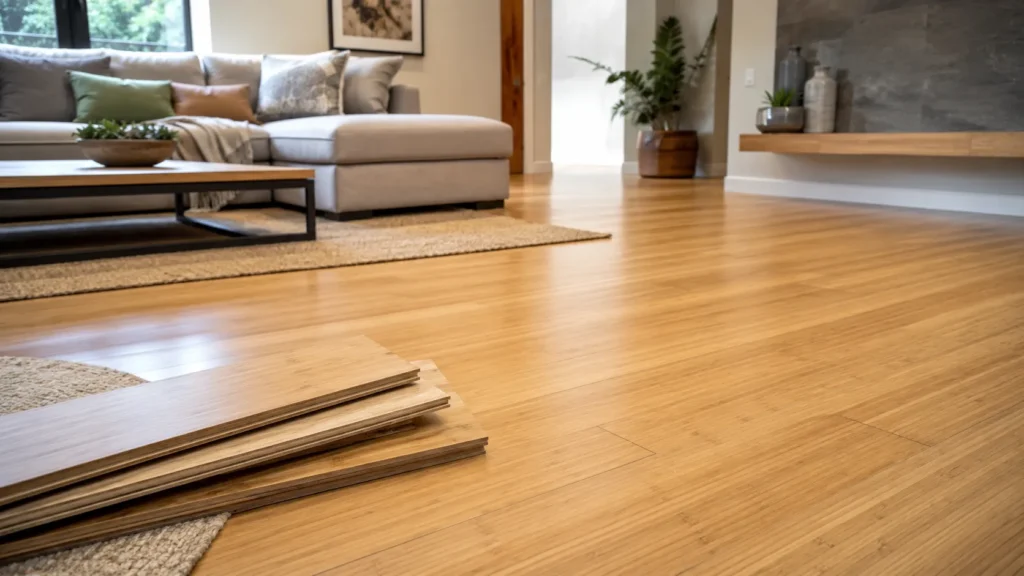
Engineered bamboo flooring has a bamboo wear layer over a plywood or fiberboard core. It can offer better stability than some solid bamboo products, depending on the construction.
This type is commonly available in floating or click-lock formats and may be easier for DIY installation.
Bamboo Plank Flooring
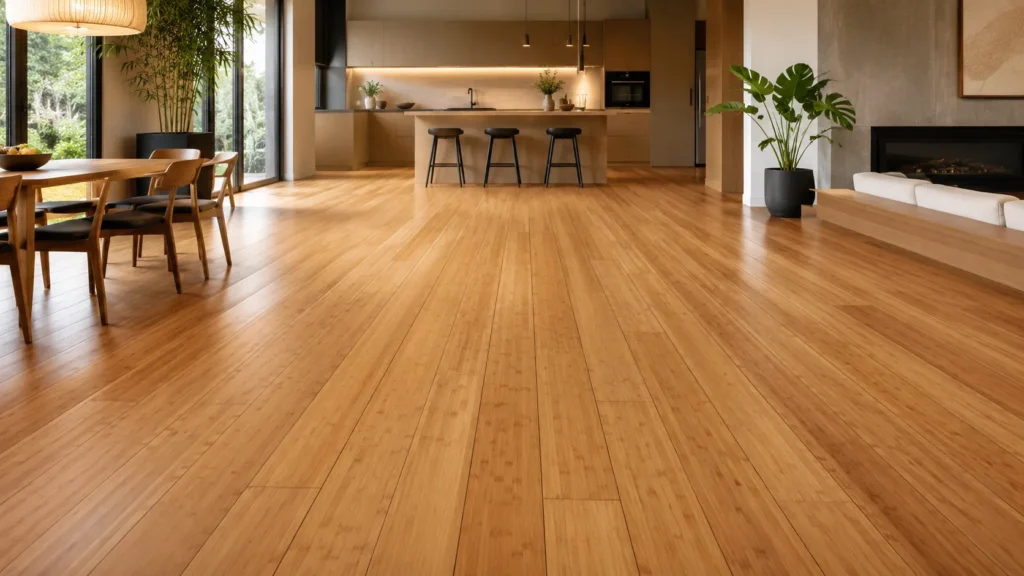
Bamboo plank flooring simply refers to bamboo flooring sold in plank form. It may be solid, engineered, horizontal, vertical, or strand-woven.
Bamboo Timber Flooring
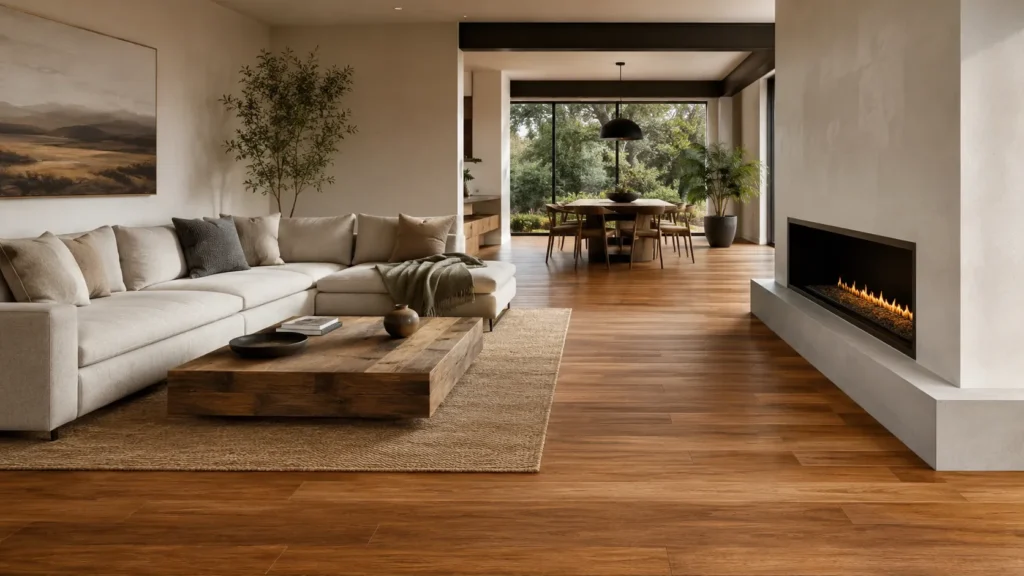
Bamboo timber flooring is another phrase people use for bamboo plank flooring, especially when comparing it with wood-style floors. The important point is not the label but the construction, finish, and installation requirements.
Bamboo Flooring Pros and Cons
Pros of Bamboo Flooring
Bamboo flooring can be a good choice for the right home.
Main advantages include:
- Clean natural appearance
- Many color and finish options
- Good durability in quality products
- Easier cleaning than carpet
- Can work well in dry living spaces
- Often available in floating or click-lock styles
- Strand-woven products can be very hard and dense
Cons of Bamboo Flooring
Bamboo also has disadvantages homeowners should understand.
Main disadvantages include:
- Not fully waterproof
- Can scratch or dent
- Quality varies widely between brands
- Some products cannot be refinished
- Direct sunlight may fade or discolor some finishes
- Poor installation can cause gapping or movement
- Low-quality products may contain stronger adhesives or VOC concerns
- Not ideal for wet bathrooms or damp basements
One common mistake homeowners make is assuming all bamboo flooring is durable just because strand-woven bamboo can be hard. Hardness helps, but finish quality, moisture control, and installation matter just as much.
Bamboo Flooring Cost
Bamboo flooring cost depends on product quality, construction, plank thickness, finish, brand, and installation method.
Costs usually include:
- Flooring material
- Labor
- Old floor removal
- Subfloor repair
- Underlayment
- Moisture barrier
- Adhesive
- Trim and transitions
- Waste factor
- Stairs or complex cuts
Lower-cost bamboo may look attractive at first, but it can become expensive later if the finish wears quickly, the floor dents easily, or the product cannot be refinished.
Bamboo Flooring Installation Cost
Installation cost depends on the method.
Floating click-lock bamboo is often less labor-intensive. Glue-down installation can cost more because it requires adhesive, careful subfloor preparation, and more installation skill. Nail-down installation may require a proper wood subfloor and professional tools.
Before comparing prices, ask what is included. A cheap installation quote may not include subfloor leveling, moisture testing, old flooring removal, or trim work.
Bamboo Flooring vs Hardwood
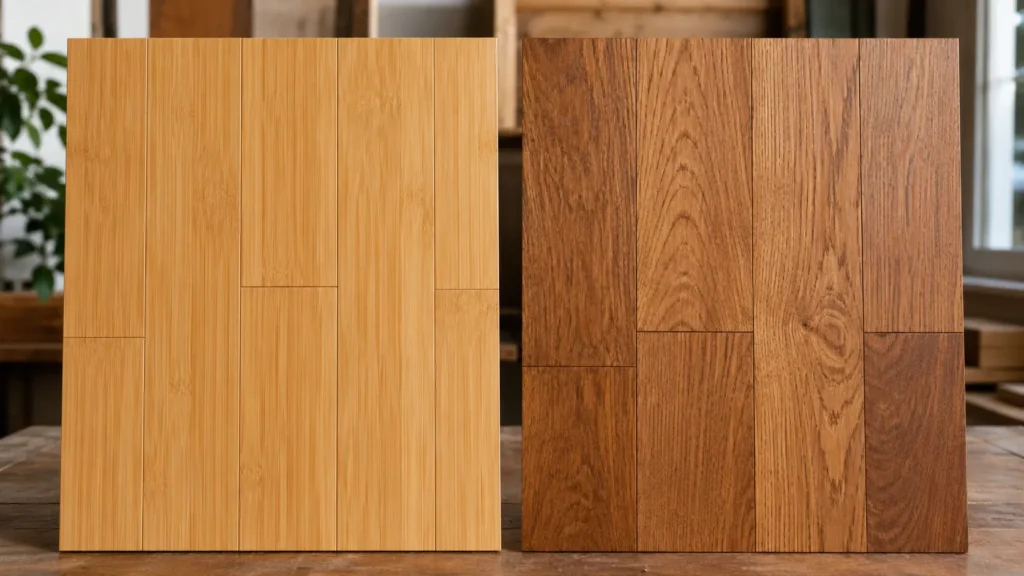
Bamboo flooring and hardwood flooring look similar in many homes, but they are different materials.
| Feature | Bamboo Flooring | Hardwood Flooring |
| Material | Bamboo grass | Tree wood |
| Look | Clean, modern, sometimes exotic | Natural wood species variation |
| Durability | Depends heavily on product type | Depends on wood species and finish |
| Moisture resistance | Moderate, not waterproof | Moderate to low, not waterproof |
| Refinishing | Product dependent | Usually better with solid hardwood |
| Style range | More limited than hardwood | Very wide species and stain options |
| Best use | Dry living spaces and bedrooms | Dry living spaces and long-term value areas |
Choose bamboo if you want a clean, modern, natural-looking floor and the product quality is strong. Choose hardwood if you want a traditional real wood floor with better refinishing potential and a wider range of species.
Bamboo Laminate Flooring, Bamboo Vinyl Flooring, and Bamboo Tile Flooring
Some search terms can be confusing because they do not always mean real bamboo.
Bamboo Laminate Flooring
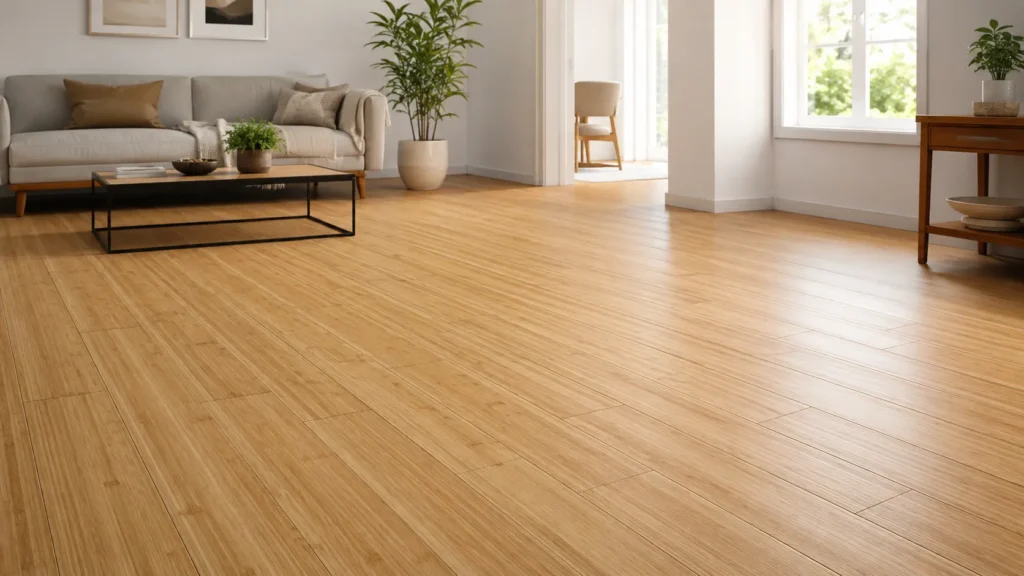
Bamboo laminate flooring usually means laminate flooring with a bamboo-look printed design. It is not real bamboo. It may be more budget-friendly, but it does not have a genuine bamboo surface.
Bamboo Vinyl Flooring
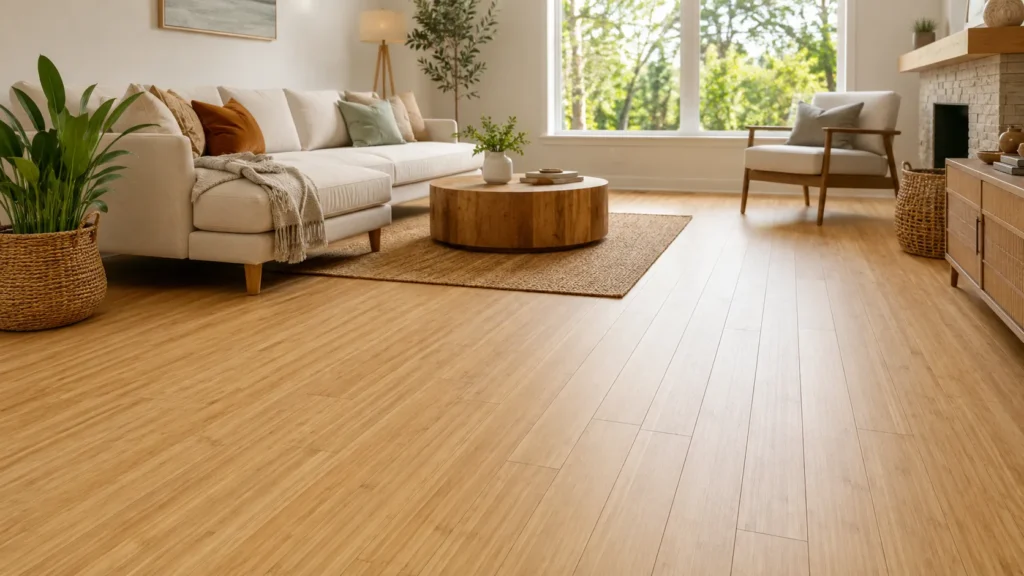
Bamboo vinyl flooring usually means vinyl plank flooring designed to look like bamboo. It can offer better water resistance than real bamboo, depending on the product, but it is not natural bamboo flooring.
Bamboo Tile Flooring
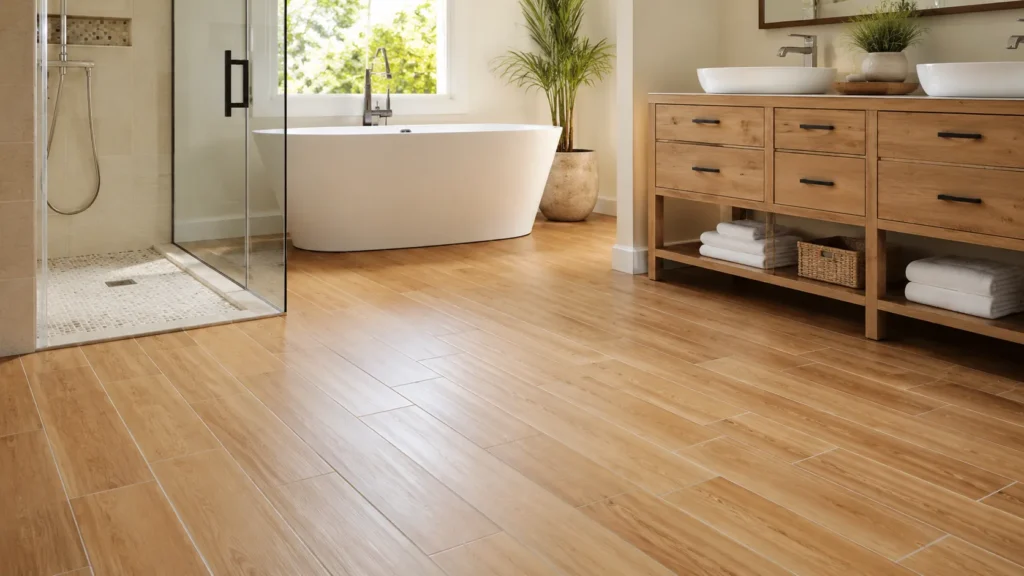
Bamboo tile flooring can mean bamboo-look tile or bamboo flooring in tile-shaped pieces. If the product is porcelain or ceramic, it may offer strong water resistance, but it is not real bamboo.
This distinction matters because a homeowner looking for waterproof bamboo flooring may actually be better served by bamboo-look vinyl or tile in wet spaces.
Best Rooms for Bamboo Flooring
| Room | Is Bamboo Flooring a Good Choice? | Notes |
| Living room | Yes | Good if humidity is controlled |
| Bedroom | Yes | Comfortable and stylish option |
| Hallway | Yes | Choose durable finish for traffic |
| Home office | Yes | Use chair mat under rolling chairs |
| Kitchen | Sometimes | Clean spills quickly and use mats |
| Bathroom | Usually no | Too much moisture risk |
| Basement | Usually no | Risky if damp or below grade |
| Laundry room | Usually no | Leaks and humidity can damage bamboo |
| Pet homes | Sometimes | Choose durable finish and keep nails trimmed |
Is Bamboo Flooring Waterproof?
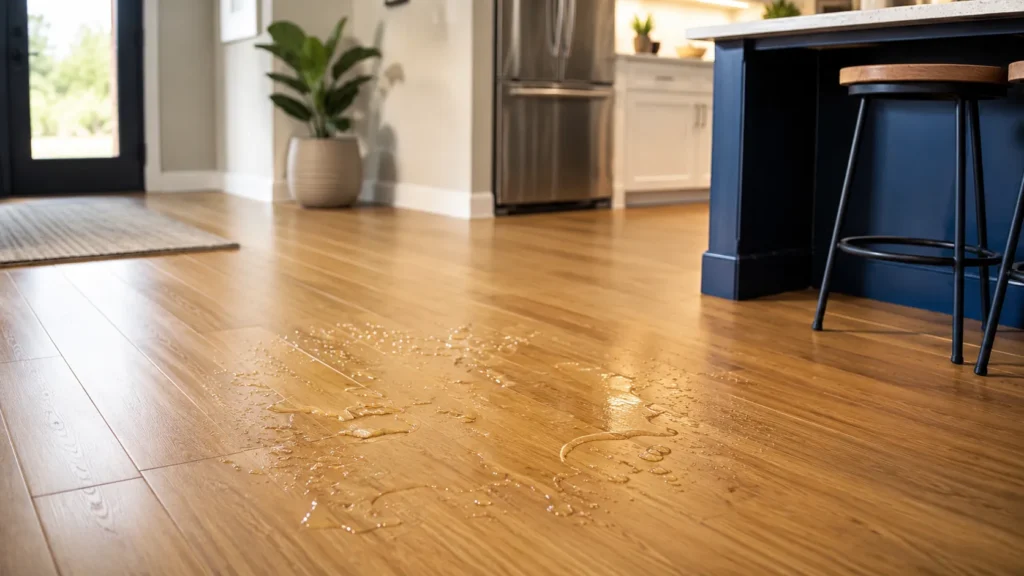
Most bamboo flooring is not waterproof. Some products are marketed as waterproof or water resistant bamboo flooring, but homeowners should read the warranty and product specifications carefully.
Bamboo can be damaged by:
- Standing water
- Wet mopping
- Plumbing leaks
- High humidity
- Damp concrete slabs
- Poor underlayment
- Unsealed edges
- Repeated spills
Water resistant bamboo flooring may handle small spills better than standard bamboo, but that does not mean the floor is safe for wet bathrooms or damp basements.
Bamboo Flooring Colors and Styles
Bamboo flooring comes in several colors and surface styles.
Natural Bamboo Flooring
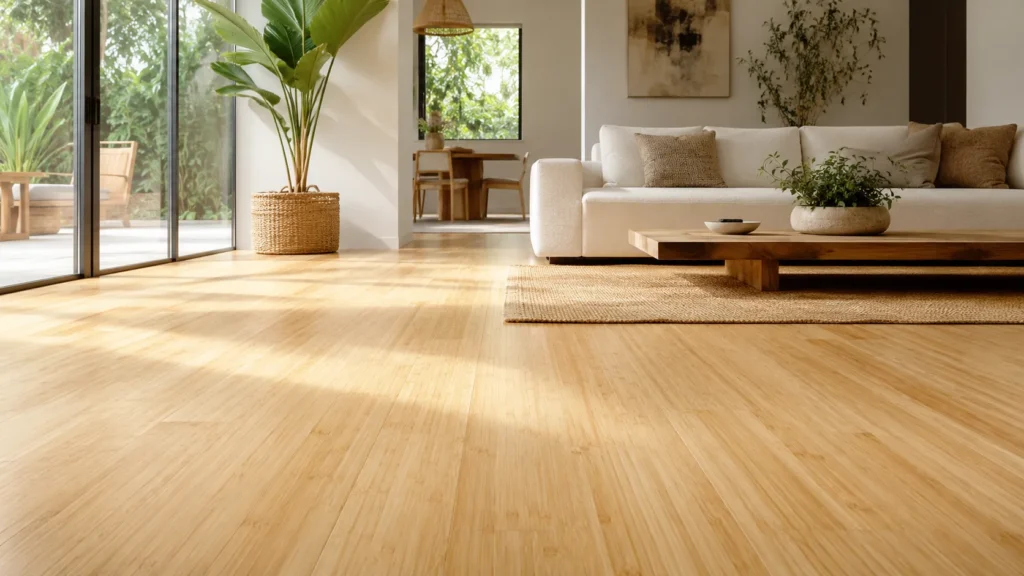
Natural bamboo flooring usually has a light blonde tone. It works well in bright, clean, modern spaces.
Carbonized Bamboo Flooring
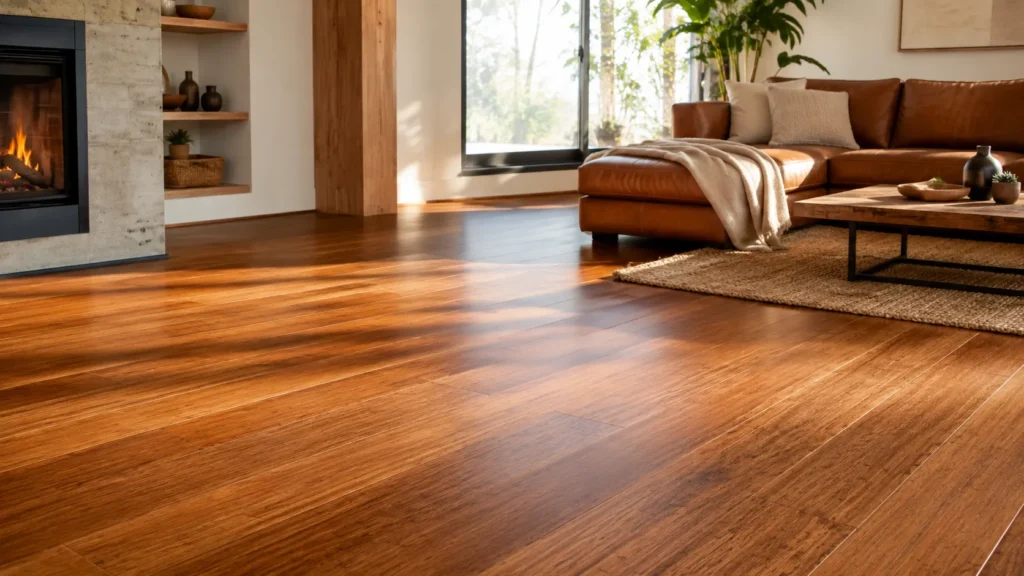
Carbonized bamboo flooring is heat-treated to create warmer brown tones. It can look rich and attractive, but homeowners should compare durability and finish quality before buying.
Dark Bamboo Flooring
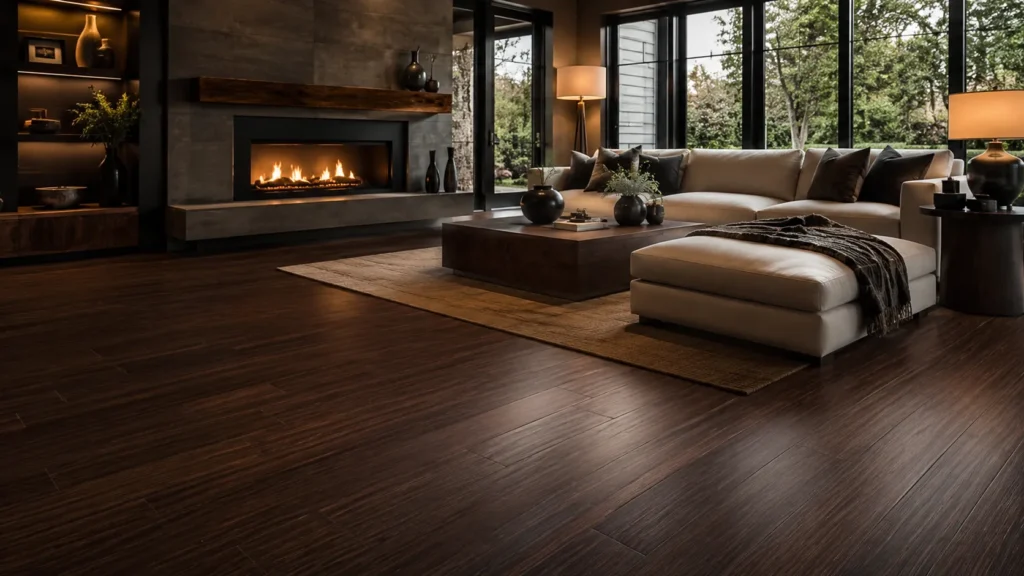
Dark bamboo flooring creates a dramatic look but can show dust, pet hair, and scratches more easily than medium tones.
Black Bamboo Flooring
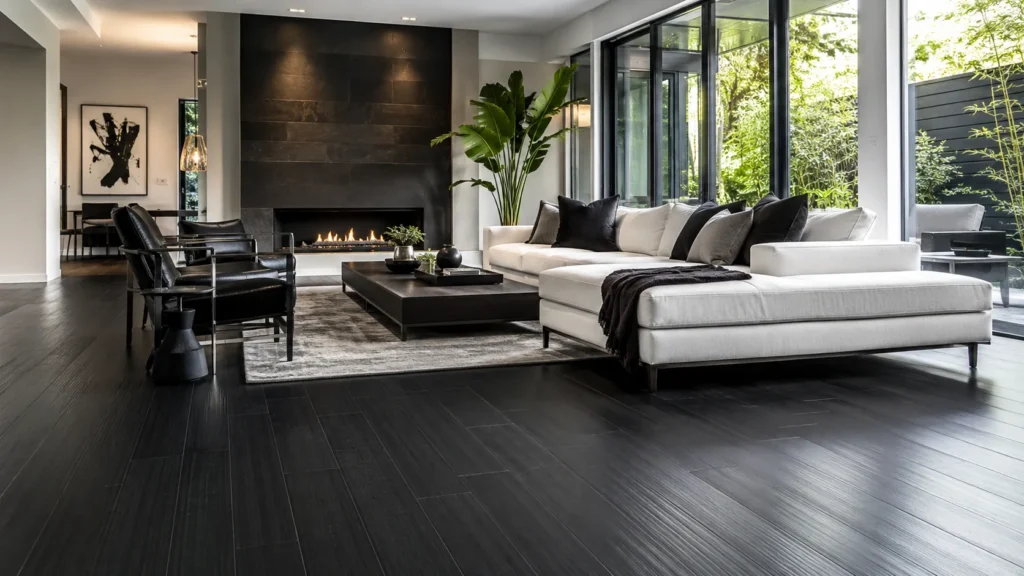
Black bamboo flooring can look bold and modern, but it needs careful cleaning and good lighting because marks and dust may be more visible.
White Bamboo Flooring
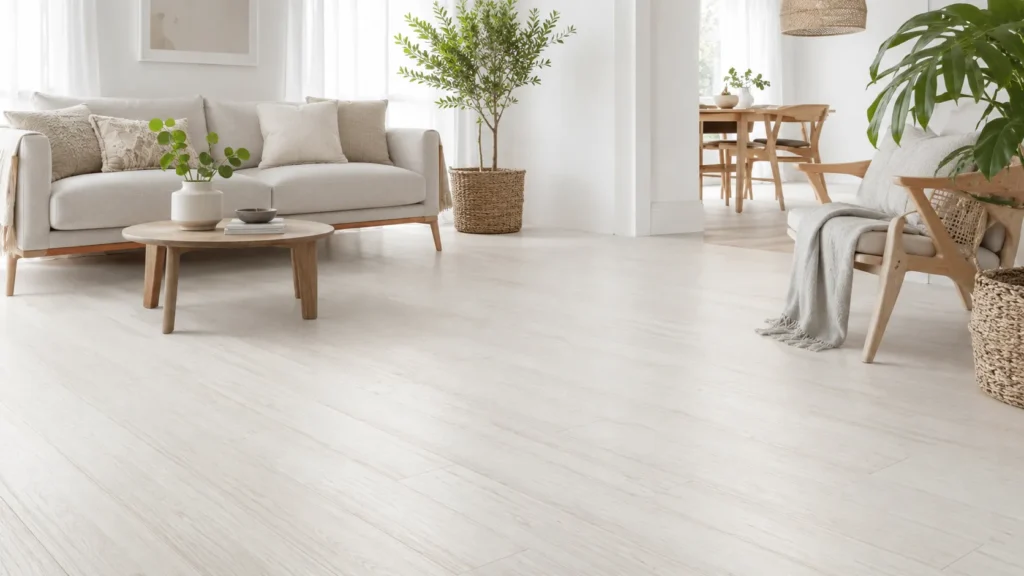
White bamboo flooring can make a room feel bright and open. It works best in low-mess spaces because light floors may show stains or dirt differently.
Gray Bamboo Flooring
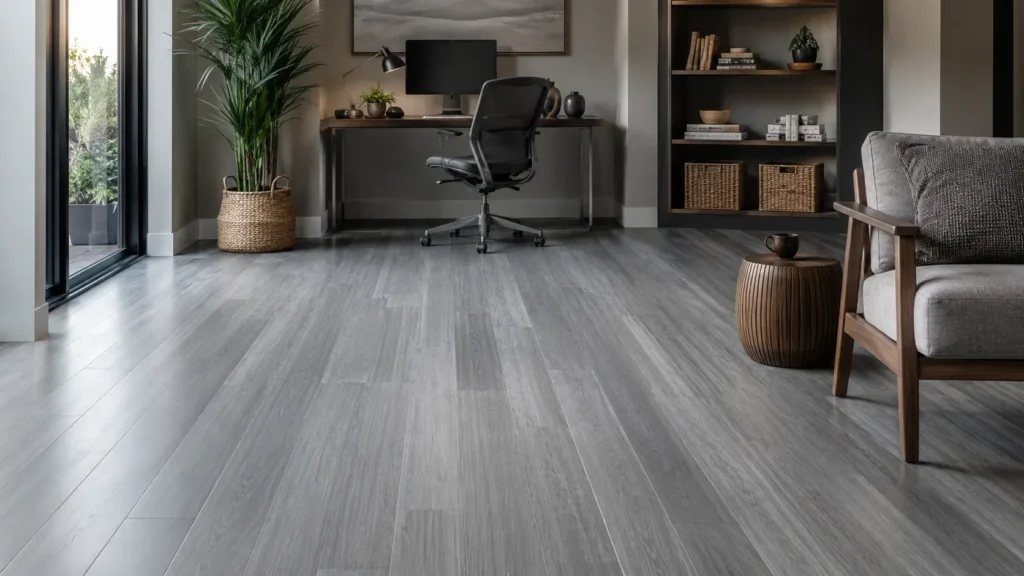
Gray bamboo flooring is popular in modern interiors. Before choosing it, make sure the color fits the long-term design of the home because gray trends can change.
Bamboo Flooring Installation
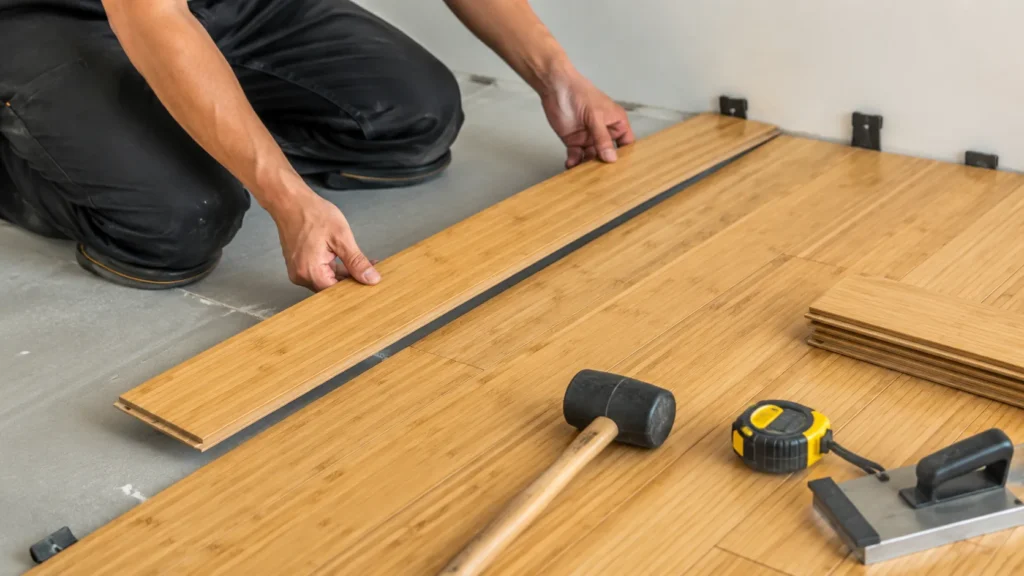
Bamboo flooring installation depends on the product. Always follow the manufacturer’s instructions.
Floating Installation
Floating bamboo flooring clicks or locks together over underlayment. It is often the most DIY-friendly method.
Best for:
- Click-lock bamboo flooring
- Approved existing floors
- Some concrete slabs with proper moisture control
- DIY-friendly projects
Glue-Down Installation
Glue-down bamboo flooring is bonded to the subfloor with adhesive. It can feel more solid underfoot when installed correctly.
Best for:
- Concrete or wood subfloors approved by the manufacturer
- More permanent installations
- Rooms where hollow sound is a concern
Nail-Down Installation
Nail-down bamboo flooring requires a suitable wood subfloor and the correct fasteners. It is usually better for experienced installers.
Best for:
- Solid bamboo products approved for nailing
- Plywood subfloors
- Professional installation
Subfloor Preparation
Before installing bamboo flooring, check:
- Subfloor flatness
- Subfloor moisture
- Room humidity
- Concrete moisture levels
- Expansion gap requirements
- Underlayment compatibility
- Adhesive compatibility
- Acclimation instructions
In real installations, bamboo problems often start below the finished surface. An uneven or damp subfloor can cause gapping, movement, cupping, swelling, or noisy floors.
How to Clean Bamboo Floors
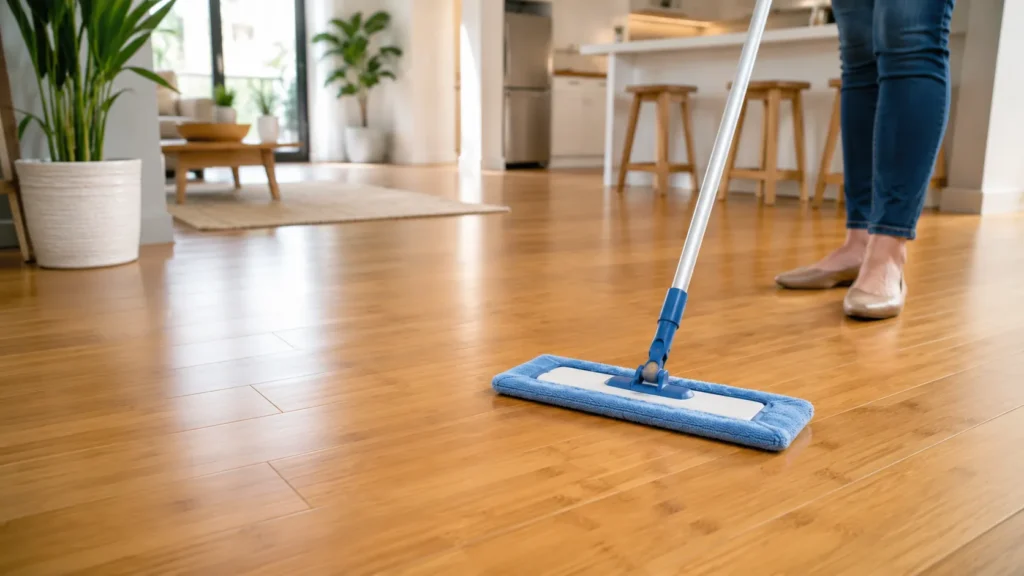
The best way to clean bamboo floors is to keep them dry, remove grit often, and use a cleaner approved for bamboo or hardwood-style floors.
Basic Cleaning Steps
- Sweep or vacuum regularly with a soft floor attachment.
- Wipe spills immediately.
- Use a slightly damp microfiber mop.
- Use a pH-neutral bamboo floor cleaner or manufacturer-approved cleaner.
- Avoid steam mops.
- Avoid soaking the floor.
- Avoid wax, oil soap, ammonia, bleach, and abrasive scrubbers.
- Use doormats at entries and felt pads under furniture.
How to Clean Bamboo Wood Floors
Many people say “bamboo wood floors,” but bamboo is not technically wood. Cleaning is still similar to hardwood care: low moisture, soft tools, and approved cleaner.
Best Bamboo Floor Cleaner
The best bamboo floor cleaner is usually a pH-neutral cleaner made for bamboo, hardwood, or polyurethane-finished floors. Always check the flooring manufacturer’s care instructions first.
Refinishing Bamboo Floors
Can you refinish bamboo floors? Sometimes.
Refinishing bamboo floors depends on:
- Whether the floor is solid or engineered
- Wear layer thickness
- Surface damage depth
- Finish type
- Manufacturer guidance
- Installer experience
Solid bamboo and some thick wear-layer products may be refinishable. Thin engineered bamboo or certain strand-woven products may not refinish well. Sanding the wrong product can permanently damage the surface.
For minor surface wear, screening and recoating may be safer than full sanding.
Buying Checklist: How to Choose the Best Bamboo Flooring
Before buying bamboo flooring, compare:
- Strand-woven vs solid vs engineered construction
- Finish durability
- Moisture rating
- Warranty
- Plank thickness
- Installation method
- Subfloor requirements
- VOC or indoor air quality certifications
- Scratch resistance
- Sunlight exposure
- Pet and kid use
- Room humidity
- Cleaning instructions
- Refinishing potential
- Brand reputation
Common Bamboo Flooring Mistakes to Avoid
- Assuming bamboo is waterproof
- Choosing only by color
- Ignoring product construction
- Installing over a damp subfloor
- Skipping acclimation
- Using a steam mop
- Installing in wet bathrooms
- Forgetting expansion gaps
- Buying the cheapest product without checking warranty
- Expecting every bamboo floor to refinish like hardwood
When to Hire a Professional
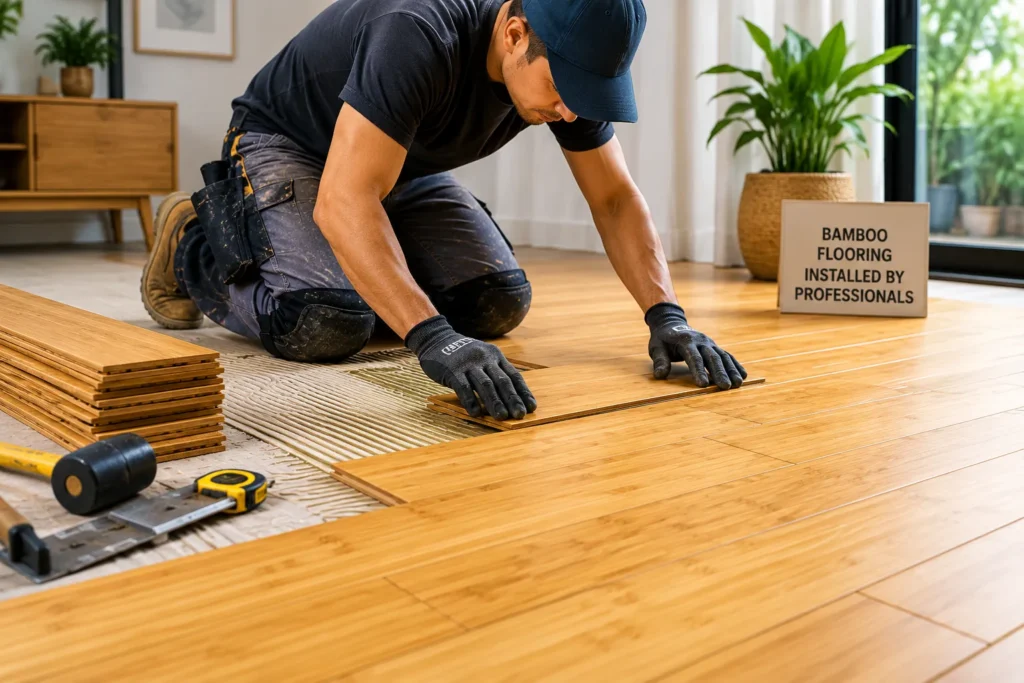
Hire a professional if:
- Your subfloor is uneven
- You are installing over concrete
- Moisture readings are uncertain
- You need glue-down installation
- You are installing stairs
- You are using expensive bamboo
- The room has complex cuts
- The manufacturer requires professional installation for warranty
DIY may be realistic for click-lock bamboo in a simple room, but subfloor moisture and flatness still need to be checked carefully.
Final Expert Recommendation
Bamboo flooring can be a good choice for homeowners who want a natural-looking, modern floor in dry living spaces. Strand woven bamboo flooring is usually the strongest option, while engineered bamboo flooring can offer easier installation and better stability depending on the product.
Choose bamboo for living rooms, bedrooms, hallways, and offices. Be cautious in kitchens, and avoid most bathrooms, laundry rooms, and damp basements unless the product is specifically rated for those conditions.
The best bamboo flooring is not just the one that looks good in a photo. It is the one that fits your room, moisture level, subfloor, lifestyle, cleaning habits, warranty needs, and long-term expectations.
FAQ
What is bamboo flooring?
Bamboo flooring is a floor made from processed bamboo stalks. Bamboo is technically a grass, not hardwood, but it is often used like wood flooring because it comes in planks and has a natural surface appearance.
Is bamboo flooring waterproof?
Most bamboo flooring is not waterproof. Some products are water resistant, but standing water, wet mopping, leaks, and high humidity can still damage bamboo floors.
What is the best bamboo flooring?
Strand woven bamboo flooring is often the strongest bamboo option, but the best bamboo flooring depends on finish quality, construction, warranty, moisture rating, installation method, and room use.
How much does bamboo flooring cost?
Bamboo flooring cost depends on product quality, construction, thickness, finish, labor, subfloor repair, underlayment, adhesive, trim, and installation method.
How do you clean bamboo floors?
Sweep or vacuum regularly, wipe spills quickly, and clean with a slightly damp microfiber mop and manufacturer-approved bamboo floor cleaner. Avoid steam mops and wet mopping.
Is bamboo flooring better than hardwood?
Bamboo can be more affordable and modern-looking, while hardwood usually offers more species options and stronger refinishing potential. The better choice depends on budget, style, room conditions, and long-term goals.
Can you refinish bamboo floors?
Some bamboo floors can be refinished, especially solid bamboo or thick wear-layer products. Thin engineered bamboo or certain strand-woven floors may not refinish well.
Is bamboo flooring good for kitchens?
Bamboo flooring can work in some kitchens if spills are cleaned quickly and moisture is controlled. It is not the safest choice for homes with frequent water spills or plumbing risks.