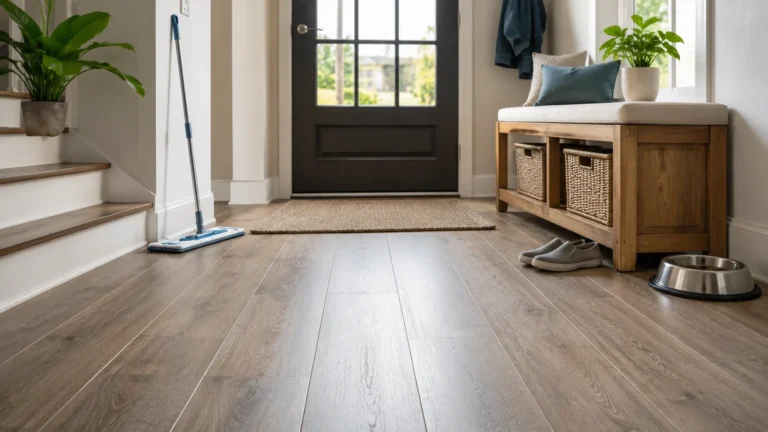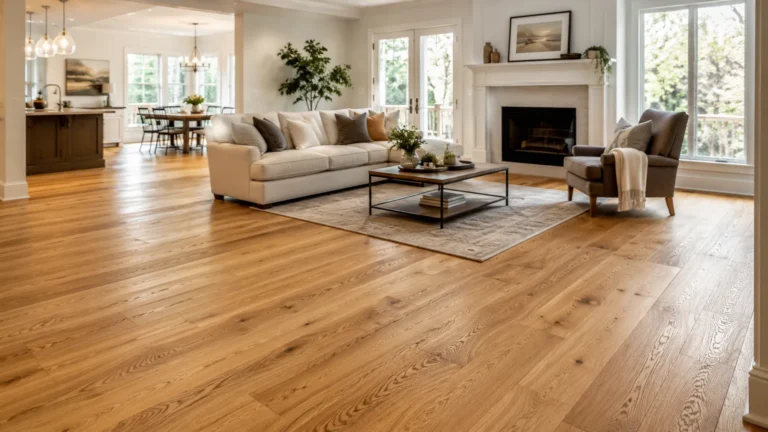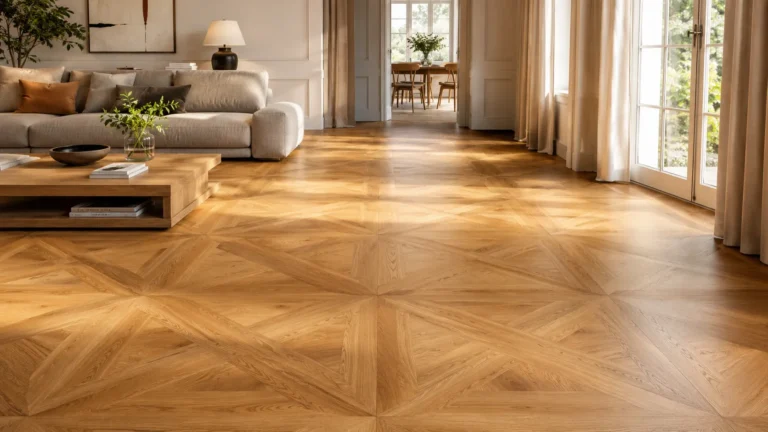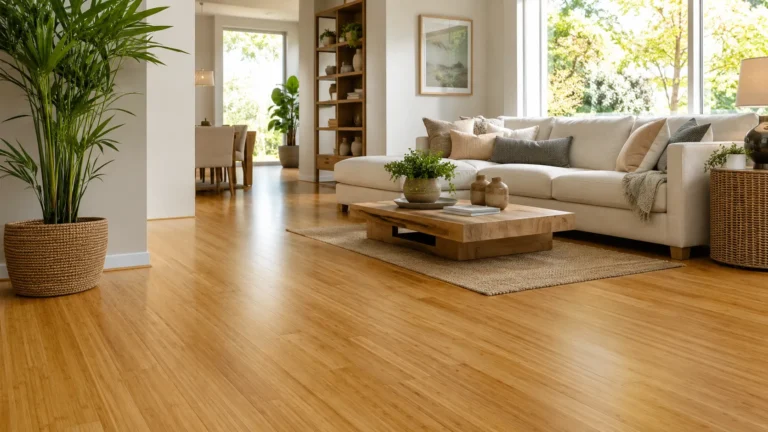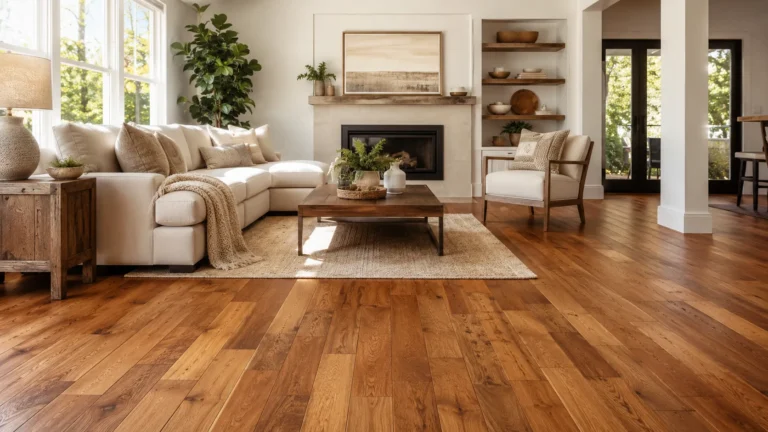
Engineered wood flooring is one of the most popular alternatives to solid hardwood because it gives homeowners the look of real wood with better dimensional stability. It can work well in living rooms, bedrooms, hallways, dining rooms, and some kitchens when the product is chosen and installed correctly.
Quick answer: Engineered wood flooring is made with a real hardwood veneer on top of a layered plywood, HDF, or wood-core base. It looks like hardwood because the surface is real wood, but the layered construction makes it more stable than solid hardwood in changing humidity. It is not the same as laminate, and it is not fully waterproof.
From field experience, engineered wood flooring is a smart choice when you want the beauty of wood but need more installation flexibility than solid hardwood.
Engineered Wood Flooring Comparison Table
| Feature | Engineered Wood Flooring |
| Surface | Real hardwood veneer |
| Core | Plywood, HDF, or layered wood core |
| Best for | Living rooms, bedrooms, hallways, dining rooms, some kitchens |
| Moisture resistance | Better than solid hardwood, but not waterproof |
| Installation | Floating, glue-down, nail-down, or staple-down |
| Refinishing | Possible only if the wear layer is thick enough |
| Main advantage | Real wood look with better stability |
| Main warning | Thin veneer products may not refinish well |
What Is Engineered Wood Flooring?
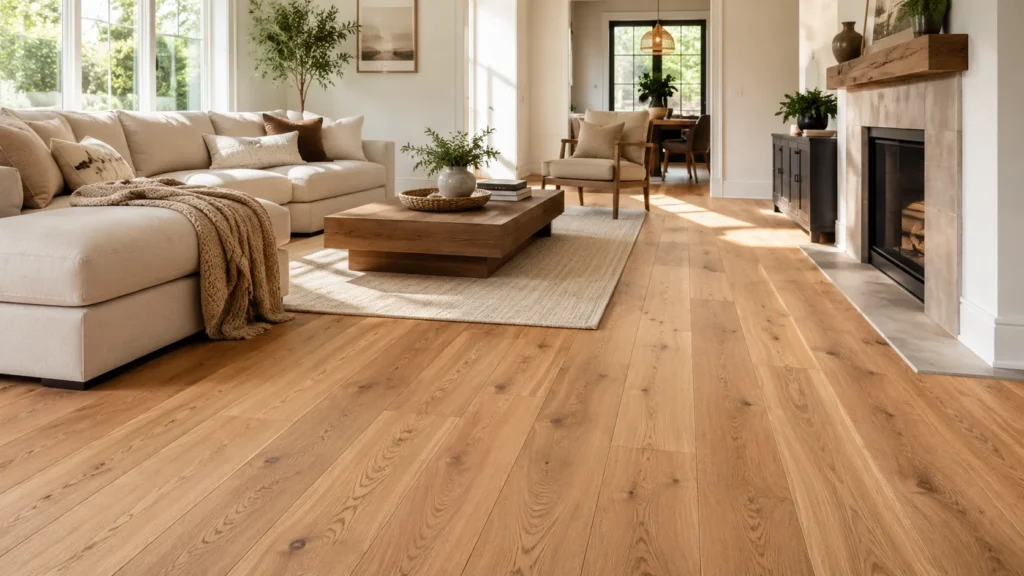
Engineered wood flooring is a wood floor made from multiple layers. The top layer is real hardwood, and the layers underneath provide support and stability.
A typical engineered wood plank includes:
- Wear layer: the real hardwood surface you walk on
- Core layer: plywood, HDF, or layered wood construction
- Backing layer: helps balance the plank and reduce movement
This layered structure helps engineered wood handle normal humidity changes better than solid hardwood. That does not mean it is waterproof. Standing water, leaks, and repeated wet mopping can still damage it.
How Engineered Wood Flooring Is Made
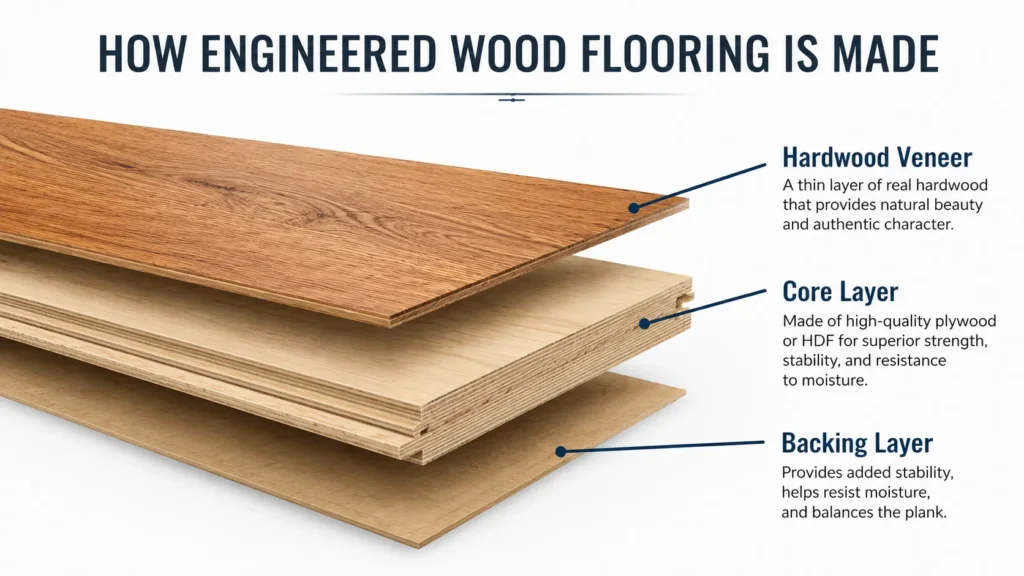
Engineered wood flooring is designed to reduce the natural expansion and contraction that happens with solid wood. Instead of one thick piece of lumber, it uses a real wood top layer bonded to a stable core.
The quality depends on:
- Thickness of the hardwood veneer
- Core construction
- Finish durability
- Plank thickness
- Locking system
- Manufacturer warranty
- Installation method
- Moisture rating
One common mistake homeowners make is choosing engineered wood only by color. In real installations, the wear layer and core quality matter just as much as the surface design.
Pros of Engineered Wood Flooring
Engineered wood flooring has several advantages when used in the right space.
Real Wood Appearance
Because the top layer is real hardwood, engineered wood flooring looks more natural than laminate. You get real grain, natural variation, and a more authentic wood feel.
Better Stability Than Solid Hardwood
Engineered wood is more dimensionally stable than solid hardwood. This makes it useful in homes with seasonal humidity changes.
More Installation Options
Depending on the product, engineered wood can be installed as:
- Floating floor
- Glue-down floor
- Nail-down floor
- Staple-down floor
This flexibility makes it easier to use in different homes and subfloor conditions.
Good for Many Design Styles
Engineered wood is available in many styles, including:
- White oak engineered wood flooring
- Wide plank engineered wood flooring
- Dark engineered wood flooring
- Black engineered wood flooring
- Hand scraped engineered wood flooring
- Wire-brushed engineered wood flooring
Can Add Home Appeal
A good engineered wood floor can improve the look and feel of a home, especially in living spaces, bedrooms, dining rooms, and hallways.
Disadvantages of Engineered Wood Flooring
Engineered wood flooring is useful, but it is not perfect.
It Is Not Fully Waterproof
Some products are marketed as waterproof engineered wood flooring, but homeowners should be careful. The surface may resist spills better than solid wood, but seams, edges, core materials, and installation gaps can still be vulnerable.
For bathrooms, laundry rooms, and wet basements, tile, vinyl, or waterproof-rated flooring may be safer.
Refinishing Depends on Wear Layer Thickness
Thicker veneer engineered wood can sometimes be sanded and refinished. Thin veneer products may only allow light screening or no refinishing at all.
Before buying, check the wear layer thickness.
Cheap Products Can Wear Fast
Low-cost engineered wood may have a thin veneer, weak core, poor finish, or weak locking system. A cheaper floor can become expensive later if it dents, separates, scratches, or cannot be repaired.
It Can Still Scratch
Engineered wood is still a wood surface. Pets, furniture movement, grit, sand, rolling chairs, and poor cleaning habits can scratch the finish.
Moisture Can Cause Damage
Leaks, wet mopping, high humidity, and poor subfloor moisture control can lead to swelling, cupping, gapping, or finish problems.
Engineered Wood Flooring vs Hardwood
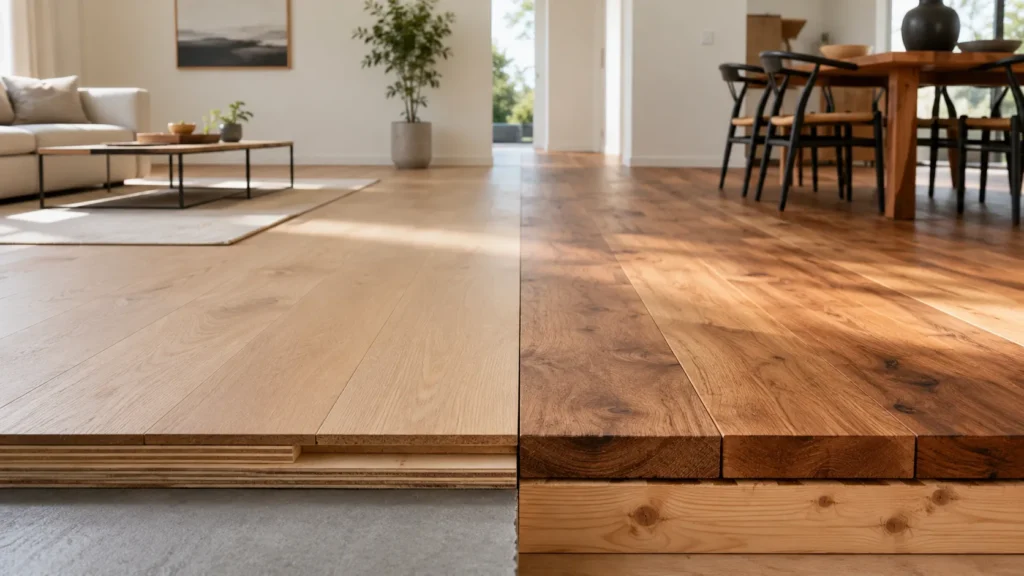
Many homeowners compare engineered wood flooring vs hardwood before buying.
| Feature | Engineered Wood Flooring | Solid Hardwood Flooring |
| Construction | Real wood veneer over layered core | One solid piece of wood |
| Stability | More stable in humidity changes | More movement with humidity |
| Refinishing | Depends on veneer thickness | Can usually be refinished multiple times |
| Installation | Floating, glue-down, nail-down, staple-down | Usually nail-down over wood subfloor |
| Concrete slab use | Often suitable if approved | Usually not ideal |
| Moisture tolerance | Better than solid, not waterproof | More moisture-sensitive |
| Long-term value | Good if quality is high | Often stronger traditional value |
Best choice:
Choose engineered wood if you need more stability, installation flexibility, or concrete slab compatibility. Choose solid hardwood if the room is dry, the subfloor is suitable, and long-term refinishing is your main priority.
Engineered Wood Flooring vs Laminate
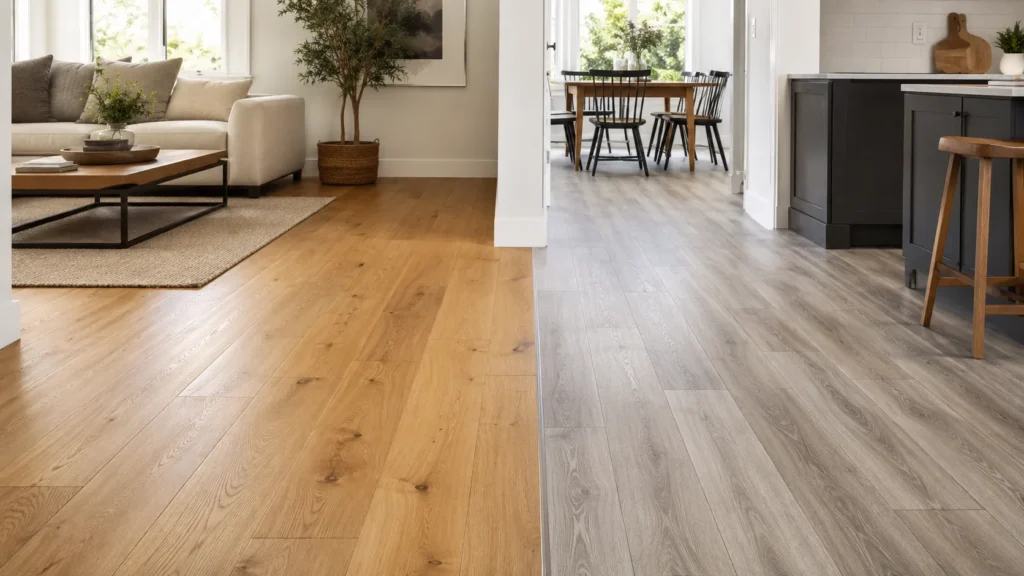
Engineered wood flooring and laminate are often confused, but they are not the same.
| Feature | Engineered Wood Flooring | Laminate Flooring |
| Top surface | Real hardwood veneer | Printed photo layer |
| Look | Natural wood variation | Wood-look image |
| Feel | Closer to real wood | More synthetic feel |
| Refinishing | Sometimes possible | Cannot be refinished |
| Cost | Usually higher | Usually lower |
| Moisture resistance | Product dependent | Product dependent |
| Repairability | Depends on product | Damaged boards often need replacement |
Best choice:
Choose engineered wood if you want a real wood surface. Choose laminate if budget, scratch resistance, and DIY installation matter more than having real wood.
Best Types and Styles of Engineered Wood Flooring
White Oak Engineered Wood Flooring
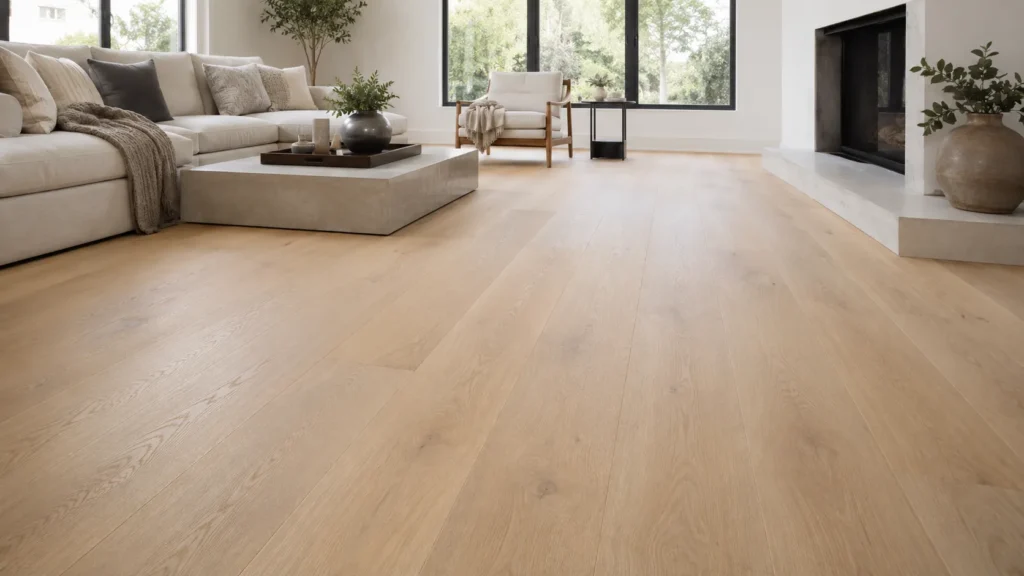
White oak engineered wood flooring is one of the most popular choices because it has a clean grain, modern color range, and good design flexibility. It works well in contemporary, farmhouse, coastal, and traditional interiors.
Wide Plank Engineered Wood Flooring
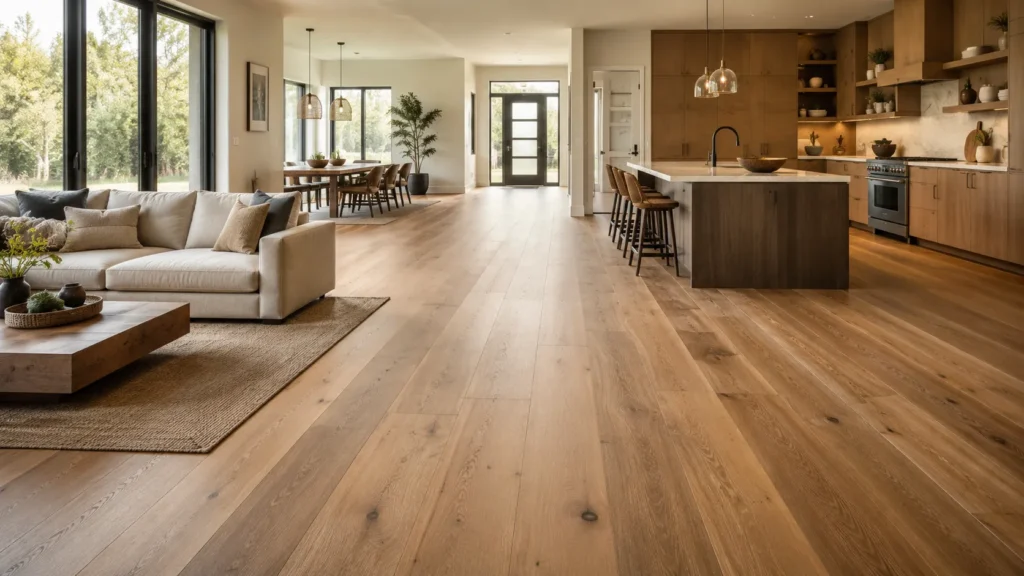
Wide plank engineered wood flooring gives rooms a larger, more open look. It is popular in modern homes, but the subfloor must be flat because wide planks can show movement and unevenness more easily.
Dark Engineered Wood Flooring
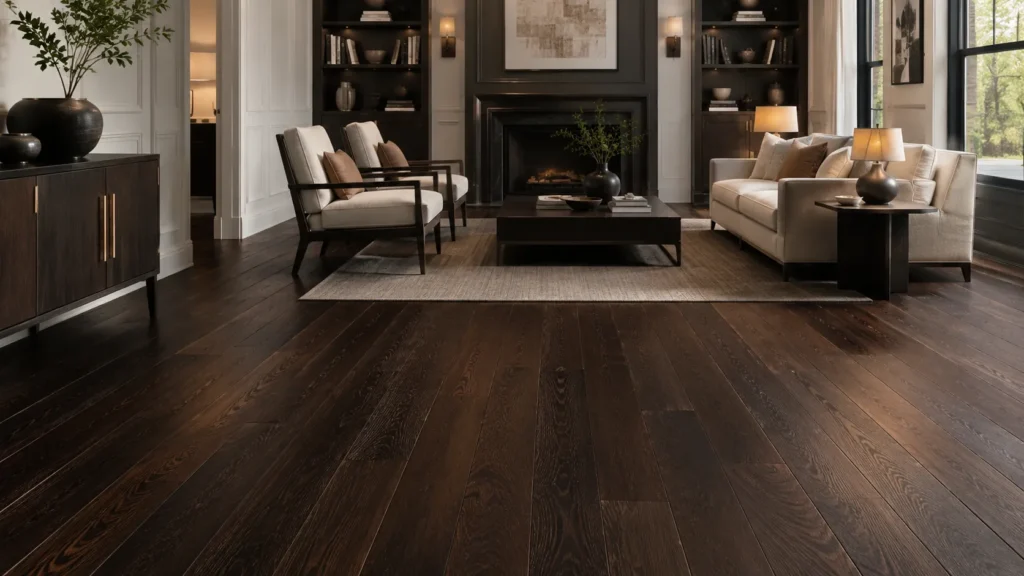
Dark engineered wood flooring creates a rich, dramatic look. It works well in formal rooms and modern interiors, but it may show dust, pet hair, and scratches more easily than medium-tone floors.
Black Engineered Wood Flooring
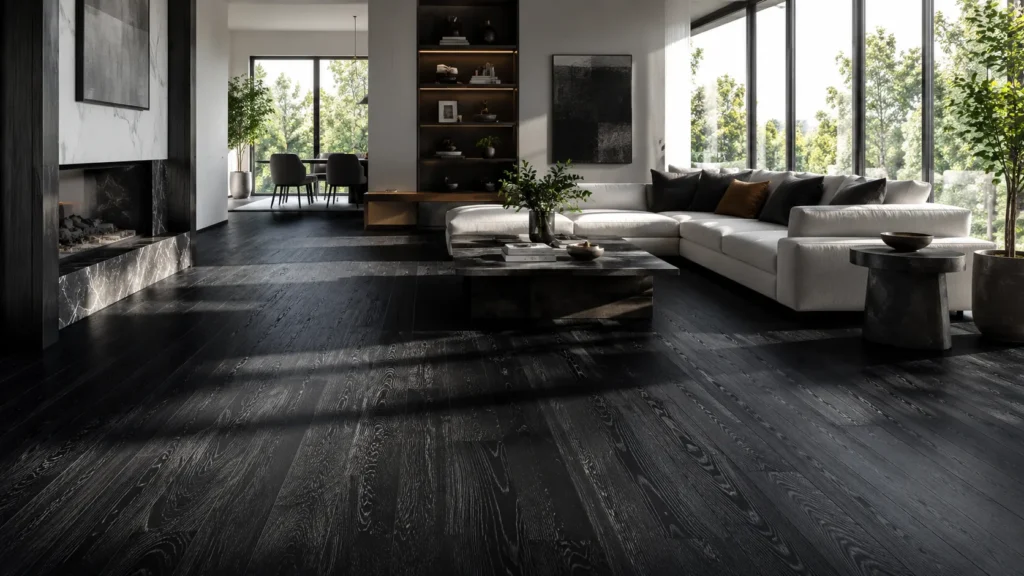
Black engineered wood flooring can look bold and premium, but it is not the most forgiving choice. It needs careful cleaning and good lighting because dust and scratches can be more visible.
Hand Scraped Engineered Wood Flooring
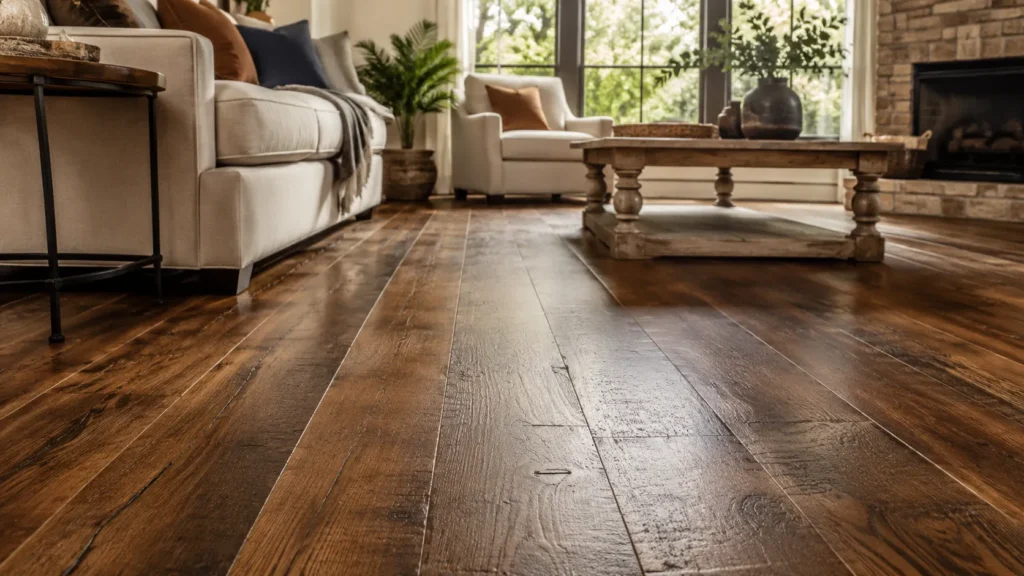
Hand scraped engineered wood flooring has a textured, rustic surface. It can help hide minor wear better than a perfectly smooth floor, making it useful for busy homes.
Waterproof Engineered Wood Flooring
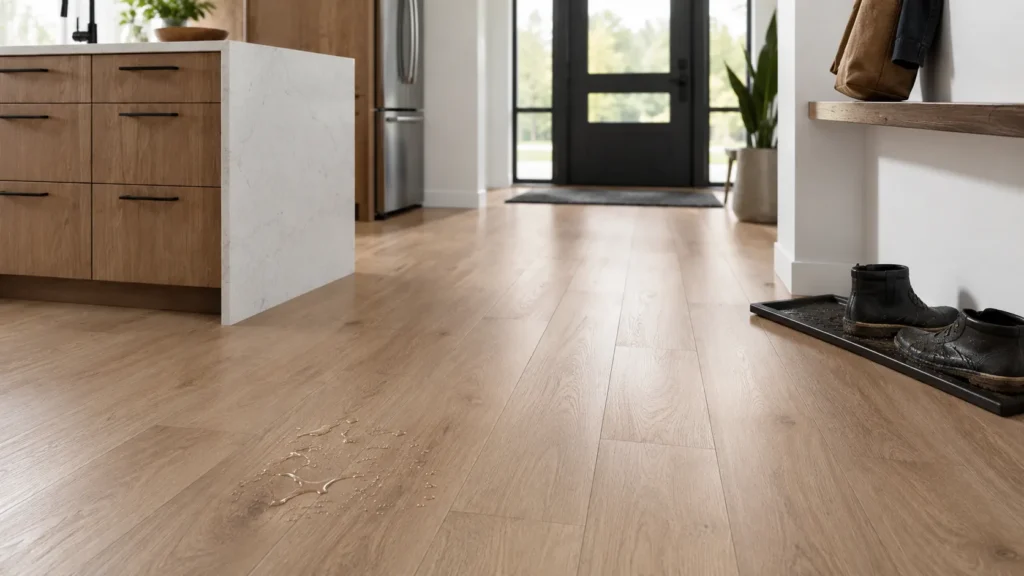
Waterproof engineered wood flooring should be checked carefully. Some products offer improved water resistance, but the whole floor system is only as good as the seams, edges, core, subfloor, and installation.
Best Rooms for Engineered Wood Flooring
| Room | Is Engineered Wood a Good Choice? | Notes |
| Living room | Yes | Strong choice for beauty and comfort |
| Bedroom | Yes | Good warmth and natural appearance |
| Dining room | Yes | Use furniture pads under chairs |
| Hallway | Yes | Choose a durable finish |
| Kitchen | Sometimes | Clean spills quickly and use mats |
| Basement | Sometimes | Only if dry and product is approved |
| Bathroom | Usually no | Too much moisture risk |
| Laundry room | Usually no | Leaks and humidity can damage wood |
Before choosing engineered wood, always check the room’s moisture level, subfloor condition, sunlight exposure, pets, kids, and traffic.
Cost of Engineered Wood Flooring
The cost of engineered wood flooring depends on product quality, wood species, veneer thickness, plank width, finish, and installation method.
Common cost factors include:
- Material price
- Installation labor
- Old flooring removal
- Subfloor repair
- Underlayment
- Adhesive
- Moisture barrier
- Trim and transitions
- Waste factor
- Stairs or complex cuts
Engineered Wood Flooring Installation Cost
Installation cost can increase if the subfloor needs leveling, moisture treatment, old flooring removal, or glue-down installation. Floating installation is often less labor-intensive, while glue-down and nail-down methods usually require more skill.
From field experience, the cheapest quote is not always the best value. Poor installation can lead to gaps, movement, hollow sounds, squeaks, or premature wear.
How to Install Engineered Wood Flooring
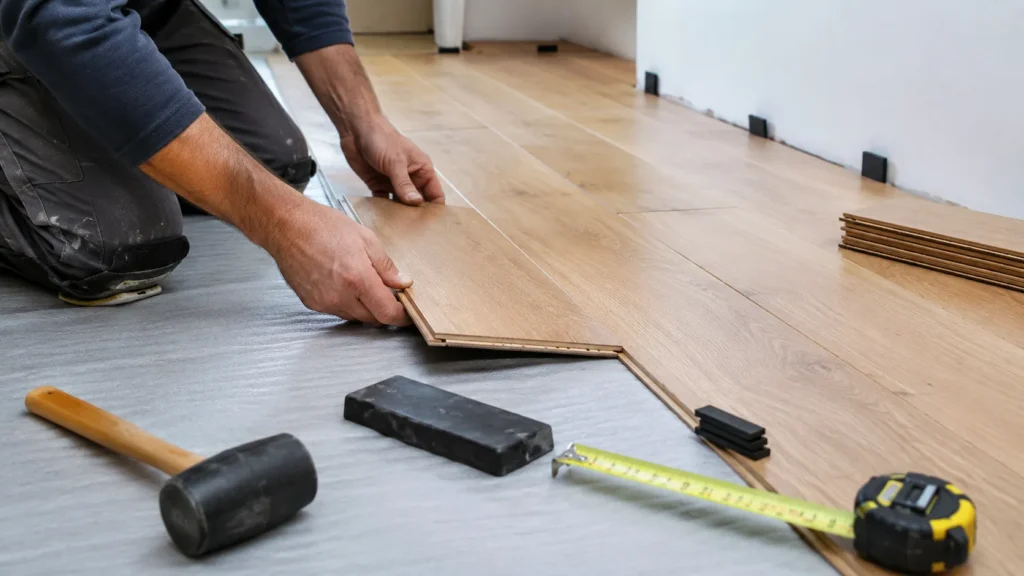
Engineered wood flooring installation depends on the product and subfloor. Always follow the manufacturer’s instructions.
1. Floating Installation
A floating floor clicks or locks together over underlayment. It is often the most DIY-friendly method.
Best for:
- Some concrete slabs
- Existing approved floors
- DIY projects
- Rooms where glue or nails are not ideal
2. Glue-Down Engineered Wood Flooring
Glue-down engineered wood flooring uses adhesive to bond the planks to the subfloor. It can feel solid underfoot when done correctly.
Best for:
- Concrete slabs
- High-traffic areas
- Spaces where a more permanent feel is desired
3. Nail-Down Installation
Nail-down installation is usually used over plywood or wood subfloors. It requires the right tools and experience.
Best for:
- Wood subfloors
- More traditional installations
- Certain thicker engineered wood products
4. Staple-Down Installation
Staple-down installation is similar to nail-down but uses staples. It also requires a proper wood subfloor.
Best for:
- Approved plywood subfloors
- Products designed for staple-down installation
Installation Preparation
Before installation, check:
- Subfloor flatness
- Moisture level
- Room temperature
- Product acclimation
- Expansion gaps
- Underlayment compatibility
- Adhesive compatibility
- Manufacturer instructions
A beautiful engineered wood floor can fail if the subfloor is uneven or damp.
How to Clean Engineered Wood Floors
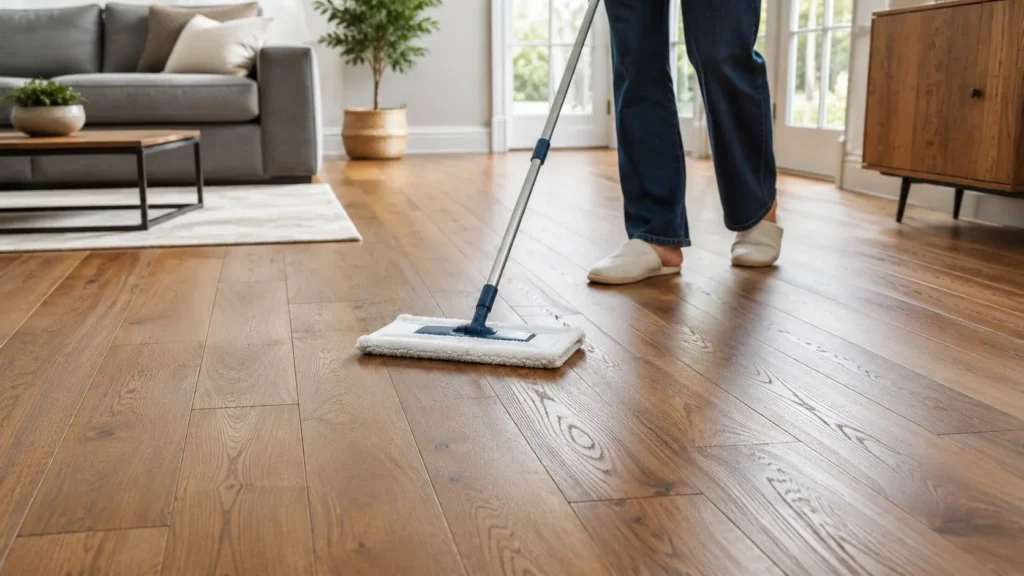
The best way to clean engineered wood floors is to keep water low, remove grit often, and use a cleaner approved for wood flooring.
Basic Cleaning Steps
- Sweep or vacuum regularly with a soft floor attachment.
- Clean spills quickly.
- Use a slightly damp microfiber mop, not a wet mop.
- Avoid steam cleaners.
- Avoid harsh chemicals, wax, ammonia, or abrasive scrubbers.
- Use rugs at entries and furniture pads under heavy items.
Best Cleaner for Engineered Wood Floors
The best cleaner for engineered wood floors is a manufacturer-approved hardwood floor cleaner or a pH-neutral wood floor cleaner. Always test in a small hidden area first.
Cleaning Mistake to Avoid
Do not soak the floor. Even if the finish looks sealed, water can enter seams and edges.
Refinishing Engineered Wood Floors
Refinishing engineered wood floors depends on the thickness of the top hardwood layer.
- Thin veneer: may not be refinishable
- Medium veneer: may allow light screening
- Thick veneer: may allow sanding and refinishing
- Deep damage: may require board replacement
Before sanding, check the product specifications. Sanding a thin veneer floor can expose the core and permanently damage the floor.
Can You Resurface Engineered Wood Floor?
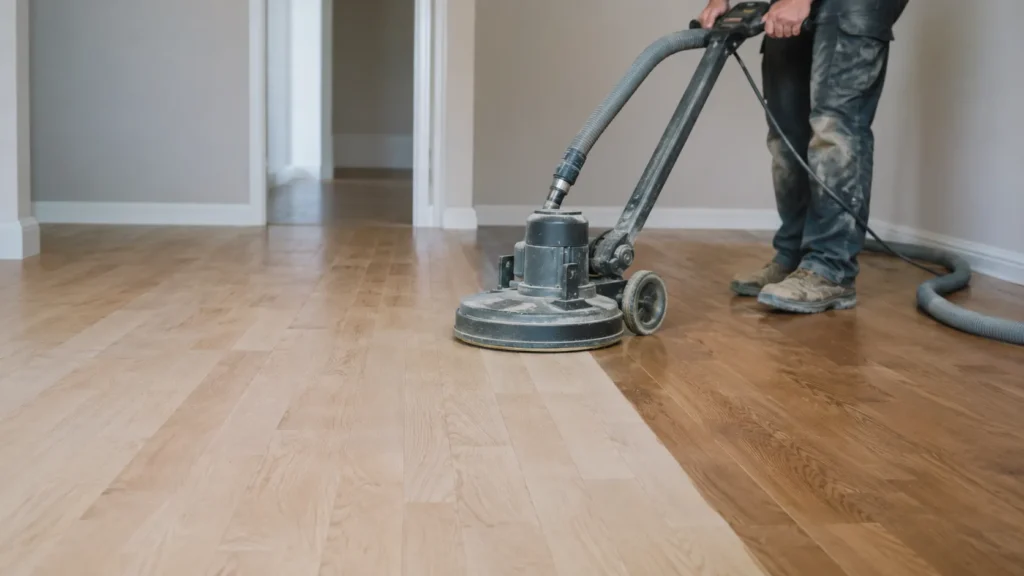
You may be able to resurface an engineered wood floor if the wear layer is thick enough and the damage is mostly in the finish. Light screening and recoating may work for minor surface wear. Deep scratches, water damage, or thin veneer products may not be good candidates.
Common Mistakes to Avoid
- Assuming engineered wood is waterproof
- Buying only by color
- Ignoring veneer thickness
- Installing over a damp subfloor
- Skipping acclimation
- Using wet mops or steam cleaners
- Choosing dark floors without considering dust and scratches
- Installing in bathrooms or laundry rooms without checking product limits
- Forgetting expansion gaps
- Hiring installers who do not follow manufacturer instructions
When to Hire a Professional
Hire a professional if:
- The subfloor is uneven
- Moisture readings are high
- You are installing over concrete
- You need glue-down installation
- You have stairs
- The room has complex cuts
- You are using expensive wide plank flooring
- You are unsure about acclimation or expansion gaps
DIY floating installation may be realistic for experienced homeowners, but glue-down, nail-down, and staple-down installations are safer with professional help.
Final Expert Recommendation
Engineered wood flooring is a strong choice for homeowners who want the look of real wood with better stability than solid hardwood. It works best in dry or moderately controlled rooms such as living rooms, bedrooms, dining rooms, hallways, and some kitchens.
Choose a thicker wear layer if refinishing matters. Choose a durable finish if you have pets, kids, or heavy traffic. Choose glue-down or professional installation if you want a more permanent, solid feel. Avoid using engineered wood in bathrooms, laundry rooms, or damp basements unless the product is specifically rated for that condition.
The best engineered wood flooring is not just the prettiest option. It is the product that fits your room, subfloor, moisture level, lifestyle, budget, and long-term maintenance expectations.
FAQ
What is engineered wood flooring?
Engineered wood flooring is a real wood floor made with a hardwood veneer on top of a layered plywood, HDF, or wood-core base. It looks like hardwood but is more stable than solid wood in changing humidity.
What are the disadvantages of engineered wood flooring?
The main disadvantages are limited refinishing potential, moisture sensitivity, possible scratching, quality differences between products, and higher cost than laminate.
Is engineered wood flooring better than hardwood?
Engineered wood is better for stability and installation flexibility. Solid hardwood is better if you want maximum refinishing potential and have a dry room with a suitable wood subfloor.
Is engineered wood flooring better than laminate?
Engineered wood is better if you want a real wood surface. Laminate is usually cheaper and can be more scratch-resistant, but it has a printed image layer rather than real hardwood veneer.
How do you clean engineered wood floors?
Sweep or vacuum regularly, clean spills quickly, and use a slightly damp microfiber mop with a manufacturer-approved wood floor cleaner. Avoid steam cleaners and wet mopping.
Can engineered wood floors be refinished?
Some engineered wood floors can be refinished if the hardwood veneer is thick enough. Thin veneer products may not be sanded and may only allow light screening or no refinishing.
Is engineered wood flooring waterproof?
Most engineered wood flooring is not fully waterproof. Some products offer improved water resistance, but standing water, leaks, and wet mopping can still damage seams, edges, or the core.
What is the best engineered wood flooring?
The best engineered wood flooring has a thick wear layer, strong core, durable finish, good warranty, suitable installation method, and a style that fits the room.