Choosing between different flooring types can feel confusing because every material looks good in the right photo. But in real homes, flooring has to handle moisture, pets, kids, furniture, sunlight, cleaning, foot traffic, and the condition of the subfloor underneath.
Quick answer: The main flooring types are hardwood, vinyl, tile, carpet, linoleum, concrete, and laminate. Hardwood is best for dry living spaces, vinyl is practical for moisture and busy homes, tile is excellent for bathrooms and kitchens, carpet adds comfort, linoleum is a durable natural option, concrete works well in garages and modern spaces, and laminate offers a budget-friendly wood look.
From field experience, the best floor is not always the most expensive floor. The right choice is the one that fits the room, the moisture level, the lifestyle of the home, and the installation conditions.
Flooring Types Comparison Table
| Flooring Type | Best For | Moisture Resistance | Comfort | Maintenance | Main Warning |
| Hardwood flooring | Living rooms, bedrooms, dining rooms | Low | Medium | Medium | Avoid wet rooms |
| Vinyl flooring | Kitchens, bathrooms, basements, pets | High | Medium | Easy | Quality varies by wear layer |
| Tile flooring | Bathrooms, kitchens, laundry rooms | Very high | Low | Easy to medium | Installation quality matters |
| Carpet flooring | Bedrooms, family rooms, upstairs spaces | Low | High | Medium | Holds stains, dust, and odors |
| Linoleum flooring | Kitchens, hallways, utility rooms | Medium | Medium | Medium | Seams need protection |
| Concrete flooring | Garages, basements, modern interiors | High if sealed | Low | Easy | Hard and cold underfoot |
| Laminate flooring | Living rooms, bedrooms, rentals | Low to medium | Medium | Easy | Moisture can damage core |
Hardwood Flooring
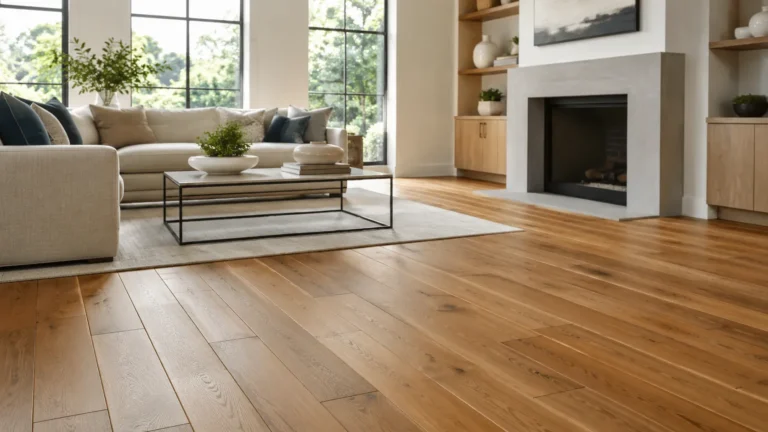
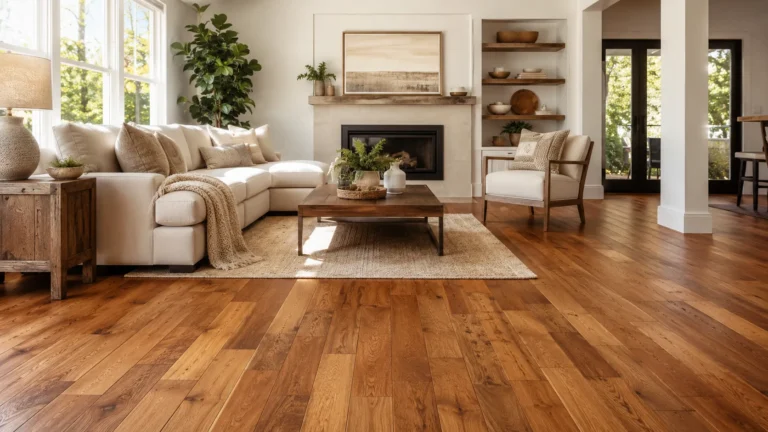
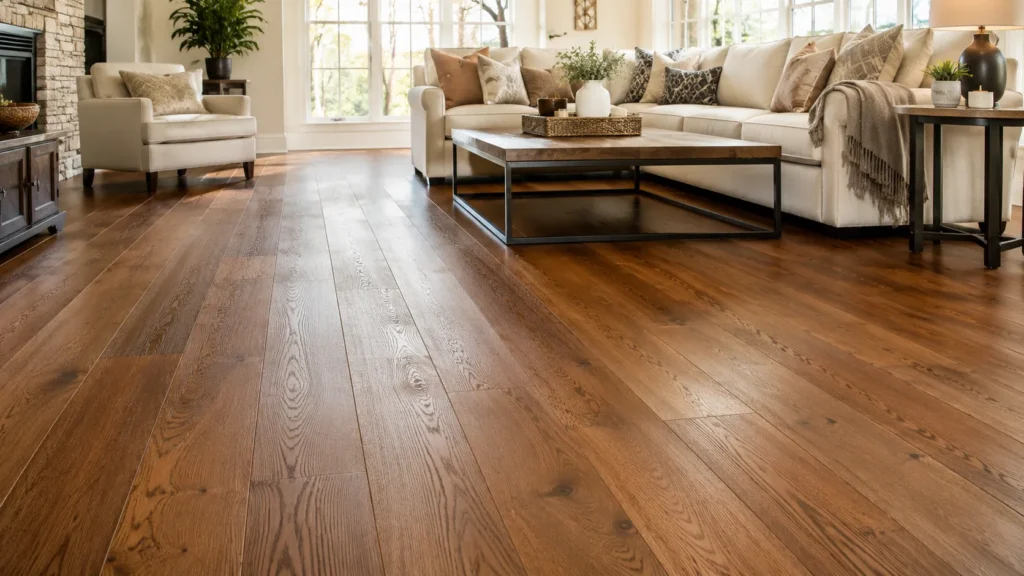
Hardwood flooring is made from real wood and is one of the most classic flooring choices for American homes. It is popular because it feels natural, looks warm, and can last a long time when properly maintained.
Hardwood is best for dry rooms where appearance and long-term home value matter. It works well in living rooms, bedrooms, dining rooms, hallways, and home offices.
Common Types of Hardwood Flooring
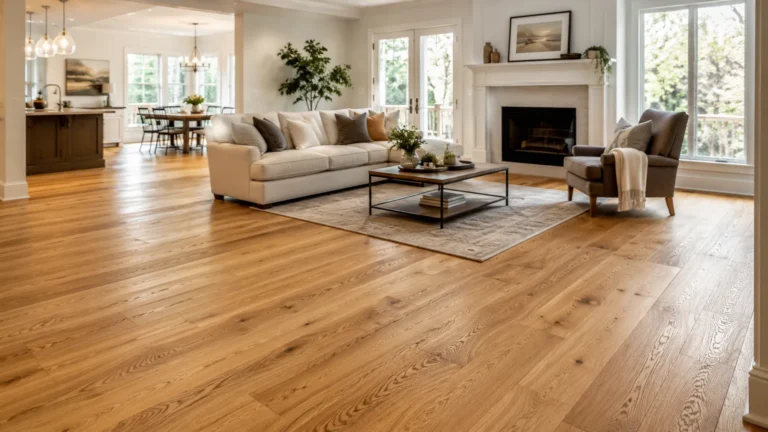
Solid hardwood flooring is made from one piece of wood. It can often be sanded and refinished several times, depending on thickness.
Engineered wood flooring has a real wood surface over a layered core. It is more stable than solid wood in changing humidity, but refinishing depends on the thickness of the top wood layer.
Oak flooring is one of the most common hardwood choices because it is durable, widely available, and works with many home styles.
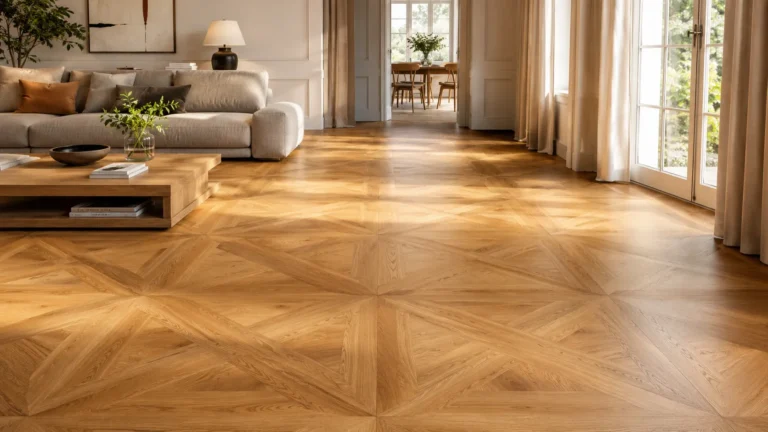
Parquet flooring uses small wood pieces arranged in geometric patterns.
Herringbone flooring is a patterned installation style often used with wood, engineered wood, or wood-look materials.
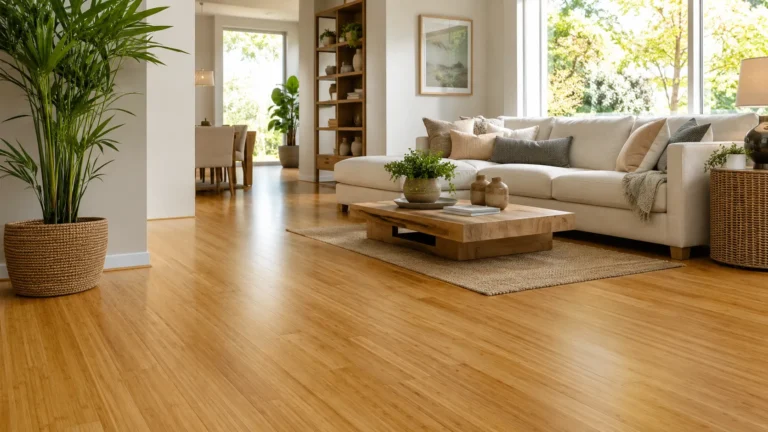
Bamboo flooring is often grouped near hardwood, although bamboo is technically a grass. Quality varies, so check hardness, finish, and warranty.
Cork flooring is softer and warmer underfoot. It can be comfortable, but it needs proper sealing and care.
Pros of Hardwood Flooring
- Natural appearance
- Strong design appeal
- Can last for many years
- Some types can be refinished
- Good for dry main living spaces
Cons of Hardwood Flooring
- Higher upfront cost
- Can scratch or dent
- Sensitive to moisture
- Not ideal for bathrooms or wet basements
- Usually requires careful installation
Expert Tip
Before choosing hardwood flooring, always check subfloor condition, moisture levels, sunlight exposure, and whether the home has pets. Hardwood can be beautiful, but it is not waterproof. Many hardwood problems come from moisture, poor acclimation, or installation over an unsuitable subfloor.
Vinyl Flooring
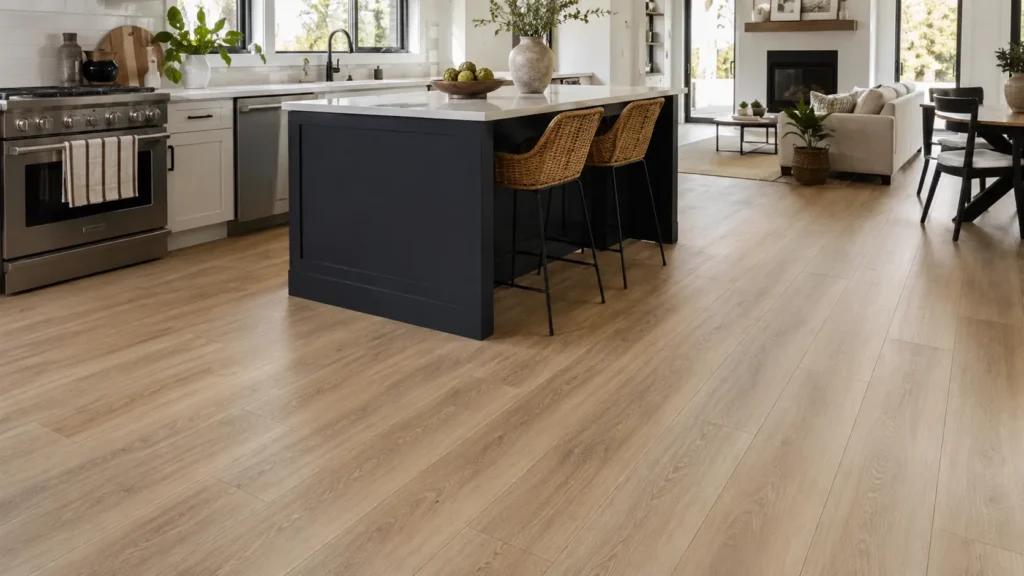
Vinyl flooring is one of the most practical modern flooring types because it is affordable, water-resistant or waterproof depending on the product, and available in many wood-look and stone-look styles.
Vinyl works especially well in kitchens, bathrooms, basements, laundry rooms, rental properties, and homes with pets or kids.
Common Types of Vinyl Flooring
LVP flooring means luxury vinyl plank. It usually looks like wood planks.
LVT flooring means luxury vinyl tile. It often looks like stone, ceramic, or decorative tile.
Sheet vinyl flooring comes in large rolls and has fewer seams, which can make it useful in moisture-prone rooms.
SPC flooring means stone plastic composite. It has a rigid core and is usually firm and dent-resistant.
WPC flooring means wood plastic composite. It usually feels slightly warmer and softer than SPC.
PVC flooring refers to vinyl flooring made with polyvinyl chloride.
Hybrid flooring combines features of vinyl, laminate, and rigid-core construction, depending on the product.
Pros of Vinyl Flooring
- Good moisture resistance
- Easy to clean
- Many affordable options
- Good for pets and kids
- Often DIY-friendly
- Available in wood, tile, and stone looks
Cons of Vinyl Flooring
- Can dent under heavy furniture
- Lower resale appeal than real hardwood
- Cheap products may wear quickly
- Subfloor imperfections can show through
- Some products are difficult to repair cleanly
Expert Tip
When comparing vinyl flooring, do not look only at color. Check the wear layer, total thickness, core type, locking system, warranty, and installation requirements. A low-quality vinyl plank can look good on day one but separate, dent, or curl later if the product or subfloor is poor.
Tile Flooring
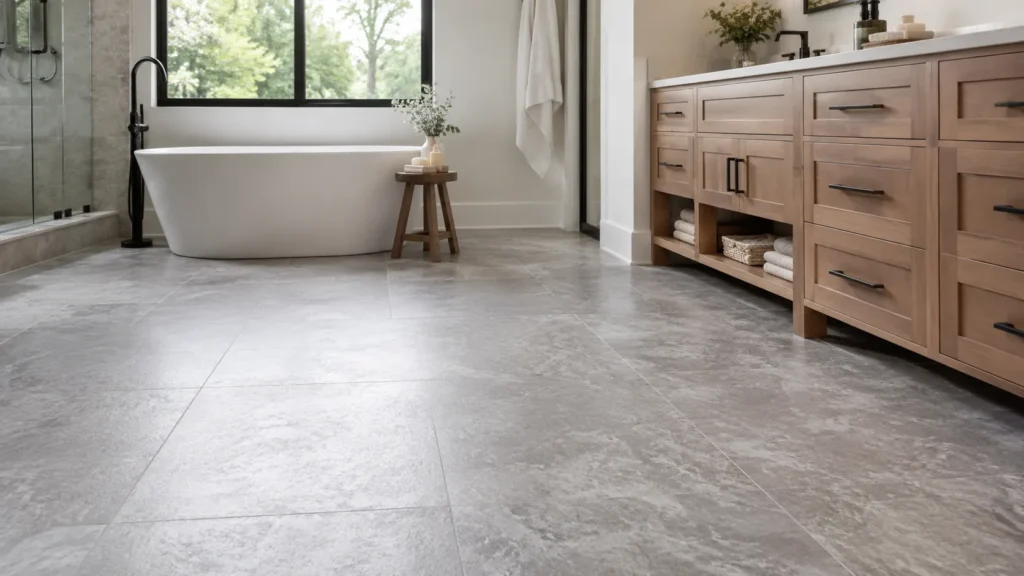
Tile flooring is one of the strongest flooring types for wet and high-traffic areas. It is commonly used in bathrooms, kitchens, laundry rooms, mudrooms, entryways, and some basements.
Tile is durable, but it depends heavily on proper installation. A good tile installed over a weak or moving subfloor can still crack.
Common Types of Tile Flooring
Ceramic tile flooring is made from clay and is a common choice for kitchens, bathrooms, and walls.
Porcelain tile flooring is denser and less porous than standard ceramic tile. It is usually a better choice for heavy traffic and wet areas.
Natural stone flooring includes stone materials such as marble, travertine, slate, and other natural surfaces.
Marble flooring looks luxurious but can scratch, stain, and need sealing.
Travertine flooring has a warm natural look but needs sealing and maintenance.
Slate flooring is durable and textured, but it can vary in thickness and finish.
Terrazzo flooring uses chips of stone, glass, or other materials in a binder and is known for durability and decorative appearance.
Pros of Tile Flooring
- Excellent moisture resistance
- Very durable
- Easy to clean
- Good for bathrooms and kitchens
- Many design options
- Works with radiant heating in many cases
Cons of Tile Flooring
- Hard and cold underfoot
- Grout needs cleaning and maintenance
- Installation can be expensive
- Cracking can happen if the subfloor moves
- Natural stone may need sealing
Expert Tip
For bathroom tile, the waterproofing system under the tile matters as much as the tile itself. Tile and grout are not a complete waterproofing plan by themselves. Poor waterproofing can lead to moisture damage under a beautiful-looking floor.
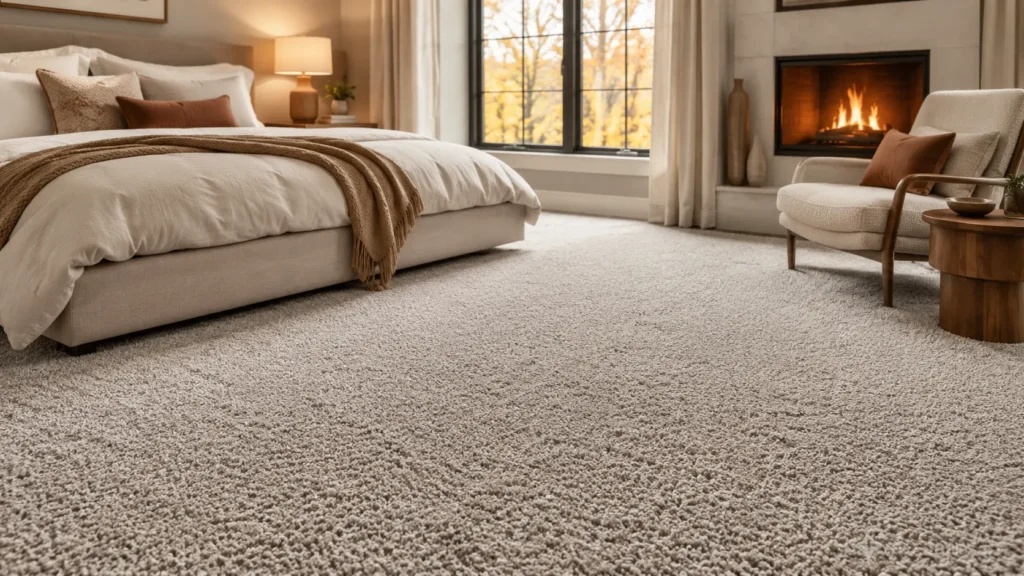
Carpet Flooring
Carpet flooring is a soft surface flooring type that adds warmth, comfort, and sound control. It is still a strong choice for bedrooms, family rooms, playrooms, stairs, and upstairs spaces.
Carpet is not usually the best choice for kitchens, bathrooms, laundry rooms, or damp basements because it can hold moisture, stains, dust, and odors.
Common Types of Carpet Flooring
Wall-to-wall carpet covers the entire room and is common in bedrooms and family rooms.
Carpet tile flooring uses modular square pieces. It is useful in basements, offices, rentals, and commercial spaces because damaged tiles can often be replaced individually.
Pros of Carpet Flooring
- Soft and warm
- Comfortable underfoot
- Helps reduce noise
- Good for bedrooms
- Available in many colors and textures
- Budget-friendly options exist
Cons of Carpet Flooring
- Can stain
- Holds dust and allergens
- Not ideal for moisture
- Can trap pet odors
- Needs regular vacuuming and cleaning
Expert Tip
Carpet quality depends heavily on fiber, density, pile, backing, and padding. A good carpet pad can improve comfort and extend carpet life. A poor pad can make even expensive carpet wear out faster.
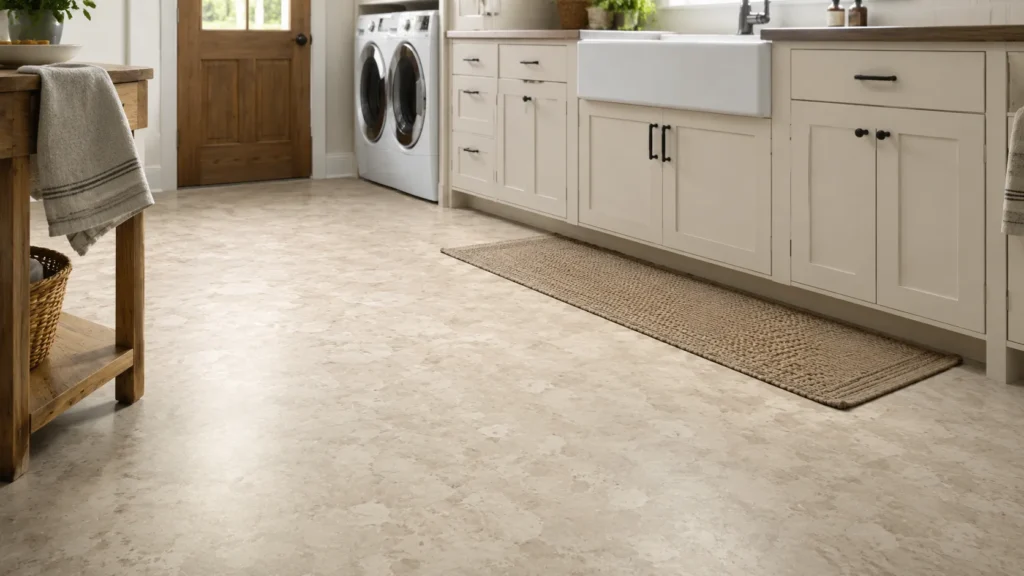
Linoleum Flooring
Linoleum flooring is a resilient flooring material made from natural ingredients such as linseed oil, wood flour, cork dust, and mineral fillers. Many homeowners confuse linoleum with vinyl, but they are different materials.
Linoleum is durable, comfortable underfoot, and often chosen by homeowners who want a more natural flooring option.
Marmoleum Flooring
Marmoleum flooring is a well-known linoleum product category. It is often used in homes, schools, healthcare spaces, and commercial interiors because it is durable and available in many colors.
Pros of Linoleum Flooring
- Made from natural materials
- Durable with proper care
- Comfortable underfoot
- Available in sheets and tiles
- Good for kitchens, hallways, and utility rooms
Cons of Linoleum Flooring
- Needs proper installation
- Seams can be vulnerable to moisture
- May require sealing depending on product
- Not as common as vinyl
- Can be damaged by standing water if neglected
Expert Tip
Linoleum can perform well, but installation quality matters. Seams, edges, and moisture exposure need attention. In wet rooms, sheet vinyl or tile may be safer unless linoleum is installed and sealed correctly.
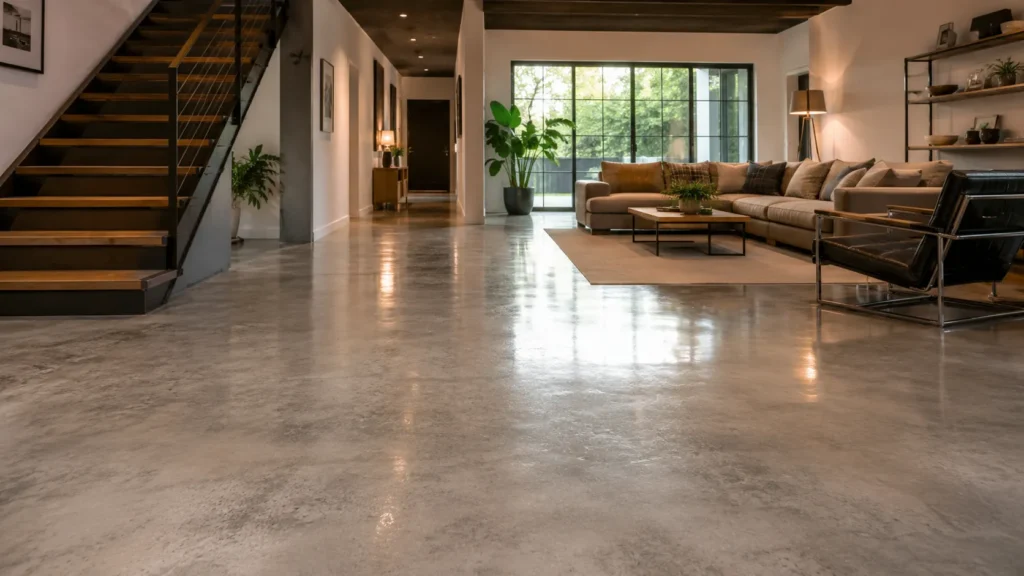
Concrete Flooring
Concrete flooring is common in garages, basements, workshops, modern interiors, and commercial spaces. It can be polished, stained, sealed, or coated.
Concrete is extremely strong, but it is also hard, cold, and unforgiving underfoot.
Common Types of Concrete Flooring
Polished concrete flooring is ground and polished to create a smooth finished surface.
Epoxy flooring uses a coating system over concrete and is common in garages, workshops, and commercial spaces.
Garage floor coating includes epoxy, polyaspartic, polyurethane, or other protective coating systems.
Pros of Concrete Flooring
- Very durable
- Easy to clean when sealed
- Good for garages and basements
- Modern appearance
- Handles heavy use well
Cons of Concrete Flooring
- Hard underfoot
- Can feel cold
- Can crack over time
- Needs sealing or coating
- Moisture vapor can damage coatings
Expert Tip
Before applying epoxy or garage floor coating, test the concrete for moisture vapor. Many coating failures happen because moisture pushes from below the slab and breaks the bond.
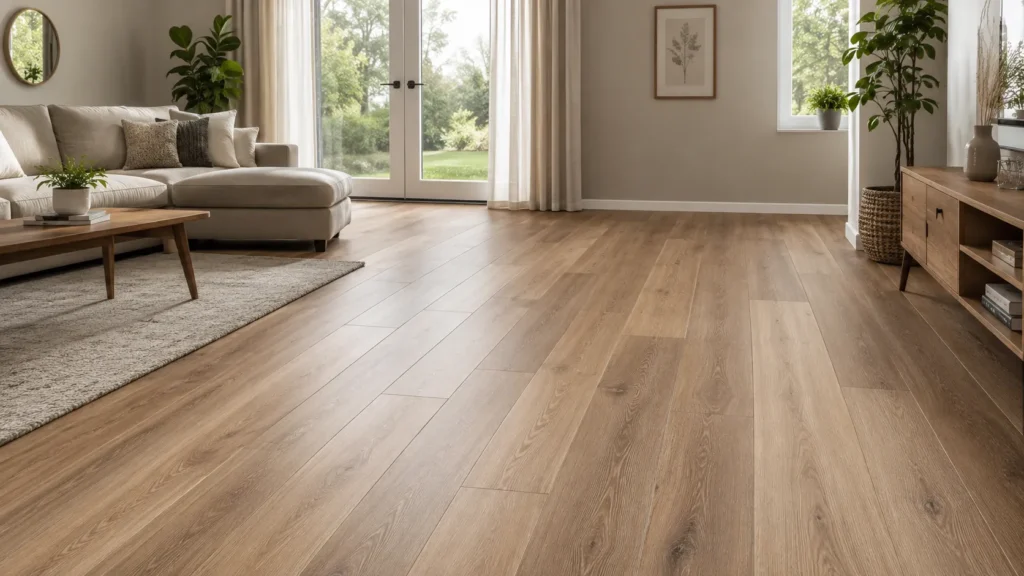
Laminate Flooring
Laminate flooring is a multi-layer flooring product designed to look like wood, stone, or tile. It is popular because it gives homeowners an attractive look at a lower cost than hardwood or tile.
Laminate works best in living rooms, bedrooms, hallways, home offices, and rental properties. Some modern laminate products offer improved water resistance, but standard laminate is still not the safest choice for wet bathrooms or damp basements.
Pros of Laminate Flooring
- Affordable
- Scratch-resistant
- Many wood-look styles
- Easy to clean
- DIY-friendly click-lock installation
- Good for dry rooms and rentals
Cons of Laminate Flooring
- Cannot be refinished
- Moisture can damage the core
- May sound hollow without good underlayment
- Lower long-term value than hardwood
- Damaged boards can be difficult to repair invisibly
Expert Tip
Before installing laminate, check subfloor flatness. Laminate locking joints can separate or break if the floor underneath is uneven. Good underlayment also helps reduce hollow sound.
Feature-Based Flooring Types
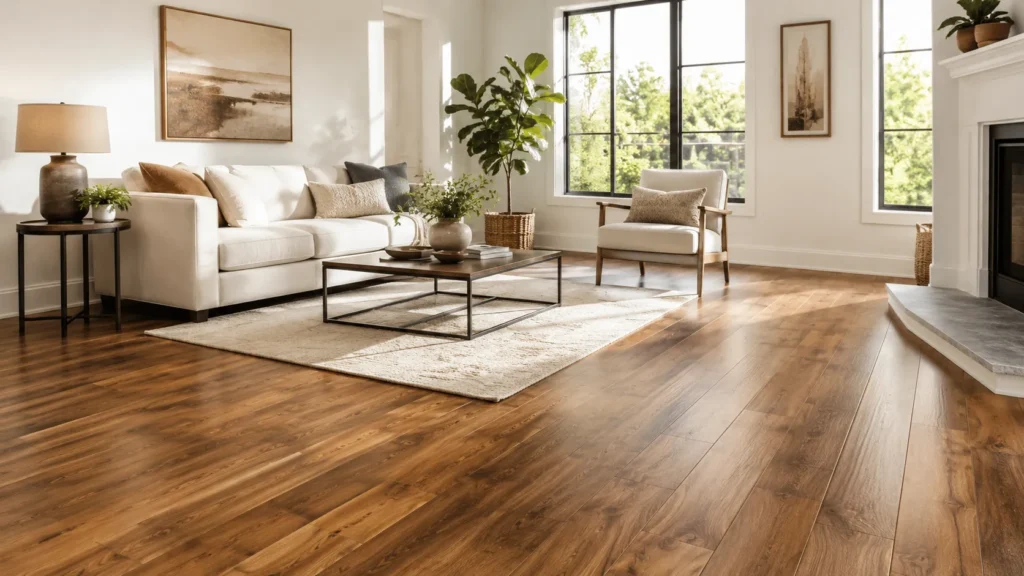
Sometimes homeowners do not search by material. They search by need. That is why feature-based flooring types are important.
Waterproof Flooring
Waterproof flooring is best for bathrooms, kitchens, basements, laundry rooms, mudrooms, and pet homes. Common options include waterproof vinyl, SPC, WPC, tile, and some hybrid flooring.
Resilient Flooring
Resilient flooring has some flexibility underfoot. Vinyl and linoleum are common resilient flooring types.
Scratch-Resistant Flooring
Scratch-resistant flooring is useful for pets, kids, furniture movement, and high-traffic rooms. Good options include tile, quality laminate, SPC, and some vinyl products.
Pet-Friendly Flooring
Pet-friendly flooring should resist scratches, stains, moisture, and odors. LVP, SPC, tile, waterproof laminate, and carpet tiles are common choices.
Low-Maintenance Flooring
Low-maintenance flooring should be easy to sweep, mop, and protect. Vinyl, tile, laminate, sealed concrete, and some linoleum floors fit this need.
Slip-Resistant Flooring
Slip-resistant flooring matters in bathrooms, laundry rooms, kitchens, entries, and homes with older adults or children. Textured tile, slip-rated vinyl, rubber, and some matte finishes can help.
Best Flooring Types by Room
| Room | Best Flooring Types |
| Kitchen | Vinyl, tile, linoleum, waterproof laminate |
| Bathroom | Porcelain tile, ceramic tile, vinyl, sheet vinyl |
| Basement | Vinyl, SPC, concrete, epoxy, tile |
| Bedroom | Carpet, hardwood, laminate, cork |
| Living room | Hardwood, laminate, vinyl, carpet |
| Laundry room | Tile, sheet vinyl, waterproof vinyl |
| Garage | Epoxy, garage floor coating, sealed concrete |
| Pet homes | Vinyl, tile, SPC, waterproof laminate, carpet tile |
| High-traffic areas | Tile, vinyl, SPC, laminate, concrete |
Cost and Installation Considerations
Flooring cost is not only the price of the material. A complete budget should include:
- Flooring material
- Labor
- Old flooring removal
- Subfloor repair
- Moisture barrier
- Underlayment
- Adhesive or mortar
- Trim and transitions
- Waste factor
- Stairs or complex cuts
- Warranty requirements
A cheaper floor can become expensive if the subfloor is not ready. For example, installing click-lock flooring over an uneven subfloor can cause movement, broken locking joints, noise, and gaps.
Common Flooring Mistakes to Avoid
- Choosing flooring only by appearance
- Ignoring moisture levels
- Skipping subfloor preparation
- Buying the cheapest product without checking thickness or warranty
- Installing wood flooring in wet rooms
- Using the wrong underlayment
- Forgetting expansion gaps
- Ignoring pets, kids, and heavy traffic
- Not checking cleaning requirements
- Assuming all “waterproof” claims mean the whole installation is waterproof
Final Expert Recommendation
For most homeowners, the best flooring type depends on the room:
- Choose hardwood flooring for dry rooms where beauty and long-term value matter.
- Choose vinyl flooring for moisture-prone, busy, pet-friendly, and family-friendly spaces.
- Choose tile flooring for bathrooms, kitchens, laundry rooms, and entryways.
- Choose carpet flooring for bedrooms and comfort-focused rooms.
- Choose linoleum flooring for a durable, natural resilient floor.
- Choose concrete flooring for garages, basements, workshops, and modern interiors.
- Choose laminate flooring for budget-friendly wood-look floors in dry rooms.
Before buying any flooring, check moisture, subfloor condition, room use, traffic, pets, kids, cleaning needs, repairability, warranty, and installation method.
FAQ Section
What are the main types of flooring?
The main types of flooring are hardwood, vinyl, tile, carpet, linoleum, concrete, and laminate. Each type has different strengths for moisture resistance, durability, comfort, cost, installation, and maintenance.
Which flooring type is best for most homes?
Vinyl, laminate, tile, hardwood, and carpet are common choices for most homes. The best option depends on the room. Vinyl and tile work well in wet areas, hardwood works best in dry living spaces, and carpet is useful for bedrooms.
What is the most durable flooring type?
Tile, polished concrete, epoxy, quality vinyl, and some laminate products are among the most durable flooring types. Durability depends on product quality, installation, subfloor condition, and maintenance.
What flooring is best for bathrooms?
Porcelain tile, ceramic tile, sheet vinyl, and waterproof vinyl flooring are good bathroom options because they handle moisture better than hardwood, carpet, or standard laminate.
What flooring is best for pets?
Pet-friendly flooring options include vinyl, SPC, porcelain tile, waterproof laminate, and carpet tile. Choose flooring that resists scratches, stains, moisture, and odors.
Is vinyl flooring better than laminate flooring?
Vinyl is usually better for kitchens, bathrooms, basements, and laundry rooms because it handles moisture better. Laminate is often better for budget-friendly wood-look flooring in dry rooms.
Is hardwood flooring worth it?
Hardwood flooring can be worth it in dry rooms where natural beauty, long-term value, and refinishing potential matter. It is not the best choice for wet bathrooms or damp basements.
What is the easiest flooring to maintain?
Vinyl, tile, laminate, sealed concrete, and some linoleum floors are among the easiest to maintain. Carpet and hardwood usually require more care.