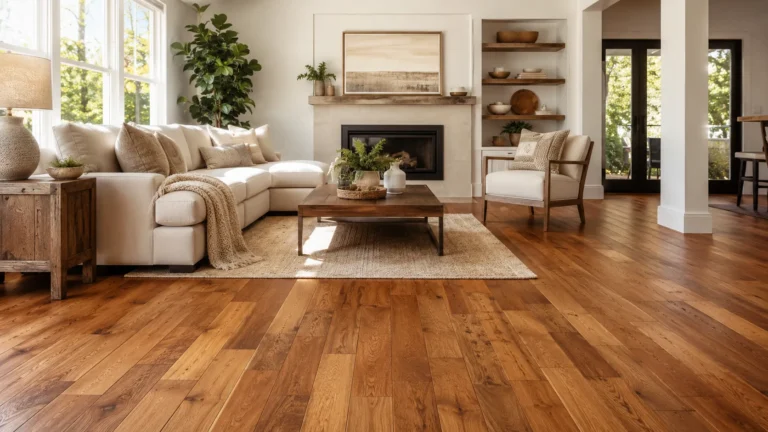
Parquet flooring is a decorative wood flooring style made from small wood pieces arranged in geometric patterns. Instead of long straight planks, parquet floors use blocks, tiles, or strips to create designs such as herringbone, chevron, basket weave, mosaic, and Versailles.
Quick answer: Parquet flooring is a patterned wood floor made from small pieces of wood arranged into geometric designs. It can be made from solid hardwood, engineered wood, laminate, or vinyl-look materials. It looks elegant and timeless, but installation, repair, and refinishing usually require more care than standard plank flooring.
From field experience, parquet flooring works best when the subfloor is flat, the room is dry, and the pattern is planned carefully before installation. Most problems happen when homeowners choose the pattern only for looks and ignore moisture, subfloor condition, adhesive, layout direction, and long-term repair needs.
Parquet Flooring Comparison Table
| Feature | Parquet Flooring |
| Flooring style | Geometric patterned flooring |
| Common materials | Solid wood, engineered wood, laminate, vinyl-look products |
| Popular patterns | Herringbone, chevron, basket weave, mosaic, Versailles |
| Best rooms | Living rooms, dining rooms, bedrooms, hallways, entryways |
| Avoid in | Wet bathrooms, damp basements, laundry rooms |
| Main advantage | Decorative, elegant, high-design appearance |
| Main concern | More complex installation and repair |
| Cleaning | Sweep, vacuum, and damp-mop carefully |
| Refinishing | Possible with real wood parquet, but more difficult than straight planks |
What Is Parquet Flooring?
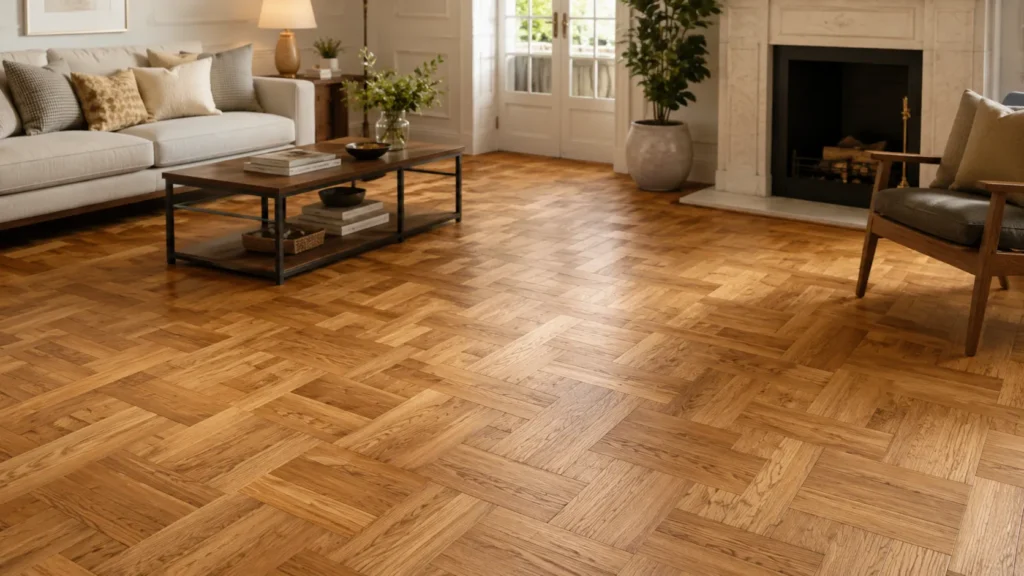
Parquet flooring is a flooring design made by arranging small wood pieces into a repeating pattern. Traditional parquet floors were made from real hardwood blocks. Modern parquet can also come as prefinished tiles, engineered parquet, laminate parquet, or vinyl products with a parquet-style design.
The important point is this: parquet is a pattern style, not just one flooring material.
That means parquet flooring may be:
- Real solid hardwood
- Engineered wood
- Wood veneer over a core
- Laminate with a printed parquet image
- Vinyl flooring with a parquet look
- Tile designed to imitate parquet wood
Before buying, always check whether the floor is real wood, engineered wood, laminate, or vinyl. Each one performs differently.
What Is Parquet Flooring Made Of?
Parquet wood flooring is usually made from small pieces of hardwood joined into tiles or installed individually. Oak is one of the most common choices, but parquet can also be made from walnut, maple, cherry, ash, and other wood species.
Common parquet flooring materials include:
| Material | What It Means | Best For |
| Solid parquet flooring | Small blocks or tiles made from real solid wood | Traditional homes, premium rooms, refinishing potential |
| Engineered parquet flooring | Real wood veneer over a layered core | More stability than solid wood in some homes |
| Parquet laminate flooring | Printed parquet image over laminate core | Budget-friendly decorative look |
| Parquet vinyl flooring | Vinyl flooring with parquet-style design | Better moisture resistance than real wood |
| 12×12 parquet wood flooring | Square parquet tiles, often used in older homes | Repairs, restoration, or retro-style rooms |
Types of Parquet Flooring
Solid Parquet Flooring
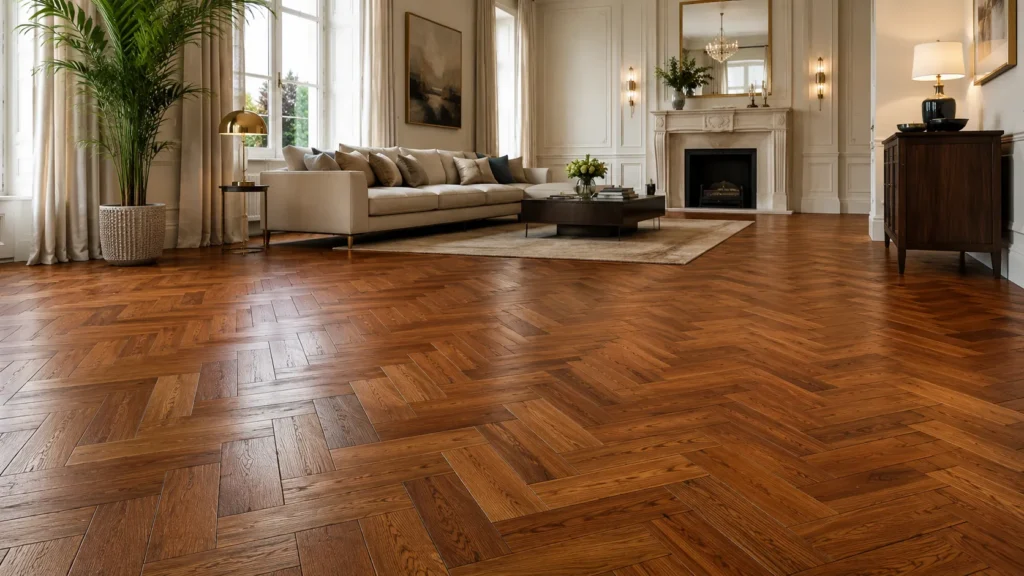
Solid parquet flooring is made from real wood pieces. It gives the most authentic wood look and can last a long time when maintained well.
The main benefit is that real wood parquet may be sanded and refinished. The main drawback is that it can move with humidity and is usually more expensive to install.
Best for:
- Living rooms
- Dining rooms
- Bedrooms
- Formal spaces
- Historic homes
- Dry rooms with stable humidity
Engineered Parquet Flooring
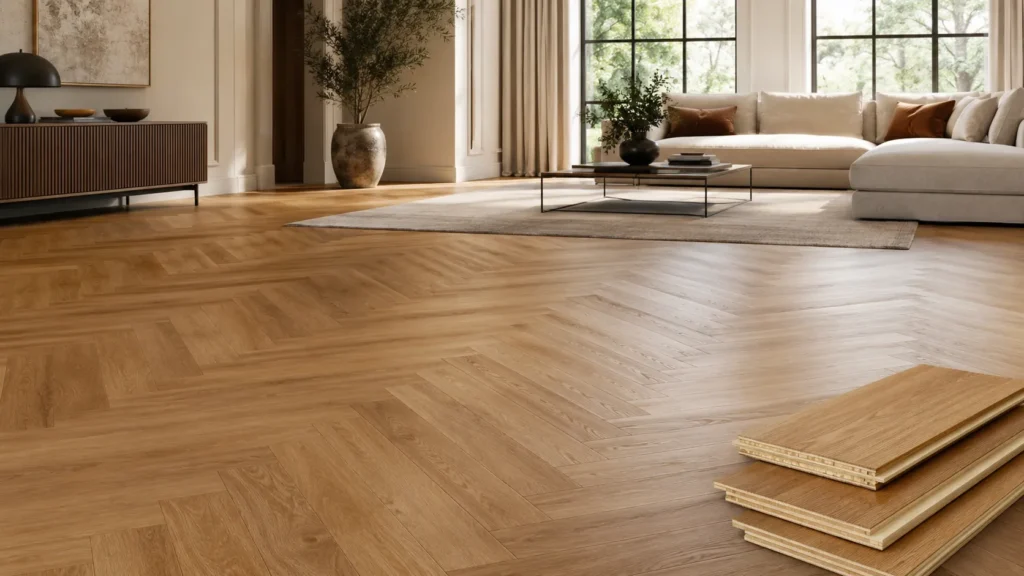
Engineered parquet flooring uses a real wood top layer over a plywood or high-density core. It is usually more stable than solid wood and may be easier to install.
It can be a good choice when you want the look of real parquet with better dimensional stability. Refinishing depends on the thickness of the top wood layer.
Best for:
- Living rooms
- Hallways
- Condos
- Apartments
- Homes with moderate humidity changes
- Some concrete slab installations if approved
Parquet Laminate Flooring
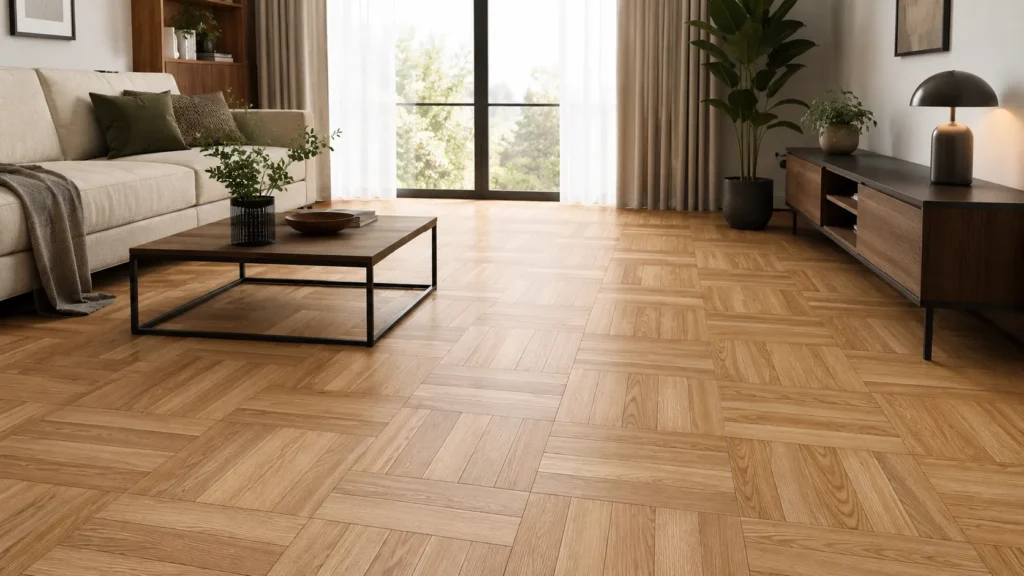
Parquet laminate flooring has a printed design layer that looks like parquet wood. It is not real wood, but it can be more affordable and easier to maintain.
This is a practical option when the look matters more than real wood value.
Best for:
- Budget projects
- Rentals
- Light-use rooms
- DIY-friendly upgrades
Parquet Vinyl Flooring
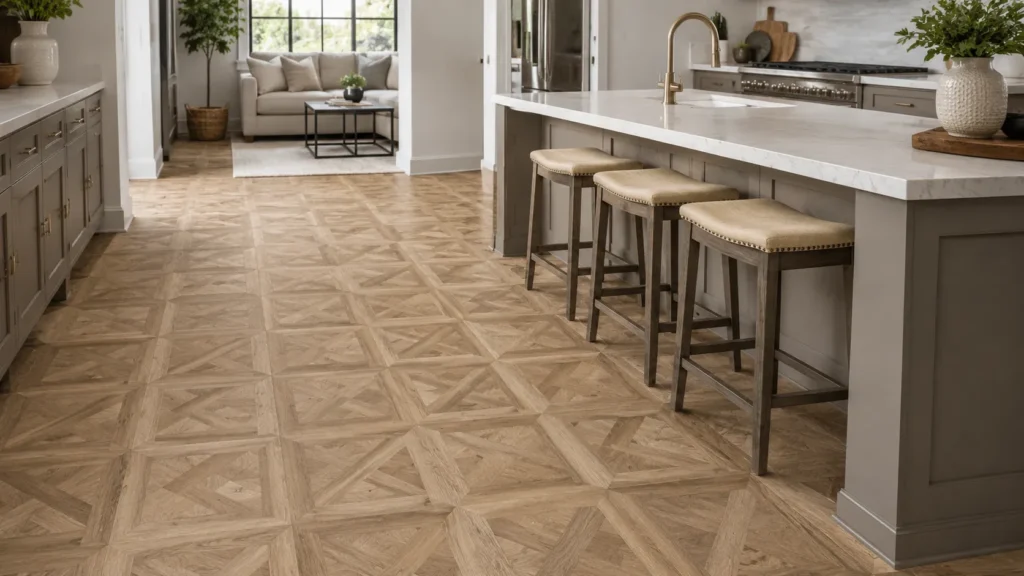
Parquet vinyl flooring is vinyl designed to look like parquet. It can be more water resistant than real wood, depending on the product.
It is useful in areas where homeowners want a parquet style but need more moisture tolerance.
Best for:
- Kitchens
- Apartments
- Rental properties
- Some lower-maintenance spaces
- Areas where real wood is risky
Parquet Hardwood Flooring
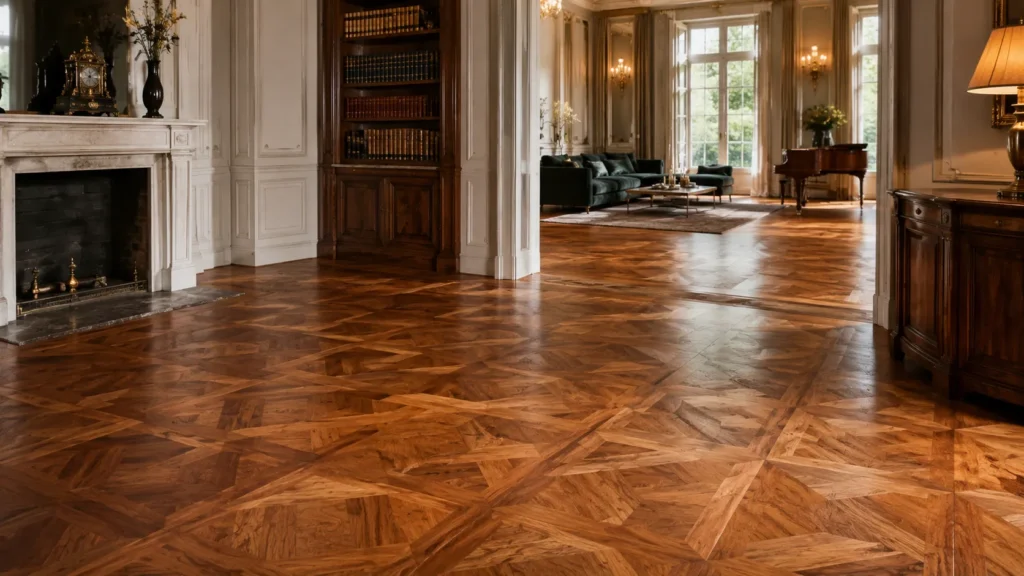
Parquet hardwood flooring is the traditional version of parquet. It uses real hardwood arranged in decorative patterns.
It is one of the most elegant options, but it needs proper installation, regular care, and moisture control.
Popular Parquet Floor Patterns
Parquet floor patterns are one of the main reasons homeowners choose this style.
Herringbone Parquet Flooring
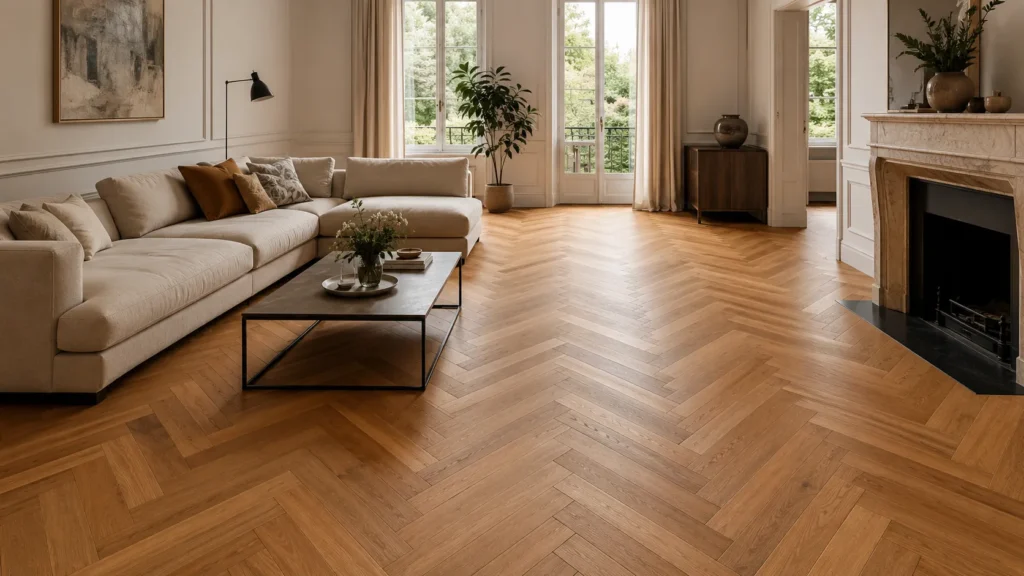
Herringbone parquet flooring uses rectangular pieces installed in a broken zigzag pattern. The ends of the planks meet at straight angles.
It is one of the most popular and timeless parquet patterns.
Best for:
- Living rooms
- Hallways
- Dining rooms
- Entryways
- Modern and traditional interiors
Chevron Parquet Flooring
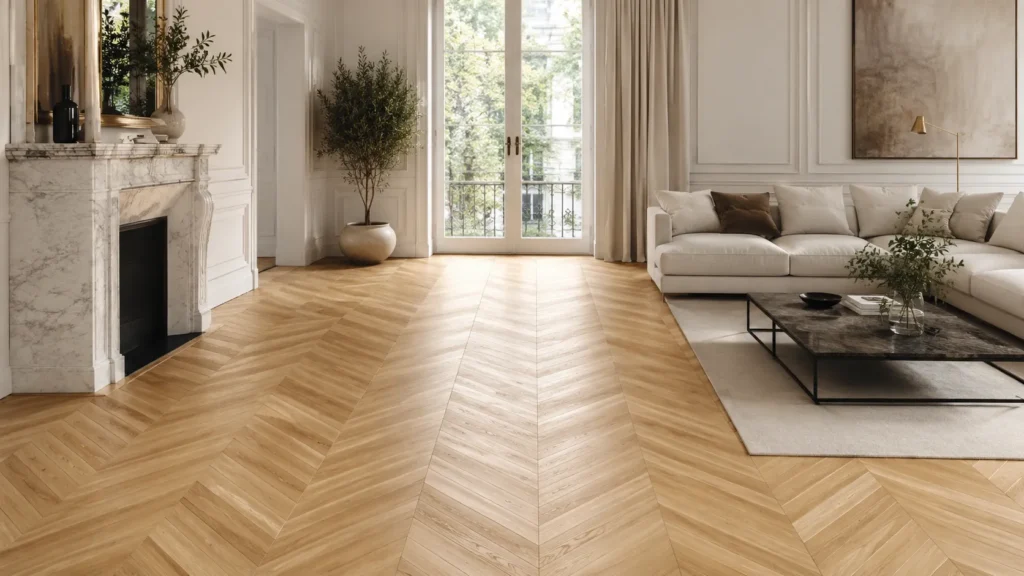
Chevron looks similar to herringbone, but the plank ends are cut at an angle so they meet in a clean V shape.
Chevron usually looks more formal and sharp than herringbone. It often requires more precise cutting and installation.
Basket Weave Parquet
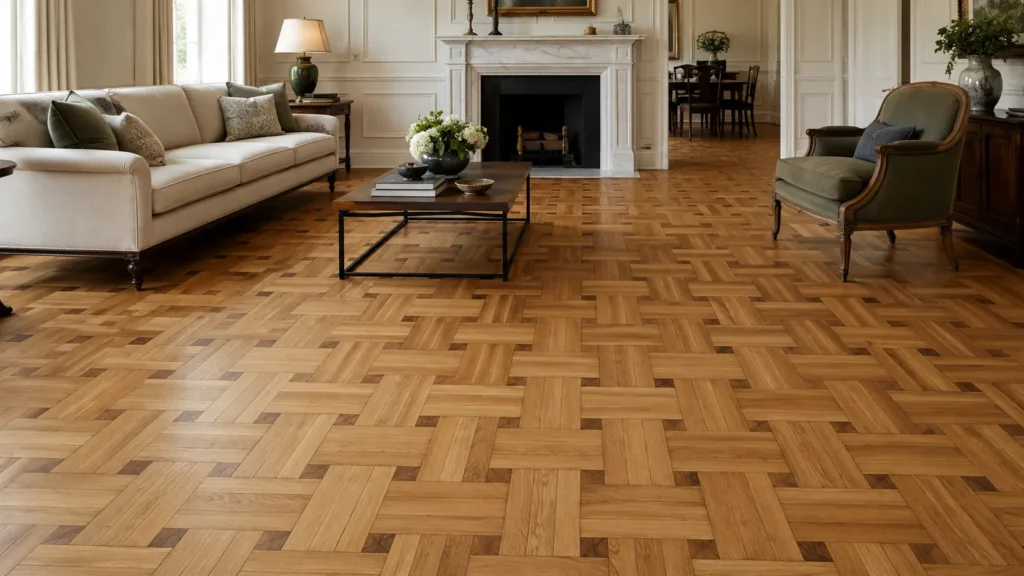
Basket weave parquet uses wood pieces arranged to look like woven strips. It creates a classic pattern and works well in traditional spaces.
Versailles Parquet Flooring
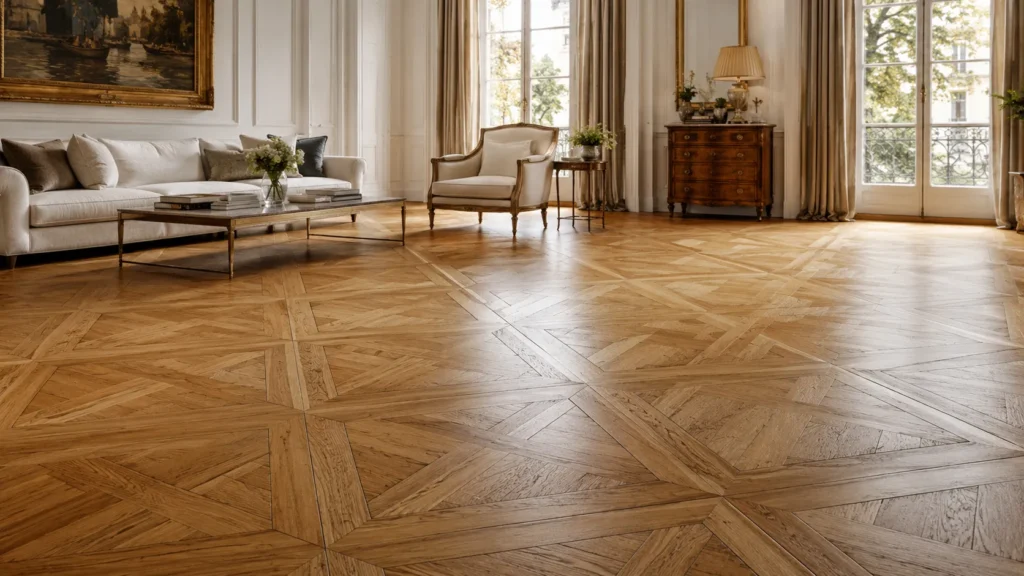
Versailles parquet flooring is a decorative panel-style pattern inspired by historic European floors. It has a more luxurious and formal appearance.
It can look beautiful in large rooms, but it is usually not the easiest or cheapest pattern to install.
Mosaic Parquet
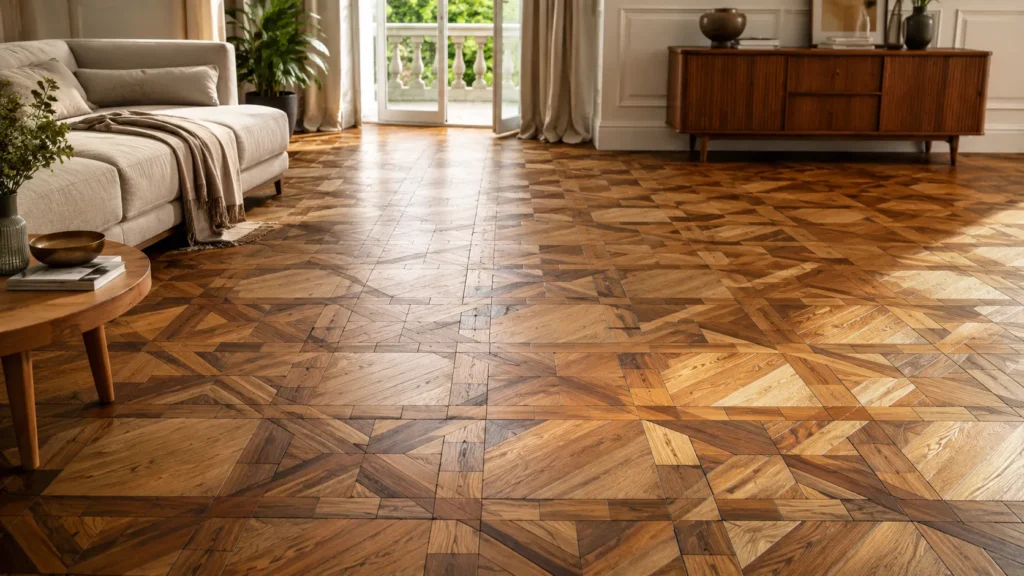
Mosaic parquet uses small wood pieces arranged in repeating square or geometric layouts. It is common in older parquet tiles.
Modern Parquet Flooring
Modern parquet flooring often uses cleaner colors, wider pattern spacing, matte finishes, white oak, light oak, or darker tones. Herringbone and chevron are especially popular in modern interiors.
Oak Parquet Flooring
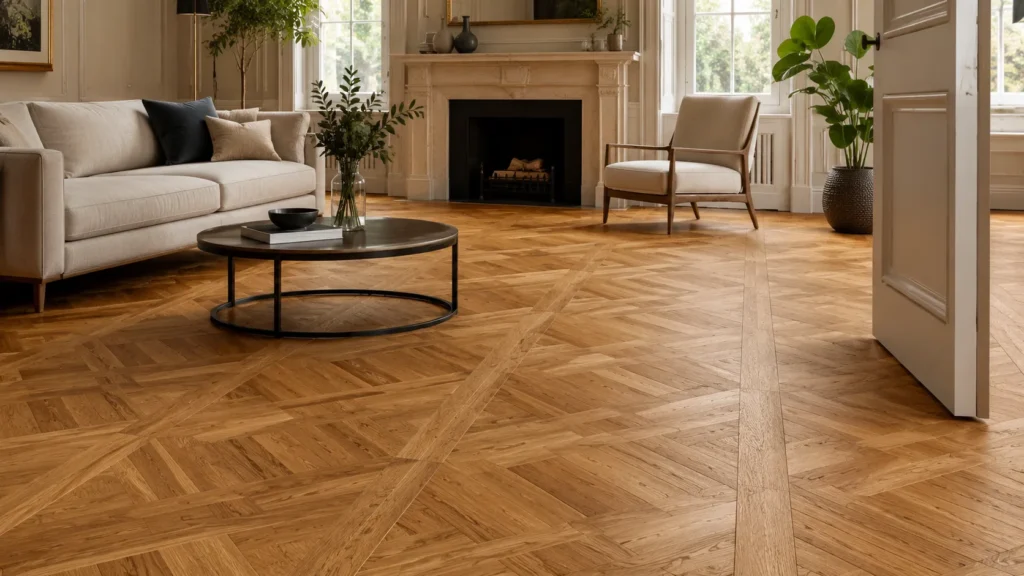
Oak parquet flooring is one of the safest choices for many homeowners. Oak is durable, widely available, and works with many stains and finishes.
White Oak Parquet Flooring
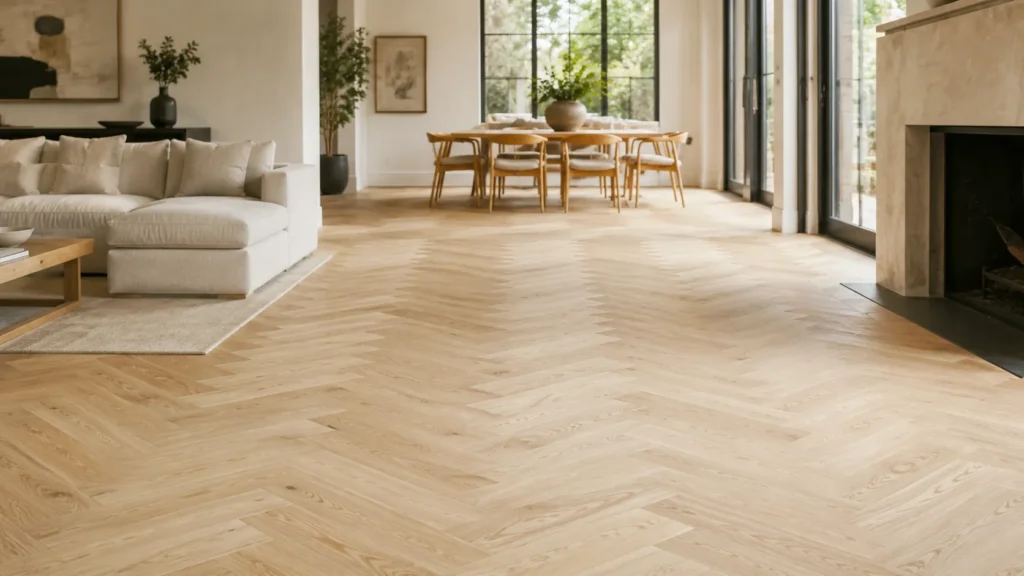
White oak parquet flooring has a calmer grain and a more modern look than some traditional red oak floors. It works well with natural, neutral, and light finishes.
Dark Parquet Flooring
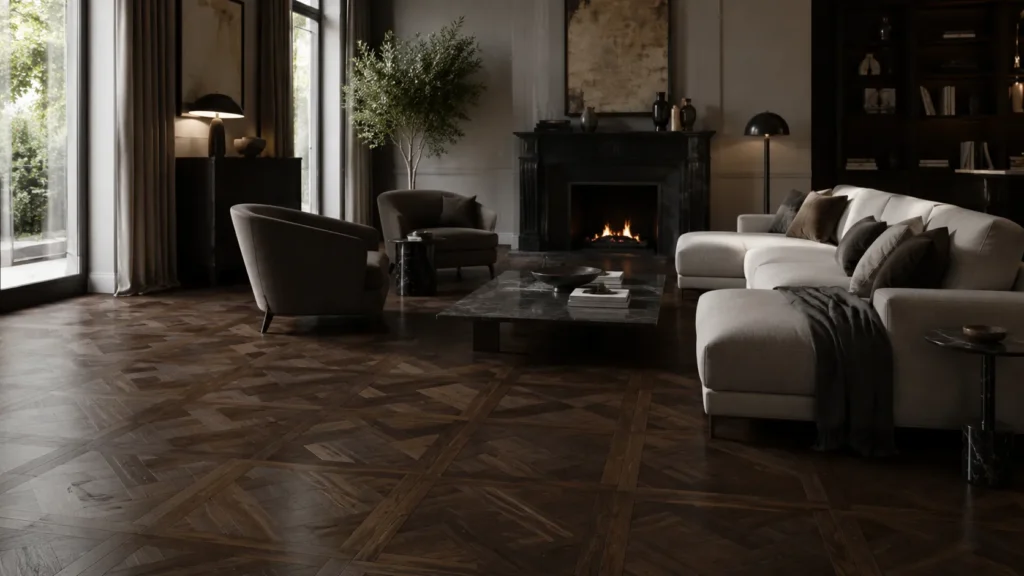
Dark parquet flooring creates a dramatic, high-end look. The downside is that it may show dust, scratches, pet hair, and dents more easily than medium-tone floors.
Pros and Cons of Parquet Flooring
Pros of Parquet Flooring
Parquet flooring has several advantages:
- Elegant geometric appearance
- Strong design impact
- Works in traditional and modern homes
- Can add character to plain rooms
- Available in many patterns
- Available in wood, engineered, laminate, and vinyl options
- Real wood versions may be refinished
- Good for feature areas and formal rooms
Cons of Parquet Flooring
Parquet flooring also has drawbacks:
- Installation is more complex than straight planks
- Repair can be difficult because of pattern matching
- Moisture can damage real wood parquet
- Refinishing is harder than standard hardwood
- Patterned floors can look busy in small rooms
- Cheap parquet tiles may not last well
- Matching old parquet can be difficult
- Dark finishes may show wear more easily
One common mistake homeowners make is choosing a complex pattern for a small or busy room. Parquet already has strong visual movement, so it works best when the room design gives it space to stand out.
Best Rooms for Parquet Flooring
| Room | Is Parquet Flooring Good? | Notes |
| Living room | Yes | Great for design impact |
| Dining room | Yes | Elegant and formal look |
| Bedroom | Yes | Works well with softer decor |
| Hallway | Yes | Herringbone can create direction and movement |
| Entryway | Sometimes | Use durable finish and protect from moisture |
| Kitchen | Sometimes | Engineered or vinyl parquet may be safer |
| Bathroom | Usually no | Real wood parquet is risky in wet rooms |
| Basement | Usually no for real wood | Moisture and concrete issues must be checked |
| Rental property | Sometimes | Laminate or vinyl parquet may be more practical |
| Pet homes | Sometimes | Choose durable finish and medium tones |
Before choosing parquet, check room size, sunlight, humidity, pets, kids, traffic, furniture layout, and cleaning habits.
Parquet Flooring Installation
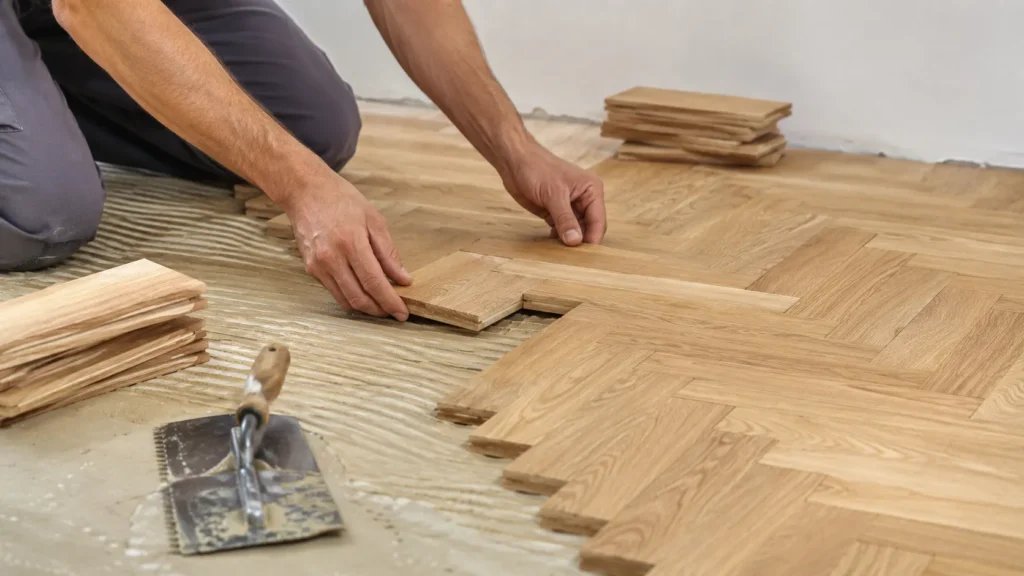
Parquet flooring installation is more detailed than installing standard straight planks. The pattern must be measured, centered, and aligned correctly.
In real installations, even a small layout mistake can make the pattern look crooked across the room.
Main Installation Methods
Glue-Down Installation
Glue-down is common for parquet tiles and engineered parquet. The adhesive must match the product and subfloor.
Best for:
- Parquet tiles
- Engineered parquet
- Concrete slabs when approved
- Stable professional installation
Nail-Down Installation
Nail-down installation may be used for some solid wood parquet systems, but it requires a suitable wood subfloor.
Best for:
- Approved solid wood parquet
- Plywood subfloors
- Professional installation
Floating Installation
Some modern parquet laminate or engineered parquet products use click-lock floating installation.
Best for:
- DIY-friendly products
- Rentals
- Laminate parquet
- Some engineered parquet systems
Subfloor Preparation
Before installation, check:
- Subfloor flatness
- Moisture level
- Concrete moisture
- Expansion gap requirements
- Adhesive compatibility
- Underlayment rules
- Product acclimation
- Room temperature and humidity
- Pattern layout and center lines
A parquet floor can fail or look uneven if the subfloor is not flat. Patterned floors make unevenness more visible than many standard plank floors.
Parquet Flooring Cost
Parquet flooring cost varies widely because pattern, material, labor, and subfloor preparation all affect the final price.
Main cost factors include:
- Solid vs engineered vs laminate vs vinyl
- Pattern complexity
- Wood species
- Tile size
- Finish type
- Installation method
- Labor cost
- Subfloor repair
- Adhesive
- Moisture barrier
- Old floor removal
- Trim and transitions
- Waste factor
A simple laminate parquet floor may be budget-friendly. A custom solid hardwood Versailles or chevron parquet floor can be much more expensive.
How to Clean Parquet Floors
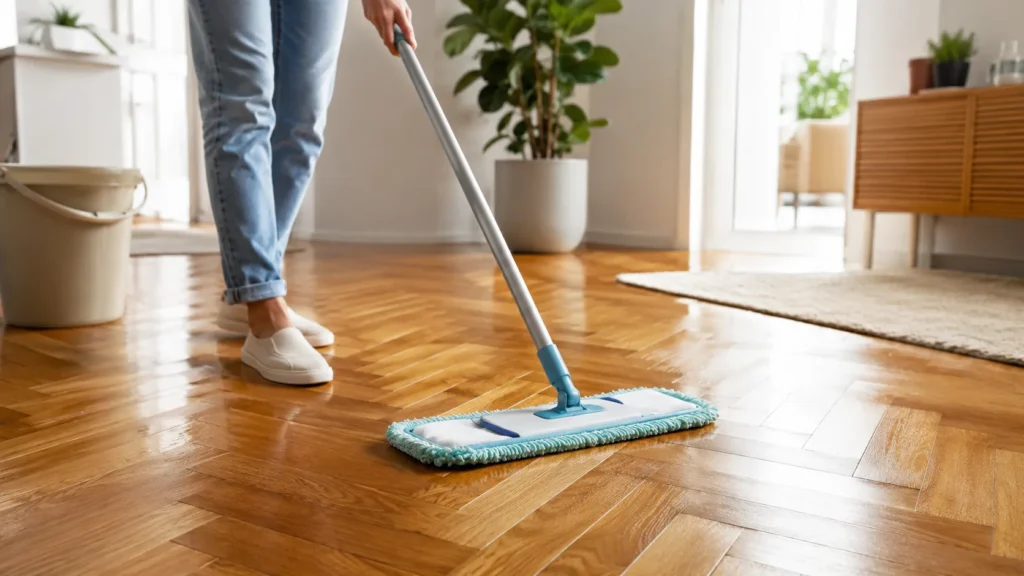
The best way to clean parquet floors is to remove grit often and use very little moisture.
Basic cleaning steps:
- Sweep or vacuum with a soft floor attachment.
- Wipe spills immediately.
- Use a slightly damp microfiber mop.
- Use a cleaner approved for wood or your floor’s finish.
- Avoid steam mops.
- Avoid soaking the floor.
- Use felt pads under furniture.
- Use rugs near entryways.
For real parquet wood flooring, water is the biggest cleaning risk. Moisture can enter the seams between small wood pieces and cause swelling, lifting, or discoloration.
How to Repair Parquet Flooring Scratches
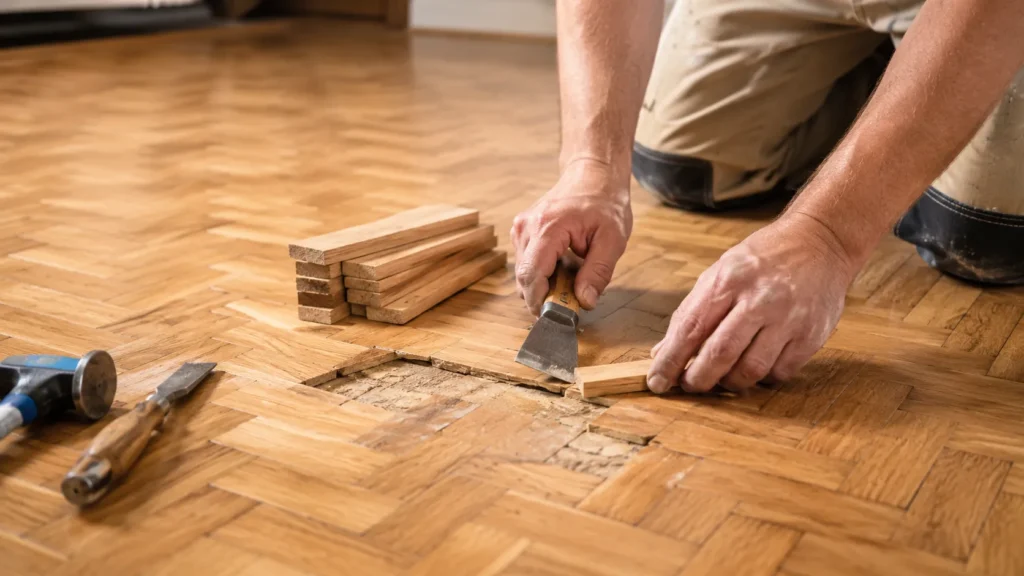
Minor parquet scratches can often be improved without replacing the floor.
Options include:
- Wood floor touch-up marker
- Scratch repair kit
- Light buffing
- Screen and recoat
- Replacing individual parquet blocks
- Professional sanding and refinishing
For deep scratches, repair is harder because parquet pieces run in different grain directions. Sanding one area too aggressively can make the repair stand out.
Refinishing Parquet Floors
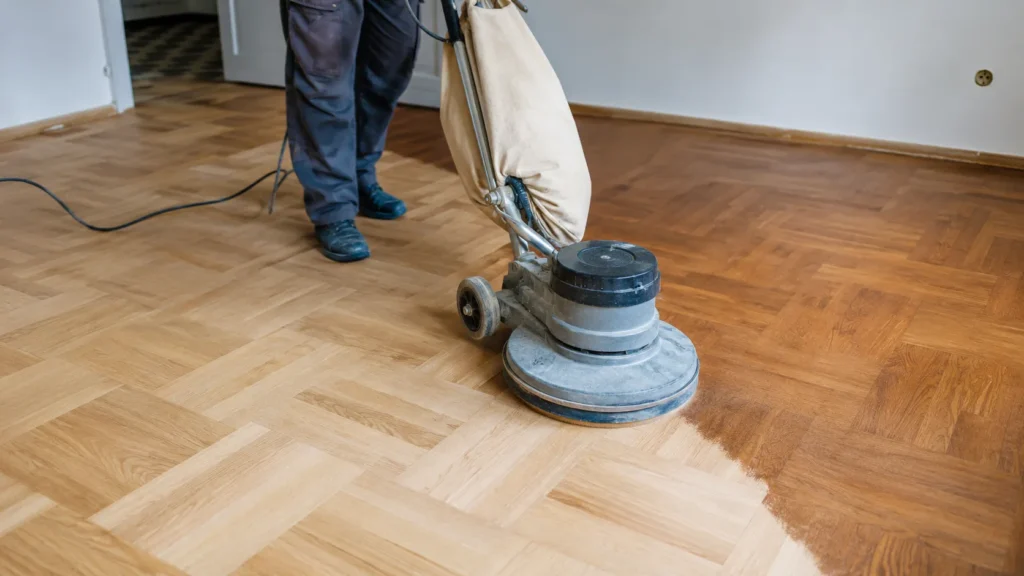
Refinishing parquet floors is possible when the floor is real wood and thick enough to sand. However, it is more difficult than refinishing standard hardwood planks.
Why refinishing parquet is harder:
- Wood grain runs in multiple directions
- Small blocks can sand unevenly
- Old adhesives may loosen
- Thin veneer parquet may not survive sanding
- Pattern matching is difficult
- Edges and corners may require hand sanding
A professional may use an orbital sander parquet floor method or a careful multi-directional sanding process to reduce cross-grain marks.
How to Refinish Parquet Floors Without Sanding
You may be able to refinish parquet floors without sanding if the damage is only in the finish and the wood itself is not deeply scratched.
Common no-sanding options include:
- Deep cleaning
- Light screening
- Buffing
- Recoating with compatible finish
- Using a wood floor restorer
- Spot repair for small scratches
This works best when the floor is dull but not deeply damaged. If the parquet has deep scratches, water stains, loose blocks, or worn-through finish, sanding or block replacement may be needed.
Painted Parquet Floor and Parquet Floor Stencil
A painted parquet floor or parquet floor stencil can be an option when the floor is too damaged for a natural wood look but still structurally sound.
This is usually a design choice, not the first repair choice for valuable hardwood parquet.
Painting may make sense when:
- The parquet is badly stained
- Matching replacement blocks is difficult
- The home has a creative or vintage style
- The floor is not valuable enough to refinish naturally
Avoid painting high-value hardwood parquet before getting a professional opinion.
Common Mistakes to Avoid
Avoid these parquet flooring mistakes:
- Choosing pattern before checking room size
- Ignoring subfloor flatness
- Installing real wood parquet in wet rooms
- Using the wrong parquet floor adhesive
- Skipping moisture testing
- Assuming all parquet can be refinished
- Wet mopping parquet floors
- Choosing dark parquet without considering dust and scratches
- Installing complex patterns as a beginner DIY project
- Forgetting that matching old parquet can be difficult
When to Hire a Professional
Hire a professional parquet floor installer if:
- The pattern is herringbone, chevron, or Versailles
- The subfloor needs leveling
- You are installing over concrete
- You need glue-down installation
- The floor is expensive solid wood
- You want to refinish old parquet
- Blocks are loose or missing
- You need color matching
- The room has many angles or doorways
DIY may be realistic for click-lock laminate parquet or simple prefabricated tiles, but traditional parquet hardwood flooring is usually better handled by an experienced installer.
Final Expert Recommendation
Parquet flooring is best for homeowners who want a decorative floor with character, pattern, and long-term style. It works especially well in living rooms, dining rooms, hallways, bedrooms, and formal spaces.
Choose solid parquet flooring if you want authenticity and refinishing potential. Choose engineered parquet flooring if you want real wood with better stability. Choose parquet laminate flooring or parquet vinyl flooring if budget, water resistance, or easy maintenance matters more than real wood.
The best parquet floor is not just the most beautiful pattern. It is the one that fits your room size, subfloor, moisture level, budget, lifestyle, maintenance habits, and long-term repair expectations.
FAQ
What is parquet flooring?
Parquet flooring is a decorative flooring style made from small wood pieces arranged in geometric patterns. It can be made from solid hardwood, engineered wood, laminate, or vinyl-look materials.
Is parquet flooring real wood?
Traditional parquet flooring is real wood, but modern parquet can also be engineered wood, laminate, or vinyl. Always check the product material before buying.
What are the main types of parquet flooring?
The main types include solid parquet flooring, engineered parquet flooring, parquet laminate flooring, parquet vinyl flooring, and parquet hardwood flooring.
What are common parquet floor patterns?
Common parquet floor patterns include herringbone, chevron, basket weave, mosaic, Versailles, Bordeaux, and Chantilly.
Is herringbone the same as parquet?
Herringbone is a type of parquet pattern. Parquet is the broader category, while herringbone is one specific layout.
Is parquet flooring expensive?
Parquet flooring can be expensive if it uses solid hardwood, custom patterns, or professional glue-down installation. Laminate and vinyl parquet options are usually more affordable.
How do you clean parquet floors?
Sweep or vacuum regularly, wipe spills quickly, and use a slightly damp microfiber mop with a cleaner approved for the floor finish. Avoid steam mops and wet mopping.
Can parquet floors be refinished?
Real wood parquet floors can often be refinished if they are thick enough. Thin veneer parquet, laminate parquet, and vinyl parquet usually cannot be sanded like solid wood.
How do you repair parquet flooring scratches?
Minor scratches can be treated with touch-up markers, repair kits, buffing, or recoating. Deep scratches may require replacing individual blocks or professional refinishing.
Is parquet flooring good for kitchens?
Parquet can work in some kitchens if moisture is controlled, but real wood parquet is not ideal for frequent spills. Engineered, vinyl, or tile-look parquet may be safer.