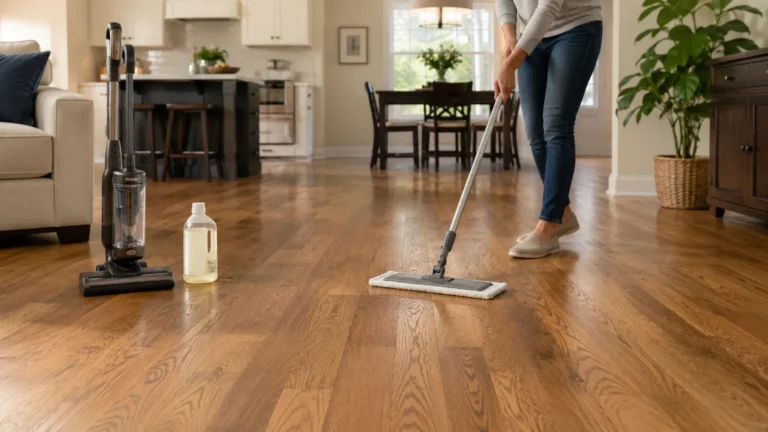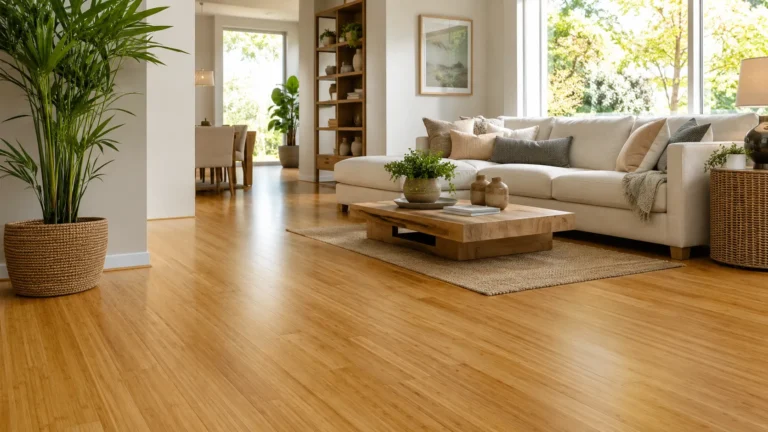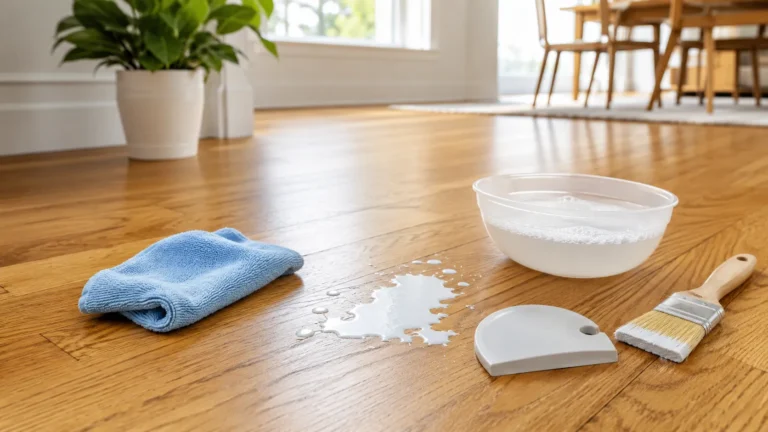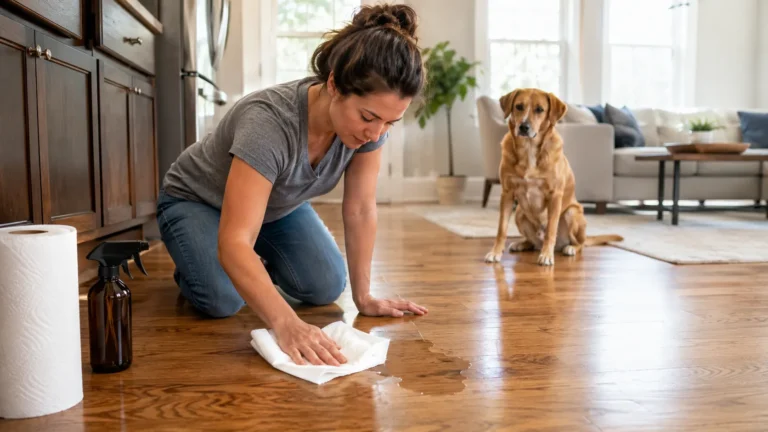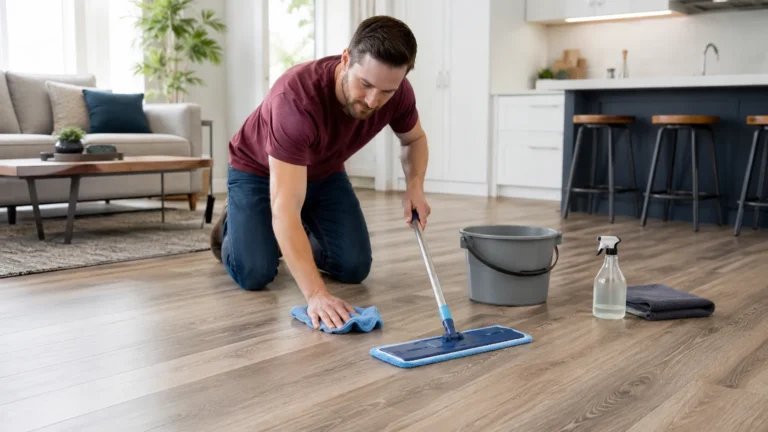
To clean bamboo floors without streaks, first remove grit with a soft broom, microfiber dust mop or hard-floor vacuum. Clean with a fresh microfiber mop lightly dampened with a pH-neutral bamboo or hardwood-floor cleaner. Work in small sections, follow the grain and dry-buff immediately. Avoid steam, wet mopping, oil soap, wax and abrasive pads unless the flooring manufacturer approves them.
Quick Summary Box
| Question | Quick answer |
|---|---|
| Best way to clean bamboo floors | Vacuum first, then lightly damp-mop |
| Best cleaner for bamboo floors | pH-neutral bamboo or hardwood cleaner |
| Best mop for bamboo floors | Washable flat microfiber mop |
| How to prevent streaks | Use less cleaner and dry-buff immediately |
| Can bamboo floors be wet-mopped? | No, use only a barely damp mop |
| Can you steam-clean bamboo floors? | No, steam may damage the finish and seams |
| Should bamboo floors be waxed? | Usually not unless the manufacturer approves it |
| How often should they be cleaned? | Dust as needed, vacuum weekly and damp-mop weekly or biweekly |
How to Clean Bamboo Hardwood Floors Step by Step
Step 1: Remove loose dirt and grit
Sweep or vacuum before mopping. Dirt, sand, and small debris can act like sandpaper when walked on or pushed around with a mop.
Use a vacuum with:
- Hard-floor mode
- Soft brush attachment
- No rotating beater bar
- Clean wheels
This matters because bamboo floors can be durable, but the surface finish can still scratch.
Step 2: Spot clean spills first
Wipe spills as soon as possible with a soft cloth. Do not let water, pet accidents, juice, coffee, or cleaning liquid sit on the floor.
For sticky spots, spray a small amount of cleaner onto a cloth instead of spraying heavily across the floor.
Step 3: Use a barely damp microfiber mop
Lightly mist the mop pad or spray a small amount of cleaner onto the floor in sections. The mop should be damp, not wet.
A good test is simple: if the floor looks wet for more than a minute or two, you are using too much liquid.
Step 4: Mop with the grain
Mop in the direction of the bamboo grain when possible. This helps reduce streaks and makes the floor look cleaner, especially on dark or glossy finishes.
Step 5: Dry the floor
After mopping, use a clean dry microfiber pad or towel to remove leftover moisture. This is especially important near seams, edges, kitchen sinks, entry doors, and pet water bowls.
How to Clean Bamboo Floors Without Streaks
The best way to clean bamboo floors without streaks is to use less cleaner, keep the mop pad clean and dry the floor after mopping.
Follow these steps:
- Vacuum or dust-mop the floor thoroughly.
- Attach a clean microfiber pad to a flat mop.
- Lightly mist the pad with a pH-neutral cleaner.
- Mop with the bamboo grain in small sections.
- Replace or rinse the pad when it becomes dirty.
- Dry-buff each section with a clean microfiber cloth.
Streaks usually come from:
- Using too much cleaning product
- Mopping with a dirty pad
- Leaving moisture on the floor
- Using oil soap or waxy products
- Reusing dirty mop water
- Allowing cleaner to dry before buffing
- Using hard water that leaves mineral residue
Dark or glossy bamboo floors show residue more easily than lighter matte floors. More cleaner does not create more shine. It normally leaves a visible film.
Bamboo Flooring Care: Seven Essential Rules
Proper bamboo flooring care does not require aggressive cleaners or complicated equipment. The most important goal is protecting the factory finish while preventing moisture, grit and residue from damaging the surface.
Follow these seven basic rules:
- Remove loose grit before mopping.
- Use a clean microfiber mop rather than a rough sponge or brush.
- Choose a pH-neutral cleaner approved for bamboo or sealed hardwood.
- Apply only enough liquid to lightly dampen the mop pad.
- Wipe spills and pet accidents immediately.
- Avoid steam, soaking water, abrasive pads and harsh chemicals.
- Use entry mats and felt furniture pads to reduce scratches.
In real homes, most bamboo floor damage comes from repeated small mistakes rather than one cleaning session. Wet mopping, dirty mop pads, tracked-in grit and cleaner buildup can gradually dull the finish.
What You Need Before Cleaning Bamboo Floors
You do not need a complicated cleaning kit. In real homes, simple tools usually work best.
Use:
- Soft broom or dust mop
- Hard-floor vacuum
- Microfiber mop
- Clean microfiber cloths
- pH-neutral hardwood or bamboo floor cleaner
- Dry towel for spills
- Felt pads under furniture
- Entry mats near doors
Avoid using dirty mop pads. A dirty pad can drag grit across the surface and create fine scratches, especially on glossy or dark bamboo floors.
What Makes Bamboo Floors Different from Hardwood?
Many homeowners call them bamboo hardwood floors, but bamboo is technically a grass, not a hardwood tree. Still, bamboo flooring is usually cleaned and maintained much like hardwood because it has a finished surface that can scratch, dull, streak, or react badly to moisture.
From a flooring point of view, the finish matters more than the bamboo itself. Most bamboo floors have a factory-applied protective coating. That coating protects the floor from normal traffic, but it can be damaged by harsh cleaners, steam, abrasive pads, wax buildup, or repeated wet mopping.
Bamboo flooring may be:
- Solid bamboo flooring
- Engineered bamboo flooring
- Strand-woven bamboo flooring
- Horizontal bamboo
- Vertical bamboo
- Dark-stained or carbonized bamboo
For questions about wood finishes, scratches, moisture, and routine care, visit our Hardwood flooring FAQs.
Bamboo floors are cleaned in a similar way to hardwood floors, but they need extra care with moisture. If you also have wood floors in your home, you can read our guide on how to clean hardwood floor for a broader cleaning routine.
How to Deep Clean Bamboo Floors Safely
Deep cleaning bamboo floors should remove embedded dirt and cleaner residue without soaking the boards.
Step 1: Remove Furniture and Rugs
Move light furniture carefully and lift it rather than dragging it. Vacuum beneath rugs and along room edges.
Step 2: Vacuum Thoroughly
Use the hard-floor setting with the rotating brush turned off. Clean corners, seams and baseboard edges with a soft attachment.
Step 3: Spot-Clean Sticky Areas
Apply a small amount of pH-neutral cleaner to a microfiber cloth. Wipe sticky food, paw prints and light residue before mopping the full room.
Step 4: Damp-Mop in Small Sections
Lightly mist a fresh microfiber pad. The floor should not remain visibly wet.
Step 5: Change Dirty Pads
Do not continue using the same pad after it becomes gray or gritty. A dirty pad spreads residue and may scratch the finish.
Step 6: Dry-Buff the Floor
Use a clean, dry microfiber pad to remove moisture and cleaner residue.
Deep cleaning should not involve flooding the floor, steam cleaning, aggressive scrubbing or stripping chemicals.
How to Clean Engineered Hardwood Bamboo Floors
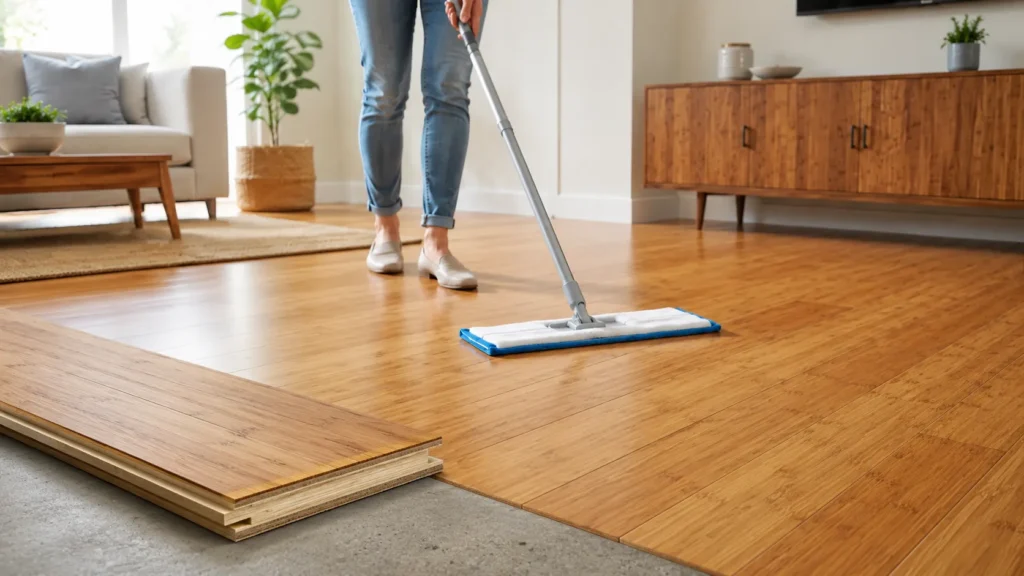
Engineered bamboo flooring usually has a bamboo wear layer over a plywood, fiberboard, or composite core. This structure can be stable, but it still needs careful moisture control.
To clean engineered hardwood bamboo floors:
- Use a dry or lightly damp cleaning method.
- Avoid soaking seams.
- Never pour cleaner directly onto the floor.
- Do not use steam mops.
- Dry edges and plank joints quickly.
- Check the manufacturer’s care guide before using polish or deep cleaner.
Engineered bamboo can be more sensitive at seams and edges because moisture may reach the core if liquid is left sitting. This is why kitchen spills, entryway snow, and pet water bowls need quick cleanup.
How to Clean Film Off of Bamboo Hardwood Floors
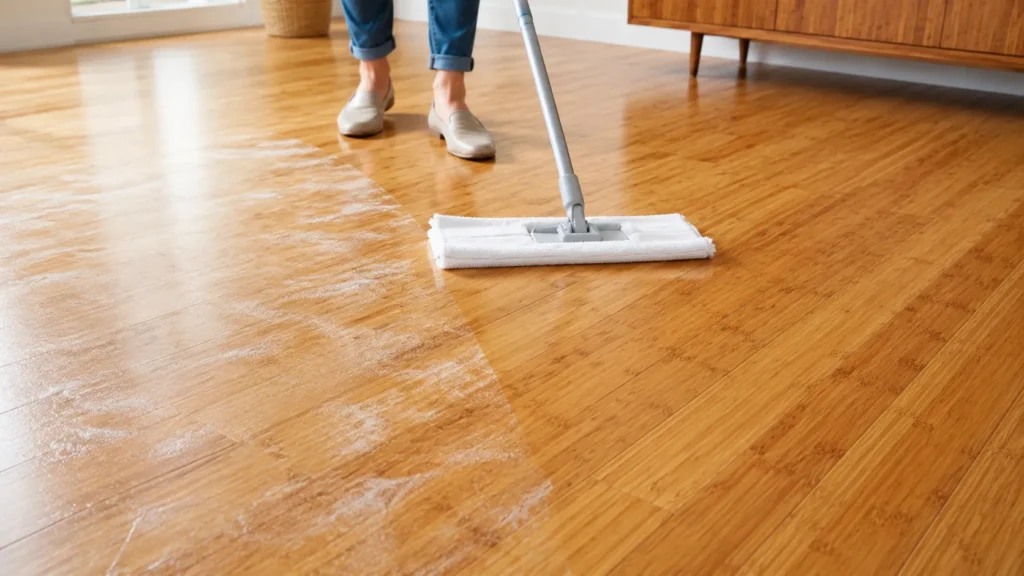
A cloudy or sticky film on bamboo floors usually comes from cleaner residue, oil soap, wax, too much polish, dirty mop water, hard water minerals, or repeated use of the wrong cleaning product.
To clean film off of bamboo hardwood floors:
- Dry dust the floor first.
- Use a fresh microfiber mop pad.
- Apply a pH-neutral hardwood or bamboo floor cleaner lightly.
- Mop a small test area first.
- Wipe with a barely damp clean cloth if residue remains.
- Dry the area fully with a microfiber towel.
Do not use vinegar as the first solution for film. Vinegar is acidic and may dull the protective finish over time. Also avoid abrasive scrub pads, bleach, ammonia, and steam.
If the film came from wax or polish buildup, regular cleaning may not remove it. In that case, check the flooring manufacturer’s instructions before using any polish remover or deep cleaner. Some bamboo floors cannot be safely stripped like traditional site-finished hardwood.
Bamboo Floor Cleaning Products: What Should You Use?
The safest bamboo floor cleaning products are designed for sealed hardwood or bamboo surfaces and have a neutral pH. Before using any product across the entire room, test it in a hidden location.
| Product | Recommendation | Reason |
|---|---|---|
| pH-neutral bamboo floor cleaner | Recommended | Cleans without leaving excessive alkalinity or acidity |
| Manufacturer-approved hardwood cleaner | Recommended | Designed for compatible sealed finishes |
| Microfiber cleaning pad | Recommended | Traps dust without abrasive scrubbing |
| Mild dish soap | Spot cleaning only | May help with small sticky spills when highly diluted |
| Vinegar solution | Avoid routine use | Acidity may dull some finishes |
| Oil soap | Usually avoid | Can leave sticky or cloudy residue |
| Wax or polish | Use only if approved | May build up on factory-finished bamboo |
| Bleach or ammonia | Avoid | Can discolor or damage the finish |
| Abrasive powder or rough pad | Avoid | May scratch or change the sheen |
| Steam cleaner | Avoid | Introduces concentrated heat and moisture |
Avoid describing one product as universally best. Bamboo flooring products use different finishes, cores and warranty requirements.
Bamboo Flooring Care and Maintenance Schedule
| Frequency | Care and maintenance task |
|---|---|
| Daily or as needed | Remove grit, crumbs, pet hair and visible dust |
| Immediately | Blot spills, pet accidents and standing water |
| Weekly | Vacuum using a hard-floor setting |
| Weekly or biweekly | Lightly damp-mop with a pH-neutral cleaner |
| Monthly | Clean beneath rugs, furniture and pet bowls |
| Every few months | Wash mop pads and inspect furniture protectors |
| Seasonally | Check seams, finish wear and moisture-prone areas |
| As required | Ask about recoating if the finish becomes worn |
Room-by-Room Bamboo Floor Cleaning Tips
| Room | Cleaning Advice |
|---|---|
| Living room | Dust often, use felt pads under furniture, avoid dragging chairs |
| Kitchen | Wipe spills quickly, use a mat near the sink, dry mop after cooking messes |
| Entryway | Use walk-off mats, remove wet shoes, clean grit often |
| Bedroom | Light weekly dusting is usually enough |
| Dining room | Use chair pads and clean food spills quickly |
| Pet areas | Put waterproof mats under bowls and wipe accidents immediately |
| Bathroom | Bamboo is risky in wet bathrooms unless the product is rated for that use |
This matters because moisture, traffic, and daily habits can change how well bamboo flooring holds up.
Common Bamboo Floor Cleaning Mistakes
Using a steam mop
Steam forces heat and moisture onto the floor. It can dull the finish, affect seams, and may void some flooring warranties.
Wet mopping
A wet mop can push water into plank joints. Bamboo flooring should be damp cleaned, not soaked.
Using vinegar regularly
Vinegar is often recommended online, but it can dull some floor finishes with repeated use.
Using oil soap
Oil soap may leave a residue or slippery film on bamboo floors.
Using wax on factory-finished bamboo
Many bamboo floors already have a protective factory finish. Wax can create buildup and may make future cleaning harder.
Scrubbing with rough pads
Abrasive pads can scratch the finish. Use soft microfiber instead.
Ignoring rugs and furniture pads
Small scratches often come from chair legs, grit under rugs, and furniture movement, not just cleaning mistakes.
Product and Tool Buying Factors
When choosing cleaning tools for bamboo floors, look for:
- Washable microfiber pads
- A flat mop head that is easy to wring or lightly mist
- pH-neutral floor cleaner
- No wax, oil, ammonia, or bleach in the formula
- Vacuum with hard-floor setting
- Non-rubber-backed mats
- Felt furniture pads that stay attached
Avoid claiming one cleaner is best for every bamboo floor. The safest product is usually the one approved by the flooring manufacturer.
Can You Use a Steam Mop on Bamboo Floors?
No, a steam mop is generally not recommended for bamboo floors. Steam introduces concentrated heat and moisture, which may affect the finish, penetrate plank seams or damage moisture-sensitive core materials. It may also conflict with the flooring manufacturer’s care instructions. Use a barely damp microfiber mop instead.
Should You Wax or Polish Bamboo Floors?
Most factory-finished bamboo floors should not be waxed or polished unless the flooring manufacturer specifically recommends it.
Wax and polish can:
- Leave cloudy buildup
- Make the floor slippery
- Attract dust
- Create uneven shine
- Make future recoating more difficult
- React poorly with the existing factory finish
Traditional wax may be suitable for a limited number of specialty floor systems, but it should not be applied simply because the bamboo looks dull.
Before applying any polish, determine whether the dull appearance comes from cleaner residue or actual finish wear.
When Bamboo Floors Need Repair Instead of Cleaning
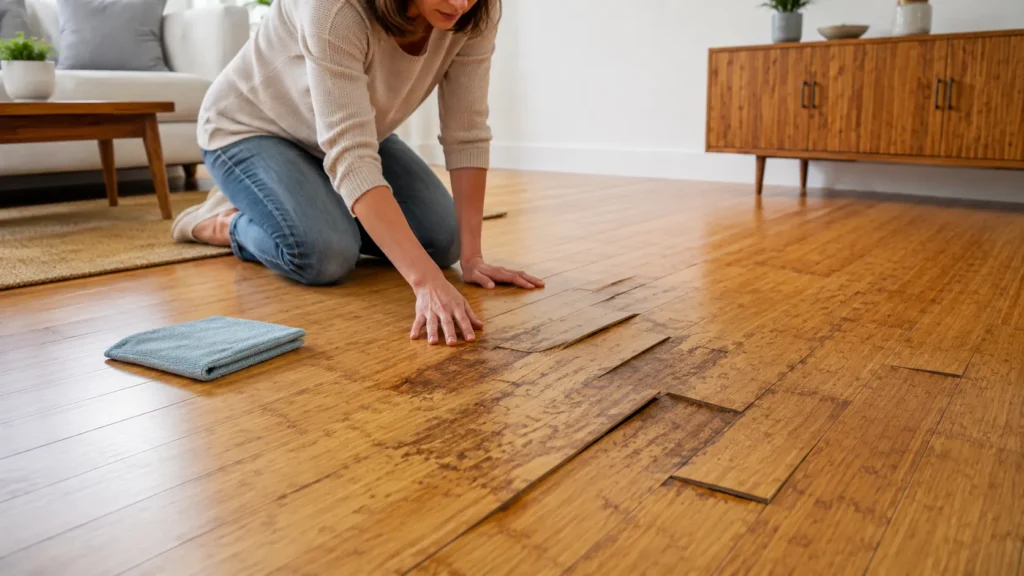
Cleaning will not fix every problem. You may need repair, refinishing advice, or plank replacement if you notice:
- Swollen plank edges
- Deep black water stains
- Cupping or buckling
- Peeling finish
- White haze under the finish
- Deep pet urine damage
- Large scratches through the finish
- Sticky wax buildup that will not clean off
If the damage is only on the surface, cleaning or buffing may help. If moisture has entered the floor or the finish has failed, cleaning alone will not solve the problem.
How to Make Bamboo Floors Shine Without Polish
To make bamboo floors shine naturally:
- Vacuum the floor thoroughly.
- Use a fresh microfiber pad.
- Apply a small amount of pH-neutral cleaner.
- Mop in the direction of the grain.
- Remove all cleaner residue.
- Dry-buff with a clean microfiber cloth.
- Improve natural light and clean footprints regularly.
If the floor remains dull after residue has been removed, the protective finish may be worn. Polish will not permanently repair a failing finish. Professional recoating or finish evaluation may be more appropriate.
What Is the Best Mop for Bamboo Floors?
The best mop for bamboo floors is a flat microfiber mop with a washable pad and controlled spray application.
Look for:
- A soft microfiber pad
- A flat head that reaches under furniture
- A removable and washable cleaning pad
- A spray mechanism that releases only a light mist
- A head that moves smoothly without scratching
- Pads that can be changed during cleaning
Avoid:
- Steam mops
- Dripping string mops
- Sponge mops that hold excessive water
- Rough scrub pads
- Dirty or grit-covered mop pads
Final Expert Recommendation
The best way to clean bamboo hardwood floors is to keep the routine simple: remove grit often, use a pH-neutral cleaner, mop with very little moisture, and dry the floor quickly. Bamboo can handle normal home traffic, but it does not respond well to steam, soaking water, harsh cleaners, waxy buildup, or neglected spills.
At EveryFAQ, the goal is to help homeowners make practical flooring decisions without overcomplicating basic care. For bamboo floors, the safest routine is consistent light cleaning rather than aggressive deep cleaning.
For more practical floor care questions, visit our All Flooring FAQs section for simple homeowner guides on cleaning, maintenance, damage, and flooring choices.
FAQs
How do you care for bamboo flooring?
Remove dust and grit regularly, clean spills immediately and use a barely damp microfiber mop with a pH-neutral cleaner. Avoid steam, wet mopping, oil soap, wax and abrasive pads.
What are the best cleaning products for bamboo floors?
Use a manufacturer-approved bamboo cleaner or a pH-neutral product designed for sealed hardwood. Avoid bleach, ammonia, oil soap, waxy cleaners and acidic homemade solutions.
What is the best way to clean bamboo floors without streaks?
Vacuum first, use a clean microfiber pad, apply very little cleaner, mop with the grain and dry-buff the floor immediately.
How do you deep-clean bamboo floors?
Vacuum thoroughly, spot-clean sticky areas and damp-mop in small sections with a pH-neutral cleaner. Change dirty pads and dry the floor completely.
Can you use a steam mop on bamboo floors?
Steam mops are generally not recommended because heat and moisture can affect the surface finish, plank joints and moisture-sensitive materials.
Should bamboo floors be waxed?
Most factory-finished bamboo floors should not be waxed. Use wax only when the flooring manufacturer specifically approves it.
How do you make bamboo floors shine?
Remove residue with a pH-neutral cleaner and dry-buff with a clean microfiber pad. Do not automatically add polish because buildup may make the floor look duller.
What is the best mop for bamboo floors?
A flat microfiber spray mop is usually the best choice because it allows controlled moisture and uses a soft, washable pad.