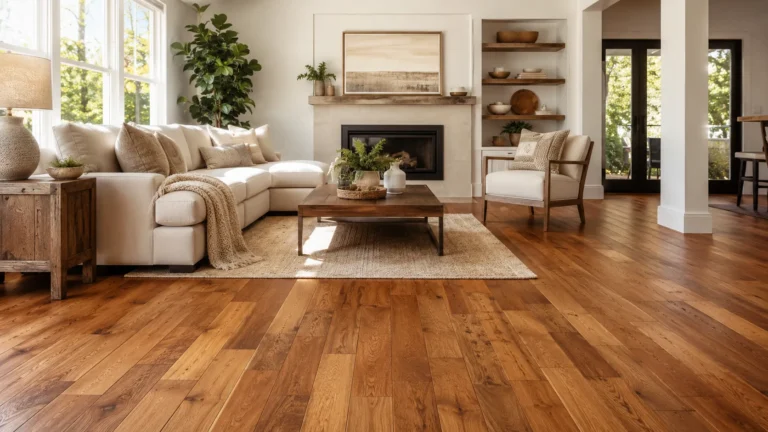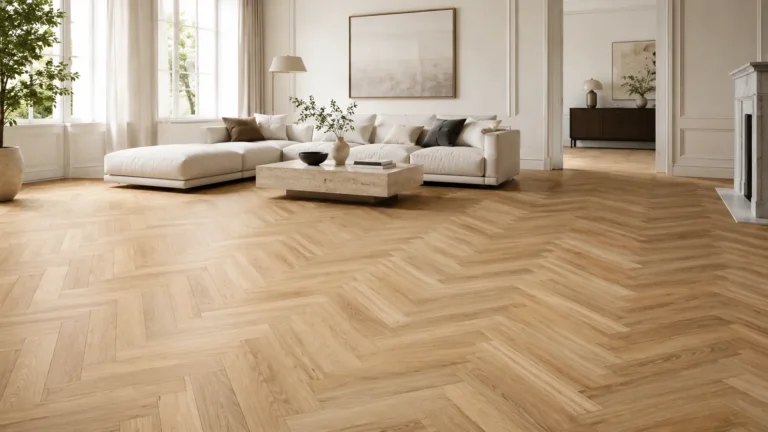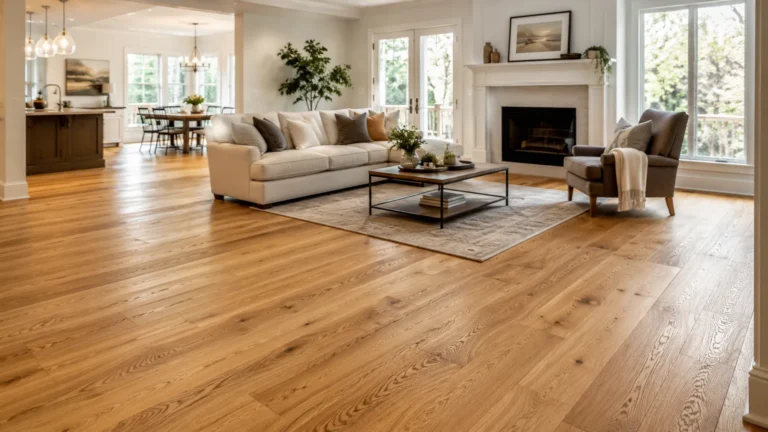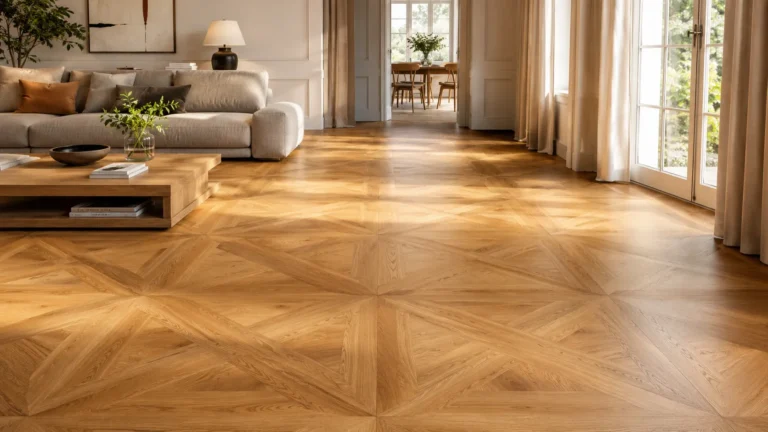
Cork flooring is a natural, comfortable, and practical flooring option made from the bark of the cork oak tree. It is popular with homeowners who want a softer floor underfoot, better sound control, a warmer surface, and a more sustainable flooring material. But cork is not the right choice for every room.
The best cork flooring is not just the one that looks good in a photo. It is the one that fits your subfloor, moisture level, room use, cleaning habits, budget, installation method, and long-term maintenance expectations.
What Is Cork Flooring?
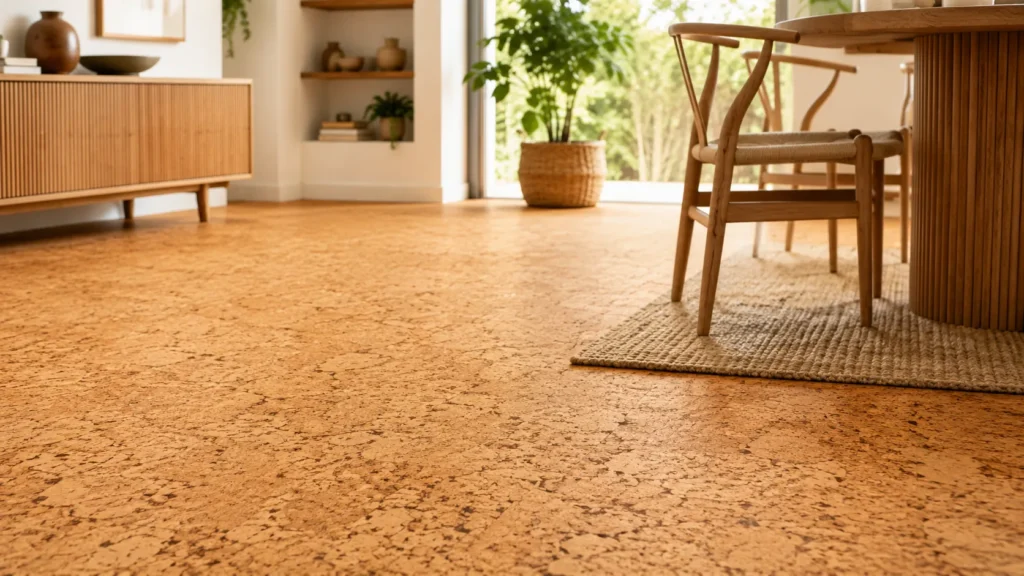
Cork flooring is a floor covering made from cork bark that is processed into tiles, planks, or engineered flooring products. Cork has a naturally cushioned feel because its structure contains tiny air-filled cells. That is why cork can feel softer, quieter, and warmer than many hard flooring materials.
Cork flooring is a softer and more comfortable option than many traditional wood floors, but it is still often compared with wood because of its natural look and warm feel. To understand how cork compares with hardwood flooring in terms of durability, moisture resistance, maintenance, installation, and long-term value, you can read our full hardwood flooring guide before choosing the right floor for your home.
In real homes, cork flooring is often chosen for bedrooms, living rooms, home offices, kitchens, gyms, and spaces where comfort underfoot matters. It can be a smart choice for people who stand for long periods, want a quieter floor, or prefer natural flooring materials.
However, cork still needs proper sealing, correct installation, and careful moisture management.
Quick Answer: Is Cork Flooring Good?
Cork flooring is a good option if you want a warm, quiet, comfortable, and sustainable floor for dry or moderately used rooms. It works well in bedrooms, living rooms, offices, kitchens, and gyms when properly sealed. It is not the best choice for rooms with standing water, poor subfloor conditions, or frequent flooding risk.
Cork Flooring Pros and Cons
| Cork Flooring Pros | Cork Flooring Cons |
| Comfortable underfoot | Can dent under heavy furniture |
| Warmer than tile or stone | Can fade in direct sunlight |
| Helps reduce sound | Needs moisture control |
| More sustainable than many flooring options | Not fully waterproof unless specially designed |
| Available in tiles and planks | Sharp pet nails can scratch the surface |
| Good for bedrooms, offices, and gyms | May need resealing depending on product |
From field experience, cork performs best when homeowners understand its limits. It is not as hard as tile, not as waterproof as vinyl, and not as refinishing-friendly as solid hardwood. But it offers comfort and quietness that many hard floors cannot match.
Cork Flooring Materials and Types
Cork flooring materials come in several formats. Choosing the right type matters because each one installs and performs differently.
Cork Floor Tiles
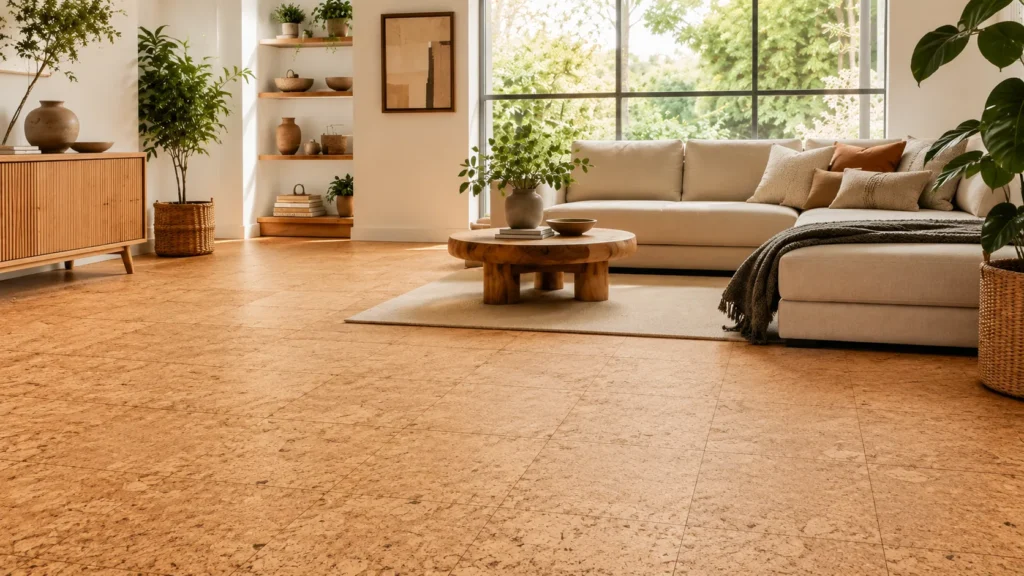
Cork floor tiles are usually glue-down products. They are installed directly over a smooth, clean, dry subfloor. Cork tiles for flooring can create a clean, seamless look, especially when the floor is sealed after installation.
Glue-down cork floor tiles are often better for kitchens and commercial spaces because they can be sealed more thoroughly than some floating floors.
Cork Flooring Planks
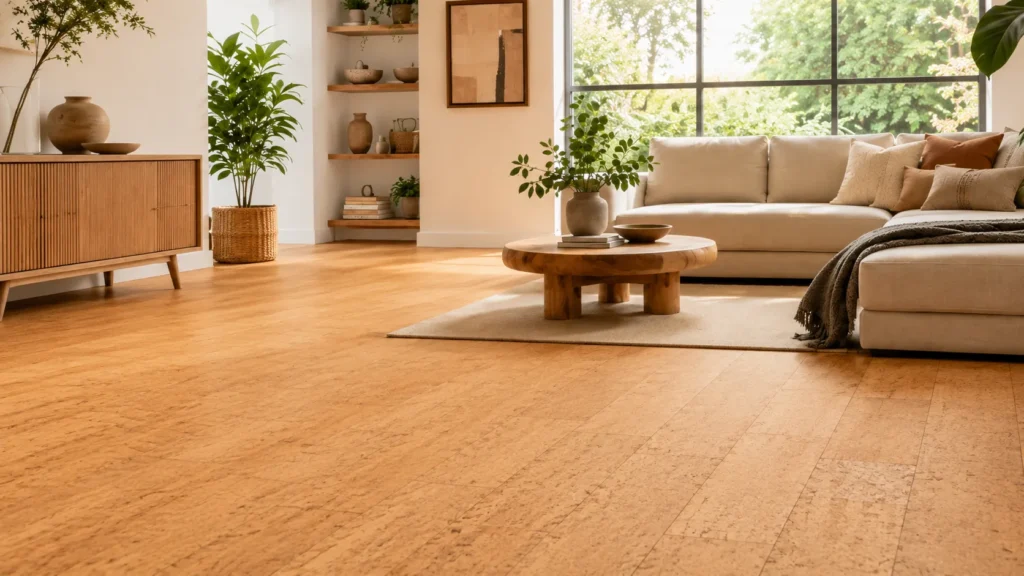
Cork flooring planks often come in click-lock form. These planks usually have a cork surface layer, a core layer, and sometimes a cork backing layer. They are common in floating cork flooring systems.
Cork planks are popular for DIY projects because they click together without being nailed down.
Floating Cork Flooring
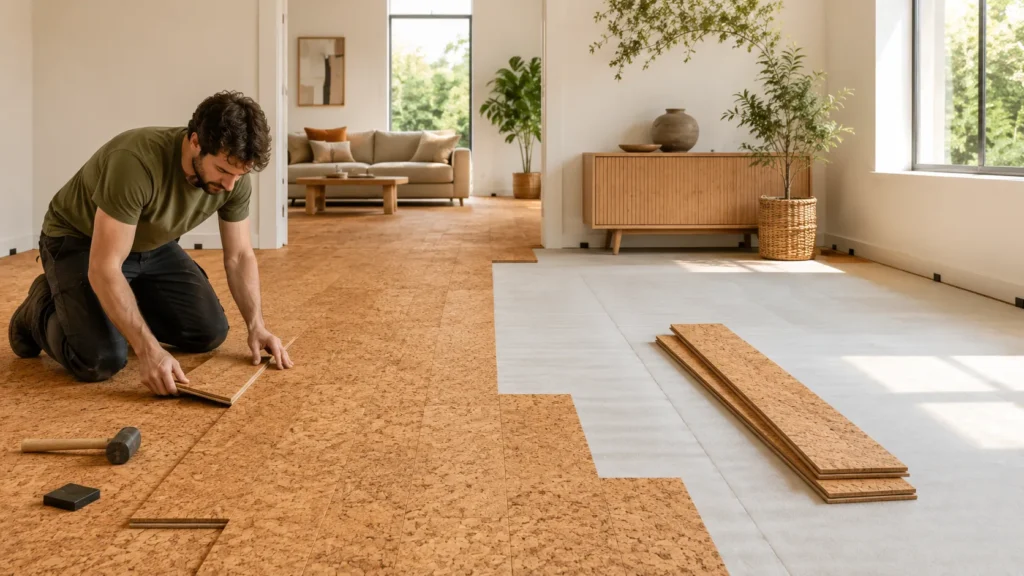
Floating cork flooring is installed over an underlayment or attached backing. The planks lock together and “float” above the subfloor. This can be a good option for bedrooms, offices, living rooms, and some basements if moisture testing is done first.
Floating cork is usually easier for DIY installation than glue-down cork.
Glue-Down Cork Flooring
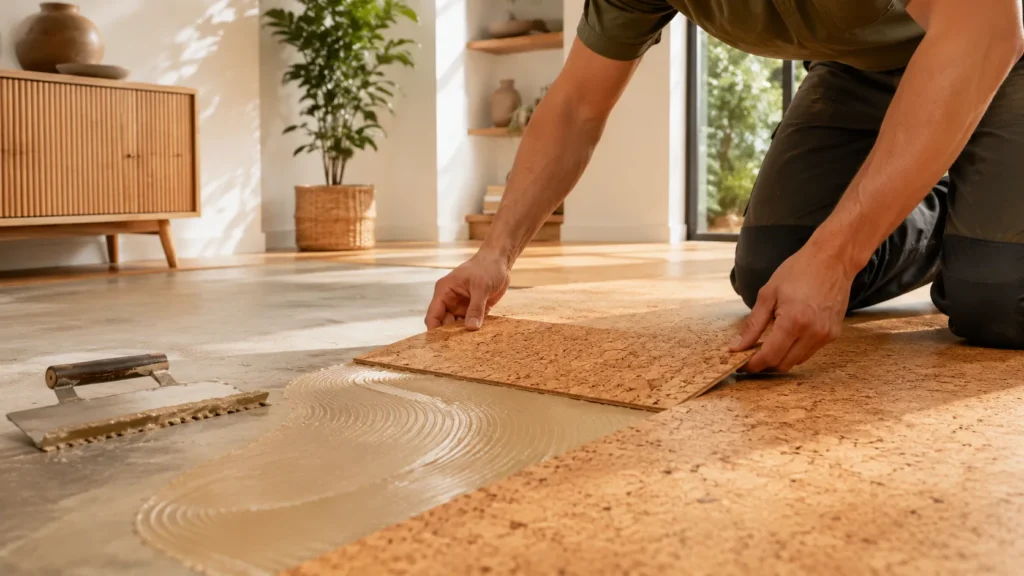
Glue-down cork flooring is bonded directly to the subfloor with adhesive. It requires more careful prep, but it can feel more stable underfoot and may be easier to seal at the surface.
Before installing glue-down cork flooring, the subfloor must be flat, clean, dry, and compatible with the adhesive.
Engineered Cork Flooring
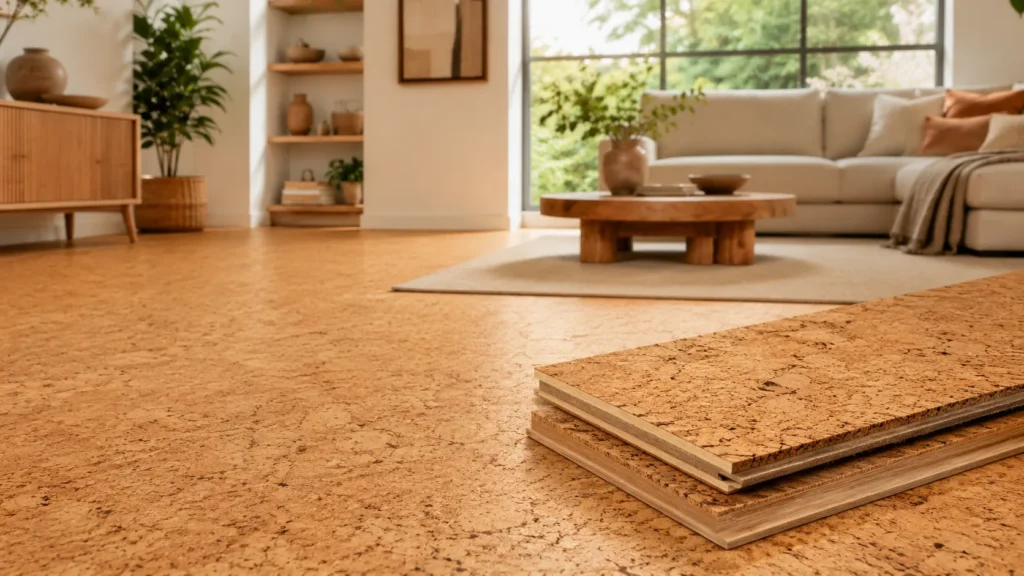
Engineered cork flooring usually includes a cork wear layer over a stable core. It is designed to improve installation ease and dimensional stability. Many floating cork planks are engineered products.
Check the wear layer, finish type, warranty, and whether the floor can be recoated before buying.
Solid Cork Flooring
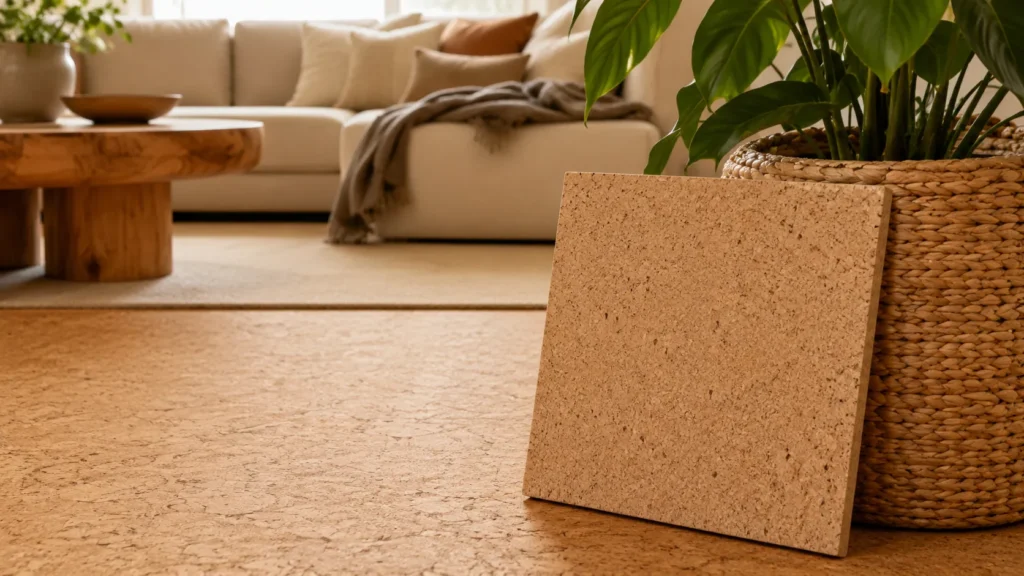
Solid cork flooring is made more fully from cork material and is often available in tile format. It may offer good comfort and insulation, but installation and sealing quality are very important.
Cork Floor Underlayment
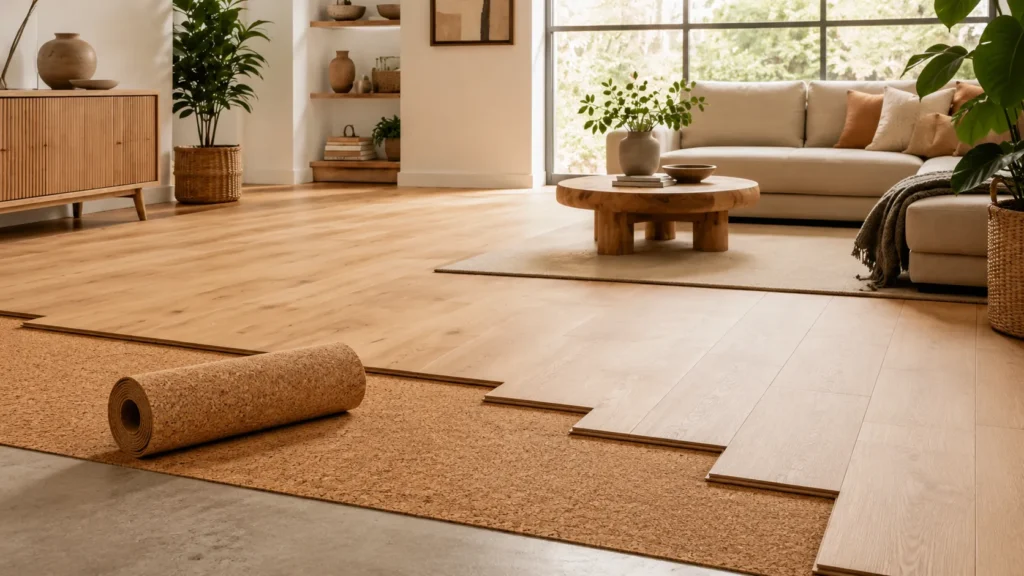
Cork floor underlayment is different from cork flooring. Underlayment is placed beneath flooring to help with sound control, comfort, and minor subfloor separation. Do not confuse cork underlayment with finished cork flooring.
Cork Flooring Cost
Cork flooring cost depends on product quality, thickness, finish, installation method, and labor in your area. In the USA, many cork flooring prices fall into a mid-range category compared with vinyl, laminate, hardwood, and tile.
A simple cost guide:
| Cork Flooring Type | Typical Use | Cost Expectation |
| Affordable cork flooring | Budget rooms, light use | Lower material cost, fewer premium finishes |
| Cork floor tiles | Kitchens, offices, custom layouts | Material plus adhesive and sealing |
| Floating cork flooring | Bedrooms, offices, living rooms | Often DIY-friendly |
| Waterproof cork flooring | Kitchens, basements, moisture-prone areas | Usually higher cost |
| Commercial cork flooring | Offices, gyms, studios | Higher durability and finish requirements |
When comparing cork flooring cost per square foot, do not look at material price only. Add underlayment, adhesive, trim, transition strips, subfloor repair, moisture testing, delivery, and waste allowance.
One common mistake homeowners make is buying cheap cork without checking the wear layer and finish quality. A cheaper floor can become expensive if it dents, swells, stains, or needs replacement too soon.
Is Cork Flooring Waterproof?
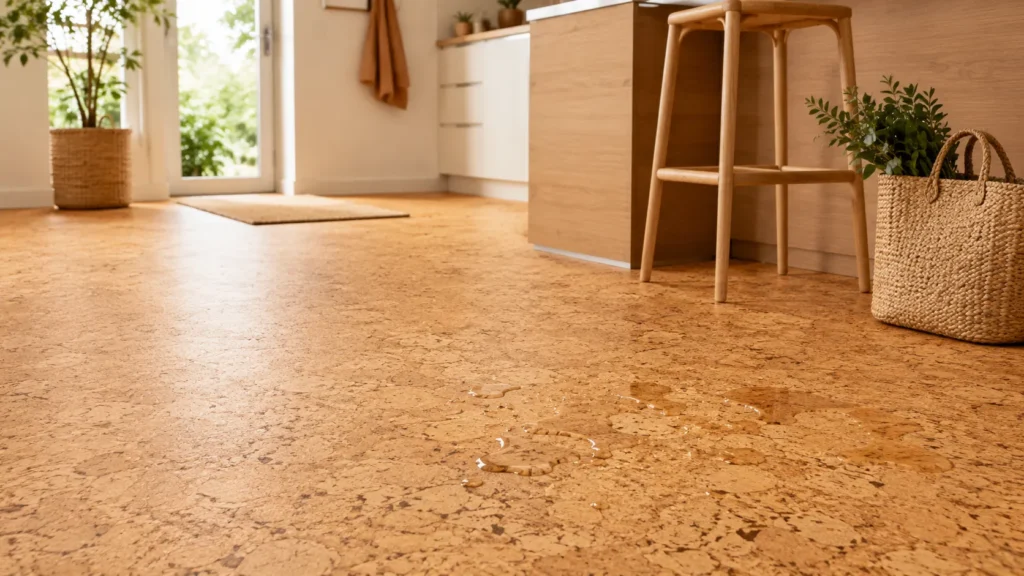
Most cork flooring is water-resistant, not fully waterproof. Cork naturally resists some moisture, but that does not mean it can handle standing water, flooding, wet mopping, or bathroom-level humidity without risk.
Waterproof cork flooring products do exist, but you still need to read the warranty carefully. Some products are waterproof at the core but still require edge sealing, proper installation, and spill cleanup.
Water-Resistant Cork Flooring
Water-resistant cork flooring can handle normal spills if cleaned quickly. It may work in kitchens, offices, bedrooms, and living rooms when properly finished.
Waterproof Cork Flooring
Waterproof cork flooring is usually a specially designed product with a waterproof core or protective surface system. It may be better for kitchens, laundry-adjacent spaces, and some basements, but it is still not a license to ignore water.
From real installations, the biggest risk is not a small spill. The bigger risk is water sitting at seams, moisture coming from below, or poor sealing around edges.
Best Rooms for Cork Flooring
Cork Kitchen Flooring
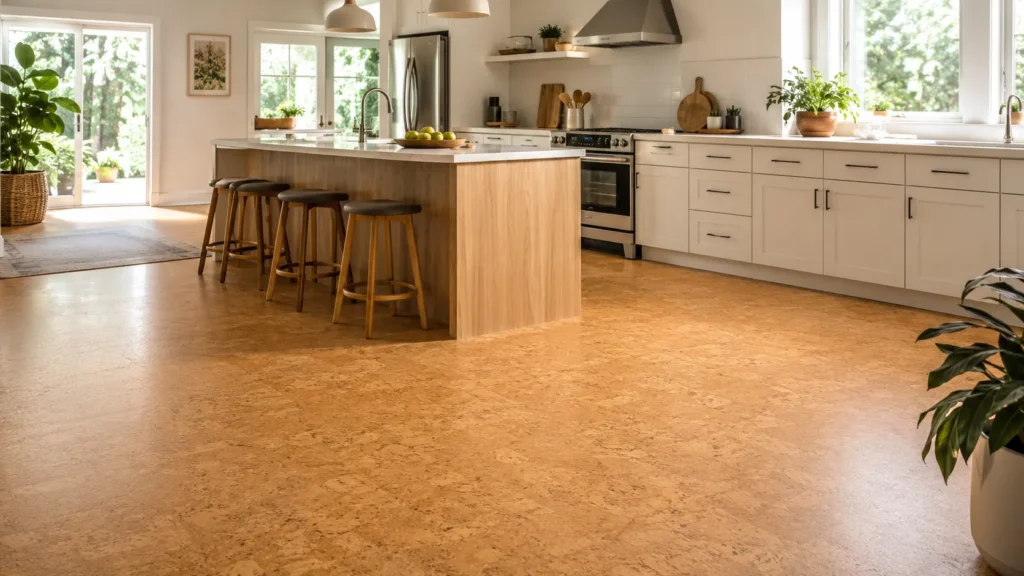
Cork kitchen flooring can be comfortable because it is softer underfoot than tile. That makes it helpful in spaces where people stand while cooking. For kitchens, choose sealed cork, clean spills quickly, and use mats near the sink and dishwasher.
Cork Bathroom Flooring
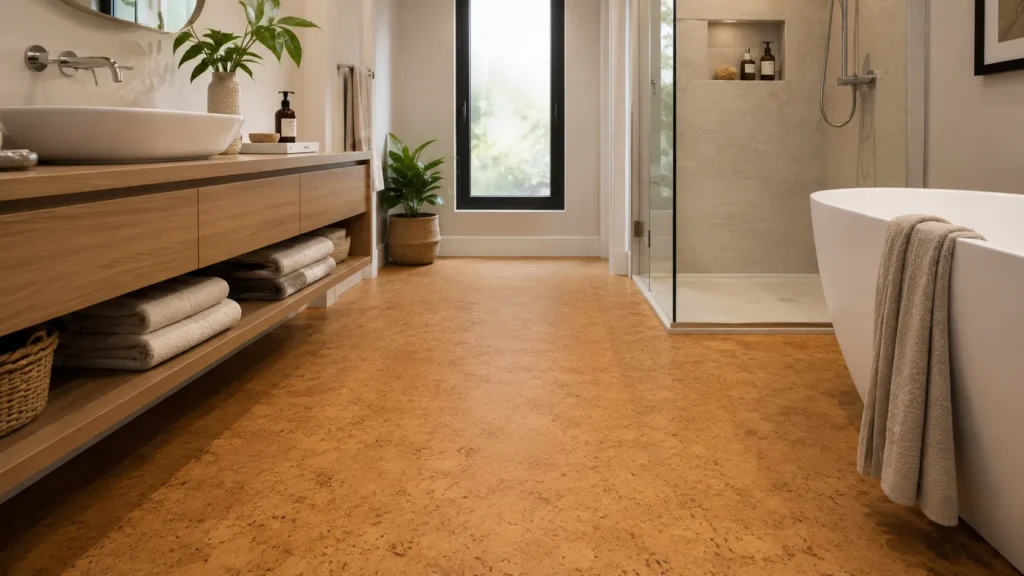
Cork bathroom flooring is risky unless the product is specifically approved for bathrooms. Full bathrooms have high humidity, splashes, and water around toilets, tubs, and showers. If you want cork in a bathroom, use a waterproof-rated product and follow the manufacturer’s sealing instructions.
Cork Flooring for Basement
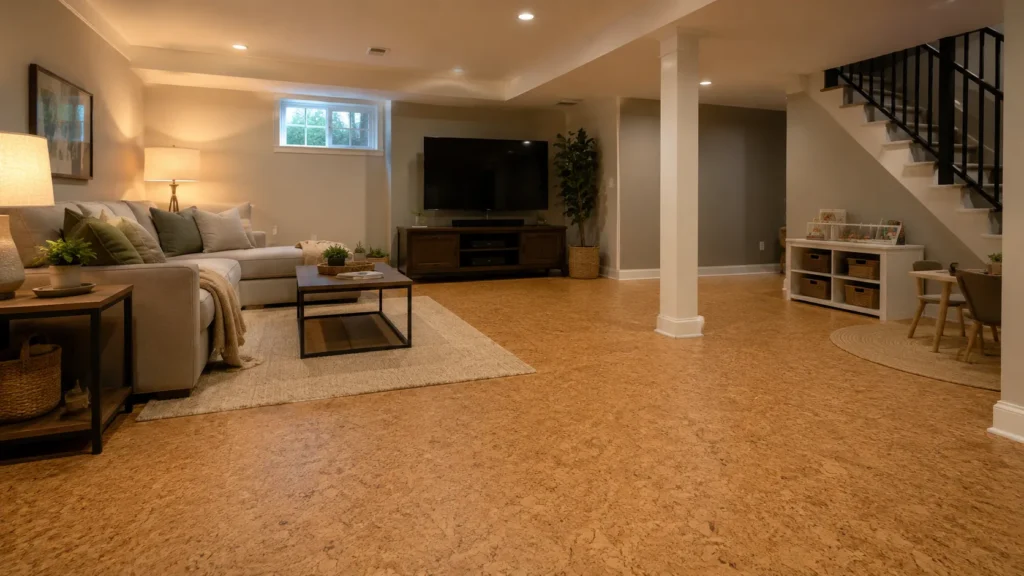
Cork flooring for basement spaces depends on moisture testing. If the basement is dry, climate controlled, and has a good vapor barrier, floating cork flooring may work. If the basement has dampness, seepage, or humidity issues, choose another material.
Cork Flooring Bedroom
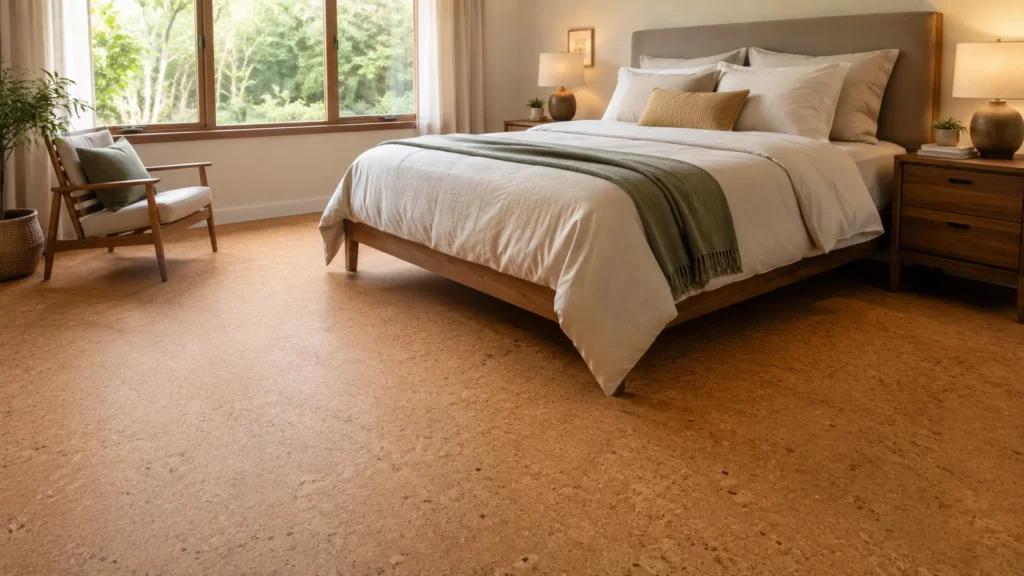
Cork flooring in a bedroom is one of its best uses. It feels warm, reduces sound, and creates a softer walking surface. It can also work well in children’s rooms if you use rugs in play areas and furniture pads under heavy pieces.
Cork Gym Flooring
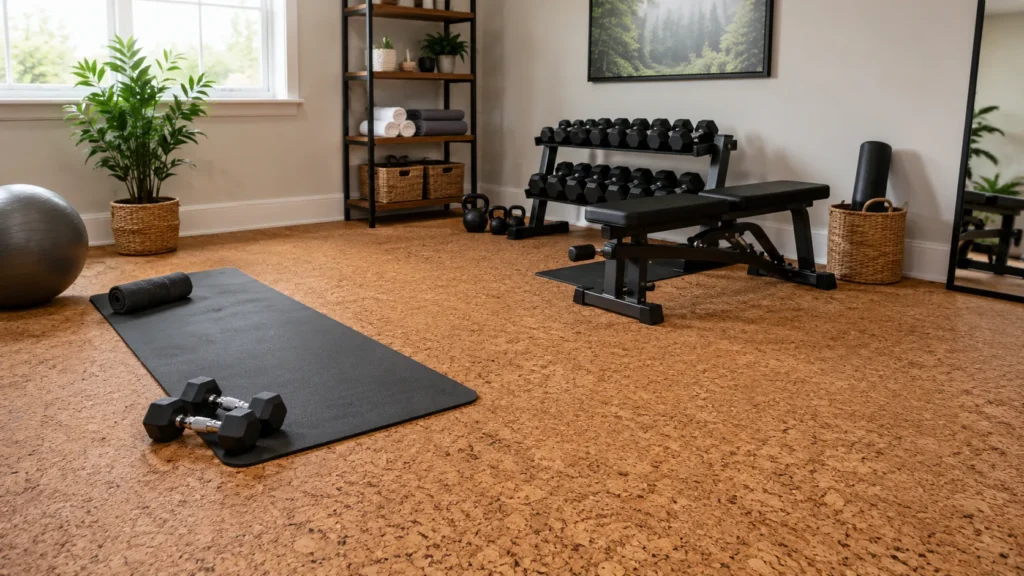
Cork gym flooring can work for yoga, stretching, light workouts, and home fitness spaces. It is not the best choice for heavy dropped weights unless protected with mats. For gym use, check compression resistance and finish durability.
Commercial Cork Flooring
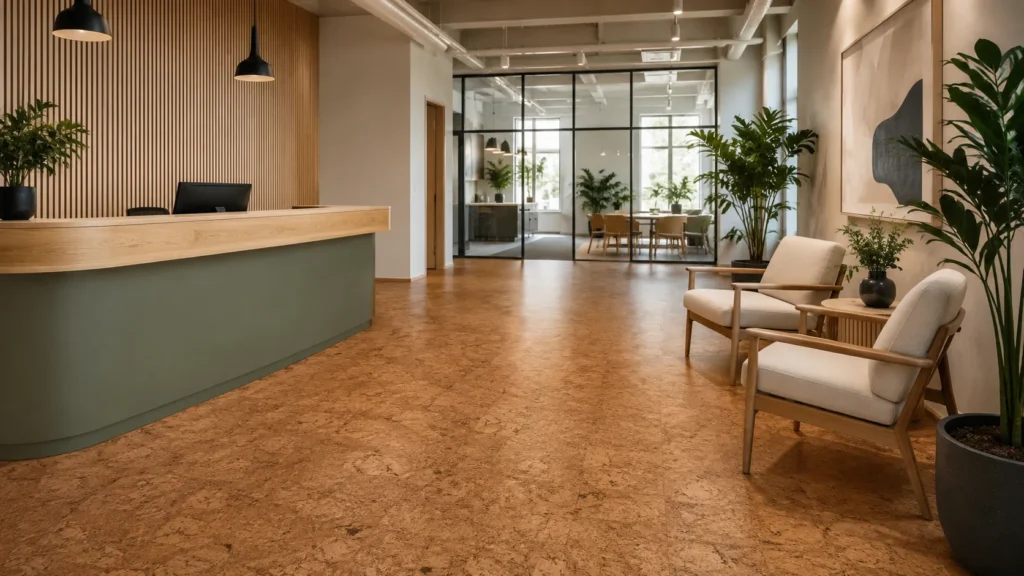
Commercial cork flooring can be useful in offices, studios, wellness spaces, and low-to-moderate traffic commercial rooms. For commercial use, choose a product rated for commercial traffic and confirm warranty coverage.
Cork Flooring Colors and Styles
Cork flooring colors are not limited to the old brown cork-board look. Today, you can find natural cork flooring, white cork flooring, gray tones, contemporary cork flooring, patterned cork, and cork floors that resemble wood or stone.
Common style options include:
- Natural cork flooring
- White cork flooring
- Contemporary cork flooring
- Cork board flooring look
- Cork flooring planks with wood-look patterns
- Cork tiles with modern texture
- Warm brown cork tones
- Light neutral cork colors
When choosing color, test samples in your room. Cork can look different under daylight, warm bulbs, and shaded corners.
Installing Cork Flooring
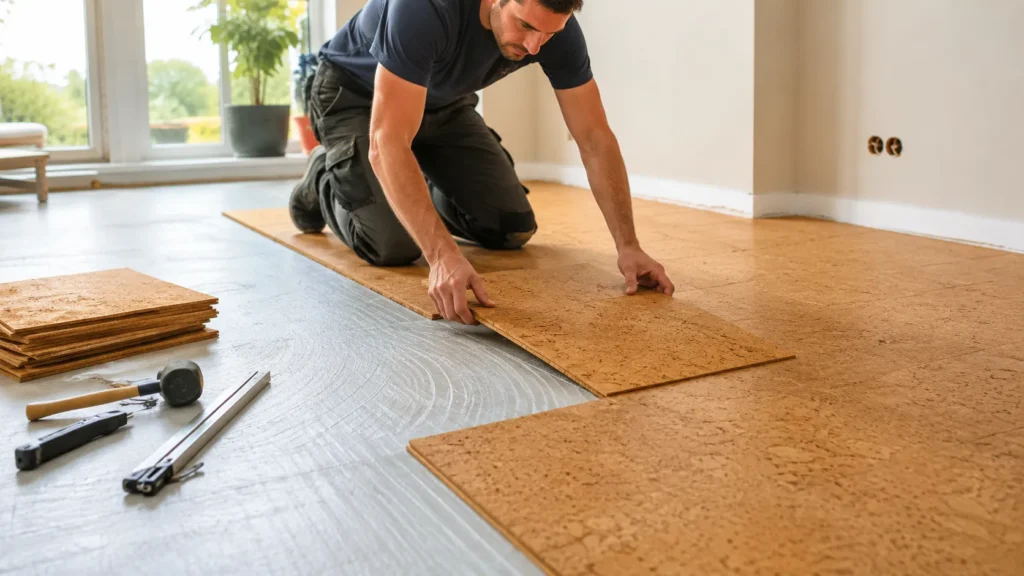
Installing cork flooring starts with the subfloor. Before choosing any product, check moisture, flatness, cracks, old adhesive, movement, and room temperature.
Before Installation, Check These Things
- Subfloor moisture level
- Flatness and smoothness
- Room humidity
- Product acclimation requirements
- Installation method
- Expansion gaps
- Sealing instructions
- Warranty rules
- Underlayment requirements
- Bundle or case weight for click cork flooring
That last point matters for practical reasons. Cork flooring click bundle weight does not usually tell you floor quality by itself, but it does affect shipping, handling, storage, and carrying boxes upstairs.
DIY or Professional Installation?
Floating cork flooring can be realistic for careful DIY homeowners. Glue-down cork flooring is less forgiving because adhesive spread, tile alignment, subfloor prep, and sealing all affect the result.
Hire a professional if:
- The subfloor is uneven
- The room has moisture issues
- You are installing cork in a kitchen or basement
- You are using glue-down cork
- You need commercial-grade performance
- The warranty requires professional installation
How to Clean Cork Flooring
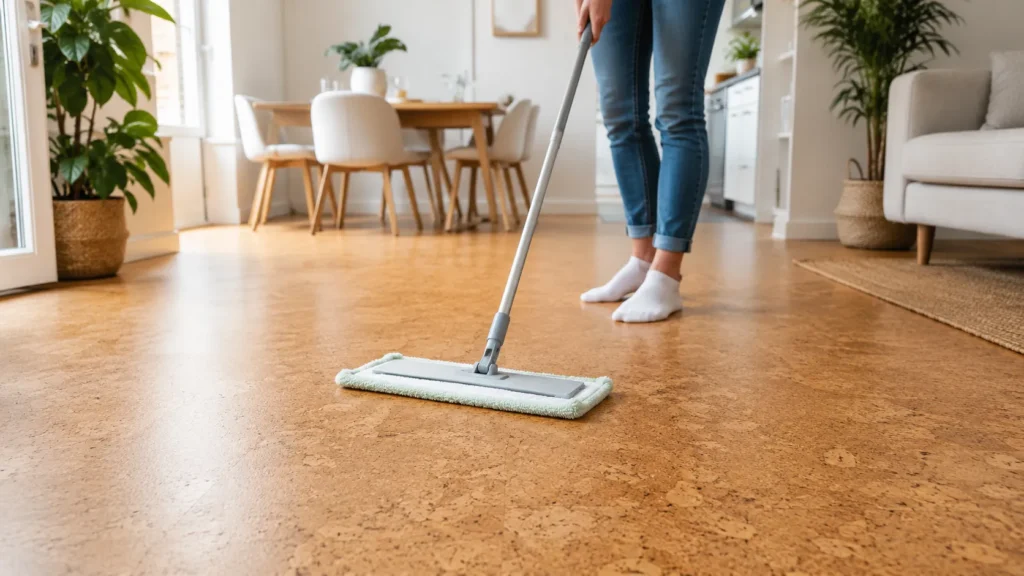
If you are wondering how to clean cork flooring, the safest routine is simple: remove grit often, clean spills quickly, and avoid soaking the floor.
How Do You Clean Cork Floors?
Use these steps:
- Sweep or vacuum regularly using a hard-floor setting.
- Wipe spills as soon as they happen.
- Use a lightly damp mop, not a wet mop.
- Choose a pH-neutral cleaner approved for cork or wood floors.
- Avoid steam mops, harsh chemicals, abrasive pads, and oil-heavy cleaners.
- Use mats near doors and sinks.
- Add felt pads under furniture.
The goal is to keep grit and moisture away from the surface. Dirt acts like sandpaper, and too much water can enter seams or edges.
How Do You Remove Stains From Cork Flooring?
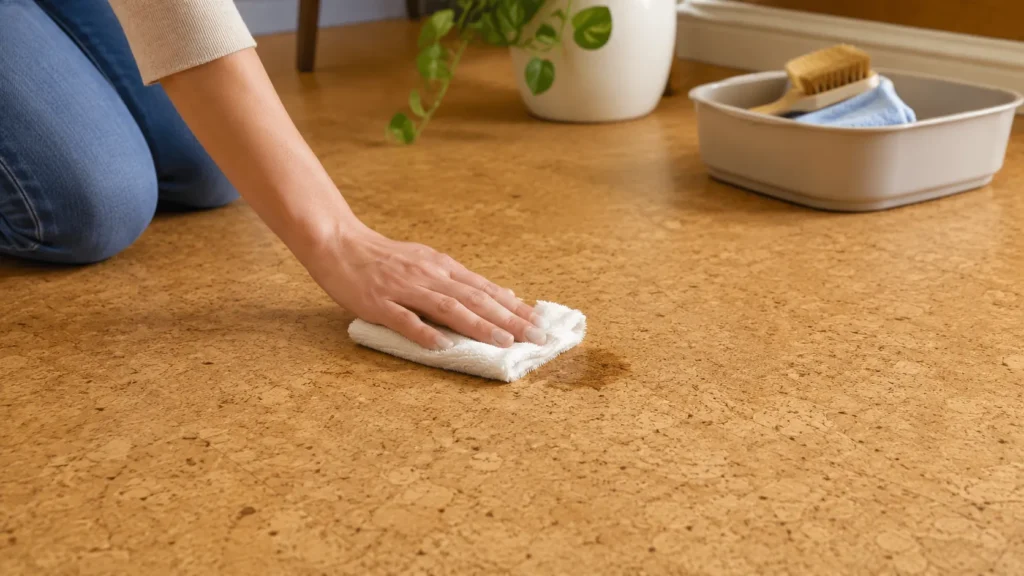
To remove stains from cork flooring, start gently. Do not sand, bleach, or scrub aggressively before checking the finish type.
Try this process:
- Blot fresh spills immediately.
- Clean with a soft cloth and approved cleaner.
- For sticky residue, use a slightly damp cloth and mild cleaner.
- For deeper stains, check the manufacturer’s care guide.
- If the stain has entered the finish, ask a flooring professional whether spot repair, resealing, or plank replacement is safer.
Avoid using vinegar, bleach, ammonia, or abrasive powders unless the manufacturer specifically approves them. These can damage the finish or discolor the cork.
Cork Flooring Compared With Other Flooring Types
| Flooring Type | Cork Compared With It |
| Cork vs hardwood | Cork is softer and quieter, but hardwood can usually be refinished more times |
| Cork vs vinyl | Vinyl is usually more waterproof, but cork feels warmer and more natural |
| Cork vs laminate | Cork is softer and quieter, while laminate may resist surface wear better depending on quality |
| Cork vs bamboo | Bamboo can be harder, but cork is more cushioned underfoot |
| Cork vs tile | Tile handles water better, but cork is warmer and more comfortable |
| Cork vs carpet | Cork is easier to wipe clean, while carpet feels softer but traps more dust |
For a full comparison, readers can explore all flooring types before choosing a material for the whole home.
Best Cork Flooring Buying Checklist
Before buying cork flooring, check:
- Is it rated for your room?
- Is it water-resistant or waterproof?
- Is it floating or glue-down?
- What is the thickness?
- What is the wear layer?
- What finish protects the surface?
- Can it be resealed?
- What does the warranty exclude?
- Is it safe for kitchens, basements, or bathrooms?
- Does it require professional installation?
- What underlayment is needed?
- How much does each bundle weigh?
- Are matching trims and transitions available?
- Can damaged tiles or planks be replaced?
You may see cork flooring at Lowes, specialty flooring stores, online flooring retailers, and brands such as Amorim Wise cork flooring. Compare product specs, not just photos.
Common Cork Flooring Mistakes to Avoid
Avoid these mistakes:
- Installing cork over a damp subfloor
- Using cork in a wet bathroom without checking warranty approval
- Wet mopping the floor
- Skipping furniture pads
- Ignoring sunlight exposure
- Buying only by price
- Forgetting expansion gaps on floating cork
- Using the wrong cleaner
- Not sealing glue-down cork when required
- Assuming all cork flooring is waterproof
In real installations, most cork flooring problems come from moisture, poor subfloor prep, dragging furniture, wrong cleaners, or choosing a product that was never meant for that room.
Final Expert Recommendation
Cork flooring is worth considering if comfort, warmth, sound control, and sustainability matter to you. It is especially useful in bedrooms, offices, living rooms, kitchens with careful maintenance, and light home gym areas.
Do not choose cork only because it looks unique. Choose it because it fits the room. Check the subfloor, moisture level, warranty, installation method, finish, cleaning needs, and repairability first. A cork floor that fits the space will usually outperform a beautiful floor chosen for looks alone.
FAQs About Cork Flooring
What is cork flooring?
Cork flooring is a natural floor covering made from cork bark. It is available in tiles, planks, floating floors, glue-down products, and engineered cork flooring.
Is cork flooring waterproof?
Most cork flooring is water-resistant, not fully waterproof. Some waterproof cork flooring products exist, but you should still check the warranty and clean spills quickly.
How do you clean cork floors?
Sweep or vacuum regularly, clean spills quickly, and use a lightly damp mop with a cork-approved or pH-neutral cleaner. Avoid steam mops and soaking the floor.
How do you remove stains from cork flooring?
Blot fresh stains quickly, clean with a soft cloth and approved cleaner, and avoid harsh chemicals. For deep stains, check whether the floor can be spot repaired, resealed, or replaced.
Is cork flooring good for kitchens?
Cork flooring can work in kitchens if it is properly sealed, cleaned carefully, and protected near sinks and dishwashers. Waterproof-rated cork is safer for kitchens.
Is cork flooring good for bathrooms?
Cork is risky in full bathrooms unless the product is specifically approved for bathroom use. Moisture, splashes, and humidity can damage standard cork flooring.
Is cork flooring good for basements?
Cork can work in dry, climate-controlled basements after moisture testing. Avoid cork in basements with dampness, seepage, or high humidity.
How much does cork flooring cost?
Cork flooring cost depends on material quality, installation method, thickness, finish, and labor. Always compare total project cost, not just material price.
What is the best cork flooring?
The best cork flooring is the one that matches your room, moisture level, traffic, cleaning habits, budget, and warranty needs.
Is cork flooring sustainable?
Cork flooring is considered a sustainable flooring option because cork comes from bark that can regrow without cutting down the tree.